Explaining hospice medications: A caregiver's guide

Explaining hospice medications: A caregiver’s guide
TL;DR:
- Hospice medications focus on comfort and symptom management rather than curing the illness, helping families understand their purpose.
- Medications are often deprescribed to reduce pill burden and improve quality of life, with a coordinated team adjusting treatments accordingly.
When a loved one enters hospice care, one of the most confusing moments for family caregivers is opening that first medication bag and wondering, “What is all of this for?” Explaining hospice medications matters because many caregivers expect these drugs to fight the illness, when they are actually designed to ease suffering and protect comfort. Understanding this shift in purpose, from curing to caring, can transform anxiety into confidence. This guide walks you through what hospice medications are, why they are chosen, how to manage them at home, and what questions to ask your care team.
Table of Contents
- What hospice medications cover: focusing on comfort and symptom management
- How hospice medication regimens change: the role of deprescribing and simplification
- Common medications in hospice care and their purposes
- Practical tips for caregivers: managing hospice medications at home
- The hospice interdisciplinary team and medication decisions
- The caregiver’s unique role: balancing comfort, communication, and compassion
- How Graceland Hospice Care supports you with medication management
- Frequently asked questions
What hospice medications cover: focusing on comfort and symptom management
The first thing to understand is that hospice care operates on a different philosophy than traditional medical treatment. Medications are not chosen to extend life or reverse disease. They are chosen to make your loved one as comfortable as possible during life’s final chapter.
Under the Medicare Hospice Benefit, hospice covers prescription drugs that are related to the patient’s terminal illness and to symptom control and comfort. It generally does not cover medications aimed at curing or treating the terminal diagnosis itself. This distinction is important because it explains why some familiar prescriptions may be continued while others are stopped.
Here is a quick overview of what hospice medication coverage typically includes:
- Pain relievers to control physical discomfort, including chronic and breakthrough pain
- Anti-nausea medications to reduce vomiting and improve appetite where possible
- Medications for anxiety and agitation to keep your loved one calm and at ease
- Medications for respiratory symptoms like shortness of breath or excess secretions
- Laxatives to counteract the constipation that opioids commonly cause
- Skin care and wound-related treatments when tied to the terminal diagnosis
What is not covered are treatments like chemotherapy or aggressive disease-modifying drugs. Understanding hospice coverage in California can help you know exactly what to expect before the first prescription is filled.
With a clear understanding of what hospice typically covers, let’s look at how medication regimens adapt when entering hospice care.
How hospice medication regimens change: the role of deprescribing and simplification
One of the most surprising aspects of hospice for many caregivers is watching certain long-standing medications get discontinued. Your loved one may have taken a cholesterol medication for 20 years. Stopping it can feel alarming. But there is a sound and compassionate reason behind this practice.
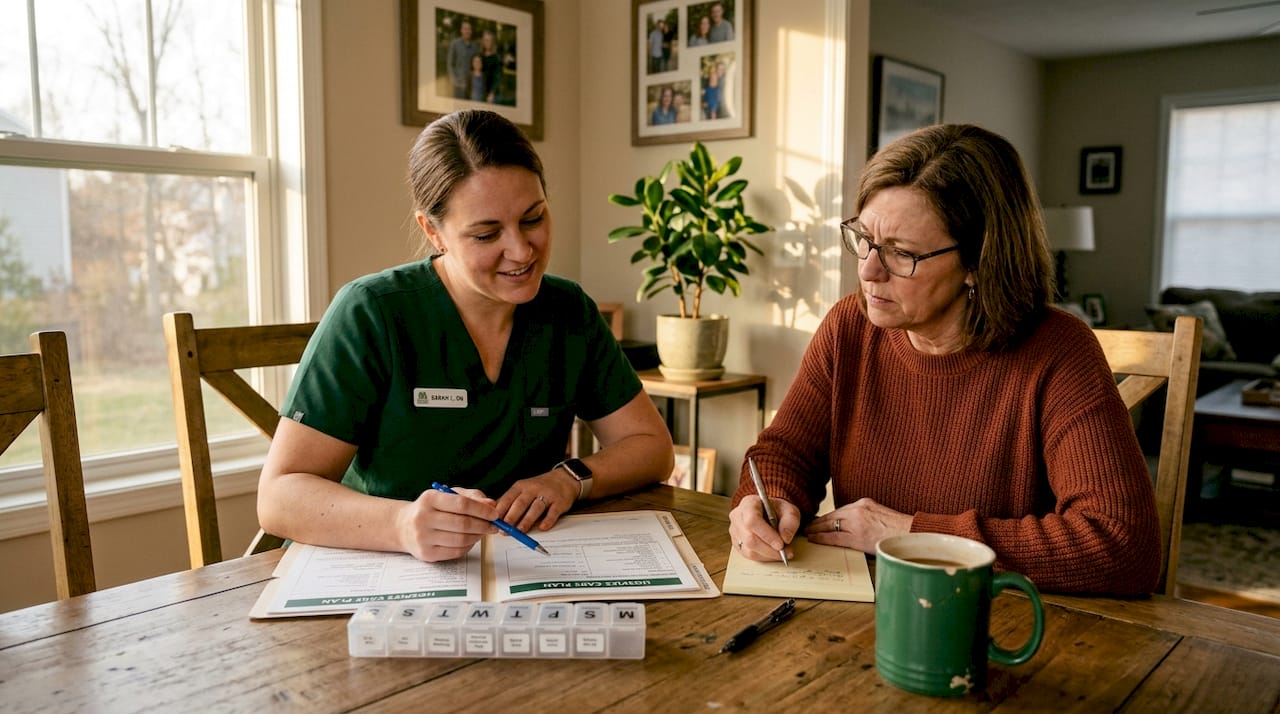
Benefits that normally take months or years to appear often will not be realized before end of life, so the medication regimen is simplified to reduce pill burden and side effects while targeting comfort symptoms instead. This process is called deprescribing, and it is one of the most meaningful acts of care a hospice team can offer.
Deprescribing in hospice care helps doctors make thoughtful choices about medications that reduce stress and improve quality of life. The goal is not to take things away. It is to remove what no longer serves your loved one’s wellbeing.
Common medications that are often stopped include:
- Statins (cholesterol-lowering drugs) because cardiovascular benefits take years to materialize
- Blood pressure medications when maintaining target numbers is no longer a comfort priority
- Vitamins and supplements unless they directly address a current, distressing symptom
- Preventive medications for osteoporosis or diabetes management at aggressive targets
- Certain psychiatric medications when adjusted alternatives offer better comfort outcomes
The result is a leaner, more focused set of medications aligned with your loved one’s daily experience. For a deeper look at how this fits into the broader picture, the end of life care guide offers helpful context on what to expect at each stage.
Pro Tip: Ask the hospice nurse to walk you through each medication and explain whether it is for active symptom relief or comfort. Knowing the purpose of every pill reduces confusion and builds your confidence as a caregiver.
Staying connected to your loved one’s symptom monitoring helps ensure that any changes in how they feel are captured quickly so the team can adjust the regimen.
Common medications in hospice care and their purposes
Hospice patients frequently require opioids for pain and breathlessness, antiemetics for nausea, anticholinergics for secretions, benzodiazepines for anxiety or agitation, and laxatives for constipation. Here is what each of those means in practical terms.
- Opioids (such as morphine or oxycodone): These relieve moderate to severe pain and ease the frightening sensation of breathlessness. Many caregivers fear opioids, but when used correctly under hospice guidance, they are safe and highly effective for managing pain and symptoms.
- Antiemetics (such as ondansetron or haloperidol): These control nausea and vomiting, which is especially important for patients whose appetite and hydration are already fragile.
- Benzodiazepines (such as lorazepam): These reduce anxiety, restlessness, and agitation, allowing your loved one to feel calm and settled.
- Anticholinergics (such as glycopyrrolate): These reduce the buildup of secretions in the throat that can cause distressing rattling sounds.
- Laxatives: Given regularly alongside opioids to prevent constipation, which can cause significant discomfort.
| Medication type | Primary purpose | Common forms available |
|---|---|---|
| Opioids | Pain and breathlessness relief | Liquid, tablet, patch, sublingual drop |
| Antiemetics | Nausea and vomiting control | Tablet, liquid, suppository, skin patch |
| Benzodiazepines | Anxiety and agitation management | Tablet, liquid, nasal spray, gel |
| Anticholinergics | Secretion reduction | Injection, patch, liquid |
| Laxatives | Prevent opioid-related constipation | Liquid, tablet |
Pro Tip: If your loved one can no longer swallow pills, do not wait for a crisis. Ask the hospice pharmacist about alternative forms immediately. Gels applied to the wrist, sublingual drops, and suppositories exist for most key hospice medications and can make a significant difference in care continuity at home.
Recognizing end-of-life symptoms early gives you and the hospice team a head start in adjusting medications before symptoms escalate.
Understanding these medications helps caregivers feel prepared, but managing them safely at home presents its own set of challenges.
Practical tips for caregivers: managing hospice medications at home
Caregiving at home is both a profound act of love and a real logistical challenge. Your role includes helping families understand how to administer medications safely while monitoring their effectiveness and watching for side effects. Here is how to do that well.
- Create a simple medication schedule. Write down every medication, its dose, and the time it is due. Keep it on the kitchen counter or refrigerator where anyone stepping in to help can see it immediately.
- Use the right form for your loved one’s current abilities. If swallowing is difficult, confirm with the hospice nurse that you have the correct alternative form on hand before you need it.
- Keep emergency medications accessible. Hospice teams typically supply a comfort kit, a small supply of medications for breakthrough pain, agitation, or nausea. Know where it is and how to use it before an urgent situation arises.
- Watch for side effects and document them. Drowsiness, confusion, nausea, or changes in breathing after a dose are all worth noting. A brief symptom diary does not need to be elaborate. Even a note on your phone with time, symptom, and medication given is useful information for the hospice team.
- Contact the hospice nurse immediately if something concerns you. Do not wait for the scheduled visit. Most hospice teams are available around the clock for exactly this reason.
- Ask about the role of hospice aides. The role of hospice aides often includes hands-on assistance with comfort tasks that make medication administration easier and less stressful for family caregivers.
Pro Tip: Keep a small notepad near your loved one’s medications specifically for writing down questions as they arise between nurse visits. Bringing a short list to each visit ensures nothing gets forgotten in the moment.
The hospice interdisciplinary team and medication decisions
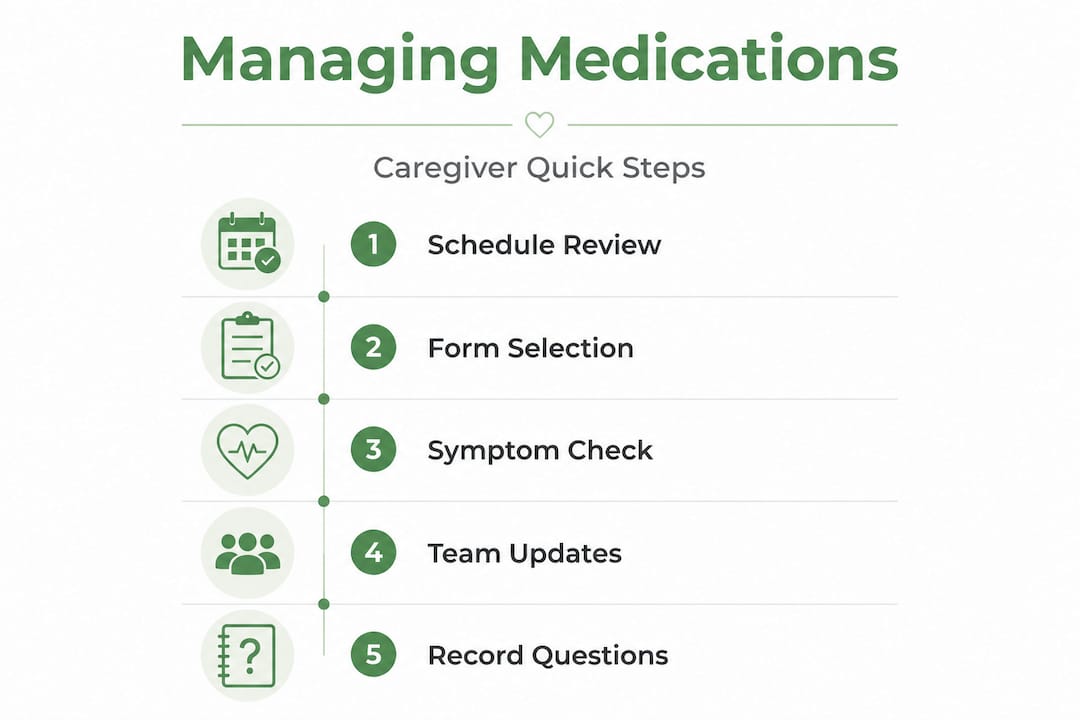
Medication management in hospice is never one person’s job. It is a carefully coordinated effort involving several professionals, each contributing a unique layer of expertise and support.
Hospice organizations rely heavily on pharmacy partners and interdisciplinary teams to ensure safe and effective medication management. Here is who is involved and what each person does:
- Hospice physicians and nurse practitioners: Prescribe medications and adjust dosages based on your loved one’s changing symptoms and goals of care.
- Registered nurses: Monitor symptoms between physician visits, administer or supervise medication delivery, and serve as your first point of contact for concerns.
- Hospice pharmacists: Review the full medication list for interactions, customize formulations when swallowing is not possible, and consult with the team on drug choices.
- Social workers: Provide emotional support, help families process the meaning of medication changes, and coordinate access to resources. Social workers in hospice care are often the bridge between clinical decisions and family understanding.
- Hospice aides: Assist with daily comfort routines that support medication effectiveness, such as repositioning, hygiene, and monitoring comfort levels.
| Team member | Medication-related role |
|---|---|
| Physician | Prescribes and adjusts the comfort-focused medication plan |
| Registered nurse | Monitors symptoms, administers medications, advises caregivers |
| Pharmacist | Reviews interactions, customizes drug forms |
| Social worker | Supports family understanding and emotional processing |
| Hospice aide | Assists with comfort care and observes daily changes |
This team works together so that every medication decision reflects what your loved one and your family actually want from care. The role of hospice aides in particular is often underestimated, yet they observe daily changes that shape clinical decisions.
The caregiver’s unique role: balancing comfort, communication, and compassion
Here is something most end-of-life medication education glosses over: caregivers are not passive participants in this process. You are the eyes and ears of the hospice team between visits, and your observations shape every medication decision made on your loved one’s behalf.
Many caregivers carry a quiet, private fear that stopping a familiar medication means giving up. That fear is understandable, and it is worth naming out loud with your hospice nurse. What often feels like withdrawal of care is actually a thoughtful act of refocusing care where it does the most good right now.
The most effective caregivers we have seen are not the ones who have medical training. They are the ones who ask questions without apology. “Why is this medication being stopped?” “What should I watch for after this dose?” “What do I do if the pain is not controlled?” These questions are not a sign of distrust. They are the mechanism by which care gets personalized.
There will likely be a period of trial and adjustment, especially in the first weeks of hospice. A dose may need to be increased. A medication may not work as expected. This is normal, and it does not mean something has gone wrong. It means the team is paying attention and adapting.
Caregiving at this stage can also take a significant emotional toll. Your wellbeing matters, too. The practical steps outlined in end-of-life care steps for hospice include guidance not only for your loved one but for you as well.
How Graceland Hospice Care supports you with medication management
At Graceland Hospice Care, we know that no two patients and no two families are alike. That is why our approach to medication management begins with listening. Our interdisciplinary team works with you to build a personalized comfort plan that reflects your loved one’s goals, not a standard template. We coordinate compassionate hospice care directly to your home, including medication delivery, caregiver education, and 24/7 support so you are never left managing a difficult symptom change alone. From explaining why a medication is being adjusted to guiding you through administering a comfort kit, our team is with you every step of the way. To learn more about our full range of hospice care services, contact us today for a free consultation.
Frequently asked questions
What types of medications does hospice cover for my loved one?
Hospice covers medications that manage symptoms related to the terminal illness and support comfort, such as pain relievers and anti-nausea drugs. Curative treatments are excluded from coverage under the Medicare Hospice Benefit.
Why are some medications stopped when starting hospice care?
Preventive medications often take too long to produce benefits and may add side effects with no comfort gain, so they are discontinued. Pill burden is reduced to keep the focus on what directly improves quality of life now.
How can I safely manage hospice medications at home?
Keep a clear written schedule, use the correct medication form for your loved one’s current swallowing ability, and report side effects or changes promptly. Caregivers play a vital role administering medications and coordinating with the hospice team to adjust treatment as needs evolve.
What should I ask the hospice team about my loved one’s medications?
Ask which medications are for active symptom relief versus preventive purposes, how to recognize and respond to side effects, when to expect dosage adjustments, and what to do if a dose is missed or a symptom is not controlled between visits.
Recommended
- Your step-by-step hospice assessment guide for caregivers
- Managing Pain and Symptoms in Hospice Care | Graceland Hospice Care Blog
- Caregiver Support in Hospice: Easing End-of-Life Care | Graceland Hospice Care Blog
- Home Hospice Care Workflow: A Step-by-Step Guide for Families | Graceland Hospice Care Blog