Home Hospice Care Workflow Guide for Families

Home Hospice Care Workflow: A Step-by-Step Guide for Families
Supporting an elderly parent at home during hospice care can feel overwhelming, especially when comfort and dignity are your highest priorities. Finding the right approach matters because each step you take shapes your loved one’s well-being and emotional peace. This guide walks you through proven workflows to help you create a warm environment, collaborate effectively with providers, and respond to your parent’s changing needs with confidence, compassion, and clarity. For caregivers seeking practical solutions, person-centered care makes all the difference.
Table of Contents
- Step 1: Set Up The Home Environment For Comfort
- Step 2: Build A Personalized Care Plan With Providers
- Step 3: Coordinate Daily Care Tasks And Medication
- Step 4: Monitor Patient Comfort And Symptom Changes
- Step 5: Evaluate And Adjust Support As Needs Evolve
Quick Summary
| Key Point | Explanation |
|---|---|
| 1. Create a Comfortable Environment | Focus on personal touches and soft lighting to foster tranquility and ease stress. |
| 2. Develop a Personalized Care Plan | Collaborate closely with healthcare professionals to meet medical, emotional, and personal needs effectively. |
| 3. Establish Clear Care Routines | Use detailed schedules for medications and daily tasks to ensure consistency and quality of care. |
| 4. Monitor Patient Comfort Regularly | Track changes in symptoms and comfort levels closely to communicate effectively with care providers. |
| 5. Adapt Support as Needs Change | Stay flexible and responsive to your loved one’s evolving condition and advocate for necessary adjustments. |
Step 1: Set Up the Home Environment for Comfort
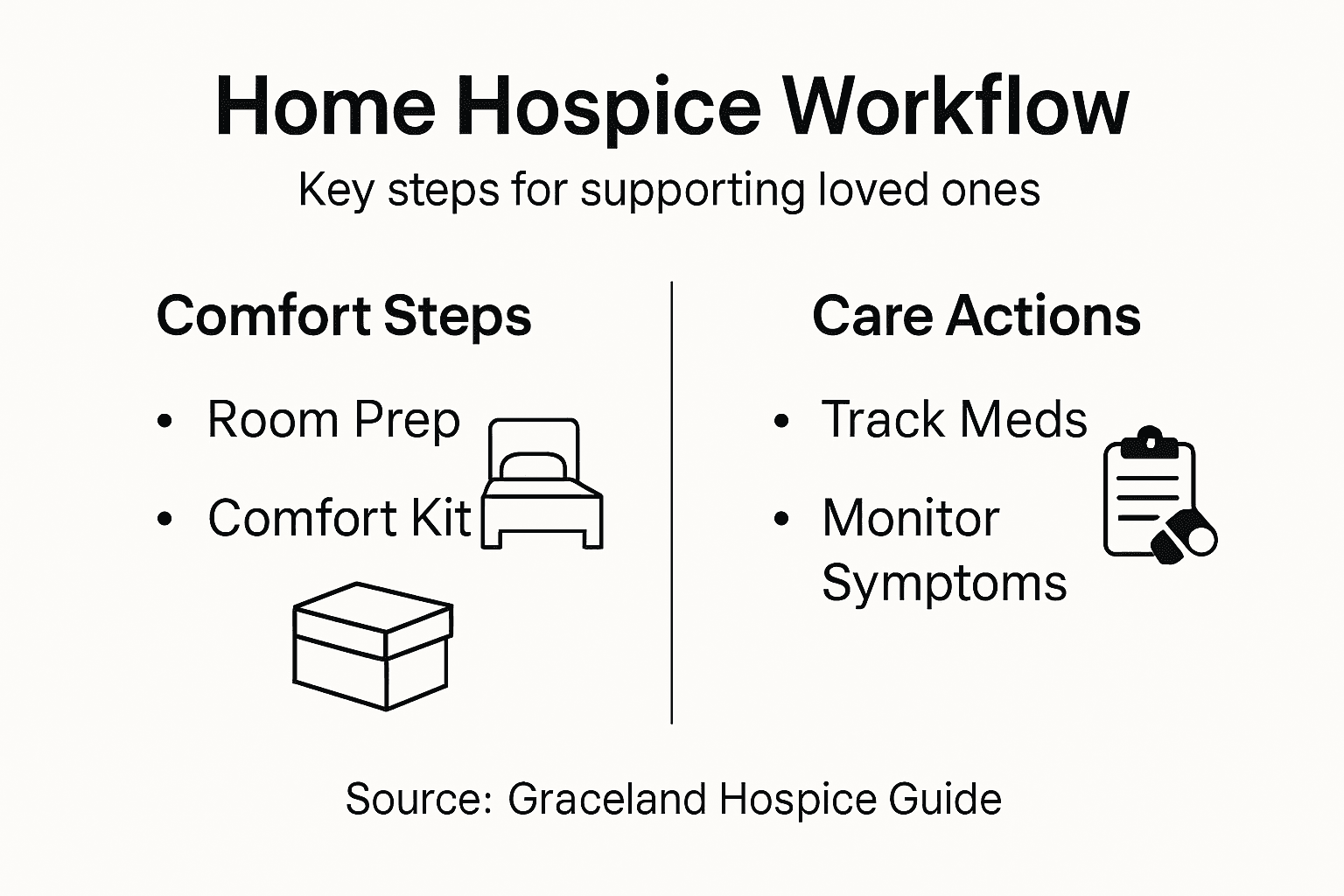
Creating a comfortable home environment is crucial when preparing for hospice care. Your primary goal is transforming a living space into a peaceful sanctuary that supports your loved one’s physical and emotional needs. This involves strategic adjustments that prioritize comfort, reduce stress, and create a soothing atmosphere.
Start by carefully evaluating the room where your family member will spend most of their time. Remove unnecessary medical equipment that might feel clinical or intimidating. Instead, focus on creating a warm space with soft lighting, comfortable positioning options like adjustable chairs or specialized medical beds, and personal touches that bring familiarity. Comfort care guidelines recommend prioritizing the patient’s sensory experience by managing environmental factors such as temperature, noise levels, and air circulation.
Consider practical comfort elements like having easy access to necessary items such as medications, water, entertainment, and communication devices. Position a bedside table within reach and ensure good natural or soft artificial lighting. Arrange furniture to allow smooth movement for caregivers while maintaining a sense of openness and tranquility. Use gentle, breathable fabrics for bedding and consider soft blankets that provide both physical warmth and emotional comfort.
Here is a summary of practical comfort elements for setting up a home hospice environment:
| Comfort Element | Purpose | Recommended Approach |
|---|---|---|
| Lighting | Reduce stress, promote calm | Soft, adjustable lighting |
| Bedding | Enhance physical comfort | Gentle, breathable fabrics |
| Room Arrangement | Allow easy movement | Spacious, uncluttered setup |
| Personal Touches | Foster emotional connection | Photos, favorite items |
| Accessibility | Simplify daily routines | Bedside table, nearby water |
Pro Tip: Create a personalized comfort kit with items like lip balm, moisturizer, soft socks, and a cherished photograph to help your loved one feel cared for and connected.
Step 2: Build a Personalized Care Plan with Providers
Developing a personalized hospice care plan is your roadmap to ensuring comprehensive and compassionate support for your loved one. This critical step involves collaborative communication with healthcare professionals to create a holistic approach that addresses not just medical needs, but emotional and personal preferences as well.
Begin by scheduling a comprehensive planning meeting with your hospice care team. Federal regulations require developing a person-centered care plan within 48 hours of admission, which means you’ll want to come prepared. Gather all relevant medical records, current medication lists, and a detailed understanding of your loved one’s specific health challenges and personal wishes. During this meeting, expect a collaborative discussion where providers will assess physical, emotional, and psychosocial needs. This approach emphasizes your family member as an active participant, ensuring the care plan genuinely reflects their values and goals.
As you work with providers, focus on creating measurable objectives that can be regularly evaluated and adjusted. Discuss specifics like pain management strategies, medication protocols, dietary considerations, and emotional support resources. Be transparent about your family’s capabilities and limitations in providing care, and ask about additional support services like counseling, spiritual care, or respite assistance. Remember that a good care plan is flexible and should evolve as your loved one’s condition changes.
Pro Tip: Keep a dedicated notebook or digital document to track care plan details, questions, and updates to ensure smooth communication and continuity of care.
Step 3: Coordinate Daily Care Tasks and Medication
Managing daily care tasks and medication for a loved one in hospice requires precision, compassion, and a systematic approach. Your goal is to create a seamless routine that ensures your family member receives consistent care while maintaining their dignity and comfort.
Begin by developing a comprehensive medication and care task tracking system. Create a detailed schedule that outlines specific times for medication administration, personal care routines, and rest periods. Use a large wall calendar or digital tracking app to document each task. Consider color coding different types of medications or care activities to make tracking easier. Some families find it helpful to divide responsibilities among multiple caregivers to prevent burnout and ensure consistent coverage.

Establish clear communication protocols with your hospice care team about medication management. Carefully review each medication’s purpose, potential side effects, and administration instructions. Prepare a designated medication station with clearly labeled containers, a pill organizer, and a log for tracking doses. Keep a backup supply of essential medications and maintain open communication with the pharmacy and healthcare providers about refills and potential adjustments. Always consult with medical professionals before making any changes to medication routines, and stay alert for any new symptoms or reactions that might require immediate attention.
Pro Tip: Create a medication and care task binder with dividers for prescriptions, medical contacts, symptom logs, and daily checklists to keep all critical information organized and easily accessible.
Step 4: Monitor Patient Comfort and Symptom Changes
Monitoring your loved one’s comfort and tracking symptom changes is a critical responsibility that requires attentiveness, compassion, and systematic observation. Your goal is to create a supportive environment that addresses physical discomfort and emotional needs while maintaining open communication with your hospice care team.
Comfort care guidelines recommend conducting regular assessments to track patient comfort and symptom progression. Start by establishing a consistent monitoring routine that focuses on key indicators such as pain levels, breathing difficulties, emotional state, and overall physical condition. Use a standardized tracking sheet or digital app to record observations, noting specific details about symptoms including intensity, duration, and potential triggers. Pay close attention to nonverbal cues like facial expressions, body language, and changes in breathing patterns that might indicate discomfort or distress.
Develop a communication protocol with your hospice care team that allows for quick reporting of significant symptom changes. Create a clear system for documenting and reporting observations, including specific thresholds that warrant immediate medical intervention. Keep a detailed log of medication effectiveness, side effects, and any new symptoms that emerge. Remember that your observations are crucial in helping healthcare providers adjust treatment plans and ensure your loved one receives the most appropriate and compassionate care possible.
Use this quick guide to monitor and address common symptoms in hospice care:
| Symptom | Signs to Watch For | Immediate Actions |
|---|---|---|
| Pain | Facial grimacing, moaning | Adjust medication, comfort measures |
| Shortness of Breath | Rapid breathing, anxiety | Open window, elevate head |
| Restlessness | Fidgeting, agitation | Reposition, provide reassurance |
| Skin Changes | Pale or bluish tone | Adjust bedding, warm blankets |
| Decreased Appetite | Refusal to eat or drink | Offer small sips, monitor hydration |
Pro Tip: Take brief smartphone videos or photos of symptom manifestations when possible to provide visual documentation for healthcare providers during consultations.
Step 5: Evaluate and Adjust Support as Needs Evolve
Navigating the changing landscape of hospice care requires flexibility, compassion, and constant attentiveness. Your role is to remain responsive to your loved one’s shifting physical and emotional needs, ensuring they receive personalized support throughout their journey.
Hospice care guidelines emphasize that care plans are living documents that must adapt continuously. Schedule regular family meetings with your hospice care team to review current care strategies and discuss emerging challenges. During these meetings, share detailed observations about your loved one’s condition, including changes in symptoms, medication effectiveness, emotional state, and overall comfort level. Be prepared to discuss potential modifications to pain management, treatment approaches, and support services that can enhance quality of life.
Remain open and proactive about requesting specialized support when needed. This might include adding spiritual counseling, adjusting medication protocols, bringing in additional nursing support, or modifying environmental accommodations. Listen carefully to recommendations from healthcare professionals while also advocating for your loved one’s specific preferences and comfort. Document all changes and maintain open communication channels with your hospice team to ensure a coordinated and compassionate approach to care.
Pro Tip: Create a dedicated digital or physical folder to track care plan modifications, making it easy to reference past adjustments and communicate effectively with healthcare providers.
Creating a Compassionate Home Hospice Care Experience with Graceland Hospice
The article “Home Hospice Care Workflow: A Step-by-Step Guide for Families” highlights the challenges families face when managing comfort, symptom monitoring, and personalized care plans at home. We understand how overwhelming it can be to coordinate medication schedules, track symptom changes, and adjust care as needs evolve while making your loved one comfortable emotionally and physically. These are deeply personal and often painful tasks that require expert guidance and supportive resources.
At Graceland Hospice, we share your commitment to compassionate and individualized care. Our team helps transform your home into a peaceful sanctuary where every comfort element is thoughtfully managed. By partnering with us, you gain access to dedicated professionals who support you in creating and adjusting care plans, monitoring patient comfort, and coordinating daily care tasks with ease. If you want expert help with this important journey, reach out today for a free consultation at Graceland Hospice. Discover how our compassionate care can bring comfort to your family when it matters most.
Explore more about how we support personalized hospice care at Graceland Hospice and take the first step towards easing your family’s care responsibilities now.
Frequently Asked Questions
How can I create a comfortable home environment for hospice care?
Creating a comfortable home environment involves removing unnecessary medical equipment and using soft lighting and personal touches that foster familiarity. Start by rearranging furniture for easy movement and ensuring that essentials like medications and water are within reach.
What should I include in a personalized care plan for my loved one in hospice?
A personalized care plan should encompass medical needs, emotional support, and personal preferences. Gather all relevant medical records and discuss specifics such as pain management, medication protocols, and dietary considerations during your first meeting with the hospice care team.
How do I manage daily care tasks and medication efficiently?
Establish a comprehensive schedule that outlines medication times, personal care routines, and rest periods. Consider using a color-coded system for tracking different medications or tasks to ensure clear communication among caregivers and prevent errors.
What symptoms should I monitor in a hospice patient?
Monitor for key indicators such as pain levels, breathing difficulties, emotional changes, and overall physical condition. Create a standardized tracking sheet to record observations and look for nonverbal cues, such as facial expressions or changes in breathing, that may signal discomfort.
How often should I evaluate and adjust the care plan for my loved one?
You should evaluate and adjust the care plan regularly, especially during scheduled family meetings with the hospice care team. Document any symptoms or changes in your loved one’s condition and be proactive about requesting specialized support when needed to ensure their comfort and quality of life.
What is the purpose of developing a personalized comfort kit?
A personalized comfort kit is designed to provide emotional and physical support during hospice care. Include items like lip balm, moisturizer, and a cherished photograph to help your loved one feel cared for and connected during this time.