How social workers support families in hospice care
How social workers support families in hospice care
TL;DR:
- Hospice social workers address emotional, social, and cultural needs beyond medical treatment.
- They support families with communication, resource navigation, conflict resolution, and bereavement care.
- Cultural competence is essential for providing individualized support respecting diverse traditions and preferences.
More than half of Medicare decedents used hospice in 2023, yet many families still don’t fully understand who is on their care team or what each person does. Among the most vital but least recognized members is the hospice social worker. While nurses and physicians manage physical symptoms, social workers address the emotional weight, the family tensions, the cultural needs, and the practical challenges that come with life’s final chapter. This guide walks you through exactly what hospice social workers do, why they matter, and how your family can make the most of their support.
Table of Contents
- What do hospice social workers actually do?
- How social workers support families and patients day-to-day
- Cultural competence: Meeting diverse family needs
- Navigating transitions: Live discharge and bereavement support
- Our perspective: What most families miss about hospice social workers
- Connect with hospice social workers for compassionate guidance
- Frequently asked questions
Key Takeaways
| Point | Details |
|---|---|
| Integral team members | Social workers are essential to hospice teams, guiding families through emotional and practical decisions. |
| Cultural sensitivity | They adapt support to each family’s unique cultural and spiritual needs for meaningful end-of-life care. |
| Long-term support | Their help extends beyond hospice, offering bereavement and transition support for over a year. |
| Navigating challenges | Social workers handle complex situations like live discharges and grief with expertise and compassion. |
What do hospice social workers actually do?
Hospice social workers are licensed professionals who serve as part of an interdisciplinary care team. Their focus is not on medication or physical treatment. Instead, they address the emotional, social, cultural, and practical needs that shape a patient’s and family’s experience of end-of-life care.
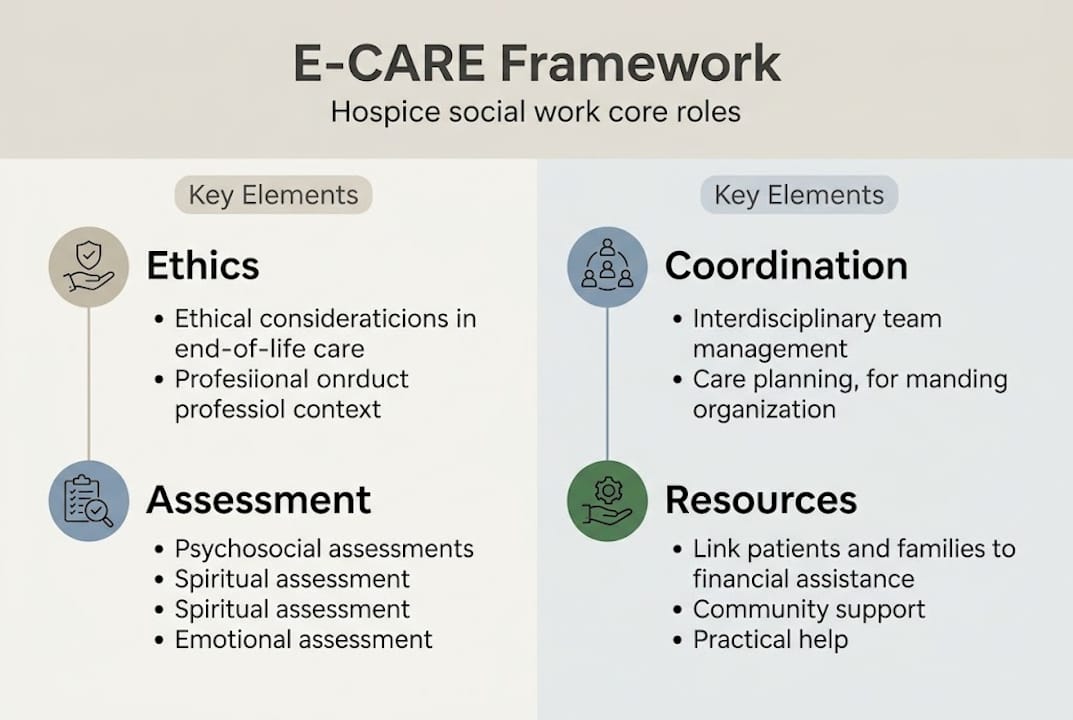
A widely used framework for understanding their role is E-CARE, which stands for Ethics, Coordination, Assessment, Resource Allocation, and Education. This model captures the full range of what a social worker brings to hospice. They help families make informed decisions, coordinate with the broader care team, assess emotional and social needs, connect families to community resources, and educate caregivers about what to expect.
The NASW Standards for Social Work Practice in hospice care emphasize ethics, knowledge of the dying process, assessment, intervention, cultural competence, and team collaboration as core requirements. These are not soft skills. They represent specialized training that takes years to develop.
Here is how their responsibilities compare to other hospice team members:
| Role | Primary focus |
|---|---|
| Physician | Medical diagnosis and symptom management |
| Nurse | Physical care and medication administration |
| Social worker | Emotional, practical, and cultural support |
| Chaplain | Spiritual care and meaning-making |
| Home health aide | Personal care and daily living assistance |
Some of their most common day-to-day responsibilities include:
- Conducting psychosocial assessments at admission and throughout care
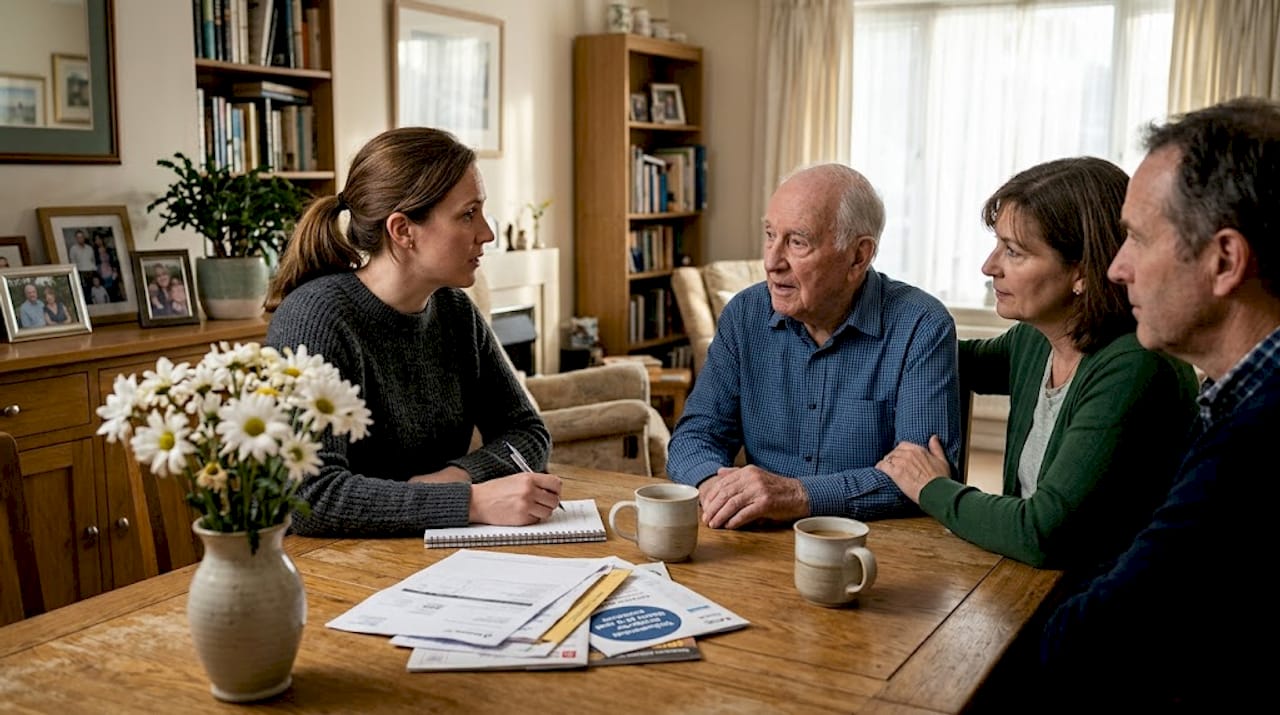
- Facilitating difficult conversations between patients, families, and the medical team
- Identifying and connecting families to financial assistance or community services
- Providing crisis intervention when emotional distress escalates
- Supporting advance care planning and end-of-life decision-making
Understanding the qualities of hospice staff can help you know what to look for. Strong hospice team collaboration also depends on every member, including the social worker, working in sync.
Pro Tip: At your first meeting with a hospice social worker, share your family’s biggest concerns openly. The more context they have early on, the more targeted and effective their support will be.
How social workers support families and patients day-to-day
With roles defined, let’s look at how social workers make a real difference in your daily experience as a caregiver or family member.
Social workers are integral to interdisciplinary hospice teams, focusing on psychosocial support that complements medical care. Psychosocial support means addressing the emotional, mental, and social factors that affect a person’s wellbeing, not just their physical condition. This distinction matters because families often feel emotionally overwhelmed in ways that no medication can address.
Here are five core ways social workers provide holistic support:
- Emotional counseling — They help patients articulate their fears, wishes, and values, and help family members process anticipatory grief, which is the sadness that comes before a loss.
- Communication facilitation — They serve as a bridge when families and medical teams are not aligned, translating complex medical information into plain language and helping everyone stay on the same page.
- Advocacy — They speak up for patients whose voices may be diminished by illness or cognitive decline, ensuring care reflects the patient’s actual preferences.
- Practical resource navigation — They connect families to financial aid, transportation, respite care, and community programs that reduce caregiver burden.
- Family dynamics support — They help navigate conflict within families, especially when siblings or extended family members disagree about care decisions.
“Hospice social workers fill the space between clinical care and human experience. They hold the emotional reality of dying in a way that allows the rest of the team to focus on medical needs.” — Hospice care specialist
Cultural sensitivity is woven into each of these areas. A social worker trained in caregiver support in hospice understands that grief, communication, and decision-making all look different across cultures and family structures. For families who need additional bereavement and mental health support, social workers can also connect you to outside resources.
Cultural competence: Meeting diverse family needs
Because every family is different, cultural background can deeply affect the type of support needed in hospice. Here’s what to know.
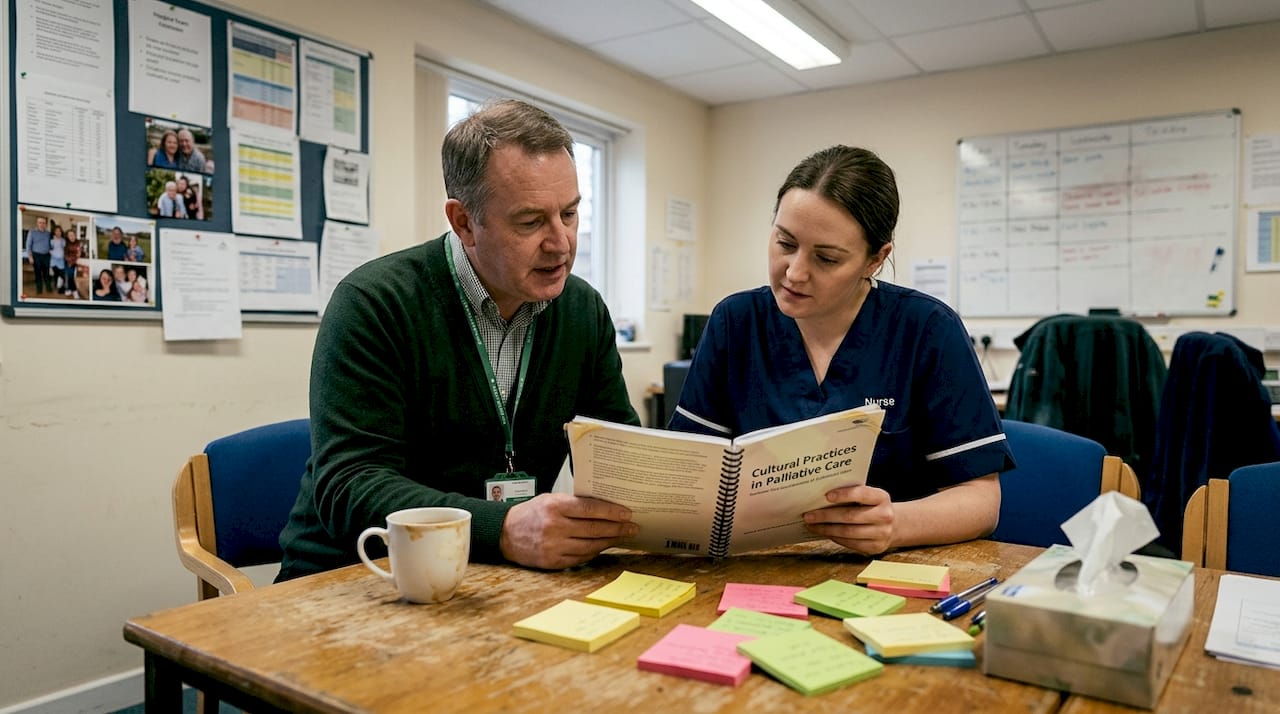
Culture shapes how families talk about death, who makes decisions, what rituals feel sacred, and whether a diagnosis should even be shared with the patient. Cultural nuances require competence: for example, many Asian and Latinx families prefer family-centered decision-making rather than individual autonomy, and some traditions involve not disclosing a terminal diagnosis directly to the patient.
Here is a snapshot of common cultural variations hospice social workers navigate:
| Cultural group | Decision-making style | Disclosure norms | Common rituals |
|---|---|---|---|
| Asian families | Family-centered | Often non-disclosure to patient | Ancestor honoring, specific burial rites |
| Latinx families | Collective family | Protective non-disclosure | Religious ceremonies, family presence |
| African American families | Community and faith-led | Open, faith-framed | Church involvement, prayer vigils |
| Indigenous families | Elder and community-guided | Varies by nation | Land-based rituals, oral traditions |
Challenges are real. Language barriers can prevent families from fully understanding care options. Stigma around hospice in some communities can delay enrollment. Distrust of medical systems, rooted in historical inequities, may create resistance.
Social workers address these challenges through strategies such as:
- Working with professional interpreters rather than relying on family members to translate
- Partnering with community or faith leaders to build trust
- Adapting care plans to honor cultural rituals and spiritual practices
- Using culturally informed assessment tools rather than one-size-fits-all approaches
For families seeking spiritual care alongside cultural support, exploring spiritual care in hospice can provide additional guidance.
Pro Tip: Don’t wait to be asked. Tell your hospice social worker about your family’s cultural traditions, language needs, and spiritual practices at the very first visit. Early communication prevents misunderstandings and ensures care that truly fits your family.
Navigating transitions: Live discharge and bereavement support
Some transitions are particularly tough. Let’s look at how social workers guide families through situations like discharge and prolonged grief.
Not every hospice stay ends with death. 19% of hospice users in fiscal year 2024 experienced a live discharge, meaning they left hospice care while still living, often because their condition stabilized or improved. This is an emotionally complex moment. Families may feel relief, confusion, and fear all at once.
Social workers support families through live discharge in several key ways:
- Explaining the reason — They help families understand why a discharge is happening and what it means for ongoing care.
- Coordinating next steps — They connect families to home health services, outpatient care, or other appropriate resources.
- Managing emotional responses — They address feelings of abandonment or uncertainty that often arise when hospice ends unexpectedly.
- Documenting preferences — They ensure that care preferences established during hospice are communicated to the next care team.
- Re-enrollment guidance — If a patient’s condition declines again, social workers help families understand how to return to hospice.
Bereavement support stat: Hospice social workers provide grief support for up to 13 months after a loved one’s death, covering the full first year of loss.
“Continuity matters enormously in bereavement. Families who have an established relationship with their social worker before the death tend to navigate grief more effectively afterward.” — Hospice bereavement coordinator
For families dealing with complicated grief, which is grief that becomes prolonged or disabling, social workers can connect you to mental health care resources beyond the hospice setting. You can also review hospice discharge steps and explore bereavement support after loss to better prepare your family.
Our perspective: What most families miss about hospice social workers
Most families come into hospice thinking the social worker handles paperwork. That misunderstanding costs them real support.
Hospice social workers bring deep expertise in conflict resolution, cultural negotiation, and counseling. Their greatest asset is often their ability to build a bridge between your family and the medical team, translating not just language but values, fears, and priorities. That bridge-building skill is what allows a care plan to actually reflect what your family needs, not just what is medically standard.
Early-career social workers face real challenges including high workloads, role ambiguity, and inconsistent training. These systemic issues exist. But even one strong social worker relationship can change the entire hospice experience for a family.
Our honest advice: ask for their recommendations early. Ask what resources are available. Ask how they can help with family disagreements. Families who stay engaged with their social worker, rather than treating them as a background figure, consistently report feeling more supported and more prepared. Explore compassionate at-home support as part of that proactive approach.
Connect with hospice social workers for compassionate guidance
At Graceland Hospice, our social workers are available to support your family before, during, and after hospice care. Whether you are navigating a new diagnosis, managing a difficult family conversation, or grieving a loss, our team is here with personalized guidance and genuine compassion. We believe every family deserves access to skilled, caring professionals who understand both the emotional and practical realities of this time. Visit our hospice care services page to learn more, or explore our full range of hospice support services to find the right next step for your family. Contact us today for a free consultation.
Frequently asked questions
What specific help can a hospice social worker provide during end-of-life care?
They offer emotional support, resource navigation, crisis planning, cultural translation, and connections to financial or counseling assistance. Their core competencies span ethics, coordination, assessment, resource allocation, and education.
How long does hospice bereavement support last after death?
Hospice social workers often provide grief support for up to 13 months after a loved one’s death, covering the critical first year of loss.
Do social workers help with practical tasks like paperwork and benefits?
Yes, they guide families in completing forms, accessing benefits, and finding community resources. Resource allocation is a recognized core competency in hospice social work practice.
How do social workers handle cultural or religious differences in hospice?
They use cultural competence to respect family traditions, language preferences, and spiritual needs, adapting care plans accordingly.
What’s the difference between a hospice social worker and a nurse?
A social worker focuses on emotional, practical, and cultural support, while a nurse provides direct medical care. Psychosocial support and medical care work together but serve distinct needs within the hospice team.