End of Life Care Guide for Compassionate At-Home Support

End of Life Care Guide for Compassionate At-Home Support
Caring for a terminally ill parent at home in Southern California brings both deep love and overwhelming responsibility. When your goal is comfort, not just treatment, every moment with your loved one feels precious but uncertain. This guide shares compassionate at-home hospice care essentials so you can create meaningful comfort, manage pain, and respect your parent’s wishes during their end-of-life journey.
Table of Contents
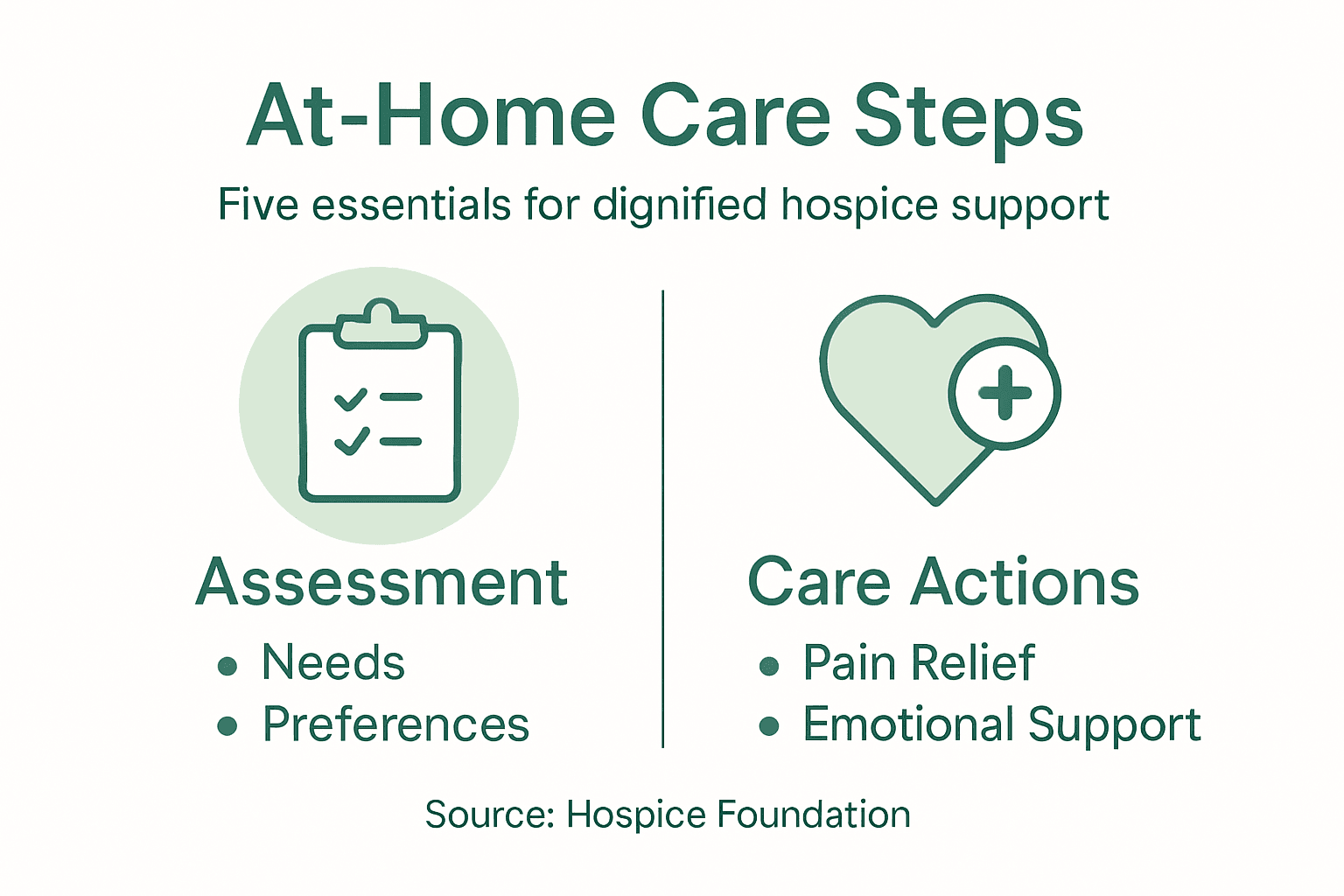
- Step 1: Assess Patient Needs And Preferences
- Step 2: Arrange Essential Hospice Services
- Step 3: Implement Comfort And Pain Management
- Step 4: Support Emotional And Spiritual Well-Being
- Step 5: Monitor Care Quality And Adjust Plans
Quick Summary
| Key Message | Explanation |
|---|---|
| 1. Prioritize Conversations About Preferences | Talk openly with your parent to understand their comfort needs and values for end-of-life care decisions. |
| 2. Arrange Appropriate Hospice Services | Contact local hospice providers to set up a care team that meets your parent’s medical and emotional needs at home. |
| 3. Implement Effective Pain Management | Work closely with the hospice team to establish and adjust pain control measures ensuring your parent’s comfort and presence. |
| 4. Support Emotional and Spiritual Needs | Facilitate discussions on feelings and spiritual practices to help your parent find meaning and peace as they approach the end. |
| 5. Monitor and Adjust Care Quality | Stay actively involved in your parent’s care by regularly assessing their needs and communicating any changes to the hospice team. |
Step 1: Assess Patient Needs and Preferences
Understanding what matters most to your parent during their final chapter requires thoughtful conversation and careful listening. This step goes beyond medical information—it’s about discovering their values, fears, comfort needs, and what quality of life looks like from their perspective. Taking time here creates a foundation for care decisions that truly honor who they are.
Start by creating a calm moment to talk with your parent about their priorities. Ask open-ended questions about what brings them comfort, what worries them most, and how they want to spend their remaining time. Do they want to be at home surrounded by family, or are they concerned about being a burden? Would they prefer aggressive pain management even if it affects alertness, or do they want maximum clarity for final conversations? These conversations feel heavy, but they’re a gift to your parent and to yourself. You’ll know you’re making decisions they would want.
Beyond these personal conversations, document their medical history and current symptoms. What medications are they taking? Which treatments have helped or caused problems? Understanding their physical, functional, and emotional dimensions of need helps hospice care teams create a personalized plan. A patient struggling with anxiety needs different support than someone managing severe pain, and a caregiver needs to know both.
Consider using tools designed specifically for this purpose. Completing an advance directive ensures preferences are documented and legally recognized, removing guesswork from medical decisions later. Naming a healthcare representative who understands your parent’s wishes prevents difficult moments when doctors ask what treatment your parent would choose. These documents aren’t morbid—they’re practical acts of love that protect your parent’s autonomy.
Remember that preferences evolve. Your parent might feel differently about staying home after experiencing a fall, or their pain tolerance might shift. Assessment isn’t a one-time event—it’s an ongoing conversation as circumstances change and new concerns surface. Revisit these discussions monthly or when their condition shifts.
Pro tip: Write down your parent’s exact words when they share their priorities—not your interpretation, but their actual phrases and concerns. When difficult moments arrive and emotions run high, their own words become anchors for decisions that honor their true wishes.
Step 2: Arrange Essential Hospice Services
Once you understand your parent’s preferences, the next move is connecting them with the right care team and services. This step transforms conversations into action, setting up the medical and emotional support that makes at-home care possible. You’re not doing this alone—hospice brings trained professionals into your home to handle what feels overwhelming.
Start by contacting hospice providers in your area and asking about their services. Quality hospice teams offer medical care, symptom control, and emotional support delivered by doctors, nurses, aides, and counselors. During your initial conversation, explain your parent’s diagnosis, current medications, and specific concerns. A good hospice organization will listen carefully and explain exactly what they can provide. This is your chance to ask questions about availability, response times for emergencies, and how they handle after-hours care.

Understanding the care team matters. Your parent will have a primary nurse who visits regularly to manage symptoms and adjust medications. Home health aides assist with bathing, dressing, and daily activities, freeing you from physical tasks so you can focus on being present. Social workers and chaplains address emotional and spiritual needs, which are just as real as physical pain. Some agencies also provide volunteers for companionship, giving you respite time when you desperately need it.
Here’s a quick reference to common hospice care team roles and their impact:
| Role | Main Responsibility | Impact on Patient & Family |
|---|---|---|
| Nurse | Symptom assessment, medication | Ensures comfort and pain control |
| Home Health Aide | Assistance with daily tasks | Supports dignity, reduces burden |
| Social Worker | Emotional and resource support | Eases stress, resolves challenges |
| Chaplain | Spiritual care and counseling | Fosters meaning, offers comfort |
| Volunteer | Companionship, respite | Prevents isolation, helps caregiver |
Discuss payment and insurance coverage before services begin. Most hospice care is covered by Medicare if your parent qualifies, and many private insurers follow similar guidelines. Ask about what costs you might face and what paperwork you need to complete. Getting financial questions answered upfront prevents surprises later when stress is already high.
With services arranged, you’ll receive a care plan tailored to your parent’s needs. This document outlines visit schedules, medication management, pain control strategies, and emergency protocols. Review it carefully with the care team, ask for clarification on anything unclear, and keep a copy easily accessible.
Pro tip: Create a simple contact sheet with every team member’s name, role, phone number, and best times to reach them, then post it on your refrigerator or near your parent’s bed so you’re never searching for numbers during a crisis.
Step 3: Implement Comfort and Pain Management
Pain and discomfort steal dignity and presence during life’s final days. This step focuses on managing physical symptoms so your parent can find peace, spend quality time with loved ones, and experience comfort even as their body weakens. Effective pain management requires ongoing assessment and adjustment, not a set-it-and-forget-it approach.
Work with your hospice team to establish a baseline understanding of your parent’s pain. Where does it hurt? What makes it better or worse? Does it come and go, or is it constant? Your parent might downplay pain, fearing addiction or wanting to seem strong. Reassure them that managing pain is essential to their comfort and quality of life. The hospice nurse will conduct regular pain assessments using simple rating scales, checking in frequently to catch changes early.
Medication is typically the foundation of pain control. Opioids and other medications work together to optimize symptom relief based on your parent’s specific type of pain. Long-acting medications provide steady relief around the clock, while breakthrough doses handle sudden pain spikes. Your parent won’t become addicted to pain medication at this stage of life, but their body may develop tolerance, requiring dose adjustments. The goal is finding the right balance between comfort and alertness so your parent stays present.
Beyond medications, comfort measures matter tremendously. Soft pillows positioned to reduce pressure, gentle massage, warm blankets, or cool compresses can ease discomfort. Some people find relief through repositioning every few hours to prevent bed sores. Others benefit from relaxation techniques, music, or being near loved ones. Ask your hospice team about pharmacologic and non-pharmacologic approaches tailored to your parent’s needs and preferences.
Compare these approaches to pain and comfort management:
| Method | Description | When Most Useful |
|---|---|---|
| Long-acting medication | Provides steady relief | Persistent, ongoing pain |
| Breakthrough medication | Handles sudden pain spikes | Unexpected discomfort events |
| Physical comfort measures | Positioning, massages | Pressure, muscle soreness |
| Emotional support | Listening, reassurance | Coping with pain/anxiety |
Watch for signs that pain management needs adjustment. Restlessness, grimacing, rapid breathing, or withdrawal might indicate inadequate pain control. Conversely, excessive drowsiness might mean the dose needs lowering. Communication with your hospice nurse ensures medications stay calibrated to your parent’s actual comfort level, not guesswork.
Pro tip: Keep a simple pain diary noting the time, location, intensity, what your parent was doing, what helped, and what didn’t—this real-world data helps your hospice team make precise medication adjustments far better than memory alone.
Step 4: Support Emotional and Spiritual Well-Being
As your parent’s body weakens, their emotional and spiritual needs often become more pronounced. This step addresses the inner landscape of their dying process, recognizing that comfort extends far beyond pain medication. Supporting their emotional and spiritual well-being helps them find meaning, resolve relationships, and approach the end with greater peace.
Start by creating space for your parent to express their feelings without judgment. Facing mortality brings up fear, regret, anger, gratitude, and countless emotions that need acknowledgment. Listen when they want to talk about their life, their legacy, or their worries about what comes next. Sometimes they won’t want to discuss it at all, and that’s okay too. Your presence matters more than perfect words. Many hospice teams include counselors and social workers who specialize in helping patients navigate these complex feelings.
Spiritual needs are deeply personal and extend beyond religion. Your parent might find meaning through prayer, meditation, time in nature, creative expression, or cherished relationships. Addressing spiritual needs at end of life honors individual values and beliefs, whether that means connecting with a religious leader, reading sacred texts, or having quiet moments of reflection. Ask your parent what brings them peace and what spiritual practices matter to them. Share this information with your hospice team so they can support these aspects of care.
Unresolved relationships often weigh heavily during final weeks. Your parent might need to apologize, forgive, express love, or simply spend time with people who matter. Creating opportunities for these conversations, whether in person or through letters and recorded messages, provides closure and healing. Your hospice social worker can help facilitate difficult conversations if needed.
Grief is normal for your parent too. They’re grieving the life they’re leaving behind, relationships changing, independence lost. Acknowledging this grief validates their experience and opens doors to finding moments of acceptance and peace amid the sadness.
Pro tip: Record your parent sharing stories, wisdom, or messages for grandchildren and future family moments, creating a lasting legacy that transforms grief into connection across generations.
Step 5: Monitor Care Quality and Adjust Plans
Hospice care isn’t static. As your parent’s condition changes, their needs shift too, and the care plan must adapt to meet them. This step focuses on staying actively involved, communicating observations, and ensuring the care your parent receives remains aligned with their goals and comfort level. Your feedback directly shapes the quality of care they receive.
Regularly assess how well current care is working. Is your parent’s pain controlled, or do they seem uncomfortable? Are they sleeping better? Do they have moments of clarity and connection with family? Is the medication schedule realistic for your household? Continuous monitoring and feedback loops enable care teams to adapt plans effectively based on what’s actually happening at home, not assumptions. You see your parent more than anyone else, making you a critical part of the care team.
Keep detailed notes about what you observe. Document changes in pain levels, appetite, alertness, mood, and mobility. Notice what seems to help and what doesn’t. If your parent develops a new symptom or complaint, write it down with timing and context. This information becomes invaluable during care team meetings. Instead of saying “Dad’s not doing well,” you can say “Dad’s been restless between 2 and 4 PM, grimacing occasionally, and sleeping most mornings.” Specificity helps your hospice team make precise adjustments.
Communicate concerns promptly to your hospice nurse or care coordinator. Don’t wait for scheduled visits if something feels wrong. If pain management isn’t working, medication side effects are problematic, or your parent’s goals have shifted, speak up immediately. Good hospice teams welcome this input and adjust plans without defensiveness. This is partnership, not passivity.
Schedule regular care plan reviews with your hospice team. These meetings bring everyone together to discuss what’s working, what isn’t, and what needs changing. Come prepared with your observations and questions. These conversations ensure your parent’s care evolves as their condition changes.
Pro tip: Create a simple one-page summary of your parent’s current medications, allergies, emergency contacts, and recent changes, then share it with every team member who visits—consistency prevents dangerous miscommunications when multiple providers are involved.
Compassionate At-Home Hospice Care That Honors Your Loved One’s Wishes
Navigating the challenges of end-of-life care at home requires not only medical expertise but deep compassion and continuous support. This guide highlights crucial pain points like managing comfort, coordinating hospice services, and honoring evolving emotional and spiritual needs. At Graceland Hospice, we understand the importance of personalized care plans that reflect your parent’s true priorities and ensure dignity through every step.
If you are seeking a hospice partner who listens closely, provides expert symptom management, and stands ready to adjust care as needs shift, explore how our dedicated team can bring peace and comfort to your home. Visit Graceland Hospice today to learn more about our comprehensive hospice services. Contact us for a free consultation to start crafting a care approach that truly supports your family’s unique journey now.
Frequently Asked Questions
What conversations should I have with my parent about their end-of-life care?
Understanding your parent’s values and preferences is crucial. Start by having open-ended conversations that explore their comfort needs, fears, and desires for their remaining time. Schedule these discussions regularly to ensure you’re aligned with their changing preferences.
How can I effectively arrange hospice services for my parent at home?
Begin by contacting local hospice providers to inquire about their services. Discuss your parent’s diagnosis and preferences, and ask about their care team structure and emergency response times to ensure they can meet your needs in a timely manner.
What steps can I take to monitor my parent’s pain management at home?
Keep a detailed pain diary that records the time, intensity, and context of any pain your parent experiences. Use this information to communicate with the hospice team, ensuring that adjustments to medication or comfort measures are made promptly based on your observations.
How can I support my parent’s emotional and spiritual well-being during end-of-life care?
Create a safe space for your parent to express their feelings about life and mortality. Encourage them to share their emotions, seek spiritual practices that bring peace, and facilitate any necessary conversations with loved ones for closure.
How often should I review and adjust the care plan with the hospice team?
Regularly assess your parent’s needs and schedule meetings with the hospice team every few weeks or anytime major changes occur. Ensure the care plan evolves in response to your parent’s condition, goals, and feedback to maintain quality support.
What should I include in a contact sheet for my parent’s hospice care team?
List the names, roles, phone numbers, and best times to reach each team member on a single sheet. Keep this contact sheet in a visible place at home to easily access information when you need it, ensuring seamless communication during critical moments.