Caregiver Support in Hospice: Easing End-of-Life Care

Caregiver Support in Hospice: Easing End-of-Life Care
Caring for a dying parent at home in Orange or LA County often means balancing overwhelming emotions with daily demands you never expected to face. The responsibility can feel heavy, especially when exhaustion, uncertainty, and isolation start to build. Caregiver support in hospice settings offers both expert guidance and compassion, giving you practical help and emotional reassurance so you don’t have to go through this alone.
Table of Contents
- Defining Caregiver Support In Hospice Settings
- Key Roles And Services For Family Caregivers
- Emotional And Practical Resources Available
- Legal Rights And Responsibilities For Caregivers
- Common Challenges And Mistakes To Avoid
Key Takeaways
| Point | Details |
|---|---|
| Caregiver Support is Essential | Hospice caregiver support includes practical and emotional assistance, ensuring both the caregiver and patient receive necessary help during end-of-life care. |
| Education Reduces Anxiety | Hospice teams provide education on patient care and recognizing changes, transforming caregiver uncertainty into confidence. |
| Access to Resources is Critical | Caregivers should actively request emotional and practical resources available through hospice teams to manage stress and improve care. |
| Understanding Legal Rights is Necessary | Caregivers must know their legal responsibilities and rights to protect both themselves and their loved ones during the caregiving process. |
Defining Caregiver Support in Hospice Settings
Caregiver support in hospice is far more than just helping someone through their final days. It’s a structured system designed to help you manage both the practical and emotional demands of end-of-life care at home.
At its core, caregiver support means having professional guidance and resources available when you need them most. The hospice team works alongside you—whether you’re a family member, friend, or paid caregiver—to ensure your loved one receives quality care while you get the help you need to sustain that care.
Here’s what caregiver support typically covers:
- Assisting with personal hygiene and grooming for your parent
- Managing medications and tracking dosages accurately
- Helping with mobility and positioning to prevent discomfort
- Handling household tasks that become overwhelming during this time
- Providing guidance on financial and insurance matters
- Offering emotional support and counseling for you and your family
The hospice team customizes care plans specifically for your situation. Your parent’s condition is unique, and support should reflect that. The hospice model depends on caregivers to meet daily needs, but you’re never alone in this work.
One critical aspect is around-the-clock availability. Hospice teams don’t operate on a 9-to-5 schedule. Whether it’s 2 AM and your parent is struggling to breathe or you’re having a panic attack about medication administration, trained professionals stand ready to help.
Caregiver support prevents burnout by giving you expert guidance, regular check-ins, and the reassurance that you don’t have to figure everything out yourself.
Education matters too. Hospice teams teach you how to recognize changes in your parent’s condition, when to adjust comfort measures, and what physical changes to expect as death approaches. This knowledge transforms uncertainty into confidence.
Many caregivers in Orange and LA counties feel isolated or unprepared. The right support system acknowledges those feelings and addresses them directly through counseling, support groups, and one-on-one guidance tailored to your needs.
Here’s a quick reference to who provides support and how in hospice settings:
| Support Provider | Type of Support | Availability | Added Value |
|---|---|---|---|
| Hospice Nurse | Clinical guidance, assessments | 24/7 on-call | Reduces anxiety, ensures medical accuracy |
| Home Aide | Hygiene, mobility assistance | Scheduled and emergency | Eases physical burden, maintains dignity |
| Social Worker | Counseling, resource coordination | By appointment, flexible | Addresses emotional needs, helps with logistics |
| Spiritual Counselor | Spiritual comfort, grief support | As requested | Supports family beliefs, relieves existential stress |
Pro tip: Ask your hospice team for a written summary of available support services, emergency contact numbers, and what qualifies as an urgent call at 2 AM versus what can wait until morning—knowing this boundary removes decision-making anxiety when you’re exhausted.
Key Roles and Services for Family Caregivers
Your role as a family caregiver in hospice goes beyond just being “there.” You become an active participant in your parent’s comfort, dignity, and final chapter.
Family caregivers provide hands-on care, emotional presence, and continuity that no medical team can fully replicate. You know your parent’s preferences, quirks, and what brings them comfort. That knowledge is invaluable.
Here’s what your role typically includes:
- Providing personal care like bathing, dressing, and toileting
- Assisting with medication reminders and symptom tracking
- Creating a comfortable environment at home
- Offering emotional reassurance and companionship
- Communicating with the hospice team about changes you notice
- Managing visitors and household routines
The hospice team doesn’t replace you—they support you. Hospice professionals help normalize dying and assign meaningful roles so you feel empowered, not helpless.
They provide critical services including:
- Nurse visits to assess your parent’s condition and adjust care
- Aide assistance with personal hygiene and mobility
- Pain management and symptom control
- Spiritual counseling if your family wants it
- Bereavement support for you after your parent passes
Education matters tremendously. Many caregivers feel anxious about recognizing what’s normal as death approaches. Hospice teams teach you the signs, prepare you emotionally, and ease the uncertainty that often causes the most stress.
Your role isn’t to be a medical expert—it’s to be present, attentive, and willing to learn. The hospice team fills the medical gaps you can’t.
You’ll learn to understand the stages of dying, notice subtle changes in your parent’s breathing or consciousness, and know when comfort measures need adjustment. This knowledge transforms fear into capability.
Many caregivers in Orange and LA counties worry they’re “doing it wrong.” The reality is simpler: you’re doing what matters most by being there and working alongside professionals who understand end-of-life care.
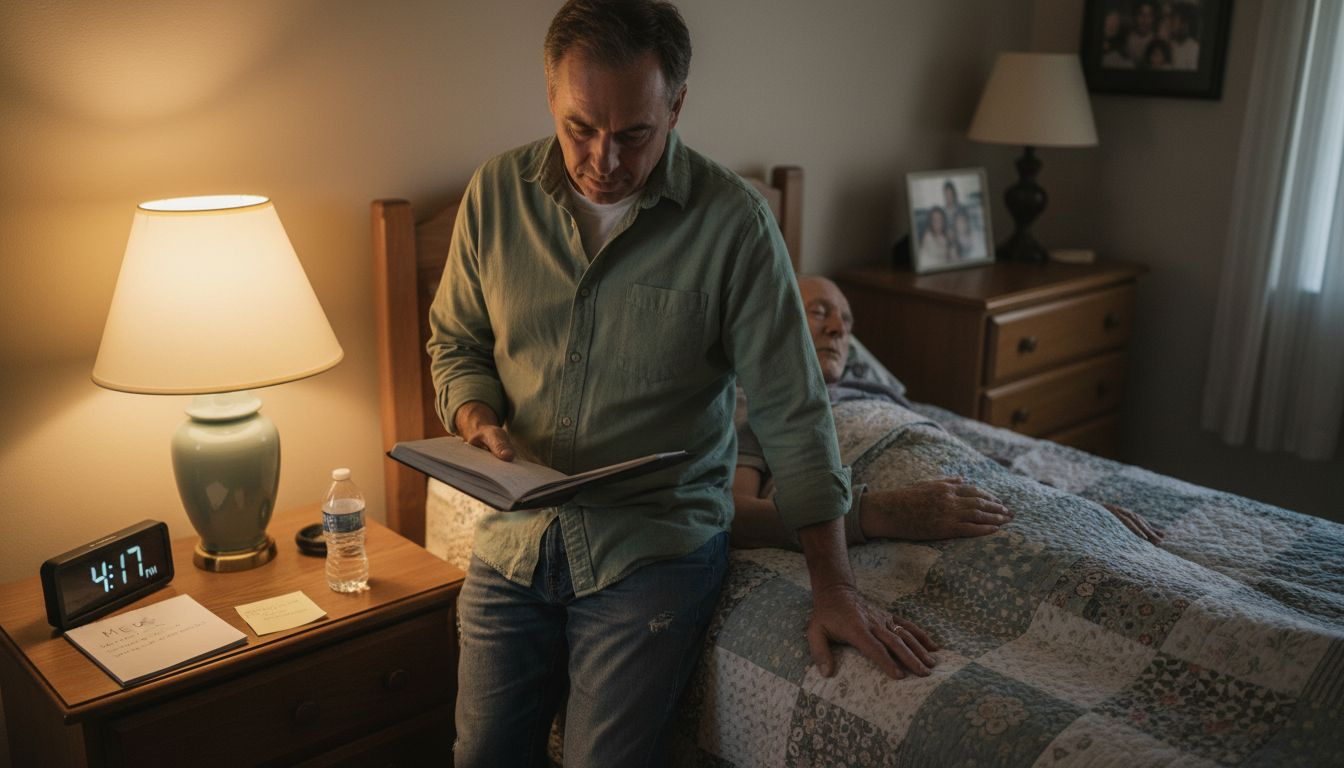
Pro tip: Create a simple one-page document listing your parent’s daily routine, preferences for comfort (favorite pillow, music, temperature), and your top questions for the hospice team—this ensures consistency if multiple caregivers share duties and prevents repeating explanations.
Emotional and Practical Resources Available
You don’t have to navigate this journey alone. Hospice teams provide a comprehensive range of resources designed to support both your emotional well-being and the practical demands of caregiving.
Emotional support is just as critical as physical care. Watching your parent’s decline takes a real toll on your mental health, and acknowledging that isn’t weakness—it’s self-awareness.
Emotional resources include:
- Counseling services to help you process grief and anxiety
- Support groups with other caregivers facing similar situations
- Spiritual care from chaplains or spiritual counselors
- One-on-one check-ins with hospice social workers
- Family meetings to align everyone on care decisions
The practical side covers the daily logistics that can feel overwhelming. Medical equipment, medication schedules, household adaptations—hospice teams help coordinate all of it.
You’ll access practical support through:
- Nursing assessments to understand changing care needs
- Equipment and supplies like hospital beds, walkers, and incontinence products
- Medication management education and pain control protocols
- Home safety modifications to prevent falls and injuries
- Meal planning assistance when appetite changes occur
Most caregivers in Orange and LA counties don’t realize they can request specific help. If bathing your parent causes you physical strain, ask for aide visits. If medication schedules confuse you, request a nurse to simplify them. Supporting a loved one through end-of-life care becomes more manageable when you voice your struggles.
Hospice resources aren’t extras or luxuries—they’re essential components of quality end-of-life care designed to prevent caregiver burnout.
Bereavement support extends beyond your parent’s death. Grief doesn’t end when the funeral does, and reputable hospice providers offer continued counseling for months afterward.
Don’t hesitate to ask your hospice team what’s available. Many caregivers suffer in silence simply because they didn’t know services existed or felt uncomfortable requesting them.
See how emotional and practical resources complement each other for caregivers:
| Resource Type | Main Focus | How It Helps Caregivers |
|---|---|---|
| Emotional | Mental health, grief support | Builds resilience, alleviates isolation |
| Practical | Equipment, safety, logistics | Simplifies daily care, prevents mistakes |
| Educational | Training, condition changes | Boosts confidence, reduces uncertainty |
| Bereavement | Post-loss counseling | Guides healthy mourning, prevents prolonged distress |
Pro tip: Schedule a dedicated meeting with your hospice social worker during the first week of care to review all available services—emotional, practical, and financial—and identify which ones fit your family’s specific situation and stressors.
Legal Rights and Responsibilities for Caregivers
Being a caregiver involves more than emotions and daily tasks. You have legal rights, and you also carry responsibilities that protect your parent and yourself.
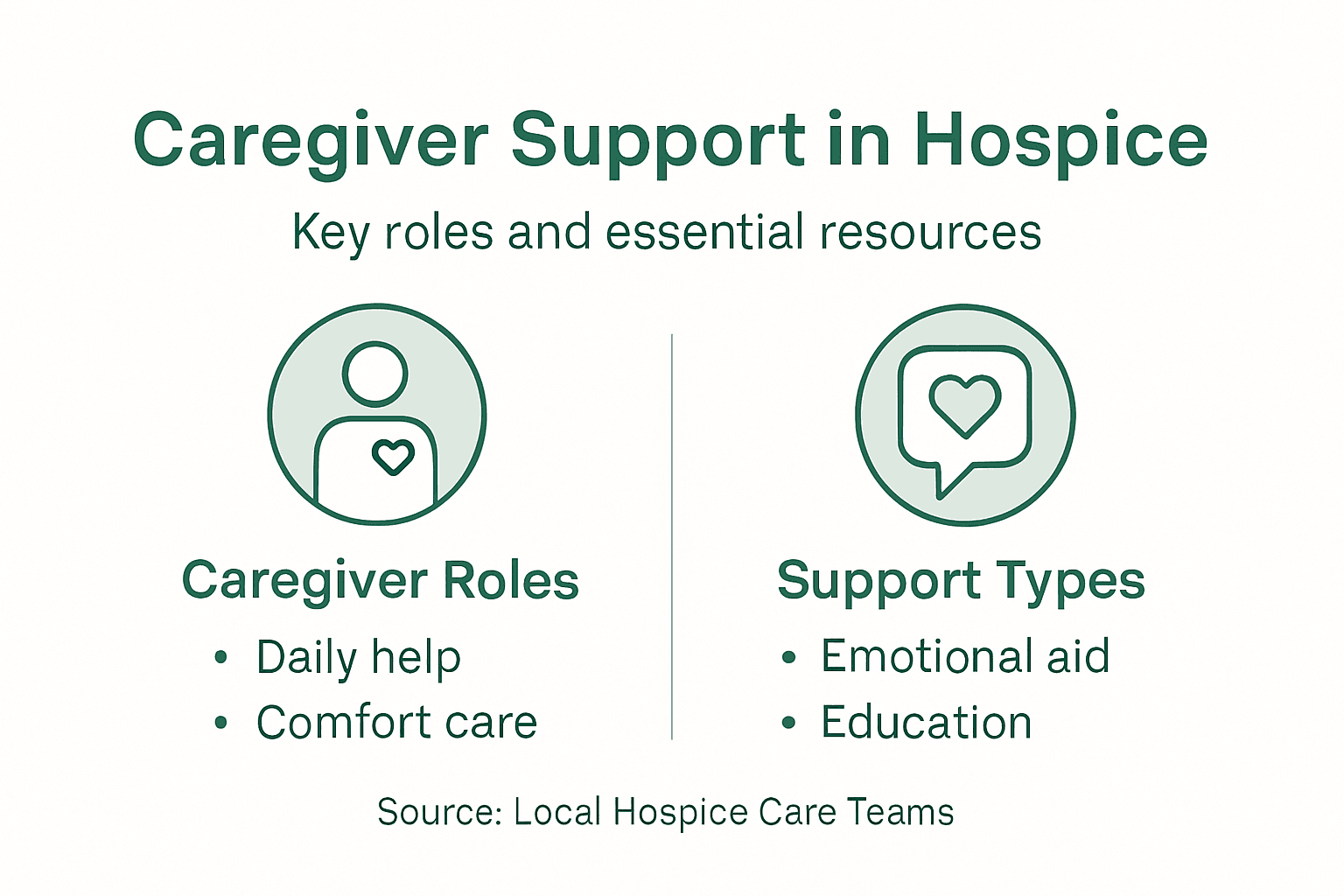
Understanding these legal boundaries prevents conflicts, ensures your parent’s wishes are honored, and protects you from liability. Many caregivers skip this step, assuming it doesn’t apply to them—then face problems later.
Your key legal responsibilities include:
- Honoring your parent’s advance healthcare directives and end-of-life wishes
- Managing decisions about medical treatment and pain management
- Protecting your parent’s financial information and assets
- Communicating honestly with the hospice team about your parent’s condition
- Respecting your parent’s privacy and dignity throughout care
Understanding your caregiver responsibilities means knowing whether you have legal authority to make decisions. Power of attorney, healthcare proxies, and advance directives determine who can approve treatments or manage finances.
Your legal rights as a caregiver include:
- Access to information about your parent’s medical condition
- The right to be present during medical appointments
- Protection from liability if you follow hospice team guidance
- The ability to consent to or refuse certain treatments (if granted authority)
- Bereavement leave and support after your parent’s death
California law recognizes caregiver rights, but these vary based on your formal role. If you’re not officially designated as healthcare proxy or power of attorney, your authority is limited—even as a family member.
Get your parent’s legal documents in order before crisis moments arrive. Advance directives and power of attorney documents prevent confusion and family conflict during difficult decisions.
This is why hospice teams often ask for copies of these documents upfront. They need to know who has authority to make decisions and what your parent’s preferences actually are.
If your parent lacks capacity to make decisions and no legal documents exist, the situation becomes complicated. Medical providers may defer to a hierarchy of decision-makers, but this causes delays and uncertainty.
Pro tip: Request a private meeting with the hospice social worker to review which legal documents your parent has in place—advance directives, power of attorney, HIPAA authorization forms—and obtain copies for your personal records to prevent delays in critical moments.
Common Challenges and Mistakes to Avoid
Caregiver burnout is real. Many family members in Orange and LA counties start this journey with good intentions, then hit a wall of exhaustion they didn’t anticipate.
Knowing the pitfalls ahead helps you sidestep them. These aren’t moral failures—they’re predictable patterns that hospice teams see repeatedly.
Common caregiver challenges include:
- Physical exhaustion from 24/7 care demands without respite breaks
- Emotional depletion from witnessing your parent’s decline
- Isolation when family and friends pull away
- Medication confusion leading to dosing errors or missed doses
- Decision paralysis when unsure about pain management or comfort care
The biggest mistake? Trying to do everything alone. Caregivers often face burnout from continuous care without respite and don’t ask for help until they’re already drowning.
Other common mistakes to avoid:
- Neglecting your own health and self-care routines
- Avoiding difficult conversations about death and dying
- Not reading medication labels or instructions carefully
- Failing to communicate changes in your parent’s condition to hospice staff
- Isolating yourself instead of joining support groups
- Expecting yourself to be a medical expert without training
Many caregivers also struggle with acknowledging the reality of impending death. You might unconsciously avoid palliative discussions or cling to false hope, which delays comfort-focused care and leaves your parent suffering unnecessarily.
The goal isn’t to fix everything—it’s to ease suffering. When caregivers shift from “fighting the disease” to “ensuring comfort,” their entire approach changes for the better.
Another trap: assuming the hospice team knows everything about your parent’s preferences without telling them. Your insights about your parent’s personality, values, and wishes matter tremendously.
Misunderstanding your role causes problems too. You’re a caregiver, not a nurse. Your job is presence and comfort, not medical precision. That’s what the hospice team provides.
Many Orange and LA county caregivers also forget that sharing duties prevents burnout. One person shouldn’t shoulder all responsibility. Coordinate with siblings, friends, or professional caregivers to rotate shifts.
Pro tip: Create a simple caregiving schedule shared with family members or friends, assign specific duties (medication management, hygiene assistance, meal prep), and block out at least 4 hours weekly for yourself to prevent caregiver burnout before it starts.
Compassionate Caregiver Support Starts Here
Caring for a loved one during hospice is one of the most challenging journeys you will face. This article highlights the emotional exhaustion, need for practical help, and the importance of clear guidance in managing end-of-life care. If you find yourself overwhelmed by medication management, physical demands, or emotional stress, you are not alone. At Graceland Hospice, we understand these pain points deeply and offer tailored support that empowers family caregivers while honoring your loved one’s dignity.
Our team provides personalized education, around-the-clock clinical assistance, and emotional resources designed to ease caregiver burnout. Discover how expert care coordination and compassionate counseling can transform your experience. Learn more about the services and resources that make a difference in this critical time by exploring our blog at Graceland Hospice. Whether you want to understand caregiver responsibilities better or find ways to share caregiving duties, our content and team are here to support you.
Take the next step with confidence. Contact us today for a free consultation and begin partnering with a hospice provider that sets the highest standards in care. Visit Caregiver Support in Hospice to get informed, and let Graceland Hospice help you ease the burden while providing the compassionate care your family deserves.
Frequently Asked Questions
What is caregiver support in hospice?
Caregiver support in hospice involves a structured system that provides professional guidance and resources to assist individuals managing end-of-life care. This support can include assistance with personal hygiene, medication management, emotional counseling, and practical resources.
How can hospice teams assist family caregivers?
Hospice teams assist family caregivers by providing 24/7 availability, personalized care plans, and education on recognizing changes in the patient’s condition. They ensure that caregivers have both clinical and emotional support to prevent burnout.
What role do emotional resources play in caregiver support?
Emotional resources are crucial for caregivers as they help address mental health challenges faced during the caregiving journey. This may include counseling services, support groups, and spiritual care to alleviate feelings of isolation and anxiety.
What are the legal responsibilities of caregivers in hospice settings?
Caregivers have essential legal responsibilities such as honoring advance healthcare directives, managing medical decisions, and protecting the patient’s financial information. Understanding these responsibilities helps ensure that the patient’s wishes are respected and reduces liability for caregivers.
Recommended
- Role of Caregivers in Hospice – Making End-of-Life More Compassionate | Graceland Hospice Care Blog
- End of Life Care Guide for Compassionate At-Home Support | Graceland Hospice Care Blog
- Blog & Resources | Graceland Hospice Care
- End of Life Care Steps for Home Hospice Success | Graceland Hospice Care Blog