Role of Caregivers in Hospice Care
Role of Caregivers in Hospice – Making End-of-Life More Compassionate
Supporting a loved one through their final months at home is filled with difficult emotions and urgent questions. Hospice caregiving in Orange County means shifting focus from cure to patient comfort and dignity, offering compassionate support during these deeply personal moments. With guidance from hospice teams and access to tailored resources, caregivers discover how to manage medical tasks, provide emotional care, and uphold California legal responsibilities while honoring their loved one’s unique end-of-life journey.
Table of Contents
- Hospice Caregiver Duties And Definition
- Different Types Of Hospice Caregiver Support
- Key Qualities And Skills For Effective Care
- Legal And Safety Responsibilities In California
- Navigating Emotional Challenges And Support Resources
Key Takeaways
| Point | Details |
|---|---|
| Emphasis on Comfort | Hospice care prioritizes comfort and quality of life over curative treatments for terminal patients. |
| Support Systems | Various support services exist for caregivers, including emotional, medical, and practical assistance to ease their responsibilities. |
| Essential Skills | Effective caregivers possess emotional intelligence, adaptability, and practical caregiving skills to navigate complex emotional landscapes. |
| Legal Responsibilities | Caregivers must understand and adhere to legal requirements to ensure patient rights and care standards are maintained. |
Hospice Caregiver Duties and Definition
Hospice caregiving represents a profound journey of compassion, supporting loved ones during their most vulnerable final months. Unlike traditional medical care, hospice focuses entirely on comfort, dignity, and quality of life for patients with terminal diagnoses. Family caregivers play a critical role in this deeply personal process of end-of-life support.
A hospice caregiver is a dedicated individual - typically a family member or close friend - who provides comprehensive emotional, physical, and practical support to a terminally ill patient. Their responsibilities extend far beyond basic medical assistance, encompassing a holistic approach to care that addresses the patient’s physical, emotional, and spiritual needs. Key duties include:
- Administering prescribed medications
- Managing pain and symptom management
- Providing personal hygiene assistance
- Offering emotional companionship
- Coordinating with hospice medical professionals
- Facilitating family communication
- Creating a peaceful, comfortable environment
The emotional landscape of hospice caregiving is complex and challenging. Caregivers must balance practical medical tasks with profound emotional support, often while processing their own grief and anticipatory loss. Professional hospice teams provide critical guidance, helping caregivers understand the dying process, normalize challenging experiences, and develop effective care strategies.
Hospice care shifts the medical focus from curative treatment to comfort, prioritizing the patient’s dignity and quality of life during their final months.
Professional training is not always required, but many hospice organizations offer comprehensive support programs that equip family caregivers with essential skills. These programs typically include medical training, emotional support resources, and practical guidance for managing end-of-life care.
Pro tip: Develop a support network for yourself by connecting with hospice counselors, joining caregiver support groups, and prioritizing your own emotional and physical well-being during this challenging journey.
Different Types of Hospice Caregiver Support
Hospice caregiver support is a multifaceted system designed to provide comprehensive assistance for families navigating end-of-life care. Mayo Clinic Hospice offers various care options tailored to meet the unique needs of patients and their families during this challenging journey.
The primary types of hospice caregiver support can be categorized into several critical areas:
-
Emotional Support Services
- Individual counseling
- Support group connections
- Grief and bereavement counseling
- Family therapy sessions
-
Medical Support Resources
- Nursing consultations
- Pain management guidance
- Symptom management training
- Medical equipment assistance
-
Practical Assistance Programs
- Respite care services
- Home health aide support
- Financial counseling
- Care coordination
Spiritual support represents another crucial dimension of hospice caregiver assistance. Trained chaplains and spiritual counselors provide compassionate guidance, helping families find meaning, peace, and emotional resilience during challenging end-of-life transitions.
Professional hospice support teams understand that caring for the caregiver is just as important as caring for the patient.
Respite care emerges as a particularly vital support mechanism, offering family caregivers planned breaks from the intense responsibilities of end-of-life care. These structured relief periods enable caregivers to rest, recharge, and maintain their own physical and emotional well-being without compromising their loved one’s quality of care.
Here’s a summary of caregiver support types and their primary benefits:
| Support Type | Example Services | Main Benefit |
|---|---|---|
| Emotional Support | Counseling, family therapy | Reduces stress and anxiety |
| Medical Assistance | Nursing consults, equipment | Improves patient comfort |
| Practical Help | Respite care, finances | Eases daily caregiver load |
| Spiritual Guidance | Chaplain visits | Fosters peace and meaning |
Pro tip: Document and communicate your personal care needs with your hospice support team, ensuring you receive comprehensive assistance tailored to your specific emotional and practical requirements.
Key Qualities and Skills for Effective Care
Effective hospice caregivers develop a unique set of skills that blend professional expertise with deep emotional intelligence. The journey of end-of-life care demands more than medical knowledge - it requires a profound commitment to compassionate support, adaptability, and personal resilience.
The essential qualities for successful hospice caregiving can be categorized into several critical domains:
Emotional Intelligence Skills
- Extraordinary empathy
- Active listening capabilities
- Emotional stability
- Ability to manage personal grief
- Patience during challenging moments
- Non-judgmental communication
Professional Caregiving Competencies
- Medication management
- Basic medical monitoring
- Physical assistance techniques
- Emergency response readiness
- Documentation and communication skills
- Understanding pain management protocols
Personal Resilience Attributes
- Emotional adaptability
- Strong stress management
- Self-care commitment
- Psychological endurance
- Flexible problem-solving approach
- Continuous learning mindset
Navigating the complex emotional terrain of hospice care requires exceptional interpersonal skills. Caregivers must simultaneously provide medical support, emotional comfort, and create a peaceful environment that honors the patient’s dignity and individual journey.
Compassion is not just a skill - it’s the heart of effective hospice caregiving.
Professional training plays a crucial role in developing these multifaceted skills. Many hospice organizations offer comprehensive programs that help caregivers build technical medical knowledge alongside emotional support strategies, ensuring they can provide holistic, compassionate care.
Pro tip: Regularly practice emotional self-regulation techniques and seek ongoing professional support to maintain your effectiveness and prevent caregiver burnout.
Legal and Safety Responsibilities in California
California hospice providers must navigate complex legal requirements to ensure patient safety, dignity, and comprehensive end-of-life care. Understanding the state’s regulatory landscape is crucial for caregivers seeking to provide ethical, compliant hospice support.
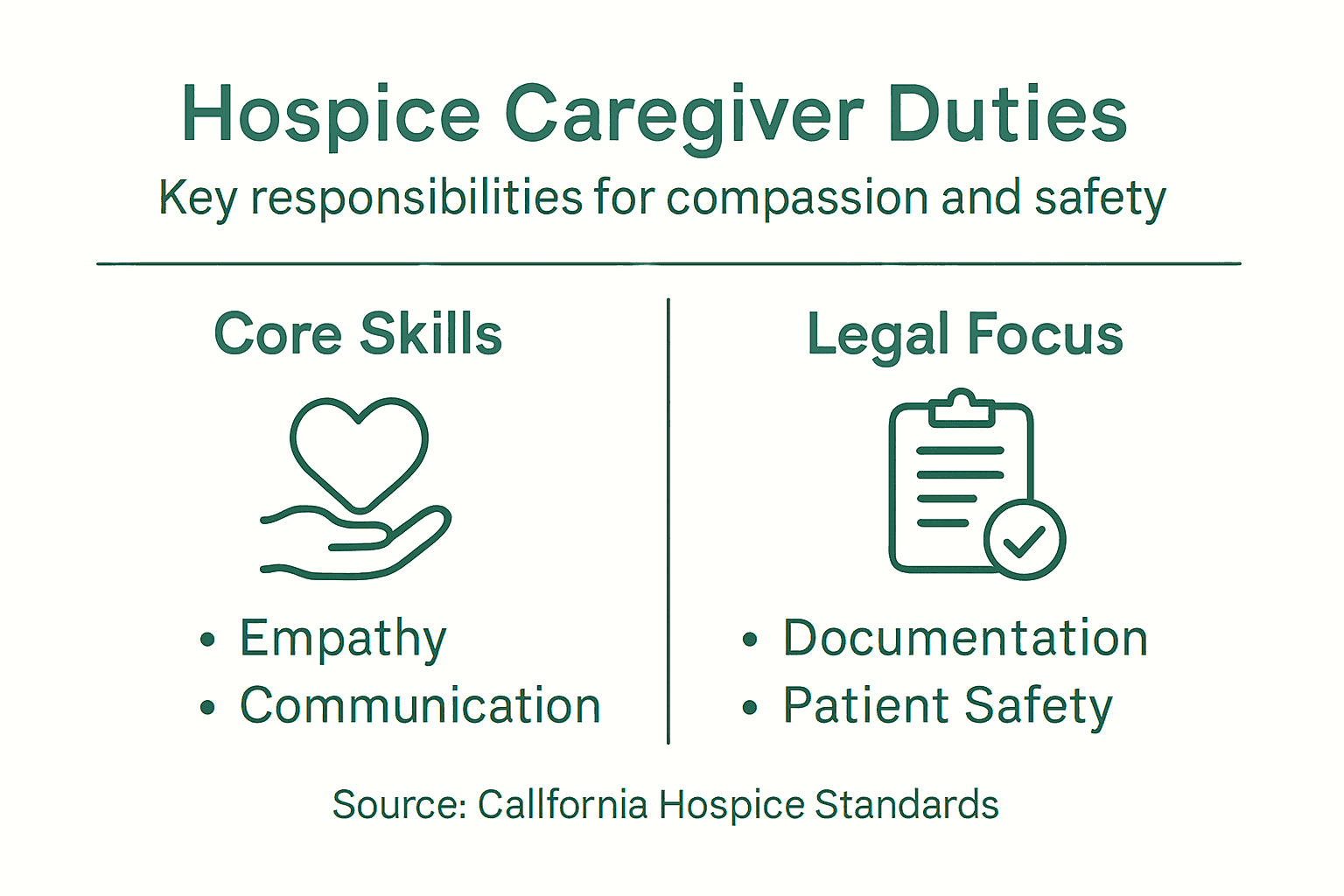
Key legal responsibilities for hospice caregivers in California include:
Patient Rights and Protections
- Right to elect or revoke hospice care
- Confidentiality of medical information
- Informed consent requirements
- Non-discrimination protections
- Access to comprehensive care services
- Transparent communication about treatment options
Medical Certification Requirements
- Physician certification of terminal illness
- Six-month prognosis documentation
- Regular medical reassessment
- Detailed care plan documentation
- Ongoing eligibility verification
- Compliance with Medi-Cal standards
Regulatory Compliance Areas
- State licensing regulations
- Quality of care standards
- Patient safety protocols
- Medical record maintenance
- Staff training requirements
- Ethical care guidelines
California Code of Regulations Title 22 provides comprehensive guidelines defining hospice care as palliative and supportive services for terminally ill individuals. These regulations mandate specific standards for nursing, medical supplies, counseling, and other essential care components.
Legal compliance is not just a requirement - it’s a fundamental commitment to patient dignity and care quality.
Professional documentation becomes a critical aspect of legal responsibility. Caregivers must maintain precise, thorough records that demonstrate adherence to state regulations, patient needs, and ethical care standards.
Use this quick reference to track essential California hospice responsibilities:
| Responsibility Area | Required Action | Outcome for Patient |
|---|---|---|
| Patient Rights | Transparent communication, consent | Dignity and autonomy |
| Medical Certification | Physician paperwork, ongoing checkups | Valid care eligibility |
| Regulatory Compliance | Maintain records, adhere to regulations | High care standards |
Pro tip: Maintain meticulous, up-to-date documentation and regularly consult with hospice legal professionals to ensure full compliance with California’s evolving hospice care regulations.
Navigating Emotional Challenges and Support Resources
Caregiver burnout represents a significant emotional challenge that demands proactive recognition and strategic management. The journey of hospice care is emotionally complex, requiring caregivers to navigate profound personal and professional challenges while maintaining compassionate support.
Emotional support strategies can be organized into several key categories:
Self-Care Emotional Management
- Acknowledge personal emotional limits
- Practice mindfulness techniques
- Schedule regular personal breaks
- Maintain personal health routines
- Recognize signs of emotional exhaustion
- Develop healthy stress coping mechanisms
External Support Resources
- Professional counseling services
- Caregiver support groups
- Family and friend networks
- Spiritual community connections
- Online support forums
- Mental health workshops
Psychological Resilience Techniques
- Emotional boundary setting
- Regular self-reflection practices
- Grief processing strategies
- Meditation and relaxation methods
- Journaling emotional experiences
- Professional emotional debriefing
The emotional landscape of hospice caregiving is uniquely challenging. Caregivers simultaneously manage personal grief, patient care, and complex family dynamics while maintaining professional composure and compassionate support.
Emotional well-being is not a luxury for caregivers - it’s a fundamental requirement for providing quality care.
Professional counseling emerges as a critical resource for managing the intense emotional demands of hospice care. Specialized therapists can help caregivers process complex emotions, develop resilience, and maintain their own mental health while supporting terminally ill patients.
Pro tip: Create a personal emotional support plan before burnout occurs, including scheduled self-care activities, professional counseling contacts, and clear communication strategies with your support network.
Compassionate Support for Hospice Caregivers with Graceland Hospice
The role of caregivers in hospice care is deeply challenging because it demands balancing medical duties with emotional strength and unwavering compassion. As the article explains, hospice caregivers face complex tasks like pain management and emotional companionship while also navigating their own grief and stress. These responsibilities can lead to caregiver burnout if not properly supported. At Graceland Hospice, we understand these unique pain points and the critical need for holistic caregiver assistance that prioritizes both patient dignity and caregiver well-being.
We are committed to providing families and caregivers with expert guidance, practical support, and emotional resources that strengthen their ability to deliver compassionate end-of-life care. Explore how our dedicated team can help you address the emotional and practical challenges discussed in the article by visiting our blog at Graceland Hospice Blog. Discover insight on effective caregiving strategies and legal responsibilities to feel confident in your critical role. Take the first step now toward compassionate hospice care tailored to your needs. Contact us today for a free consultation and experience the Graceland difference by visiting Our Hospice Care Solutions.
Frequently Asked Questions
What are the main duties of a hospice caregiver?
Hospice caregivers provide emotional, physical, and practical support to terminally ill patients. Their key duties include administering medications, managing pain, assisting with personal hygiene, offering companionship, coordinating with medical professionals, and creating a comfortable environment for the patient.
How can caregivers cope with emotional challenges in hospice care?
Caregivers can manage emotional challenges by acknowledging their limits, practicing self-care and mindfulness, seeking professional counseling, joining support groups, and maintaining personal health routines to prevent burnout.
What types of support are available for hospice caregivers?
Hospice caregivers have access to various support types, including emotional support services (like counseling and support groups), medical assistance resources (such as nursing consultations), practical help (like respite care), and spiritual guidance from trained chaplains or counselors.
Is professional training required to be a hospice caregiver?
Professional training is not always required, but many hospice organizations offer comprehensive programs that teach caregivers essential skills for providing emotional, physical, and medical support, ensuring holistic care for patients.
Recommended
- Graceland Hospice Care | Compassionate End-of-Life Care
- Graceland Hospice Care | Compassionate End-of-Life Care
- Graceland Hospice Care | Compassionate End-of-Life Care
- Graceland Hospice Care | Compassionate End-of-Life Care
- Supporting Those Who Support Others With Therapy for Caregivers - Dr. Stephen Oreski & Associates
- Grief & Loss During the Holidays: Why Christmas Can Feel Especially Heavy