End-of-life symptoms: A caregiver's guide to recognizing signs
End-of-life symptoms: A caregiver’s guide to recognizing signs
TL;DR:
- Caring for a loved one at home during life’s final phase involves understanding normal end-of-life symptoms, which follow recognizable patterns. Recognizing signs such as breathing changes, confusion, or skin color shifts helps caregivers respond appropriately and seek hospice support when necessary. Support from hospice teams and self-care are vital for ensuring comfort and reducing caregiver distress during this profound experience.
Caring for a loved one at home during life’s final chapter is one of the most profound things you can do, and it comes with moments of deep uncertainty. Many California caregivers worry that every new change signals a crisis, yet most end-of-life symptoms are actually a natural part of the body’s gradual process of letting go. This guide will help you understand what to expect, how to tell normal progression from something that needs immediate attention, and when to lean on your hospice care team for support. You do not have to navigate this alone.
Table of Contents
- What are end-of-life symptoms? Understanding the basics
- Major end-of-life symptoms to recognize at home
- When to call for help: Recognizing concerning symptoms
- Practical tips for compassionate symptom care at home
- A hospice team’s perspective: What most guides don’t tell you
- Supporting you through every step
- Frequently asked questions
Key Takeaways
| Point | Details |
|---|---|
| Recognize normal symptoms | Many end-of-life symptoms, like changes in breathing or confusion, are part of the natural process and not always a cause for alarm. |
| Know red flags | Sudden or rapidly worsening symptoms, new severe pain, or agitation require immediate contact with your care team. |
| Practical comfort tips | Simple steps like gentle repositioning, a calm environment, and routine check-ins can maximize comfort for your loved one. |
| Caregiver support matters | Your emotional well-being is important, so seek support and communicate openly with your hospice team. |
What are end-of-life symptoms? Understanding the basics
End-of-life symptoms are physical, emotional, and cognitive changes that occur as a person’s body gradually slows down in the final days or weeks of life. These changes are not random. They follow a recognizable pattern that hospice teams see regularly, and understanding them can transform fear into informed, compassionate caregiving.
There are three broad categories worth knowing:
- Physical symptoms: Changes in breathing, decreased appetite and thirst, skin color changes, reduced urine output, and extreme fatigue.
- Cognitive symptoms: Confusion, disorientation, seeing or hearing things that others cannot, and difficulty recognizing familiar people.
- Emotional and behavioral symptoms: Withdrawal from conversations, decreased interest in surroundings, restlessness, or unusual calm.
Recognizing these categories matters because it helps you separate what is expected from what might need medical attention. When you understand that a symptom is part of normal progression, it reduces the fear and distress you feel as a caregiver, and it lets you focus your energy on providing comfort rather than panic.
“Many symptoms that seem alarming, like labored breathing, moaning, or confusion, are often part of the body’s natural process. Your first instinct may be to call 911, but your hospice team is the right call in most situations.”
Caregivers who understand supporting loved ones through this process report feeling more confident and less overwhelmed. According to Signs That Someone Is Dying, delirium-like mental changes including confusion, disorientation, and hallucinations can occur near end of life and may have multiple medical causes. Reaching out to your care team for guidance is always the right move when you are unsure.
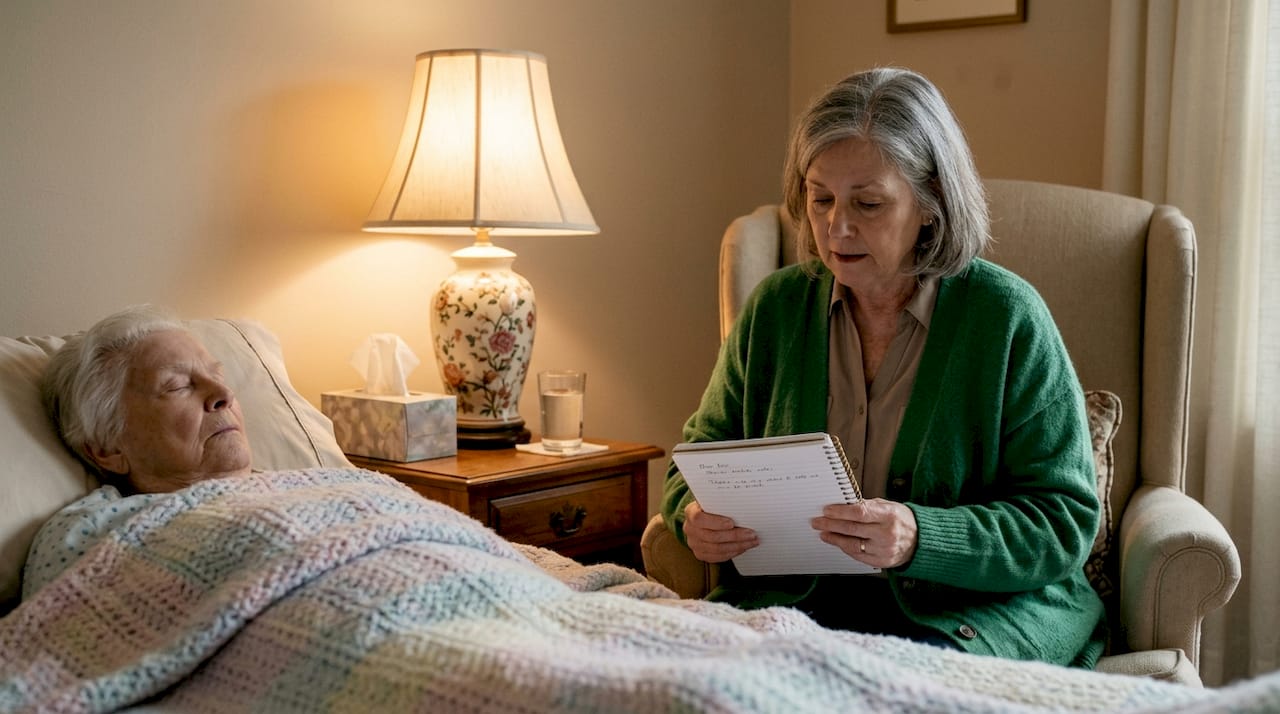
Pro Tip: Keep a simple notebook near your loved one’s bed. Write down new symptoms, what time they appeared, and how long they lasted. This log becomes a valuable tool when you speak with the hospice nurse.
With expectations now set, let’s clarify which symptoms you are most likely to see in the final days.
Major end-of-life symptoms to recognize at home
Understanding the specific symptoms that commonly appear at home helps you stay calm and respond wisely. The following are the most frequently observed changes, along with straightforward explanations of what they mean.
| Symptom | How common | What it means |
|---|---|---|
| Changes in breathing | Very common | The body needs less oxygen; breathing may slow, speed up, or become irregular |
| Extreme fatigue | Nearly universal | Energy is redirected inward as the body slows down |
| Decreased appetite and thirst | Very common | The digestive system is gradually shutting down |
| Confusion or disorientation | Common | Reduced blood flow and oxygen to the brain |
| Terminal restlessness | Moderately common | Can signal unmanaged discomfort or be part of normal dying |
| Skin color and temperature changes | Common | Circulation is decreasing; skin may turn pale, gray, or mottled |
| Incontinence | Common | Muscle control decreases as the body relaxes |
| Social withdrawal | Very common | The person is naturally turning inward |
Breathing changes deserve special attention. You may hear a gurgling or rattling sound, sometimes called the “death rattle.” This happens because the person can no longer clear secretions from their throat. It sounds distressing, but most people at this stage are not consciously aware of it. Repositioning the head slightly or turning them on their side often reduces the sound.
Confusion and agitation are among the most emotionally difficult symptoms for families to witness. As the Cancer Council NSW explains, terminal restlessness and agitation can occur near the end of life and may have multiple medical causes. This means they are not always just “part of dying.” Sometimes they signal pain, a full bladder, or medication effects that your hospice team can address.
Skin changes can be startling if you do not know what to expect. A mottled, purplish or bluish pattern on the knees, feet, and hands is called livedo reticularis. It indicates that circulation is withdrawing from the extremities. The skin may also feel cool to the touch while the chest and abdomen remain warm. This is normal.
Here is what to watch for as key indicators that the final hours may be approaching:
- Breathing pauses lasting 10 to 60 seconds (called Cheyne-Stokes breathing)
- Jaw relaxation and mouth falling open
- Eyes partially open but unresponsive
- Hands and feet turning a deep gray or purple
- No response to touch or voice
Pro Tip: Use a calm, gentle voice even when your loved one appears unresponsive. Hearing is believed to be one of the last senses to fade. Familiar words and a soothing tone can still provide comfort.
Your hospice team can help you navigate what you observe. A good symptom monitoring guide tailored to California home hospice settings will give you additional confidence between nurse visits. Connecting with caregiver support resources also ensures that you are not carrying this weight alone.
Now that you know what symptoms to look for, let’s explore how to tell which changes are concerning and might call for your hospice team’s help.
When to call for help: Recognizing concerning symptoms
Not every change requires a phone call, but some definitely do. Knowing the difference protects your loved one and eases your worry. Here is a practical, stepwise approach.
- Assess the change. Is the symptom new, or has it been gradually developing? Gradual changes are usually part of normal progression. Sudden or sharp changes deserve a call.
- Check for signs of distress. Is your loved one grimacing, moaning, or appearing agitated in a way that seems different from their baseline? Distress that looks like pain should not wait.
- Review recent medications. Did anything change in the past 24 hours? A new medication or a missed dose can trigger confusion or agitation. Your hospice nurse needs to know.
- Call your hospice team. In California, your hospice provider is required to offer 24-hour on-call support. Do not hesitate to use it. That is exactly what it is there for.
- Document what you observe. Before calling, note the symptom, when it started, and how severe it seems. This helps the nurse guide you more effectively over the phone.
“Breathing sounds, restlessness, and confusion can be frightening but are often part of normal dying physiology or delirium. Still, caregivers should treat concerning or rapidly changing symptoms as a reason to call the hospice team for assessment, especially for delirium and agitation, which can have treatable causes.”
Red flags that require an immediate call to your hospice team include:
- Sudden, severe confusion or agitation not seen before
- Signs of pain that medication is not controlling
- Difficulty swallowing or choking
- A dramatic change in breathing that causes visible distress
- Seizure activity
- Bleeding that is difficult to control
It is also worth knowing that in California, hospice patients enrolled in a Medicare or Medi-Cal certified program have access to a team that includes nurses, social workers, chaplains, and physicians. You do not have to judge these situations alone. Detailed guidance on managing pain and symptoms in hospice care can prepare you further, and learning about the types of palliative support available at home helps you understand the full range of help at your disposal.
Recognizing when to contact professionals is vital, but equally important are practical skills for providing everyday comfort at home.
Practical tips for compassionate symptom care at home
Comfort care is an active practice. It involves thoughtful, consistent attention to your loved one’s environment, body, and emotional state. Here are the most effective strategies that hospice teams recommend for home caregivers.
Positioning and physical comfort:
- Reposition your loved one every two hours to prevent pressure sores, unless movement causes visible distress.
- Elevate the head of the bed slightly (about 30 degrees) to ease breathing.
- Use pillows to support the arms and legs in a natural, relaxed position.
- Keep the mouth moist with small sponge swabs, even when the person is no longer drinking.
- Apply lip balm regularly to prevent cracking and discomfort.
The environment matters more than you think:
- Keep lighting soft and consistent. Bright, flickering light can worsen confusion.
- Reduce loud noise from televisions and phones. Gentle music at a low volume is often comforting.
- Maintain a comfortable room temperature. People near end of life are less able to regulate their own body heat.
- Allow natural light during the day if the person seems to respond to it.
Touch and presence:
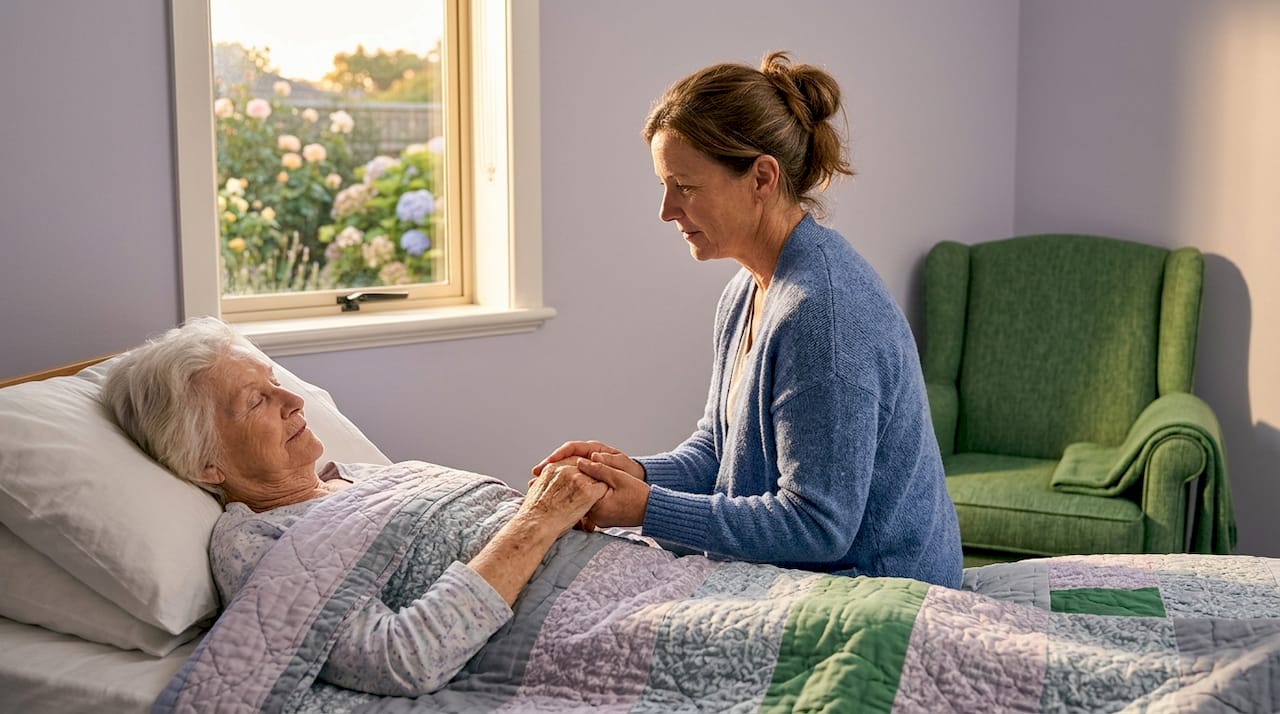
Gentle touch, such as holding a hand, lightly stroking an arm, or placing a warm blanket over the feet, communicates care when words fall short. Many families worry about “doing something wrong,” but your presence itself is the most meaningful form of comfort you can offer.
Medication reminders and symptom management:
Never skip or delay scheduled medications without guidance from your hospice nurse. Medications for pain, anxiety, and breathing discomfort are often given on a schedule specifically to prevent symptoms from breaking through. If you are uncertain whether a medication is still needed, call your care team rather than stopping it on your own.
As end-stage symptoms can sometimes resemble other conditions, having your care team closely involved ensures that changes in cognition or behavior are properly assessed. The Cancer Council NSW notes that delirium-like mental changes near end of life may have multiple medical causes, reinforcing why your hospice team’s guidance is so important.
For your own well-being:
Caregiver burnout is real. Take breaks when another family member or volunteer can sit with your loved one. Sleep matters. Eating regular meals matters. Your capacity to care for someone else depends directly on how well you take care of yourself. Explore emotional support strategies designed specifically for caregivers in your situation.
Pro Tip: Set a gentle daily reminder on your phone to check in with yourself. Ask: “Have I eaten? Have I rested? Have I talked to someone today?” Small check-ins prevent the slow slide into exhaustion.
Beyond checklists and steps, each family’s journey with end-of-life care is unique. Here is our perspective based on years of working with California caregivers.
A hospice team’s perspective: What most guides don’t tell you
Most caregiving guides focus on what to watch for and when to call. That is important. But after years of walking alongside California families through this experience, we have noticed a pattern that rarely gets addressed directly: the deepest source of caregiver distress is not the symptoms themselves. It is the fear of “getting it wrong.”
Families sometimes wait too long to call the care team because they do not want to seem like they are overreacting. Or they second-guess decisions they have already made, wondering if they chose the right medication timing or the right positioning. This self-doubt is one of the heaviest burdens caregivers carry, and it is largely unnecessary.
Here is what we wish every caregiver knew: your hospice team is not a last resort. They are a first resource. Calling to ask a question is not weakness or panic. It is smart, attentive caregiving. Every question you ask protects your loved one and eases your burden.
We also want to address something rarely said plainly. Emotional reactions to symptoms are not signs that you are failing. If your loved one’s breathing sounds distress you even though you know it is normal, that is a human response, not a caregiving error. Allowing yourself to feel the weight of what you are witnessing is appropriate. Seeking support for that weight is wise. Our emotional support resources for California caregivers can help you find steadiness during this time.
The families who feel most at peace during this season are not the ones who knew every answer. They are the ones who stayed connected to their care team, accepted help, and gave themselves permission to be human in an intensely human moment.
Supporting you through every step
At Graceland Hospice, we understand that recognizing and responding to end-of-life symptoms is just one part of an enormous responsibility you are carrying. Our compassionate team of nurses, social workers, chaplains, and physicians is here to walk alongside you, providing hands-on symptom management, emotional support, and around-the-clock guidance from the comfort of your home. We believe every eligible patient and family deserves access to skilled, dignified hospice care. Explore our Graceland Hospice Care services to understand how we can help, or review our full service list to find exactly the support you need. You are also warmly invited to read family experiences from others who have walked this road. Contact us today for a free consultation.
Frequently asked questions
What symptoms indicate someone may be nearing the end of life at home?
Common symptoms include changes in breathing, increased sleepiness, confusion or agitation, decreased appetite, and skin color changes. As delirium-like mental status changes and terminal restlessness are among the most common signs near end of life, it is helpful to know what they look like before they occur.
How can I tell if a symptom is normal or if I should call the hospice team?
Call your hospice team if a symptom is new, worsens quickly, or causes visible distress. As the Cancer Council NSW advises, concerning or rapidly changing symptoms are always worth a call for expert assessment, even if they turn out to be part of normal progression.
Is confusion or agitation near the end of life always a sign of distress or pain?
Not always. Confusion and agitation are common as part of the dying process, but they can also signal treatable issues like a full bladder, medication effects, or uncontrolled pain. Your hospice team can assess whether confusion and agitation have a medical cause worth addressing.
What can caregivers do to comfort someone experiencing end-of-life symptoms?
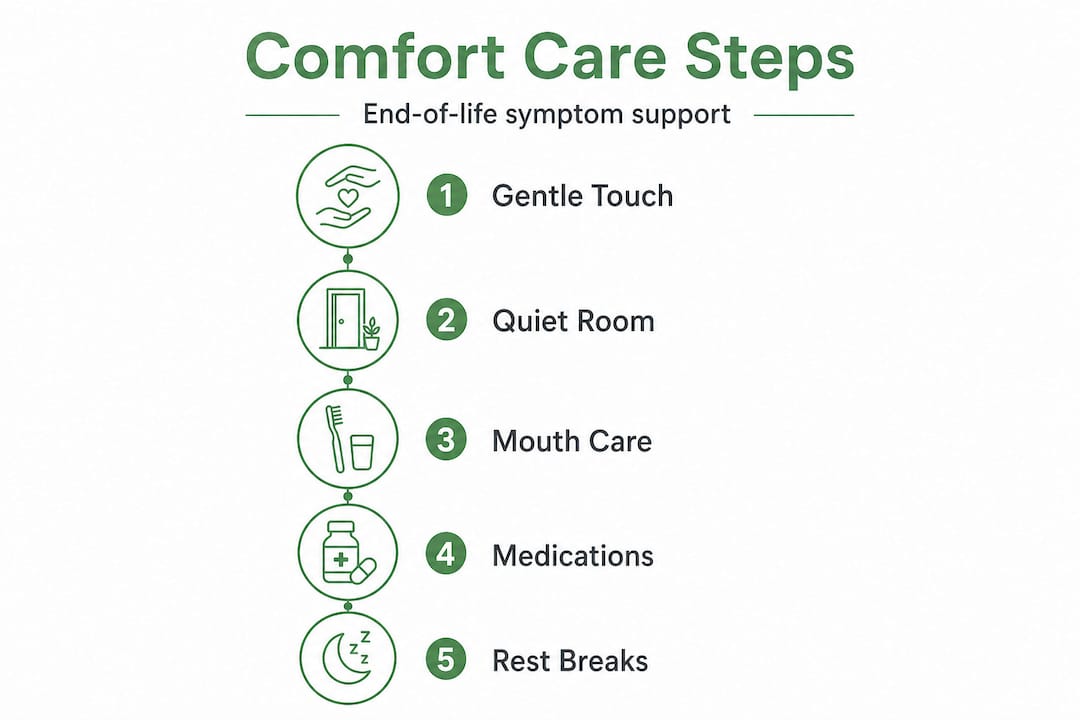
Gentle touch, a calm and quiet environment, mouth care, and consistent medication schedules all contribute meaningfully to comfort. Your care team’s symptom management guidance is your best resource when you are uncertain what to do next.
Are there resources for caregivers dealing with stress during this time?
Yes. Many hospice providers, including Graceland Hospice, offer dedicated emotional support services for caregivers, including counseling, respite care, and community referrals to help you manage the emotional weight of this season.
Recommended
- Supporting a Loved One Through End-of-Life Care | Graceland Hospice Care Blog
- 7 Essential Steps in an End of Life Care Checklist for Caregivers | Graceland Hospice Care Blog
- Caregiver Support in Hospice: Easing End-of-Life Care | Graceland Hospice Care Blog
- Patient comfort at home: A complete end-of-life guide