Navigate California hospice insurance: step-by-step coverage guide

Navigate California hospice insurance: step-by-step coverage guide
TL;DR:
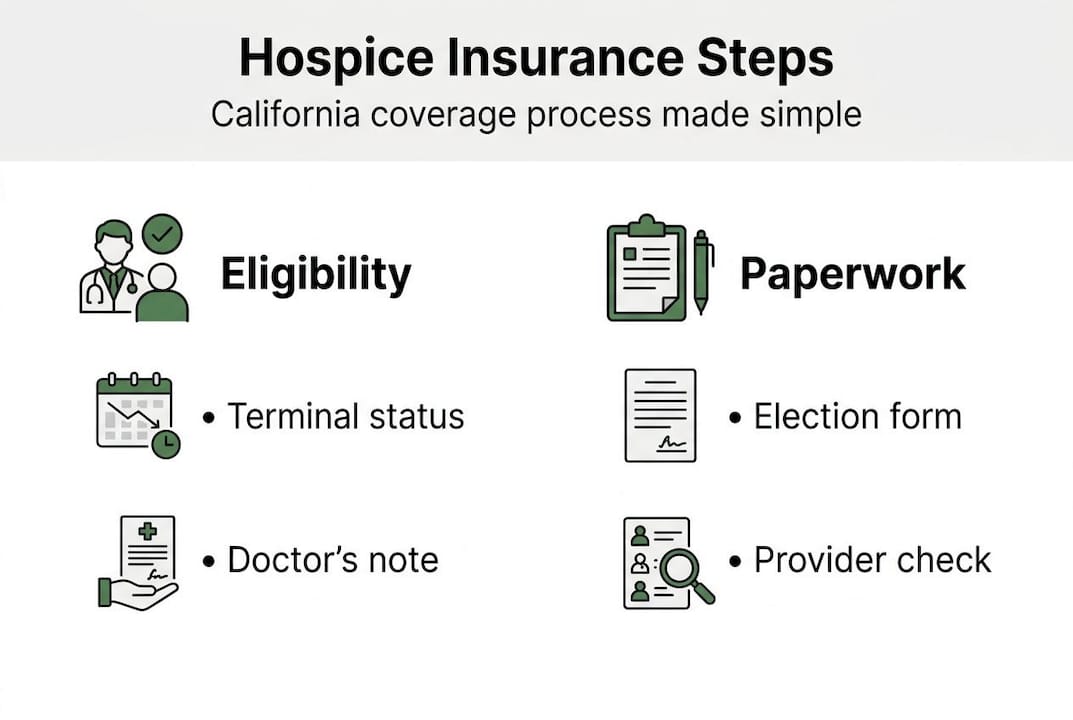
- California hospice eligibility requires physician certification and patient election of comfort-focused care.
- Families should verify hospice provider licensure and understand coverage levels to avoid billing errors.
- Staying informed and reporting concerns helps protect families from hospice fraud and ensures quality care.
When a loved one receives a terminal diagnosis, families in California often find themselves buried in paperwork, unclear coverage rules, and urgent decisions all at once. The hospice insurance process can feel overwhelming, but understanding it clearly makes a profound difference. Getting coverage right means your loved one receives the comfort and support they deserve without interruption. This guide walks you through eligibility requirements, required forms, care levels, and how to protect your family from billing mistakes or fraud, so you can focus on what truly matters: being present.
Table of Contents
- Understanding hospice insurance eligibility and requirements
- How to initiate the hospice insurance process in California
- Levels of hospice care and coverage details
- Troubleshooting, common mistakes, and handling disputes
- A new perspective: The unspoken challenges and real solutions for California families
- Get expert help with hospice insurance and care
- Frequently asked questions
Key Takeaways
| Point | Details |
|---|---|
| Eligibility essentials | Families must secure physician certification and complete necessary forms before electing hospice insurance. |
| Step-by-step process | A clear sequence of paperwork and provider actions helps ensure timely and accurate coverage. |
| Coverage differences | Understanding Medicare and Medi-Cal distinctions guarantees proper payment and access for dual-eligible patients. |
| Fraud safeguards | California families should always verify provider credentials and watch for common fraud red flags. |
| Appeal timelines | Claim disputes must be filed within 365 days, with plan responses due in 45 days under California rules. |
Understanding hospice insurance eligibility and requirements
Before any paperwork begins, your loved one must meet specific eligibility criteria. This is the foundation of the entire process, and getting it right prevents delays and denials later.
Hospice eligibility in California requires physician certification that a patient has a terminal illness with a life expectancy of six months or less. The patient or their authorized representative must also formally elect hospice care, which means agreeing to focus on comfort rather than curative treatment for the terminal condition, under Medicare Part A or Medi-Cal.
This election is a meaningful decision. It does not mean giving up on life. It means choosing comfort, dignity, and quality of time over aggressive medical interventions that may no longer serve the patient’s well-being.
For California’s Medi-Cal program, hospice eligibility procedures involve specific DHCS forms, face-to-face clinical requirements with the certifying physician, and a clear focus on patient choice. Families should gather the following documents before initiating the process:
- Physician certification of terminal illness and life expectancy
- Patient or representative election statement waiving curative treatments
- DHCS forms specific to Medi-Cal enrollment
- Medicare Part A enrollment confirmation (if applicable)
- Advance directive or POLST form to support patient wishes
Reviewing end-of-life documentation steps ahead of time helps families avoid last-minute scrambles. You should also become familiar with what insurance typically covers, including how hospice costs coverage works across different payment sources.
| Eligibility requirement | Medicare | Medi-Cal |
|---|---|---|
| Terminal illness certification | Yes, by physician | Yes, by physician |
| Life expectancy | 6 months or less | 6 months or less |
| Election of comfort-focused care | Required | Required |
| DHCS forms required | No | Yes |
| Coverage of curative treatment | No | No |
It is also essential to confirm that your hospice provider meets Medicare hospice requirements, including being Medicare-certified and licensed by the state of California.
Pro Tip: Before signing any hospice agreement, verify the provider’s license status through the California Department of Public Health’s online registry. Unlicensed providers are a serious red flag.
How to initiate the hospice insurance process in California
Once eligibility is confirmed, the next step is officially electing hospice care and submitting the required paperwork. This is where many families feel uncertain, but the process is straightforward when broken into clear steps.
Medi-Cal hospice election requires specific DHCS forms submitted within defined timeframes. Your hospice provider is responsible for submitting these on your behalf, but it helps to understand what they are filing.
Step-by-step: How to start hospice insurance in California
- Choose a licensed hospice provider that is certified under Medicare and licensed in California.
- Complete the DHCS 8052 Hospice Election Notice, which formally documents the patient’s decision to receive hospice care.
- Complete the DHCS 8053 Non-Covered Notification, informing the patient of services not covered under the hospice benefit.
- Submit both forms to DHCS within five business days of the hospice election date.
- Confirm benefit period coverage, as Medi-Cal hospice is divided into two 90-day periods followed by unlimited 60-day periods.
- Notify your managed care plan if the patient is enrolled in a Medi-Cal managed care plan, as procedures may vary.
For families new to this process, starting hospice care at home is often the most common and comfortable option. Understanding the full scope of care is also easier when you first spend time understanding hospice care before making decisions.
For dual-eligible patients (those covered by both Medicare and Medi-Cal), the California hospice FAQ outlines important billing distinctions.
| Coverage area | Medicare | Medi-Cal |
|---|---|---|
| Primary payer | Yes | No (secondary) |
| Hospice services | Fully covered | Covers coinsurance/room & board |
| Dual-eligible billing | Medicare pays first | Medi-Cal supplements |
| Managed care coordination | May apply | Required if enrolled |
Pro Tip: If your loved one is enrolled in a Medi-Cal managed care plan, contact the plan’s member services before the hospice election. Some plans have specific authorization procedures that differ from standard fee-for-service Medi-Cal.
Levels of hospice care and coverage details
Hospice is not one-size-fits-all. There are four recognized levels of care, each designed to meet different clinical needs, and insurance coverage applies to each level differently.
Routine home care is the most common level, accounting for the vast majority of hospice days. According to national benchmarks, routine home care represents more than 95% of all hospice days nationwide. The four levels are:
- Routine home care: Daily comfort care provided at home, including nursing visits, medication management, and aide support.
- Continuous home care: Short-term intensive care, usually during a medical crisis, provided for at least eight hours in a 24-hour period.
- General inpatient care: Hospital-level symptom management when home care cannot control acute symptoms; requires prior authorization (Treatment Authorization Request, or TAR, in Medi-Cal).
- Inpatient respite care: Short-term inpatient stays (up to five consecutive days) to give family caregivers a needed break.
Coverage details matter. Medicare and Medi-Cal both cover all four levels, but the billing process and authorization requirements differ. For hospice care levels explained in full detail, it helps to review the specific criteria with your provider.
Families should also be aware of their hospice patient rights, including the right to change providers or revoke the hospice election at any time. All services covered under Medicaid hospice coverage must be related to the terminal diagnosis.
Pro Tip: Keep a folder with your loved one’s current care plan, recent physician notes, and benefit period dates. If the level of care needs to change quickly, having these ready speeds up the authorization process significantly.
Troubleshooting, common mistakes, and handling disputes
Even with insurance in place, things can go wrong. Claims get denied, billing errors occur, and unfortunately, fraud remains a serious concern in California’s hospice industry. Knowing how to respond protects your family.
Common insurance mistakes to watch for:
- Submitting DHCS forms late (beyond five business days from election)
- Failing to notify the managed care plan before starting services
- Accepting care from a provider without verifying their license
- Missing the benefit period renewal documentation
- Not tracking which services are billed to Medicare versus Medi-Cal
When a claim is denied, disputes must be filed within 365 days of the original denial, and California health plans are required to respond within 45 days under the standard appeals process.
Fraud is a growing and well-documented problem. In early 2026, California revoked 280 hospice licenses in a major fraud crackdown, with congressional hearings and federal investigations following. This is not a distant issue. It affects real families.
Warning: California’s 2026 hospice fraud crackdown exposed a $267 million fraudulent billing scheme. If a provider pressures you to enroll, promises unusually high care levels without clinical assessment, or does not provide regular visits, report them immediately to the California Office of the Attorney General’s consumer alert hotline at oag.ca.gov/dmfea/hospicefraud.
Families navigating a difficult diagnosis deserve honest, responsive care. Reviewing resources on honoring hospice wishes and knowing your options for emergency hospice care helps you stay prepared for unexpected situations.
Pro Tip: Before enrolling with any hospice provider, verify their license at the California Department of Public Health registry and confirm they are not under a license moratorium. A five-minute check can prevent months of heartbreak.
A new perspective: The unspoken challenges and real solutions for California families
Most guides stop at paperwork. But the families we support at Graceland Hospice tell us the real challenge is something harder to name: the fear of trusting the wrong provider at the most vulnerable moment of their lives.
The conventional focus on forms and timelines is necessary, but it misses something important. The California hospice fraud crisis exposed that fraudulent billing and reimbursement delays are not rare edge cases. They are systemic risks that disproportionately harm families who are already exhausted and emotionally stretched.
The hard-won lesson from recent fraud cases is simple: trust, but verify. Ask your provider for proof of licensure. Ask who will visit and how often. Ask what happens if the level of care needs to change. A trustworthy provider welcomes these questions.
Families who stay informed and report concerns early are not just protecting themselves. They are helping protect every California family that follows. Reviewing at-home hospice benefits is a good starting point for understanding what quality care actually looks like in practice.
Get expert help with hospice insurance and care
Navigating hospice insurance in California is a process no family should face alone. At Graceland Hospice, we are here to walk alongside you at every step, from verifying eligibility to submitting forms to answering your most pressing questions about coverage. Our team is licensed, Medicare-certified, and deeply committed to transparent, compassionate care. We believe every eligible patient deserves access to quality hospice without confusion or delay. Explore our hospice care services to see how we support families across California, or browse our full range of all services. Contact us today for a free consultation.
Frequently asked questions
What forms are needed to start hospice insurance in California?
You’ll need the DHCS 8052 Hospice Election Notice and DHCS 8053 Non-Covered Notification, completed and submitted by your provider within five business days of the hospice election date.
Who pays for hospice care if a patient is eligible for both Medicare and Medi-Cal?
Medicare pays first for hospice services; Medi-Cal then covers coinsurance and room and board costs in nursing facilities for patients who qualify under both programs.
How long does it take to resolve a hospice insurance claim dispute?
Providers have 365 days to file disputes after a denial, and California health plans are required to respond within 45 days under the standard appeals process.
What are signs of hospice care fraud in California?
Red flags include minimal or no care visits, pressure to enroll without clinical evaluation, and providers who cannot verify licensure. California’s 2026 fraud crackdown revoked 280 licenses, making credential verification more important than ever.
Recommended
- Are hospice costs covered? A California family’s guide | Graceland Hospice Care Blog
- Understanding Hospice Care Levels: A Guide for California Families | Graceland Hospice Care Blog
- End-of-Life Planning Guide: Hospice & Comfort Care at Home | Graceland Hospice Care Blog
- Essential end-of-life documentation steps for California families | Graceland Hospice Care Blog