Hospice Patient Rights in California Guide

Hospice Patient Rights in California: 51 Fraud Cases Resolved
TL;DR:
- California law grants hospice patients and families legal rights to dignity, decision-making, and pain management.
- Patients can revoke hospice care anytime by submitting a signed written statement and re-elect later if eligible.
- Vigilance and active family involvement are essential to prevent fraud and ensure quality care.
Many families believe that choosing hospice means giving up control over a loved one’s care. That belief is understandable, but it is simply not true. California law gives hospice patients and their families meaningful rights at every stage of care, from the first day of enrollment to the final moments of life. Knowing those rights changes everything. It means you can ask hard questions, expect honest answers, and push back if something feels wrong. This guide walks you through what those rights are, how to protect them, and what to do if you ever feel they are not being honored.
Table of Contents
- What are hospice patient rights in California?
- The right to choose and revoke hospice care
- Fraud risks and protections in California hospice care
- How to stand up for hospice patient rights
- A hard truth: Enforcement and vigilance matter more than paperwork
- How Graceland Hospice Care supports your rights
- Frequently asked questions
Key Takeaways
| Point | Details |
|---|---|
| You have strong legal rights | California law ensures dignity, choice, and clear communication for all hospice patients. |
| Care plans are flexible | Patients can start, stop, or change hospice care, and Medi-Cal offers special options for minors. |
| Be alert to fraud | Recent cases show the importance of verifying providers and reporting concerns. |
| Advocacy gets results | Families who ask questions and document concerns help ensure safe, high-quality care. |
| Resources are available | You can contact state agencies and trusted providers to resolve issues and confirm your rights. |
What are hospice patient rights in California?
With the myth addressed, let’s break down what specific rights you and your loved one actually have. California hospice patients are protected by a strong legal framework that covers dignity, decision-making, and pain management. These rights apply whether your loved one is in a facility, at home, or in a residential hospice setting.
At the core, every hospice patient in California has the right to:
- Be treated with dignity and respect at all times
- Participate in care planning and understand every treatment decision
- Refuse any treatment or medication
- Receive effective pain and symptom management
- Maintain privacy and confidentiality
- Receive visitors and communicate freely with family and clergy
- Honor personal, cultural, and spiritual beliefs throughout care
- Be free from discrimination, abuse, or neglect
These rights are not just guidelines. They are enforceable protections under California state law and federal Medicare and Medi-Cal regulations.
“Every patient has the right to be informed about their care, to participate in decisions, and to refuse treatment. These are not privileges—they are legal rights.”
For families navigating planning hospice care, understanding these protections from the start helps you set clear expectations with your care team.
For Medi-Cal patients, there are specific documentation requirements your hospice provider must meet. The DHCS 8052 and 8053 forms are required for all Medi-Cal hospice enrollments. The DHCS 8052 is the Election Notice that confirms a patient’s decision to begin hospice. The DHCS 8053 is the Non-Covered Items Notification, which tells the patient what services are no longer covered under Medi-Cal once hospice begins. Both must be submitted online within five days of election.
Families should also review hospice care standards in California to understand what quality looks like day to day.
Pro Tip: Ask for the DHCS 8052 and 8053 forms on the very first day of care. If the hospice cannot produce them promptly, that is a red flag worth taking seriously.
The right to choose and revoke hospice care
Knowing your rights means understanding when and how you can make different choices about care. One of the most important and least understood rights is the right to revoke hospice care at any time. Patients do not have to stay in hospice once they have entered it.
According to California’s Medi-Cal framework, patients may revoke their hospice election at any time by submitting a signed written statement. After revocation, they can return to standard curative treatment and may re-elect hospice care later if they still meet eligibility criteria.
Here is how the revocation process works, step by step:
- Request a revocation form from your hospice provider or prepare a signed written statement expressing the patient’s wish to leave hospice care.
- Submit the signed statement to the hospice agency. The effective date is the date the statement is signed or a specific date listed in the document.
- Confirm in writing that the revocation has been received and processed by the agency.
- Contact your primary care physician to resume curative or disease-modifying treatment right away.
- Track your benefit periods. Hospice care under Medi-Cal is organized into benefit periods. Revoking and re-enrolling is allowed, but new eligibility must be confirmed.
Understanding your end of life care choices is essential before making this decision, so speak with your care team and primary physician together.
One important note: children under 21 enrolled in Medi-Cal have an even more flexible option. They can receive both curative treatment and hospice care at the same time, which is sometimes called “concurrent care.” This is a meaningful protection that adult patients do not automatically have.
If you are thinking about starting hospice care at home, know that the choice to begin or stop hospice is always yours to make.
Pro Tip: Do not hesitate to revoke if care needs change. The process is quick, and the patient’s wellbeing always comes first. You can re-elect hospice care again later if needed.
Fraud risks and protections in California hospice care
Acting on your rights also means recognizing when something might be wrong, and how California is fighting back. Hospice fraud is a serious and growing problem in the state, and the consequences for vulnerable patients can be devastating.
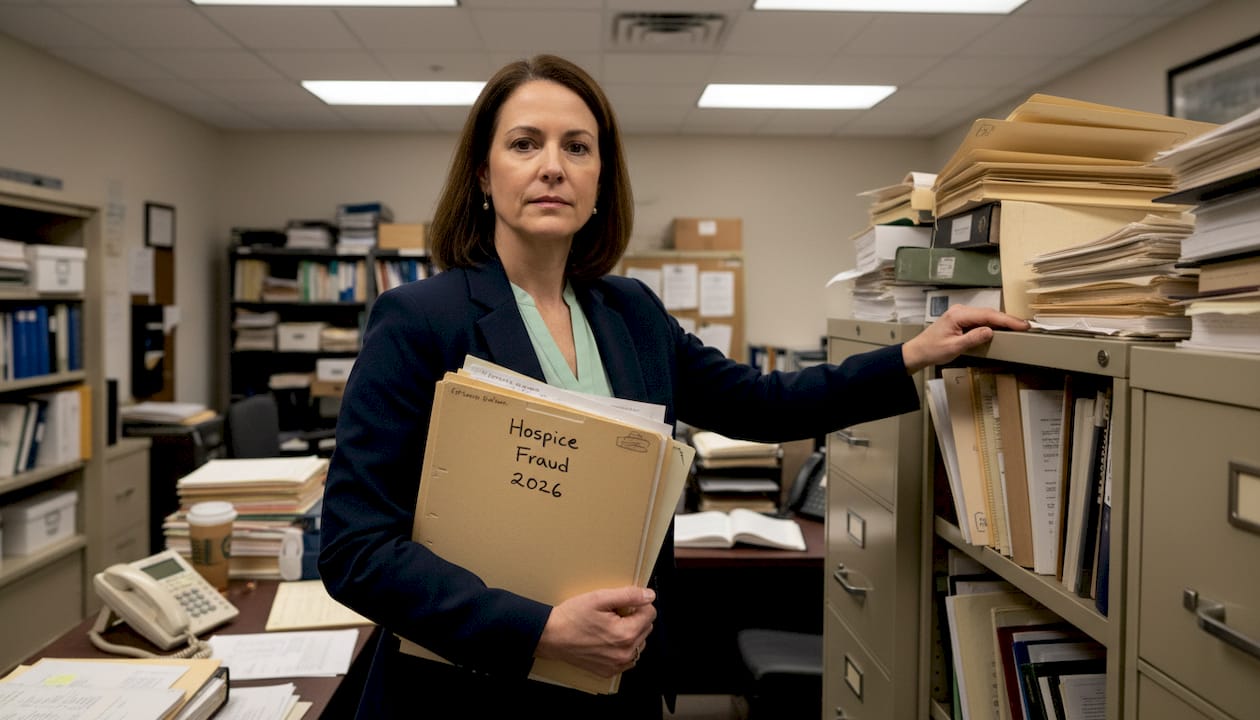
In April 2026, California charged 21 people in a $267 million hospice fraud scheme. Investigators found that fraudulent providers used stolen identities to enroll patients who were not terminally ill in order to collect Medi-Cal billing payments. The state had received warnings about this kind of fraud years earlier, and critics say inaction allowed problems to grow.
The scale of the problem is significant. California’s state attorney general has secured 51 convictions in 119 hospice fraud cases, with fraud often involving the enrollment of non-terminal patients and the delivery of substandard or no care.
| Case detail | Amount involved | Outcome |
|---|---|---|
| 2026 identity fraud scheme | $267 million | 21 charged |
| Statewide fraud prosecutions | Multiple cases | 51 convictions |
| Common pattern | Non-terminal enrollment | Ongoing enforcement |
Families reviewing ensuring care quality should also know what fraud warning signs look like:
- Staff who cannot explain the care plan or who change frequently with no explanation
- Visits that are shorter or less frequent than promised
- Billing for services the patient never received
- Pressure to sign forms without time to read them
- A hospice provider that discourages family involvement or questions
- Enrollment that feels rushed, especially without a terminal diagnosis from your own physician
If you have concerns, review end-of-life paperwork and compare it with the care actually delivered. Discrepancies matter and deserve attention.
Verify your hospice provider through California’s Department of Public Health licensing portal before enrollment. Legitimate hospices welcome your questions.
How to stand up for hospice patient rights
Knowing about fraud and protections is useful. Here is how you can take action if problems ever arise.
Advocating for your loved one does not require legal training. It requires consistency, documentation, and a willingness to escalate when needed. Here are the steps to follow if you believe patient rights are being denied:
- Address it with care staff directly. Most issues can be resolved through clear, calm communication. State your concern specifically and ask for a clear answer.
- Document everything. Write down dates, names, and details of any incident. Keep copies of all forms, care plans, and written communications.
- Speak with the hospice supervisor or administrator. If frontline staff cannot resolve the issue, escalate to management with your documentation in hand.
- Contact the California Long-Term Care Ombudsman. This office advocates for patients in care settings and can investigate complaints confidentially.
- File a complaint with the California Department of Public Health. They license and oversee hospice agencies and take formal complaints seriously.
- Report suspected fraud to the California Department of Justice or the Medi-Cal Fraud Control Unit if you believe billing or identity abuse is involved.
Key contacts and resources for families include:
- California Department of Public Health: licensing complaints and inspections
- California Long-Term Care Ombudsman: patient advocacy and dispute resolution
- Medi-Cal Fraud Control Unit: financial and billing fraud
- Local Area Agency on Aging: connecting families with resources
Understanding the caregiver’s hospice role will also help you know what to expect and when something falls short of the standard.
For children under 21 on Medi-Cal, the rules carry additional nuance. DHCS forms are required for any revocation or discharge, and face-to-face encounters with a physician are required for recertification beyond the initial benefit periods. If you are navigating emergency care in hospice, know that certain situations still allow emergency intervention even under hospice election.
You have every right to ask questions, push for answers, and expect excellence from your care team. Speak up with confidence.
A hard truth: Enforcement and vigilance matter more than paperwork
Most articles about hospice rights focus heavily on forms, documents, and official channels. That information is important, but it tells only part of the story. The uncomfortable truth is this: paperwork does not protect patients. People do.
Families who respectfully but firmly ask tough questions get better outcomes. Not because the system rewards assertiveness, but because attentive, engaged families are harder to take advantage of and easier for honest providers to serve well. The 2026 fraud cases in California are a stark reminder that official processes can fail. Providers can be licensed and still fraudulent. Forms can be filed and still mean nothing if no care is actually delivered.
Real vigilance means watching the care, not just the documentation. Are visits happening? Are staff members the same from week to week? Does your loved one seem comfortable and supported? If something feels wrong, trust that feeling and act on it. Understanding hospice care levels helps you benchmark what appropriate care should look like at each stage.
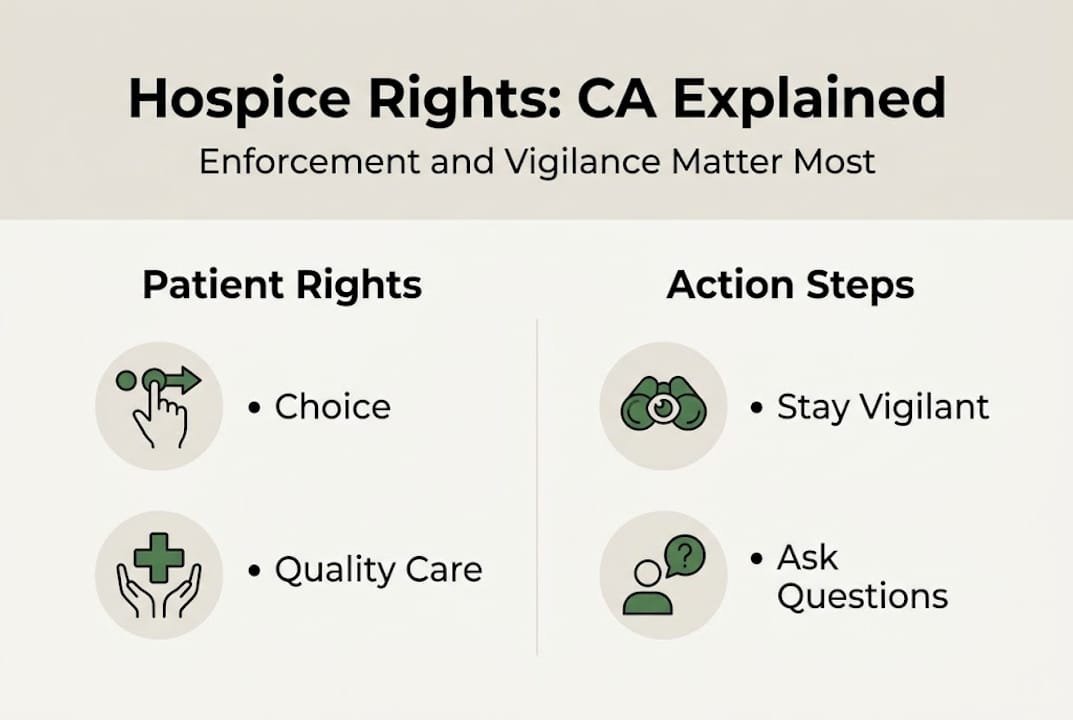
The families who protect their loved ones best are not the ones with the most paperwork. They are the ones who stay present, stay curious, and stay willing to speak up.
How Graceland Hospice Care supports your rights
At Graceland Hospice, we believe that informed families make better decisions, and we welcome every question you bring. Our compassionate hospice care model is built on transparency, respect for patient choice, and full compliance with California’s patient rights requirements. We provide all required Medi-Cal documentation on time and encourage families to review care plans, raise concerns, and stay involved at every level. You should never feel like an outsider in your loved one’s care. Explore our hospice services or contact us today for a free consultation. We are here to help you navigate this journey with dignity and confidence.
Frequently asked questions
Can a hospice patient in California stop or change their care?
Yes, patients or their legal representatives can revoke hospice care at any time by submitting a signed statement and can request curative treatment before re-electing hospice later if eligible.
What protections exist if I suspect hospice fraud or substandard care?
Report concerns to California’s licensing authorities or the state ombudsman, and verify provider credentials through official channels, especially given the 2026 $267 million fraud case that exposed gaps in oversight.
What special rights do children and under-21 Medi-Cal hospice patients have?
Patients under 21 can receive curative care alongside hospice, and any changes or discharge must be reported to DHCS using the required state forms.
What documents should California hospice patients receive when electing Medi-Cal hospice?
They must receive the DHCS 8052 and 8053 forms, the Election Notice and Non-Covered Items Notification, submitted within five days of the start of care.
Recommended
- Understanding Hospice Care Levels: A Guide for California Families | Graceland Hospice Care Blog
- End-of-Life Planning Guide: Hospice & Comfort Care at Home | Graceland Hospice Care Blog
- Hospice Care Standards: Ensuring Quality at Home | Graceland Hospice Care Blog
- Essential end-of-life documentation steps for California families | Graceland Hospice Care Blog
- Insurance claims explained: secure your payouts in California - Jenkins Insurance Agency Inc.