How to Start Hospice Care for Loved Ones at Home

How to Start Hospice Care for Loved Ones at Home
Every caregiver in Orange County faces moments when supporting elderly parents at home becomes overwhelming and emotionally complex. Choosing hospice care is a deeply personal step that impacts family dynamics and loved ones’ comfort. Understanding key steps like verifying hospice eligibility, engaging in meaningful discussions, and selecting a compassionate provider empowers you to deliver personalized, high-quality care. This guide helps you navigate the process with clarity and sensitivity, focusing on your parent’s unique medical, emotional, and spiritual needs.
Table of Contents
- Step 1: Assess Hospice Eligibility and Needs
- Step 2: Discuss Options with Family and Physicians
- Step 3: Select a Hospice Provider in Orange County
- Step 4: Initiate Admission and Care Planning
- Step 5: Monitor Care and Address Concerns
Quick Summary
| Key Point | Explanation |
|---|---|
| 1. Assess Hospice Eligibility Accurately | Confirm terminal illness and individual needs to determine qualification for hospice services effectively. |
| 2. Engage in Open Family Discussions | Facilitate honest conversations among family and physicians to align on care preferences and patient wishes. |
| 3. Research Local Hospice Providers Thoroughly | Evaluate providers based on quality, services, and staff competency to ensure the best care for your loved one. |
| 4. Develop a Comprehensive Care Plan | Collaboratively create a personalized care plan addressing all medical, emotional, and spiritual needs upon admission. |
| 5. Monitor Care Quality Consistently | Actively track care and communicate with hospice staff to maintain high-quality support and address any concerns promptly. |
Step 1: Assess Hospice Eligibility and Needs
Navigating hospice care for a loved one requires understanding complex eligibility requirements and conducting a thorough personal assessment. Your goal in this step is to determine whether your family member qualifies for hospice services and comprehensively document their specific care needs.
To begin, you’ll need to verify key medical criteria. Medicare hospice eligibility requires a physician’s certification that the patient has a terminal illness with a prognosis of six months or less if the disease follows its normal progression. This means working closely with your loved one’s primary care physician or specialist to obtain a detailed medical assessment.
The comprehensive evaluation involves several critical components:
- Physical Health Assessment: Documenting the progression of the terminal illness
- Functional Status Evaluation: Understanding the patient’s current capabilities and limitations
- Symptom Severity Analysis: Tracking pain levels, medical complications, and treatment responsiveness
- Psychological and Emotional Screening: Assessing mental health and emotional readiness for end-of-life care
Your hospice team will conduct a patient-specific comprehensive evaluation that goes beyond medical metrics. They will examine your loved one’s social, emotional, and spiritual needs to develop a personalized care plan focused on comfort and quality of life.
A thorough eligibility assessment ensures that your family receives precisely tailored hospice services matching your loved one’s unique medical and personal requirements.
The next step involves scheduling detailed consultations with medical professionals who can provide official certification and help you navigate the hospice enrollment process.
Pro tip: Gather all medical records, diagnostic reports, and treatment histories before your initial hospice assessment to streamline the evaluation process and provide comprehensive information.
Step 2: Discuss Options with Family and Physicians
Navigating the complex landscape of hospice care requires open, honest conversations with your loved ones and medical professionals. In this critical step, you’ll facilitate meaningful dialogues that help everyone understand the hospice journey and align on the best approach for your family’s unique situation.
Begin by scheduling a comprehensive family meeting where everyone can express their thoughts, concerns, and expectations. Medicare hospice guidance emphasizes the importance of collaborative decision-making that centers on the patient’s goals and values. These discussions should create a supportive environment where everyone feels heard and respected.
Key conversation elements include:
- Medical Insights: Physicians provide detailed information about prognosis and treatment options
- Family Preferences: Understanding emotional and practical considerations
- Patient Wishes: Centering discussions around the patient’s comfort and quality of life
- Care Plan Overview: Exploring specific hospice services and support mechanisms
Prepare a list of critical questions for your medical team to ensure comprehensive understanding. This might include inquiries about:
- Specific medical eligibility criteria
- Expected progression of care
- Available support services
- Financial considerations and insurance coverage
Open communication transforms a challenging medical decision into a compassionate, collaborative journey of mutual understanding and support.
Once initial discussions are complete, schedule follow-up conversations to refine your collective understanding and approach. This iterative process allows for flexibility and continued emotional support.
Pro tip: Create a shared digital document or notebook where family members can contribute thoughts, questions, and insights to maintain transparency and keep everyone informed throughout the hospice care planning process.
Step 3: Select a Hospice Provider in Orange County
Finding the right hospice provider is a crucial decision that requires careful research and thoughtful evaluation. Your goal in this step is to identify a hospice service that not only meets medical requirements but also provides compassionate, personalized care for your loved one.

Begin your search by utilizing Medicare Care Compare tools to explore certified hospice providers in Orange County. These resources offer comprehensive insights into provider quality, service offerings, and patient experiences, helping you make an informed selection.
Key factors to consider when evaluating hospice providers include:
- Certification Status: Verify state and federal licensing
- Geographic Coverage: Ensure service availability in your specific Orange County area
- Service Range: Assess comprehensive care options
- Staff Expertise: Review qualifications of medical and support teams
- Patient-to-Caregiver Ratio: Understand personalized attention potential
Important evaluation steps:
- Request detailed service brochures
- Schedule in-person or virtual consultations
- Check references and patient testimonials
- Confirm insurance and Medicare compatibility
Choosing a hospice provider is about finding a compassionate partner who will support both your loved one and your entire family during a deeply personal journey.
Once you’ve narrowed your options, arrange site visits or comprehensive interviews to get a deeper understanding of each provider’s approach and philosophy.
Pro tip: Create a comparative spreadsheet tracking each hospice provider’s key attributes, allowing you to systematically evaluate and compare your options side by side.
Compare how Medicare, private insurance, and self-pay methods influence hospice selection in Orange County:
| Payment Method | Provider Choice Flexibility | Out-of-Pocket Cost | Typical Process |
|---|---|---|---|
| Medicare | Wide; must be certified | Minimal, usually covered | Enroll via referral and certification |
| Private Insurance | Varies by plan network | Possible deductibles | Confirm in-network providers first |
| Self-Pay | Any licensed provider | Highest personal expense | Direct contract with hospice agency |
Step 4: Initiate Admission and Care Planning
With your hospice provider selected, you’re now ready to navigate the critical process of admission and developing a personalized care plan. This step transforms your discussions and assessments into a concrete roadmap for compassionate end-of-life support.
The initial phase involves a comprehensive interdisciplinary care planning process that typically occurs within 48 hours of hospice election. Your hospice team will conduct an initial assessment to understand your loved one’s unique medical, emotional, and personal needs.
Key components of the admission and care planning process include:
- Medical Documentation: Gathering and reviewing complete medical history
- Comprehensive Assessment: Evaluating physical, emotional, and spiritual needs
- Medication Review: Analyzing current treatments and potential adjustments
- Equipment and Support Needs: Identifying required medical supplies and assistance
Important steps during admission:
- Complete all required medical consent forms
- Provide detailed medical records
- Discuss pain management preferences
- Review insurance and payment details
- Establish primary caregiver responsibilities
The most effective hospice care plans are collaborative efforts that honor the patient’s wishes while providing comprehensive, compassionate support.
Your hospice team will work closely with you to develop a flexible care plan that can be adjusted as your loved one’s needs change. This ongoing communication ensures personalized and responsive care throughout the hospice journey.
Pro tip: Create a dedicated folder with copies of all medical documents, care plan details, and contact information to ensure quick access and smooth communication with your hospice team.
Step 5: Monitor Care and Address Concerns
As your loved one begins hospice care, active involvement and vigilant monitoring become crucial to ensuring the highest quality of support and comfort. Your role transitions from initial planning to ongoing advocacy and attentive care management.
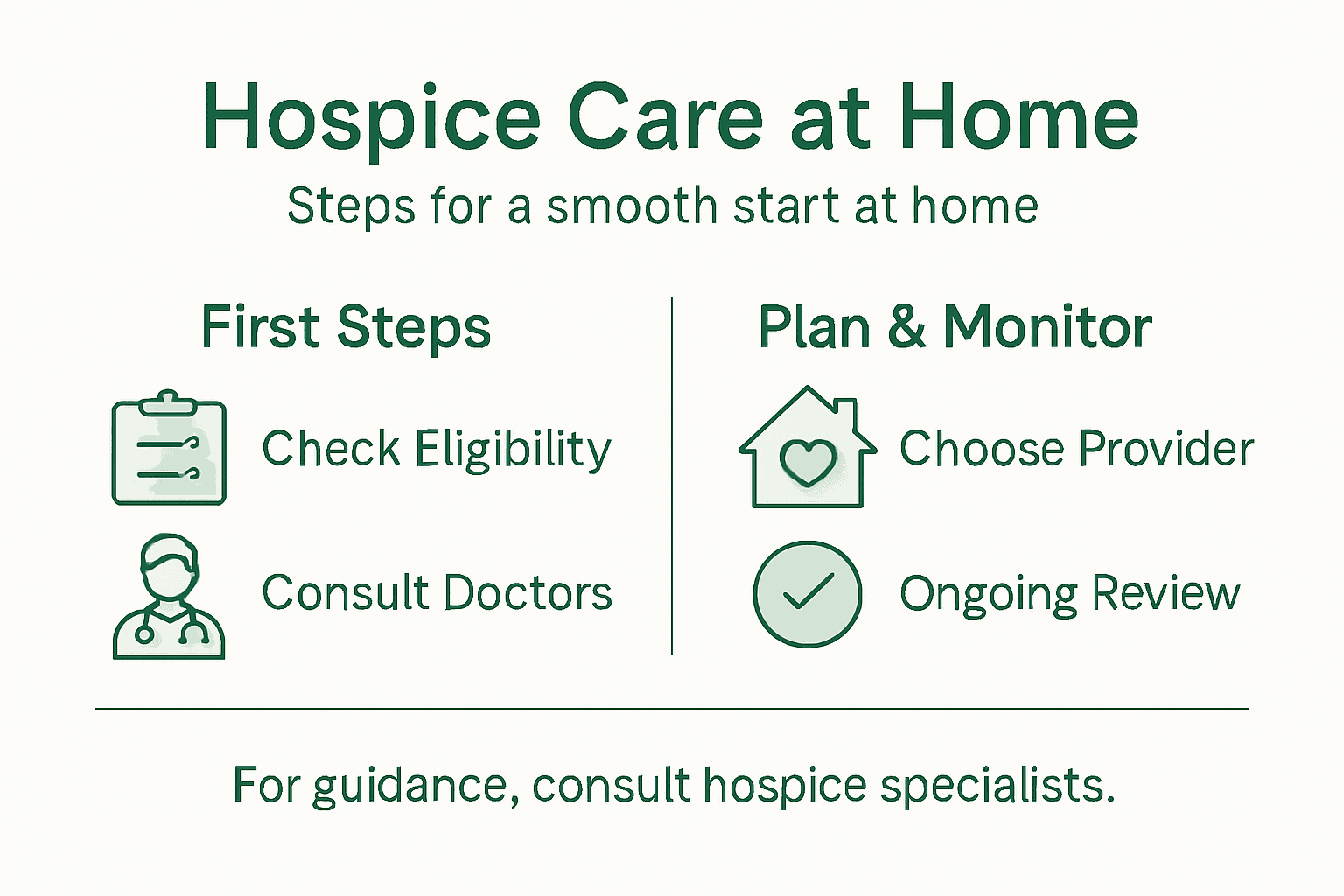
Stay proactively engaged by understanding hospice care oversight protocols that protect patient safety and well-being. This means maintaining open communication with the hospice team, documenting interactions, and being prepared to address any concerns promptly and professionally.
Key strategies for effective care monitoring include:
- Regular Communication: Schedule weekly check-ins with hospice staff
- Detailed Documentation: Keep comprehensive notes about care quality
- Observational Tracking: Monitor your loved one’s physical and emotional state
- Staff Interaction: Assess the compassion and professionalism of caregivers
- Care Plan Review: Ensure ongoing alignment with patient needs
Important monitoring actions:
- Request and review care reports
- Be present during medical assessments
- Ask specific questions about treatment approaches
- Observe caregiver interactions
- Trust your instincts about care quality
Effective hospice care monitoring is a collaborative process that balances professional medical expertise with family compassion and intuition.
Remember that your hospice team wants to provide the best possible care. Approach any concerns with respect, clarity, and a solution-oriented mindset, focusing on your loved one’s comfort and dignity.
Pro tip: Create a dedicated communication log where you record all interactions, observations, and discussions with hospice staff to maintain clear, consistent documentation of your loved one’s care journey.
Here’s a quick reference for key actions and their impact at each step in the hospice care process:
| Step | Main Action | Purpose | Family Benefit |
|---|---|---|---|
| Assess Eligibility | Verify terminal illness and needs | Ensure medical and service qualification | Access to appropriate hospice support |
| Discuss Options | Hold open conversations | Align on goals and expectations | Unified decisions, reduced stress |
| Select Provider | Evaluate local hospice agencies | Choose best fit for needs | Quality care and peace of mind |
| Admission Planning | Coordinate care plan and paperwork | Organize treatment and support | Personalized, responsive attention |
| Monitor Care | Track and communicate with staff | Maintain quality and safety | Prompt issue resolution, reassurance |
Begin Your Hospice Care Journey with Confidence and Compassion
Starting hospice care at home brings many challenges including understanding eligibility, coordinating care plans, and choosing the right provider. The article highlights how these steps can feel overwhelming when facing complex medical assessments and emotional decisions. If you are seeking personalized support that respects your loved one’s unique needs and emotional comfort, Graceland Hospice stands ready to guide you every step of the way. Our compassionate team ensures clear communication, expert care planning, and trusted service that eases the burden during this delicate time.
Explore helpful resources and detailed guidance on our blog to deepen your understanding of hospice care options. When you are ready to take the next step, contact us for a free consultation and discover why so many in Orange County trust Graceland Hospice for compassionate, high-quality care. Visit Graceland Hospice today and let us partner with your family to provide comfort and dignity at home.
Frequently Asked Questions
How do I assess if my loved one is eligible for hospice care at home?
To determine eligibility for hospice care at home, start by consulting with your loved one’s primary physician to confirm they have a terminal illness with a prognosis of six months or less. Gather all medical records and documentation to support this process and prepare for a comprehensive evaluation with a hospice team.
What steps should I take to discuss hospice care options with my family?
Begin by scheduling a family meeting to discuss hospice care options openly. Create a list of questions about medical needs, patient wishes, and available services, allowing all family members to share their thoughts and concerns in a supportive environment.
How do I choose the right hospice provider for home care?
Identify potential hospice providers that offer home care by reviewing their certifications and services. Schedule consultations with your top choices to assess their staff expertise, patient-to-caregiver ratio, and overall approach to care, enabling you to make an informed selection that best fits your loved one’s needs.
What is involved in the admission process for hospice care at home?
During the admission process, your chosen hospice provider will conduct a comprehensive assessment of your loved one’s medical, emotional, and personal needs. Make sure to gather all required medical documentation, discuss pain management preferences, and clarify insurance details to ensure a smooth admission process.
How can I monitor the quality of hospice care my loved one receives at home?
Stay actively involved in your loved one’s care by maintaining regular communication with the hospice team and documenting care quality. Schedule weekly check-ins to assess your loved one’s physical and emotional state, and address any concerns you have promptly to ensure they receive high-quality support.
What actions should I take if I have concerns about the care provided?
If you have concerns about the care provided, address them directly with the hospice team in a respectful and clear manner. Document your observations and specific issues to facilitate constructive discussions, ensuring that your loved one’s comfort and dignity remain the top priority.
Recommended
- Graceland Hospice Care | Compassionate End-of-Life Care
- Graceland Hospice Care | Compassionate End-of-Life Care
- Graceland Hospice Care | Compassionate End-of-Life Care
- Graceland Hospice Care | Compassionate End-of-Life Care
- Coping With Grief After Losing a Loved One - Dr. Stephen Oreski & Associates