Hospice Care Standards: Ensuring Quality at Home

Hospice Care Standards: Ensuring Quality at Home
Caring for an elderly parent in Orange or LA County often means facing both practical and emotional questions about end-of-life support at home. During these deeply personal moments, choosing a provider who meets hospice care standards and values becomes crucial for peace of mind. This guide explains how quality, patient-centered care in California is shaped by established federal regulations, compassionate principles, and the promise of dignity for your loved one.
Table of Contents
- Defining Hospice Care Standards And Values
- Types Of Hospice Services For Home Settings
- Licensure, Accreditation, And Legal Compliance
- Care Planning, Staffing, And Family Support
- Patient Rights, Fraud Protection, And Oversight
- Costs, Medicare, And Compliance Pitfalls
Key Takeaways
| Point | Details |
|---|---|
| Patient-Centered Care | Hospice care focuses on dignity, comfort, and individualized support for patients with terminal illnesses. |
| Service Options | Various hospice service levels are available, including Routine Home Care and Continuous Home Care, tailored to patient needs. |
| Legal Compliance | Hospice providers must meet federal and state regulations to ensure high-quality care and protect patient rights. |
| Financial Considerations | Understanding Medicare coverage and potential out-of-pocket expenses is crucial for families seeking hospice care. |
Defining Hospice Care Standards and Values
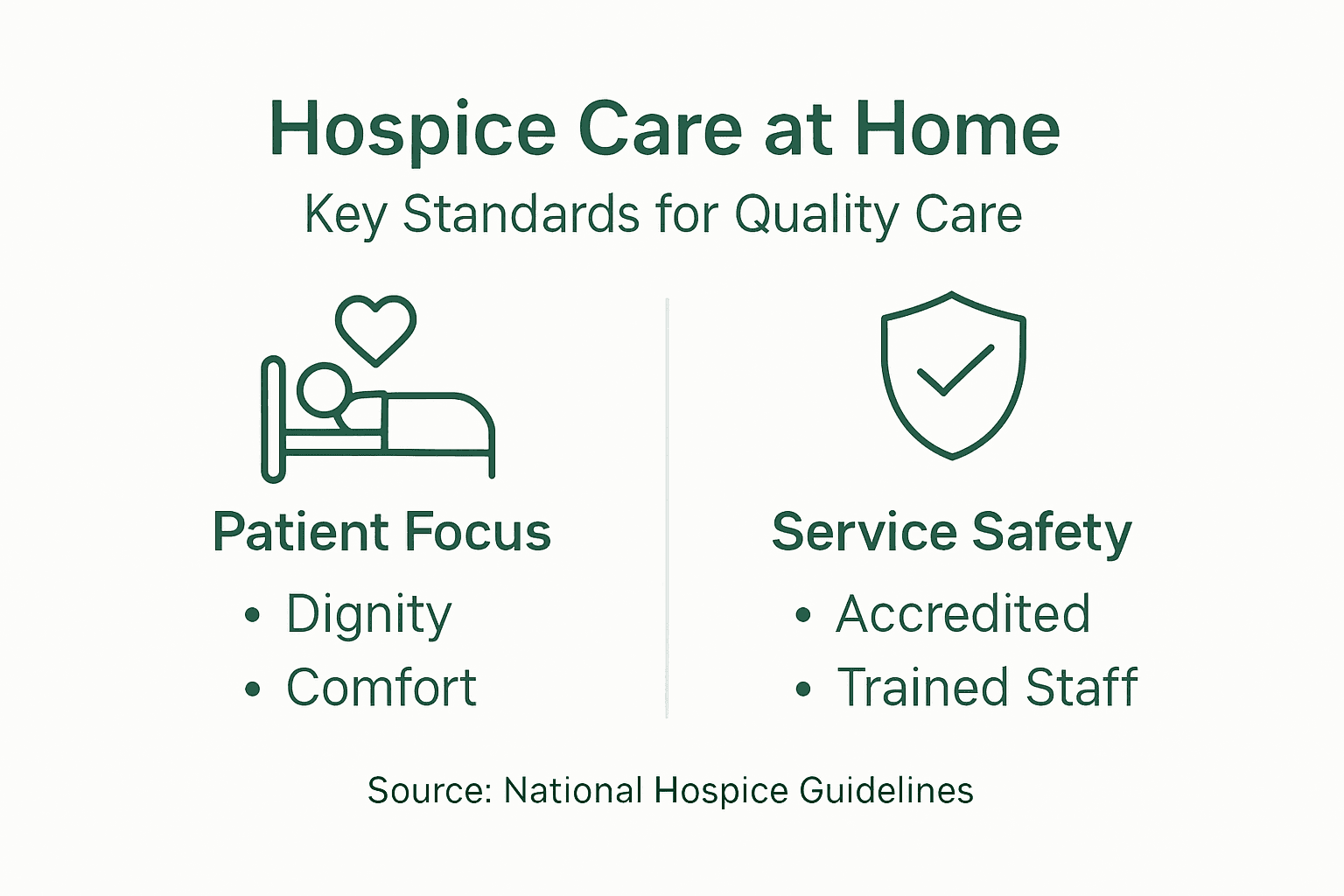
Hospice care represents a compassionate, patient-centered approach to medical support for individuals facing terminal illnesses. Specialized medical care focuses on comfort, dignity, and quality of life during life’s most challenging final months.
The core standards of hospice care are built upon several fundamental principles that prioritize holistic patient support:
- Emphasizing patient dignity and personal choice
- Managing pain and symptoms effectively
- Providing comprehensive physical and emotional support
- Supporting the entire family through the end-of-life journey
- Ensuring individualized care plans
Federal regulations play a critical role in establishing consistent hospice care standards. Medicare conditions of participation mandate specific requirements that hospice programs must meet, ensuring patients receive high-quality, compassionate care. These regulations outline precise guidelines for:
- Interdisciplinary patient assessments
- Pain management protocols
- Emotional and bereavement support services
- Comprehensive care coordination
Critical to understanding hospice care is recognizing its fundamental philosophy: transforming end-of-life experiences from clinical procedures to deeply human, dignified passages. By focusing on comfort rather than cure, hospice programs create supportive environments where patients can spend their remaining time with maximum peace and minimal suffering.
Pro tip: Ask potential hospice providers about their specific care philosophy and how they personalize support for individual patient needs.
Types of Hospice Services for Home Settings
Navigating hospice care requires understanding the different service levels available for patients receiving treatment at home. Medicare-certified hospice levels provide comprehensive support tailored to varying patient needs and medical conditions.
The primary types of hospice services for home settings include:
- Routine Home Care: The most common service level
- Continuous Home Care: Intensive support during medical crises
- Respite Care: Temporary relief for primary caregivers
- General Inpatient Care: Short-term facility-based symptom management
Routine Home Care represents the standard approach for most hospice patients. This service allows individuals to remain in their familiar home environment while receiving comprehensive medical support. Nurses and healthcare professionals visit regularly to manage symptoms, administer medications, and provide emotional support to both patients and their families.
Continuous Home Care offers more intensive intervention during acute medical situations. When patients experience significant symptom escalation or medical complications, specialized nursing staff provide round-the-clock support directly in the patient’s home. This service ensures immediate medical attention and helps stabilize challenging health conditions.
Choosing the right hospice service level depends on individual patient needs, medical complexity, and caregiver support requirements.
Respite Care provides critical support for family caregivers, offering temporary relief and preventing burnout. During these periods, patients receive short-term care in a facility, allowing primary caregivers to rest, recuperate, and manage their own physical and emotional well-being.
Pro tip: Discuss all available service levels with your hospice provider to create a personalized care plan that adapts to changing medical needs.
Here’s a concise comparison of hospice service levels for home-based care:
| Service Level | Primary Purpose | Typical Setting | Patient Need Addressed |
|---|---|---|---|
| Routine Home Care | Ongoing comfort and support | Patient’s residence | Stable care needs |
| Continuous Home Care | Crisis intervention at home | Patient’s residence | Sudden symptom escalation |
| Respite Care | Caregiver relief and support | Inpatient facility | Temporary family rest periods |
| General Inpatient Care | Intensive symptom management | Medical facility unit | Complex or uncontrolled symptoms |
Licensure, Accreditation, and Legal Compliance
Hospice care providers must navigate a complex landscape of legal requirements and professional standards to ensure high-quality patient care. Federal regulations define critical compliance standards that protect patient rights and maintain healthcare quality across different service settings.
Key legal and regulatory requirements for hospice providers include:
- Obtaining appropriate state and federal licensing
- Maintaining comprehensive patient documentation
- Implementing robust interdisciplinary care protocols
- Ensuring staff qualifications and ongoing training
- Protecting patient privacy and rights
Accreditation serves as an additional layer of quality assurance beyond basic legal compliance. Community Health Accreditation Partner (CHAP) provides specialized hospice accreditation that goes beyond minimum regulatory requirements. This voluntary process helps providers demonstrate their commitment to exceptional care standards and continuous improvement.
The Medicare Conditions of Participation represent the cornerstone of hospice legal compliance. These comprehensive regulations mandate specific requirements for:
- Patient assessment protocols
- Care planning and documentation
- Staff training and qualifications
- Performance measurement and quality improvement
- Patient and family rights protection
Legal compliance is not just about following rules, but about ensuring the highest standard of compassionate, patient-centered care.
Hospice organizations must maintain meticulous records, implement rigorous staff training programs, and continuously evaluate their services to meet evolving regulatory standards. Failure to comply can result in significant penalties, license suspension, or removal from Medicare and Medicaid reimbursement programs.

Pro tip: Request documentation of a hospice provider’s current accreditations and recent compliance audits before making a care selection.
Care Planning, Staffing, and Family Support
Hospice care requires a comprehensive, personalized approach that addresses the complex needs of patients and their families. Individualized care planning involves a collaborative process that brings together medical professionals, patients, and family members to create a holistic support strategy.
Key components of an effective hospice care plan include:
- Comprehensive medical assessments
- Pain and symptom management protocols
- Emotional and spiritual support services
- Personalized treatment objectives
- Family education and counseling
The interdisciplinary care team plays a crucial role in developing and implementing care plans. This team typically consists of:
- Physicians specializing in palliative care
- Registered nurses
- Social workers
- Spiritual care counselors
- Trained hospice aides
Hospice caregiver support extends beyond medical treatment, recognizing the critical role of family members in the patient’s end-of-life journey. The support system provides comprehensive resources to help families navigate this challenging time, including:
- Caregiver training programs
- Respite care services
- Emotional support counseling
- Practical caregiving guidance
- Bereavement support
The most effective hospice care sees the patient and family as a single unit of care, addressing both medical and emotional needs.
Staffing in hospice care requires careful consideration of patient needs, with professionals trained to provide compassionate, personalized support. Each team member brings specialized skills to address the multifaceted challenges of end-of-life care, ensuring patients receive comprehensive support that honors their dignity and individual preferences.
Pro tip: Request a detailed care plan consultation that involves all family members and explores every aspect of potential patient support.
The following table summarizes how hospice care planning addresses both patient and family needs:
| Component | Patient Benefit | Family Benefit |
|---|---|---|
| Medical Assessments | Tailored treatment plans | Confidence in quality of care |
| Emotional Support | Reduces anxiety and fear | Guidance during difficult times |
| Family Counseling | Encourages shared goals | Strengthens coping resources |
| Bereavement Support | Smooth transition in care | Long-term emotional support |
Patient Rights, Fraud Protection, and Oversight
Hospice care demands rigorous legal protections to ensure patient dignity, safety, and quality of care. Federal regulations establish comprehensive patient rights that safeguard individuals during their most vulnerable moments.
Critical patient rights in hospice care include:
- Right to informed consent
- Comprehensive privacy protections
- Active participation in care planning
- Access to complete medical information
- Freedom from discrimination
- Option to refuse treatments
Fraud prevention represents another crucial aspect of patient protection. The Hospice CARE Act proposes significant oversight reforms designed to enhance accountability and prevent systemic abuse. Key fraud prevention strategies involve:
- Enhanced clinical visit documentation
- Moratoriums on new hospice enrollments in high-risk areas
- Increased monitoring of newly established programs
- Strict licensing requirements for medical directors
- Regular compliance audits
Patient rights are not optional extras, but fundamental guarantees that must be consistently upheld and protected.
Oversight mechanisms play a critical role in maintaining hospice care standards. Government agencies conduct regular inspections, review documentation, and investigate potential violations to ensure providers maintain ethical and legal standards. These oversight processes protect patients from potential mistreatment, financial exploitation, and substandard care.
Pro tip: Request a written copy of patient rights and carefully review the hospice provider’s fraud prevention and oversight protocols before selecting their services.
Costs, Medicare, and Compliance Pitfalls
Navigating hospice care costs requires a comprehensive understanding of Medicare coverage and potential financial challenges. Medicare hospice benefits provide critical support for patients facing terminal illnesses, but understanding the nuanced coverage is essential.
Medicare hospice coverage typically includes:
- Skilled nursing care
- Medical supplies and equipment
- Therapy services
- Prescription medications for symptom management
- Respite care services
- Counseling and emotional support
Financial considerations for patients involve several key aspects:
- Nominal copayments for prescription drugs
- Small fees for respite care
- Limited out-of-pocket expenses
- Waiving of curative treatment costs for terminal conditions
- Potential additional expenses not covered by Medicare
Medicare compliance requirements introduce complex documentation and certification processes. Potential compliance pitfalls include:
- Improper terminal illness certification
- Inadequate medical documentation
- Failure to meet Medicare Conditions of Participation
- Insufficient patient eligibility verification
- Incomplete care plan documentation
Understanding Medicare’s intricate rules can mean the difference between comprehensive coverage and unexpected financial burdens.
Patients and families must carefully review coverage limitations and potential compliance risks. Medicare requires precise documentation, including physician certification of terminal illness and explicit patient agreement to forgo curative treatments for the specific condition.
Pro tip: Request a detailed written explanation of Medicare coverage and potential out-of-pocket expenses before finalizing hospice care arrangements.
Ensuring Compassionate Hospice Care Standards at Home
Navigating the complexities of hospice care standards and ensuring quality comfort at home can be overwhelming for patients and their families. Key challenges include understanding individualized care planning, managing pain and symptoms effectively, and securing legal compliance that protects patient rights. At Graceland Hospice, we recognize these critical needs and are dedicated to providing compassionate support tailored to each unique situation.
Our team embraces the hospice philosophy of prioritizing dignity and holistic patient care while supporting families every step of the way. We invite you to explore our commitment to excellence by visiting Graceland Hospice and learning how our personalized services can bring peace and comfort during this difficult time. Reach out today for a free consultation and discover why so many trust us to uphold the highest hospice care standards in home settings.
Contact us now and take the first step toward compassionate, quality hospice care designed around your needs.
Frequently Asked Questions
What are the core standards of hospice care?
The core standards of hospice care emphasize patient dignity, effective pain management, comprehensive support for both physical and emotional needs, family involvement, and individualized care plans.
What types of hospice services are available for home settings?
Hospice services for home settings include Routine Home Care, Continuous Home Care, Respite Care, and General Inpatient Care, each tailored to meet varying patient needs and medical conditions.
How do Medicare regulations affect hospice care quality?
Medicare regulations establish conditions of participation that ensure hospice care providers meet specific standards for patient assessments, pain management, emotional support, and care coordination to guarantee high-quality services.
What is involved in care planning for hospice patients?
Care planning in hospice involves a collaborative approach that includes comprehensive medical assessments, personalized treatment objectives, and support services for both patients and their families to address their holistic needs.
Recommended
- Graceland Hospice Care | Compassionate End-of-Life Care
- Graceland Hospice Care | Compassionate End-of-Life Care
- Graceland Hospice Care | Compassionate End-of-Life Care
- Graceland Hospice Care | Compassionate End-of-Life Care
- Role of Caregivers in Hearing Aid Choice – Impact on Elderly Wellbeing – Audora
- Supporting Those Who Support Others With Therapy for Caregivers - Dr. Stephen Oreski & Associates