Why Choose At-Home Hospice for Orange County Families
Why Choose At-Home Hospice for Orange County Families
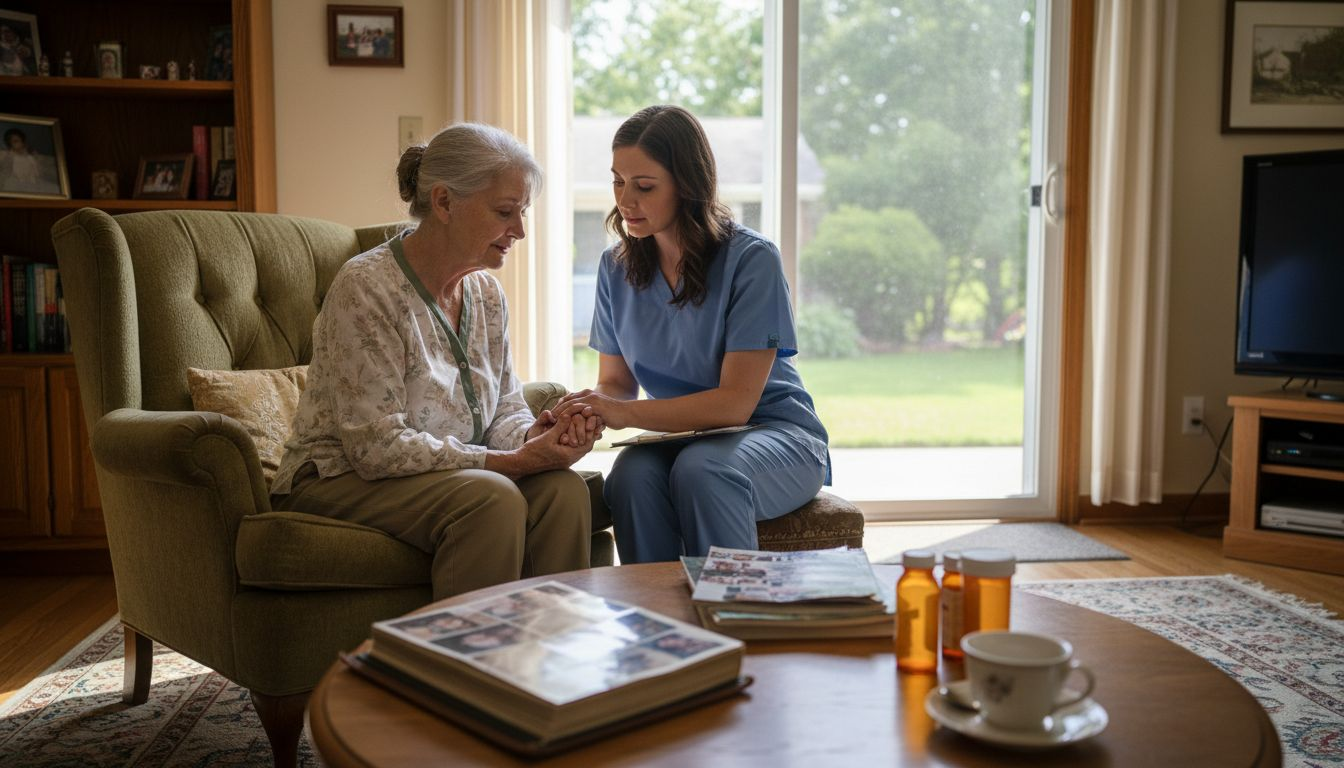
When caring for a loved one facing a terminal illness, choosing compassionate support close to home becomes a top priority for many families in Orange and LA counties. At-home hospice care offers a way to focus on comfort, dignity, and personalized attention during life’s most tender moments. By understanding the benefits, legal protections, and financial coverage available, families can discover how hospice care helps make each day meaningful and provides holistic support for both patients and caregivers.
Table of Contents
- What At-Home Hospice Care Means
- Types of Hospice Services at Home
- Key Features and Patient Benefits
- Qualifications and Legal Framework in California
- Comparing At-Home and Facility Hospice
- Financial Costs and Coverage Explained
Key Takeaways
| Point | Details |
|---|---|
| Compassionate Care Focus | At-home hospice care emphasizes comfort and dignity for patients facing terminal illness, prioritizing symptom management over curative treatment. |
| Interdisciplinary Team Support | A team of professionals, including physicians, nurses, and social workers, collaborates to provide personalized, holistic care tailored to individual needs. |
| Legal and Financial Guidance | Understanding California’s hospice eligibility requirements and financial options, including Medicare and Medicaid, helps ensure accessible care. |
| At-Home vs. Facility Hospice | Families must assess the differences in comfort, medical support, and costs when choosing between at-home and facility-based hospice care. |
What At-Home Hospice Care Means
At-home hospice care represents a compassionate, patient-centered approach to end-of-life medical support that prioritizes comfort and dignity for individuals facing terminal illness. Unlike traditional medical treatment, hospice focuses on managing symptoms and improving quality of life rather than pursuing aggressive curative interventions.
This specialized medical service is designed for patients with a life expectancy of six months or less, providing comprehensive care directly within the familiar and comforting environment of their own home. The core philosophy of at-home hospice centers on holistic support that addresses multiple dimensions of patient experience:
- Medical Management: Professional healthcare professionals provide targeted symptom control and pain management
- Emotional Support: Psychological counseling for patients and family members
- Spiritual Care: Guidance and comfort addressing existential and spiritual needs
- Family Assistance: Comprehensive support for caregivers and loved ones
The hospice care team typically consists of an interdisciplinary group of professionals working collaboratively to ensure the highest standard of personalized care. This team may include:
- Physicians specializing in palliative care
- Registered nurses with hospice expertise
- Social workers
- Spiritual counselors
- Trained home health aides
Hospice care isn’t about giving up—it’s about providing the most compassionate, dignified support during life’s most profound transition.
Pro tip: Schedule an initial consultation with a hospice care provider early to understand all available support options and create a personalized care plan tailored to your family’s unique needs.
Types of Hospice Services at Home
At-home hospice services offer a comprehensive and personalized approach to end-of-life care, addressing the complex medical, emotional, and practical needs of patients and their families. These services encompass a wide range of specialized support designed to provide comfort, dignity, and holistic care within the familiar environment of one’s home.
The primary types of at-home hospice services include:
- Medical Care: Comprehensive symptom management and pain control
- Personal Care Assistance: Help with daily activities like bathing, dressing, and medication management
- Emotional Support: Counseling and psychological services for patients and family members
- Spiritual Guidance: Support addressing existential and spiritual concerns
- Respite Care: Temporary relief for primary family caregivers
Each type of service is carefully tailored to meet the unique needs of individual patients. Specialized hospice teams work closely with families to develop a customized care plan that addresses physical, emotional, and practical challenges:
- Nursing Care
- Medical Equipment Provision
- Medication Management
- Nutritional Support
- Family Counseling
- Bereavement Support
Hospice care is not about counting days, but about making the days count—providing comfort, dignity, and quality of life during life’s most challenging journey.
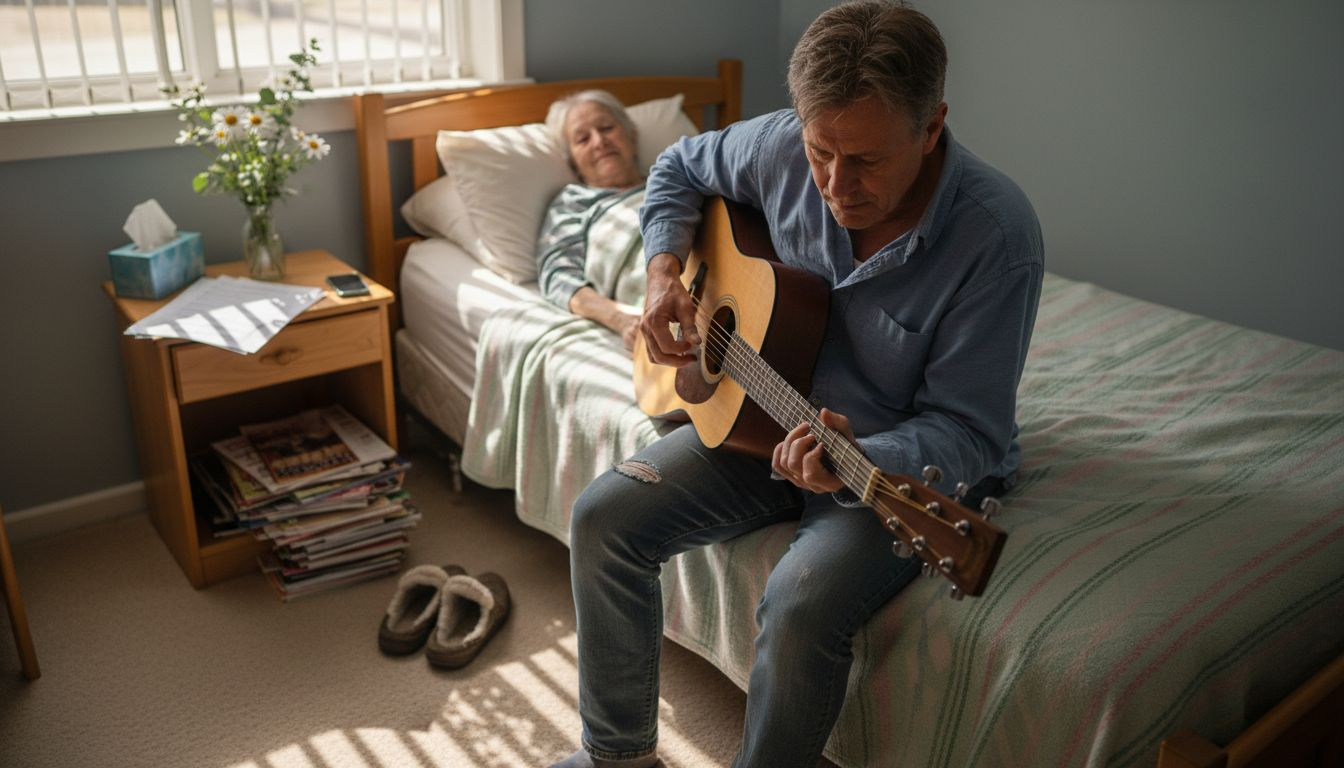
Advanced at-home hospice services often include additional specialized support such as music therapy, art therapy, and alternative pain management techniques. These holistic approaches aim to provide comprehensive care that addresses the entire spectrum of patient needs, ensuring comfort and emotional well-being.
Pro tip: Request a comprehensive care consultation to understand the full range of personalized services available and how they can be customized to support your loved one’s specific needs and preferences.
Key Features and Patient Benefits
Hospice care represents a compassionate approach to end-of-life support that fundamentally transforms how patients and families experience terminal illness. Shifting from curative to comfort-focused care, these services prioritize quality of life and emotional well-being during life’s most challenging moments.
The key features of at-home hospice care are designed to provide comprehensive, personalized support across multiple dimensions:
- Medical Expertise: Professional pain and symptom management
- Emotional Support: Counseling for patients and family members
- 24/7 Accessibility: Continuous care and immediate response
- Individualized Care Plans: Tailored to unique patient needs
- Holistic Approach: Addressing physical, emotional, and spiritual dimensions
Patient benefits of hospice care extend far beyond traditional medical treatment, offering profound advantages for both patients and their families:
- Reduced hospital visits and medical interventions
- Enhanced comfort and dignity
- Emotional and psychological support
- Comprehensive family counseling
- Personalized care in familiar surroundings
Hospice care isn’t about limiting hope—it’s about maximizing comfort, understanding, and meaningful connection during life’s most intimate journey.
Advanced hospice services also incorporate innovative support mechanisms like music therapy, art therapy, and alternative pain management techniques. These approaches recognize that healing encompasses more than physical treatment, focusing instead on emotional resilience, personal dignity, and quality of life.
Pro tip: Request a comprehensive family consultation to explore how personalized hospice services can be tailored to address your specific emotional, medical, and practical needs.
Qualifications and Legal Framework in California
Navigating the complex legal landscape of hospice care in California requires a comprehensive understanding of state-specific regulations and patient protection standards. California hospice providers must adhere to strict regulatory requirements that ensure quality, safety, and patient dignity throughout the end-of-life care process.
Key legal qualifications for hospice care eligibility in California include:
- Medical Certification: Terminal illness with prognosis of six months or less
- Voluntary Election: Patient or representative must voluntarily choose hospice care
- Treatment Preference: Electing palliative over curative medical interventions
- Documentation: Signed election statements and medical documentation
- Continuous Assessment: Regular medical reviews of patient’s condition
The regulatory framework governing hospice services in California is comprehensive and multifaceted:
- Licensing through California Department of Public Health
- Compliance with Title 22 Health Care Service Regulations
- Mandatory quality and patient protection standards
- Ongoing oversight and periodic inspections
- Strict reporting and complaint management processes
The legal framework exists not to restrict care, but to ensure every patient receives compassionate, high-quality, and legally protected end-of-life support.
California’s hospice regulatory system maintains a careful balance between protecting patient rights and preventing potential healthcare fraud. The state has implemented a moratorium on new hospice licenses while strengthening oversight mechanisms, demonstrating a commitment to maintaining the highest standards of care for vulnerable patients.
Pro tip: Request a detailed review of your specific legal qualifications and documentation requirements from a hospice care professional to ensure seamless eligibility and compliance.
Comparing At-Home and Facility Hospice
Choosing between at-home and facility-based hospice care represents a deeply personal decision that hinges on individual patient needs, family dynamics, and medical requirements. Each approach offers unique advantages and challenges, making it crucial for families to understand the nuanced differences and potential implications of their choice.
Key comparative features of at-home and facility hospice care include:
- Comfort Level: Home environment vs. clinical setting
- Family Involvement: Varying degrees of caregiver participation
- Medical Support: Intensity and immediacy of professional care
- Cost Considerations: Financial implications of each option
- Emotional Impact: Psychological effects on patient and family
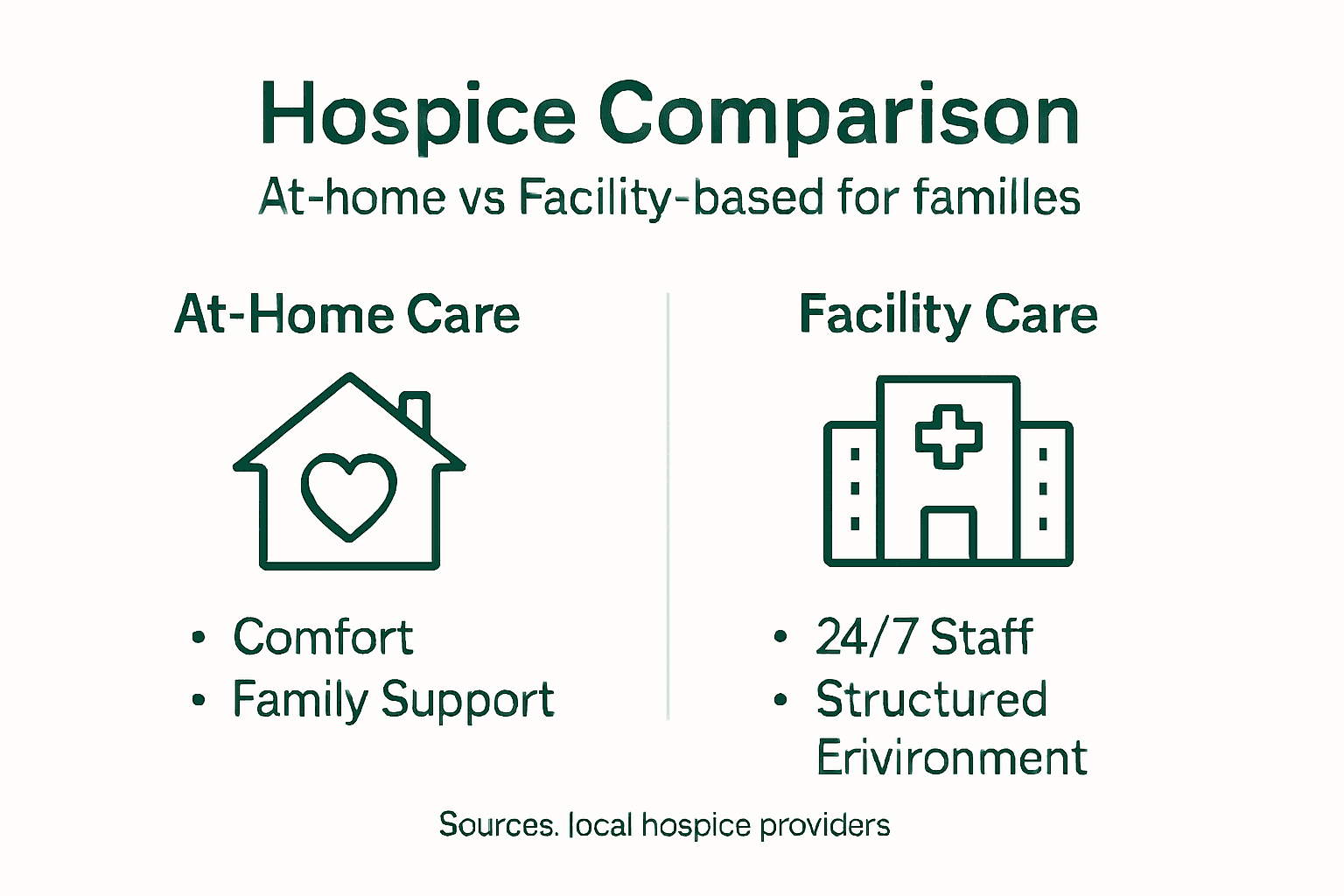
A detailed comparison reveals distinct characteristics of each hospice care approach:
-
At-Home Hospice
- Familiar surroundings
- Maximum family integration
- Personalized care environment
- Potential caregiver strain
-
Facility-Based Hospice
- 24/7 professional monitoring
- Specialized medical equipment
- Reduced family caregiving burden
- Structured care protocols
The best hospice option isn’t about location—it’s about providing compassionate, dignified support that meets the unique needs of each patient and family.
Understanding the emotional and practical dimensions of both care models helps families make informed decisions. At-home hospice offers intimacy and personalization, while facility-based care provides comprehensive medical support and professional management. The ideal choice depends on individual medical requirements, family dynamics, and the patient’s personal preferences.
Here’s a side-by-side look at the main differences between at-home and facility-based hospice care:
| Aspect | At-Home Hospice | Facility-Based Hospice |
|---|---|---|
| Care Environment | Patient’s home, familiar space | Medical facility, clinical setting |
| Family Involvement | Family often provides daily care | Family support, less hands-on |
| Medical Supervision | Home visits, on-call support | Continuous monitoring by staff |
| Comfort & Privacy | High, in own surroundings | Shared spaces possible |
| Cost Range | $150-$1,600 per day | Varies, often higher |
| Equipment Access | Provides essentials at home | Full medical resources on site |
Pro tip: Conduct a comprehensive family discussion and consult with healthcare professionals to evaluate your specific situation and determine the most appropriate hospice care approach.
Financial Costs and Coverage Explained
Navigating the financial landscape of hospice care can feel overwhelming, but understanding the various coverage options and potential expenses helps families make informed decisions. Home hospice care costs range significantly, typically varying from $150 to $1,600 daily depending on the required level of medical support and personal care intensity.
Multiple financial coverage options exist for families seeking hospice services:
- Medicare Coverage: Comprehensive hospice benefit for eligible patients
- Medicaid Support: State-level assistance for low-income individuals
- Private Insurance: Variable coverage with specific policy limitations
- Veterans Benefits: Special hospice care provisions
- Out-of-Pocket Options: Supplemental payment strategies
Detailed breakdown of potential financial considerations includes:
- Public Program Eligibility Requirements
- Private Insurance Verification Process
- Cost-sharing Mechanisms
- Additional Supplemental Services
- Financial Assistance Programs
Understanding hospice care financing isn’t about navigating complexity—it’s about ensuring compassionate care remains accessible and affordable during life’s most sensitive moments.
Patients and families should carefully review their specific insurance plans, as coverage can vary dramatically between providers. Medicare typically covers most hospice care expenses, including medical equipment, nursing services, counseling, and prescription medications related to symptom management and pain control.
Below is a summary of common hospice care financial coverage sources and what they typically include:
| Coverage Source | What It Covers | Eligibility Requirement |
|---|---|---|
| Medicare | Nursing, medications, medical equipment | 65+, terminal diagnosis, enrolled |
| Medicaid | Basic hospice services, limited extras | Low income, state-specific criteria |
| Private Insurance | Varies by policy, may require copays | Active policy, plan review needed |
| Veterans Benefits | Hospice services for eligible veterans | Military service, VA confirmation |
| Out-of-Pocket | Services not covered by other sources | Financial ability, personal funds |
Pro tip: Contact multiple hospice providers and your insurance representative to create a comprehensive financial plan that maximizes available benefits and minimizes unexpected expenses.
Compassionate At-Home Hospice Care Tailored for Orange County Families
Facing the challenges of end-of-life care can be overwhelming. This article highlights how at-home hospice focuses on providing personalized medical management, emotional support, and spiritual care directly within familiar surroundings. If you are looking for comfort, dignity, and professional support that emphasizes quality of life for your loved one, understanding these key pain points and holistic care approaches is essential.
At Graceland Hospice, we share your commitment to compassionate care. Our experienced team delivers comprehensive at-home hospice services right here in Orange County with deep respect and individualized attention. Learn how we set new standards in hospice care by visiting our blog to explore detailed insights. Ready to ease your family’s burden and ensure the best care possible? Contact us now for a free consultation and let us help you create a personalized care plan that truly honors your loved one’s needs and wishes.
Frequently Asked Questions
What is at-home hospice care?
At-home hospice care is a compassionate end-of-life medical service focusing on comfort and dignity for individuals with terminal illnesses, prioritizing symptom management and quality of life instead of curative treatments.
How does at-home hospice differ from facility-based hospice?
At-home hospice allows patients to receive care in the comfort of their own homes, which can enhance their emotional well-being, whereas facility-based hospice typically offers 24/7 professional medical support in a clinical environment, which may reduce family caregiving burden.
What types of services are offered in at-home hospice care?
At-home hospice services typically include medical care, personal care assistance, emotional support, spiritual guidance, and respite care for family caregivers, tailored to meet the unique needs of each patient.
How is the cost of at-home hospice care covered?
Costs for at-home hospice care can vary significantly based on the level of support required. Medicare often covers hospice expenses, along with Medicaid, private insurance options, and veterans benefits, but it’s essential to verify coverage specifics with your insurance provider.
Recommended
- Graceland Hospice Care | Compassionate End-of-Life Care
- Graceland Hospice Care | Compassionate End-of-Life Care
- Graceland Hospice Care | Compassionate End-of-Life Care
- Graceland Hospice Care | Compassionate End-of-Life Care
- Grief Therapy for Families – Rebuilding Connections Together
- Family Therapy - ReviveHealthTherapy