How to Manage Hospice Medications at Home
How to Manage Hospice Medications at Home
TL;DR:
- Managing hospice medications at home requires organization, ongoing communication, and careful observation to ensure your loved one’s comfort. Proper tools, documentation, and prompt reporting of side effects help caregivers provide safe, effective care during this challenging time. Regular medication reviews and honest conversations with hospice professionals support adaptive, compassionate end-of-life symptom management.
Caring for a loved one at home during life’s final chapter is one of the most profound things a person can do. It is also one of the most demanding. Knowing how to manage hospice medications confidently sits at the heart of that responsibility. When medications are given correctly and on time, your loved one stays comfortable, pain stays controlled, and crises become less frequent. This guide walks you through everything you need to know, from setting up your medication space to recognizing side effects, so you can provide the best possible care with clarity and confidence.
Table of Contents
- Key takeaways
- How to manage hospice medications: getting organized first
- Administering medications safely and effectively
- Monitoring for side effects and knowing when to call
- Troubleshooting common medication challenges
- Keeping up as needs change
- My honest take on what no one tells you
- How Gracelandhc supports caregivers through every step
- FAQ
Key takeaways
| Point | Details |
|---|---|
| Prepare before you start | Gather tools like medication logs, pill organizers, and reminder systems before administering any medications. |
| Follow the comfort-focused plan | Hospice medications target symptom relief, not cure, so accuracy and consistency matter deeply. |
| Document every dose | Recording what was given and how your loved one responded helps the hospice team make better decisions. |
| Know the warning signs | Recognizing side effects early and reporting them promptly protects your loved one from unnecessary suffering. |
| Reassess regularly | Medication needs change as conditions evolve, making ongoing communication with the hospice team non-negotiable. |
How to manage hospice medications: getting organized first
Before you administer a single medication, you need the right tools and a clear setup. Simple organizational tools like pill organizers, medication logs, and reminder alarms genuinely reduce errors in home hospice care and improve caregiver confidence.
Here is what you should have ready before you begin:
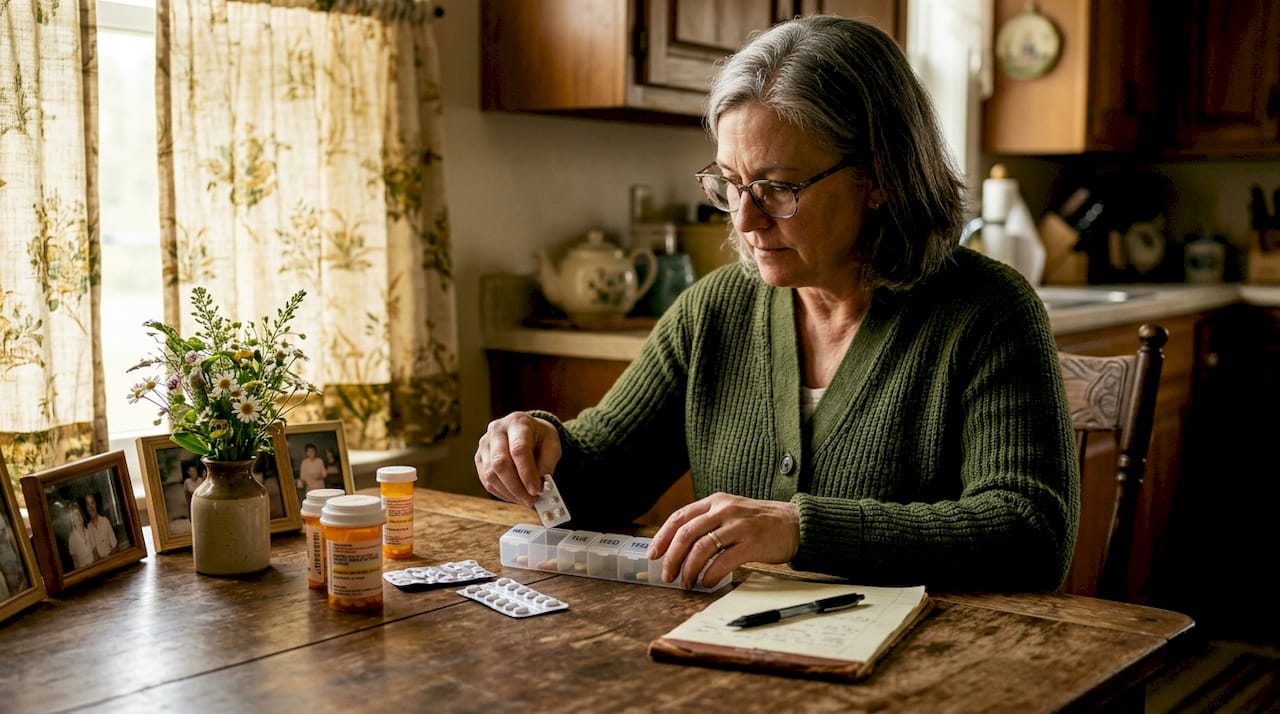
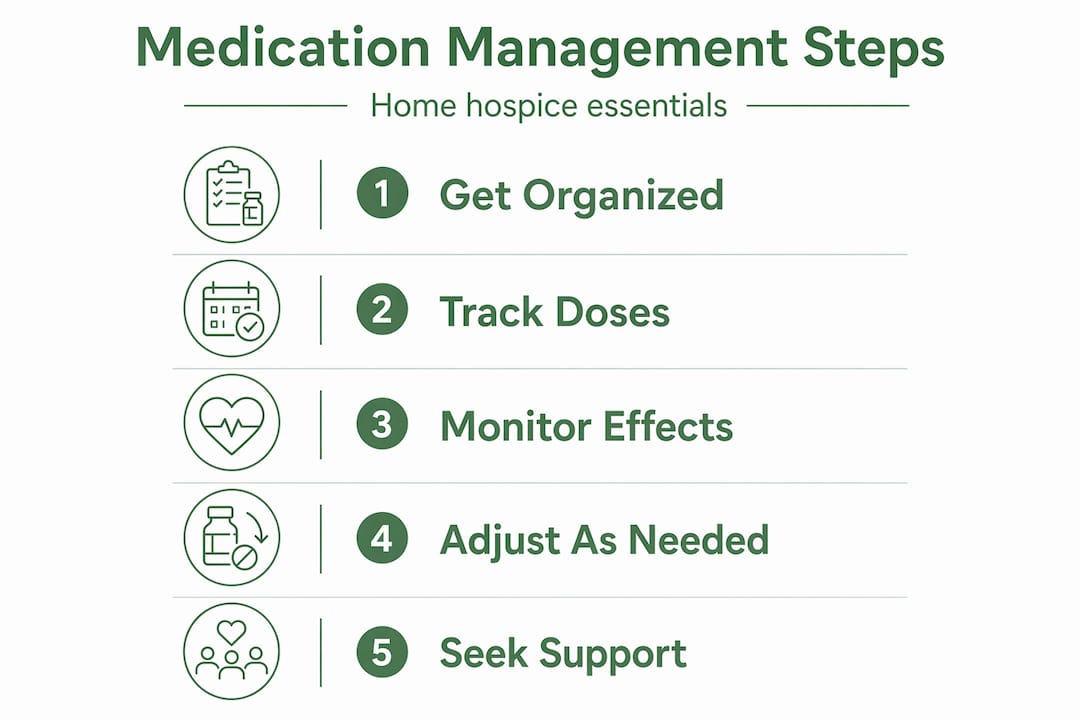
- A written medication log. Record every dose, the time it was given, and any reaction you notice. This creates a paper trail that protects both you and your loved one.
- Pill organizers or labeled containers. Use clearly labeled containers separated by day and time. This prevents accidental double-dosing.
- A reminder system. Phone alarms, paper charts, or caregiver apps all work. Choose the one you will actually use consistently.
- Emergency contact information. Keep your hospice nurse’s direct line, the on-call number, and any relevant pharmacy contacts posted where you can find them in seconds.
- A secure, organized medication area. Designate one spot in the home for all medications. Keep it away from children, at a consistent temperature, and stocked with supplies like gloves, syringes, or any other tools the hospice team has prescribed.
Pro Tip: Ask your hospice pharmacist to package medications in blister packs rather than loose bottles. Blister packs make it immediately visible whether a dose was taken, cutting down on guesswork.
Hospice medications focus exclusively on symptom management and comfort, which means the list is often shorter than you might expect. Core medications typically include pain relievers, anti-nausea drugs, and medications for anxiety or breathing difficulty. Understanding what each medication is for helps you administer it with purpose rather than uncertainty.
| Tool | Purpose |
|---|---|
| Medication log | Tracks doses, timing, and patient response |
| Pill organizer | Prevents missed or doubled doses |
| Reminder alarm | Maintains consistent dosing schedule |
| Emergency info sheet | Speeds up response during difficult moments |
| Comfort pack | Provides fast symptom relief at home |
One step many caregivers skip is asking the hospice team for a written medication plan with plain-language explanations. Coordinating with the hospice team enhances medication safety and ensures you are never guessing about a dose or a schedule.
Administering medications safely and effectively
Once your workspace is ready, the actual administration process follows a clear pattern. Sticking to that pattern every time is what keeps your loved one safe and comfortable.
- Read the label carefully before every dose. Confirm the medication name, dose amount, and timing. Even if you have given the same medication dozens of times, this check takes ten seconds and prevents serious errors.
- Match the administration method to what the hospice team prescribed. Oral medications, patches, liquid drops, and suppositories each require different techniques. Ask for a demonstration from your hospice nurse if you are uncertain about any method.
- Give medications at the scheduled time. Consistency matters more than perfection. If you miss a dose, contact the hospice nurse rather than doubling up on the next one.
- Record the dose immediately after giving it. Do not wait until the end of the day. Write down the medication name, the amount, the time, and a brief note about how your loved one seemed before and after.
- Observe your loved one for 30 to 60 minutes after a new medication or a dose change. This window gives you a chance to spot reactions early.
- Contact the hospice nurse right away if something seems wrong. You are not expected to diagnose problems. Your job is to notice and report.
Pro Tip: For patients who struggle to swallow pills, ask the pharmacist whether a liquid version of the medication is available. Many hospice medications come in dissolvable or liquid forms that are far easier to administer.
When it comes to pain specifically, timing matters enormously. Dose increases of 50% to 100% may be needed for severe pain or pain crises, with reassessment within 15 to 60 minutes depending on the administration route. You should never adjust doses on your own, but you do need to report pain that is not controlled so the hospice team can act quickly.
Many hospice patients also have an emergency medication kit at home. Comfort packs reduce emergency interventions by giving caregivers access to fast-acting medications for pain, breathing difficulty, nausea, and seizures. Know where yours is stored and confirm with your nurse exactly when and how to use it.
For more guidance on the full end-of-life care steps involved in home hospice, Gracelandhc has a detailed resource that puts medications in the broader context of comfort-focused care.
Monitoring for side effects and knowing when to call
Managing end-of-life medications means watching closely, not just giving doses. Side effects are common, and catching them early makes a real difference in your loved one’s comfort.
Watch carefully for these signs:
- Confusion or increased agitation after a new medication
- Nausea, vomiting, or loss of appetite that is new or worsening
- Constipation, which is extremely common with opioid pain medications
- Skin reactions, especially around medication patches
- Difficulty waking, extreme drowsiness, or changes in breathing pattern
- Signs of uncontrolled pain, including grimacing, moaning, or restlessness even during sleep
Regular reassessment and documentation of pain and symptoms are what make hospice medication management work over time. Your notes are not just for your own reference. They are clinical data that helps the hospice team make decisions.
Use a simple daily symptom log. Rate pain on a 0 to 10 scale, note sleep quality, and record any behavioral changes. Patterns that emerge over two or three days are often more telling than any single event.
When in doubt, call the hospice nurse. You will never be bothering anyone. Hospice nurses expect calls, prepare for calls, and would far rather hear from you than find out later that a problem went unaddressed for hours.
If your loved one shows sudden severe symptoms, such as a dramatic change in breathing, extreme pain that is not responding to medication, or a seizure, use the emergency comfort pack as directed and call the hospice team immediately. The goal of symptom monitoring in hospice is always to prevent suffering before it becomes a crisis.
Troubleshooting common medication challenges

Even well-prepared caregivers run into problems. Knowing the most common ones ahead of time means you are less likely to be caught off guard.
| Common challenge | Practical solution |
|---|---|
| Missed dose | Contact the hospice nurse before giving the next one |
| Medication refusal | Try a different form, texture, or timing; report persistent refusal |
| Confusion about schedule | Use a single written chart reviewed weekly with your nurse |
| Medication supply running low | Request refills 3 to 5 days before running out |
| Visible distress after dosing | Document and call the hospice team promptly |
Medication refusal is one of the harder challenges caregivers face. A patient may refuse medications because they cause nausea, because swallowing is difficult, or simply because they do not want to take them. Respecting your loved one’s wishes is part of compassionate care.
Here are strategies that often help:
- Offer medications with a small amount of food or flavored liquid when appropriate
- Adjust the timing to when your loved one tends to feel most alert and cooperative
- Ask the hospice team whether a different delivery method, like a patch or sublingual drops, would work better
- Have an honest, gentle conversation about why the medication helps and what comfort it provides
Medication coordination between hospice providers and Medicare Part D sponsors also plays a role in keeping the right medications available. If you run into access or coverage issues, the hospice team handles the administrative side. Your job is to flag the problem as soon as you notice it.
Keeping up as needs change
Hospice care is not static. As your loved one’s condition shifts, so will the medications and the way you manage them. Staying current requires a regular, structured check-in process rather than waiting until something goes wrong.
- Review the medication list with the hospice nurse at every visit, not just when there is a problem
- Document any changes in your loved one’s comfort, sleep, appetite, or behavior between visits
- Ask the hospice team directly which medications may be discontinued as the patient’s needs change
- Know that some medications added earlier may no longer serve a comfort purpose and can be stopped
As part of best practices for hospice medication, quality home hospice care includes regular medication reviews built into every care visit. You do not have to initiate these reviews alone.
Caregiver fatigue is real and it affects medication management. If you are exhausted, you are more likely to make errors. Reach out to the hospice social worker or chaplain for emotional support. Ask about respite care so you can rest. Taking care of yourself is not separate from taking care of your loved one. It is part of the same commitment.
My honest take on what no one tells you
I have worked alongside families managing hospice medications at home, and the thing that surprises caregivers most is never the clinical complexity. It is the emotional weight of being the person who gives the pain medication. There is a voice in the back of your head asking whether you are doing it right, whether the dose is too much, whether you should have called sooner.
Here is what I have learned: caregivers who document consistently and communicate often make better decisions than those who try to hold it all in their heads and handle it alone. The log is not bureaucratic paperwork. It is the thing that gets your loved one’s pain controlled faster because the nurse walks in with real data instead of impressions.
I have also seen how much a single conversation with a hospice nurse can transform a caregiver’s confidence. The families who thrive are not the ones with medical backgrounds. They are the ones who ask questions without embarrassment and call when something feels off.
The discomfort of calling too often is nothing compared to the peace of knowing your loved one is comfortable. Trust that instinct every time.
— Sam
How Gracelandhc supports caregivers through every step
Managing hospice medications at home is a responsibility no family should carry without support. At Gracelandhc, our interdisciplinary team works directly with family caregivers to provide clear medication guidance, hands-on training, and 24-hour nurse access so you always have someone to call. We help you understand every medication on your loved one’s plan, recognize when something needs to change, and feel genuinely prepared for the moments that matter most.
Our approach to compassionate end-of-life care puts your loved one’s comfort and dignity first, while making sure you as a caregiver feel supported, informed, and never alone. Whether you are just starting hospice care or facing new challenges mid-journey, Gracelandhc is here to help. Contact us today for a free consultation and let us walk alongside your family.
FAQ
What medications are typically used in hospice care?
Hospice medications focus on comfort and symptom relief, including pain relievers, anti-nausea drugs, anxiety medications, and drugs for breathing difficulty. Medications that do not contribute to quality of life are generally discontinued.
How do I keep track of hospice medications at home?
Use a written medication log, clearly labeled pill organizers, and phone or alarm reminders. Recording each dose immediately after giving it reduces errors and gives the hospice team useful data during visits.
When should I call the hospice nurse about a medication concern?
Call any time your loved one shows new or worsening symptoms, refuses medications, or seems to be in uncontrolled pain. Hospice nurses are available around the clock and expect caregivers to reach out with concerns.
What should I do if my loved one refuses to take their medication?
Try adjusting the timing, offering a different form of the medication, or pairing it with a small amount of food. Report persistent refusal to the hospice team so they can explore alternative delivery methods or revisit the medication plan.
How often should hospice medications be reviewed?
Medication lists should be reviewed at every hospice nurse visit, not only when problems arise. Regular reassessment and documentation of symptoms ensure the plan stays aligned with your loved one’s changing comfort needs.
Recommended
- End of Life Care Guide for Compassionate At-Home Support | Graceland Hospice Care Blog
- Hospice Visit Workflow for Comfort Care at Home | Graceland Hospice Care Blog
- End of Life Care Steps for Home Hospice Success | Graceland Hospice Care Blog
- Managing Pain and Symptoms in Hospice Care | Graceland Hospice Care Blog