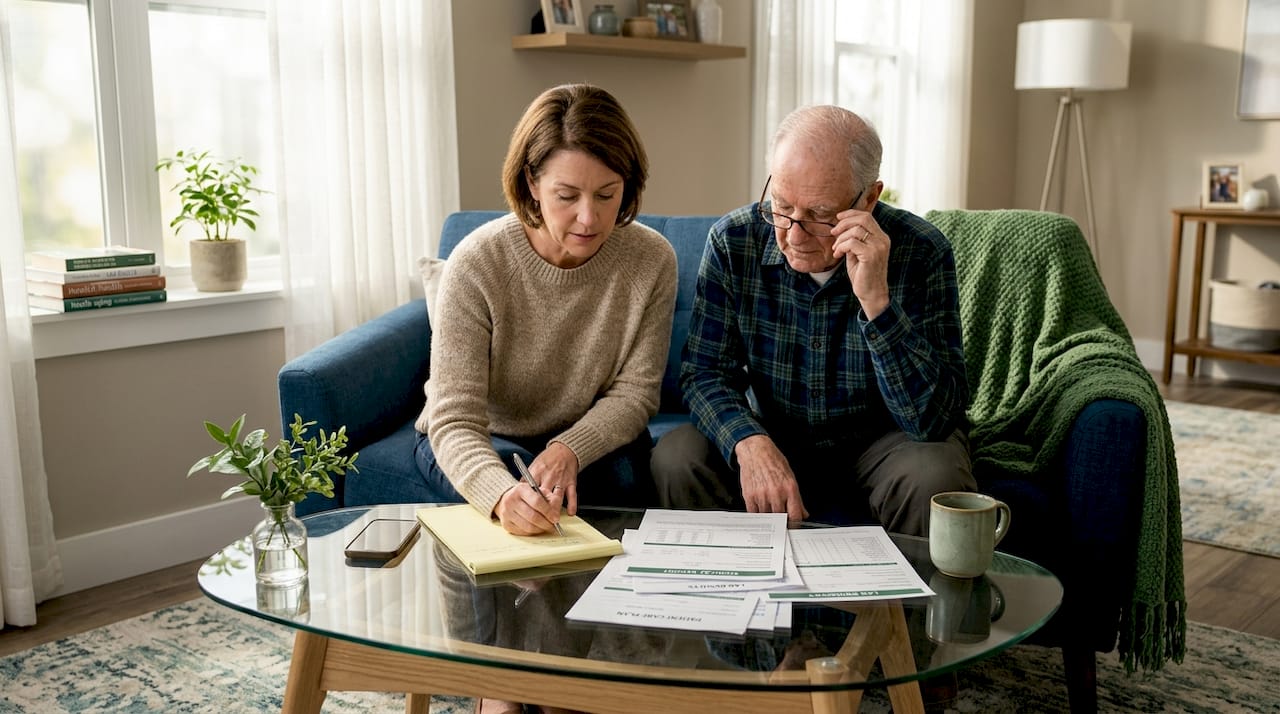
Hospice communication strategies for California caregivers
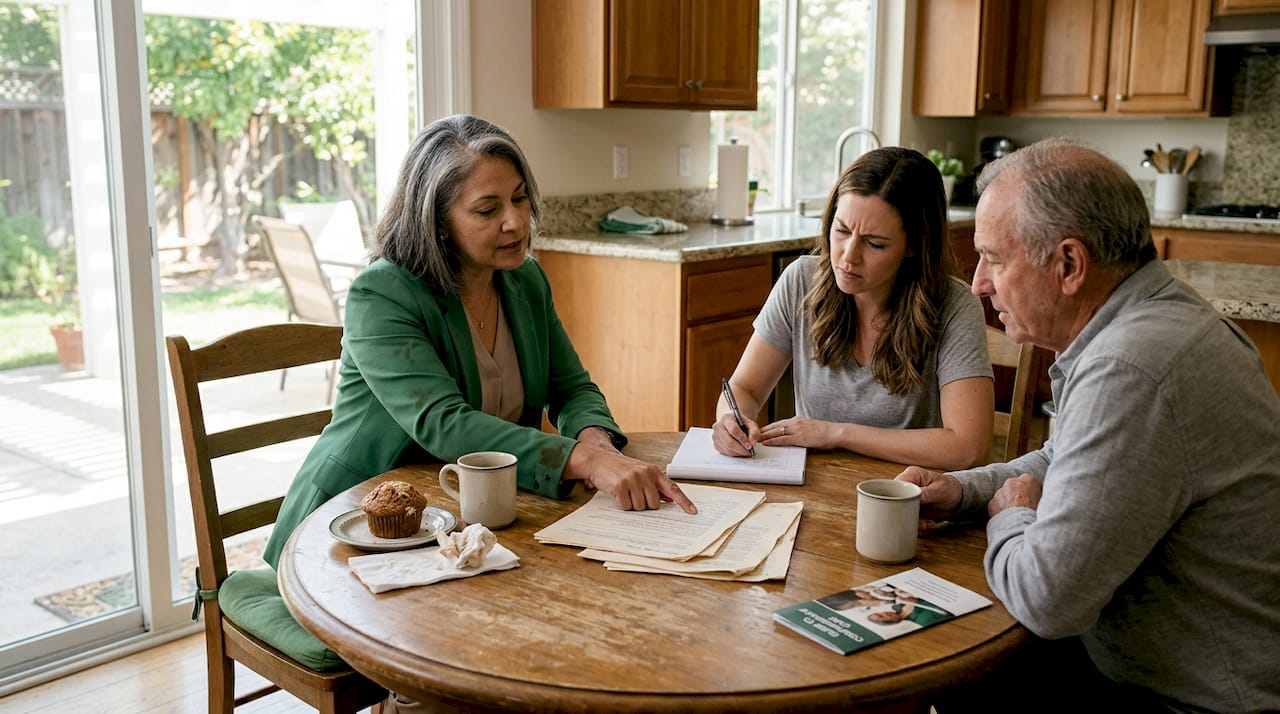
Hospice communication strategies for California caregivers
TL;DR:
- Open, compassionate communication is essential in hospice care because it enhances understanding, reduces anxiety, and ensures loved ones’ wishes are respected. Effective strategies include active listening, using plain language, and following structured protocols like SPIKES to deliver difficult news with clarity and empathy. Starting conversations early and supporting both verbal and nonverbal communication improves patient comfort and family satisfaction during life’s final chapter.
Many caregivers assume there is a perfect moment to talk about end-of-life wishes, or that bringing up difficult topics will cause more harm than good. That belief, as understandable as it is, often delays the very conversations that bring the most comfort and clarity. The truth is that thoughtful, compassionate communication is one of the most powerful tools available to families walking through hospice care. This guide offers practical, evidence-backed strategies to help you communicate with confidence, reduce anxiety, and ensure your loved one’s wishes are heard and honored throughout life’s final chapter.
Table of Contents
- Why communication matters in hospice care
- Core hospice communication strategies every caregiver should know
- Handling difficult conversations: Addressing fears, emotions, and misconceptions
- Communicating with nonverbal patients and distance caregivers
- Beyond scripts: What actually helps families communicate in hospice care
- How Graceland Hospice Care can support your family
- Frequently asked questions
Key Takeaways
| Point | Details |
|---|---|
| Compassionate communication | Simple, empathetic conversations lead to less distress for hospice families. |
| Structured approaches help | Protocols like SPIKES guide caregivers through tough end-of-life talks. |
| Adapt for unique needs | Adjust strategies when communicating with nonverbal or remote family members. |
| Start early | Honest conversations about care goals build understanding and reduce later regret. |
Why communication matters in hospice care
Having challenged the misconception that these conversations must be painful, let’s explore what makes communication so crucial in hospice care.
When families and care teams communicate openly, the entire experience of hospice changes. Patients feel seen and respected. Families feel less helpless. Decisions become clearer, even when they are hard. Poor communication, on the other hand, can leave everyone feeling isolated, confused, and regretful long after a loved one passes.
ELNEC training improves nurses’ communication skills, and study data consistently shows that open communication aligns care with patient values while reducing distress for both patients and families. This is not a soft benefit. It directly affects pain management decisions, the location of care, and how supported a family feels at every stage.
“Families who engage in open, honest conversations about care goals experience less complicated grief and report higher satisfaction with hospice services.”
The benefits of strong communication in hospice care include:
- Reduced anxiety and distress for both patients and family members
- Care aligned with personal values, including cultural, spiritual, and personal preferences
- Faster, more confident decision-making during medical crises or care transitions
- Stronger relationships between families and hospice staff
- Less regret for family members after a loved one passes
Understanding key hospice staff qualities can also help caregivers know what to expect and how to engage effectively with the team supporting their loved one. And if you are preparing for compassionate difficult conversations with aging parents, knowing that communication skill can be learned and improved is a meaningful first step.
Research shows that outcomes are measurably better when communication begins early in the hospice journey, not just at moments of crisis. Structured approaches and caregiver training make a real difference in how these conversations unfold.
Core hospice communication strategies every caregiver should know
Understanding why communication matters, let’s break down strategies that can make conversations more effective.
Effective hospice communication strategies for caregivers and family members include active listening, using plain language, practicing empathy, and following structured protocols like SPIKES. These are not abstract ideals. They are learnable, practical skills.
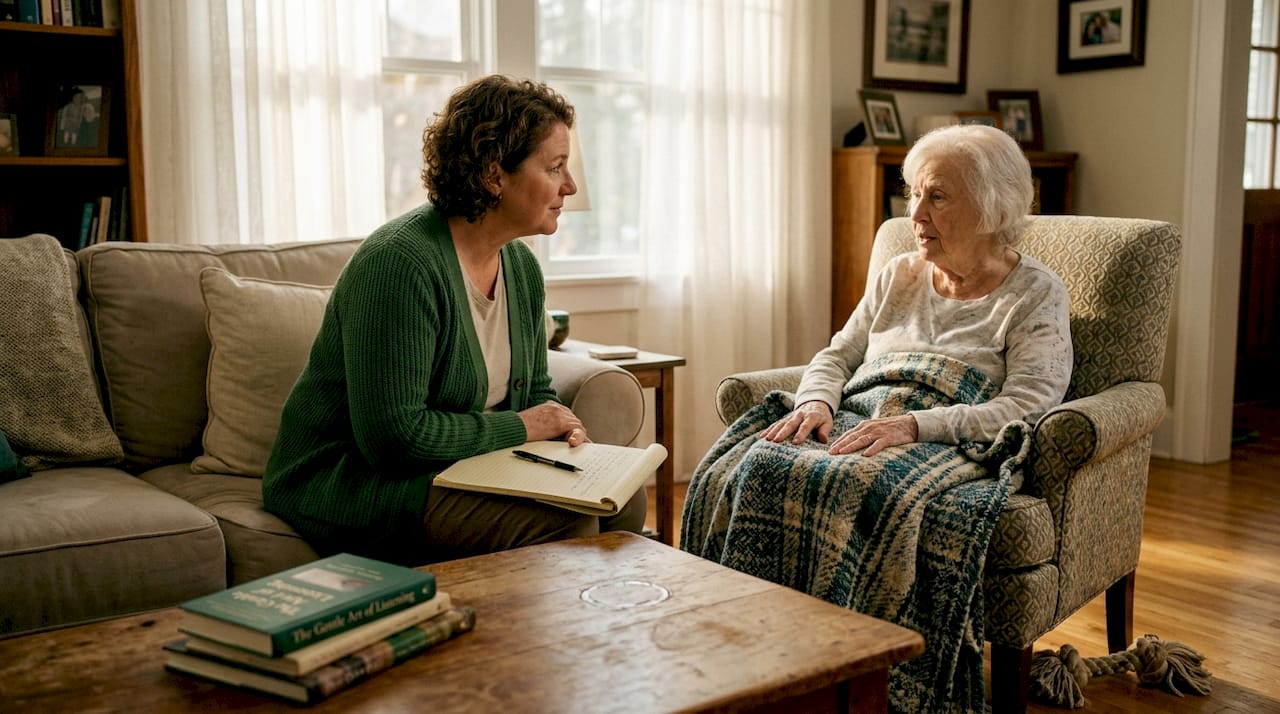
Active listening means giving your full attention, not interrupting, and reflecting back what you hear. It sounds simple, but most people listen to respond rather than to understand. In hospice conversations, slowing down and really hearing what your loved one or the care team says makes an enormous difference.
The SPIKES protocol is a six-step framework originally designed for physicians delivering difficult news. Many hospice caregivers and families find it equally useful. The steps are: Setting up the conversation, assessing Perception, getting an Invitation to share information, delivering Knowledge clearly, addressing Emotions with empathy, and closing with a Strategy or next step.
Chunk and check is another technique worth knowing. Chunk and check information, avoid jargon, use open-ended questions, and pause for emotional responses during difficult conversations. Instead of overwhelming a family member with a long explanation, you share one piece of information, pause, and check for understanding before continuing.
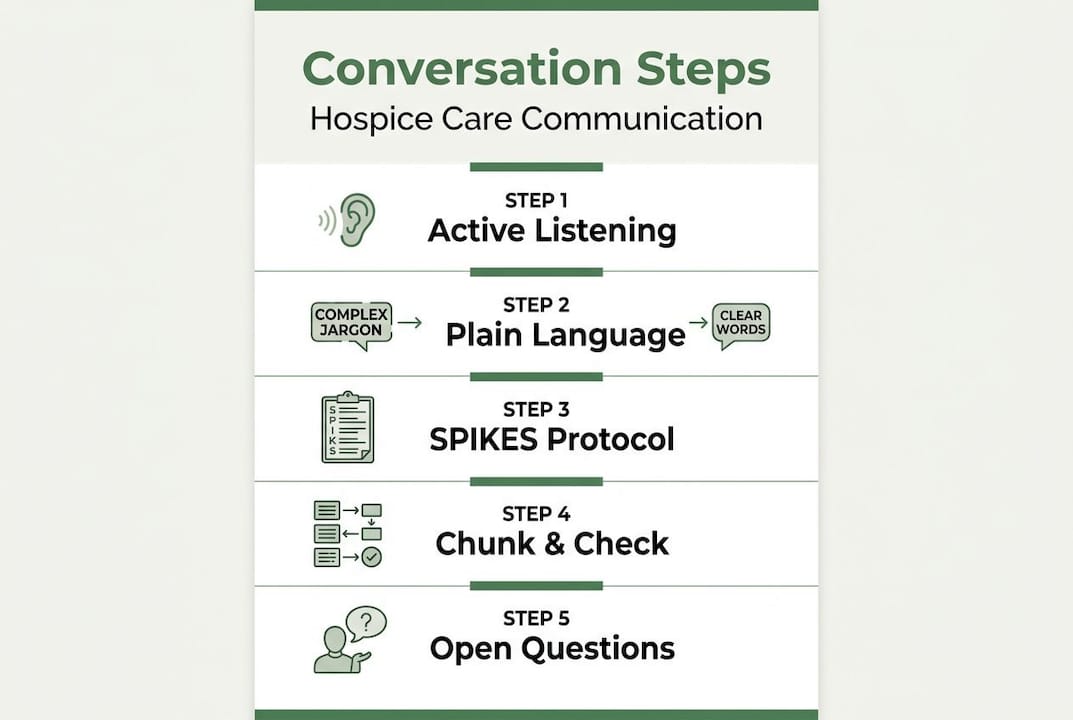
Here is a comparison of common communication approaches:
| Approach | Best used when | Key strength |
|---|---|---|
| Active listening | Any conversation | Builds trust and connection |
| SPIKES protocol | Delivering difficult news | Provides structure and clarity |
| Chunk and check | Sharing medical updates | Prevents information overload |
| Open-ended questions | Exploring feelings or wishes | Invites deeper sharing |
| Reflective listening | High emotion moments | Validates feelings without judgment |
How to structure a compassionate conversation:
- Choose the right setting. Find a quiet, private space where everyone feels comfortable and unhurried.
- Start with what the person already knows. Ask what they understand about the current situation before adding new information.
- Use plain, simple language. Replace medical terms with everyday words whenever possible.
- Share information in small pieces. Pause between points and ask if they have questions.
- Name and acknowledge emotions. Saying “I can see this is really hard” goes further than moving quickly to solutions.
- Invite their wishes into the conversation. Ask “What matters most to you right now?” rather than presenting only clinical options.
- Close with a clear next step. Even if the step is small, it gives everyone a sense of direction and agency.
Pro Tip: Keep a small notebook nearby during family meetings with the hospice team. Writing down key phrases, questions, and care goals helps everyone stay aligned and ensures nothing important gets forgotten in emotional moments.
Caregivers looking for additional caregiver support strategies will find that many of these same communication tools also help reduce caregiver stress and burnout over time.
Handling difficult conversations: Addressing fears, emotions, and misconceptions
These foundational strategies are crucial, but most caregivers struggle with tough topics. Next, we’ll focus on what to do in the hardest moments.
One of the most common and painful misconceptions families in California face is the belief that choosing hospice means giving up on a loved one. This belief can create guilt, delay important conversations, and even prevent people from accessing the care that would give their loved one the most comfort. Reframing hospice as a choice for dignity, comfort, and quality of life, rather than a choice against treatment, changes the emotional weight of the conversation entirely.
California resources stress early discussions about care goals and actively address the misconceptions that prevent families from engaging with hospice care. Starting these conversations before a crisis, when everyone is calmer and more able to think clearly, leads to significantly better outcomes for patients and their families.
Common fears and misconceptions caregivers and families often face:
- “Talking about dying will make it happen faster” — Research does not support this. In fact, patients who discuss their wishes often feel more at peace.
- “Hospice means we’re giving up” — Hospice is a specialized form of care focused on comfort, not on hastening death.
- “My loved one doesn’t want to talk about it” — Some patients are actually waiting for permission from family to have this conversation.
- “There’s still time to have this conversation later” — Early conversations preserve more choices and give patients more agency in their care.
- “I’ll say the wrong thing and make everything worse” — There is rarely a “wrong” thing when your intent is love and your approach is gentle.
“The goal of a difficult conversation is not to have the perfect words. It is to show up with honesty, presence, and care.”
Contrasting viewpoints exist around how to deliver difficult information. Some families and communities prefer blunter approaches, while others rely on religious frameworks or cultural customs. Variants of the SPIKES model, including the KE and SK adaptations, have been developed to fit different cultural contexts. In structured clinical settings, however, the full SPIKES protocol remains the most consistently effective framework for delivering difficult news with both honesty and compassion.
Pro Tip: Before a family meeting with the care team, ask each family member to write down one question and one concern. This keeps the conversation focused and ensures quieter family members have a voice.
Learning how hospice teams work to honor patient wishes throughout care can also help families feel more confident entering these conversations. And if safety concerns come up during discussions with older parents, guidance on talking about care safety can help you approach those topics gently and effectively.
Communicating with nonverbal patients and distance caregivers
Effective communication sometimes means thinking beyond words. Let’s look at what works when loved ones can’t speak, or family is far away.
When a patient can no longer communicate verbally, many caregivers feel lost. The connection does not have to disappear. Nonverbal cues for nonverbal patients include eye contact, body language, gentle touch, gestures, and maintaining a calm environment. These forms of communication carry enormous meaning. Holding a hand, sitting quietly nearby, speaking softly even if there is no verbal response, all of these actions convey presence and love in ways that patients can perceive even when words are no longer possible.
For families supporting a loved one from a distance, staying connected requires intentionality and structure. Distance caregivers face challenges like limited direct interaction, difficulty responding to emergencies, and feeling disconnected from daily care decisions. These challenges are real but manageable with the right tools and routines.
| Communication need | Recommended tool | Key benefit |
|---|---|---|
| Staying updated on condition | Regular text or email updates from primary caregiver | Reduces uncertainty and anxiety |
| Participating in care decisions | Video calls with hospice team | Maintains inclusion and voice |
| Supporting the patient directly | Scheduled video calls with patient | Preserves emotional bond |
| Coordinating family logistics | Shared online caregiving calendar | Reduces miscommunication |
| Managing caregiver stress | Virtual counseling or support groups | Supports mental health from afar |
Additional strategies that support both nonverbal patients and distance caregivers:
- Play familiar music or audio for nonverbal patients. Hearing a beloved song can provide comfort and stimulation even without verbal exchange.
- Assign a primary communicator in the family to relay updates to distant relatives, reducing repeated and sometimes conflicting information.
- Use a shared digital journal where caregivers log daily observations, mood changes, and care notes. This keeps everyone informed and creates a meaningful record.
- Schedule regular family check-ins by video call, even brief ones, so remote members feel connected rather than sidelined.
Understanding the caregiver role in hospice is essential for both in-person and distance caregivers, and knowing how volunteers in hospice care support families can open up additional resources for connection and relief. Caregivers should also prioritize their own caregiver well-being, because sustained communication requires emotional energy that needs to be replenished.
Beyond scripts: What actually helps families communicate in hospice care
Now that you know the tools and evidence-based tactics, here is an honest perspective from families and hospice teams on what really changes outcomes.
Frameworks like SPIKES are genuinely valuable. They give structure to conversations that can otherwise spiral into silence or panic. But here is what many communication guides do not tell you: the families who navigate hospice most gracefully are rarely the ones who follow a script perfectly. They are the ones who show up authentically, even when they do not have the right words.
Training like ELNEC and Oncotalk builds measurable communication skills in caregivers and hospice staff, and practices like journaling and fostering meaningful connection further support families through the emotional demands of end-of-life care. These are not soft extras. They are evidence-based tools that protect both the patient’s experience and the caregiver’s long-term mental health.
What we see in practice is that families benefit most from three things that no protocol can fully teach. First, the willingness to sit in discomfort without rushing toward resolution. Sometimes a patient needs you to be present with their fear, not immediately reassure it away. Second, the flexibility to meet each day differently. What worked in a conversation last week may not work today, and being responsive to that shift matters more than consistency of technique. Third, the willingness to accept support from the full interdisciplinary team. Nurses, social workers, chaplains, and volunteers each bring a different kind of presence, and allowing them into the communication circle relieves pressure from any single family member.
We also encourage caregivers to invest in supporting caregivers emotionally, because burnout erodes the very qualities that make communication meaningful: patience, presence, and the capacity for genuine empathy. A well-supported caregiver communicates better. That is not a theory. It is what families tell us, time and again.
The real measure of good hospice communication is not whether anyone said the exact right thing. It is whether the patient felt loved, heard, and cared for. That is always within reach, even in the hardest moments.
How Graceland Hospice Care can support your family
If you want caring, skilled support implementing these strategies, here is how our team at Graceland can partner with you.
At Graceland Hospice Care, we believe every California family deserves expert guidance through the communication challenges that come with end-of-life care. Our interdisciplinary team, including nurses, social workers, chaplains, and trained volunteers, works alongside you to ensure your loved one’s wishes are understood, respected, and honored at every stage. We do not just provide medical support. We support the entire family with compassion, clarity, and consistent presence. Explore our hospice support services to learn more about how we can walk alongside your family, and contact us today for a free consultation.
Frequently asked questions
What is the SPIKES protocol in hospice communication?
SPIKES is a structured method for delivering difficult news that involves six steps: Setting up, Perception, Invitation, Knowledge, Emotions, and Strategy. It helps caregivers and clinicians share hard information with both honesty and compassion.
How can I support a nonverbal hospice patient?
Use eye contact, gentle touch, body language, and a calm environment to communicate care. Nonverbal cues like gestures and quiet presence carry deep meaning even when spoken words are no longer possible.
What are the best ways to communicate with family at a distance?
Regular video calls, clear and consistent updates, and involving remote caregivers in care decisions are the most effective strategies. Distance caregivers stay better connected when they have a defined role in the communication plan.
Is it better to be direct or gentle about end-of-life news?
Blending compassion with clarity is the most effective approach for most families. Structured protocols like SPIKES help balance candor and sensitivity, and can be adapted for cultural or personal preferences.
How does communication affect hospice care quality?
Open communication aligns care with patient and family values while reducing distress, improving decision-making, and supporting a more peaceful end-of-life experience for everyone involved.
Recommended
- Blog & Resources | Graceland Hospice Care
- Blog & Resources | Graceland Hospice Care
- Role of Caregivers in Hospice – Making End-of-Life More Compassionate | Graceland Hospice Care Blog
- End-of-Life Planning Guide: Hospice & Comfort Care at Home | Graceland Hospice Care Blog
- Can Palliative Care Be Done At Home - What You Need To Know