Home safety guide for hospice in California: 5 key tips
Home safety guide for hospice in California: 5 key tips
TL;DR:
- Home safety assessments focus on eliminating fall risks and ensuring accessible environments.
- Necessary equipment like hospital beds and grab bars are typically covered by Medi-Cal in California.
- Consistent routines and professional support are key to a safe, comfortable, and stress-free hospice experience.
Bringing a loved one home for hospice care is one of the most meaningful decisions a family can make. It is also one of the most demanding. You are suddenly responsible for creating a space that feels safe, calm, and dignified, often with little preparation time and a great deal of emotional weight. The good news is that with the right steps, you can transform your home into a genuinely supportive environment. This guide walks you through assessing risks, making practical changes, building daily routines, and tapping into California-licensed hospice resources so your family feels prepared, not overwhelmed.
Table of Contents
- Assessing your home for hospice safety
- Preparing your home: Essential changes and equipment
- Ensuring daily safety and comfort for loved ones
- Leveraging California’s hospice resources and regulations
- Our perspective: What truly makes home hospice safe and compassionate
Key Takeaways
| Point | Details |
|---|---|
| Start with a safety assessment | Identifying hazards before care begins helps prevent accidents and stress. |
| Equip for comfort and peace | Simple modifications and the right equipment keep your loved one secure at home. |
| Lean on California resources | Use licensed agencies and Medi-Cal benefits for optimal home hospice care. |
| Balance safety with compassion | Small acts of comfort and clear routines matter just as much as equipment. |
Assessing your home for hospice safety
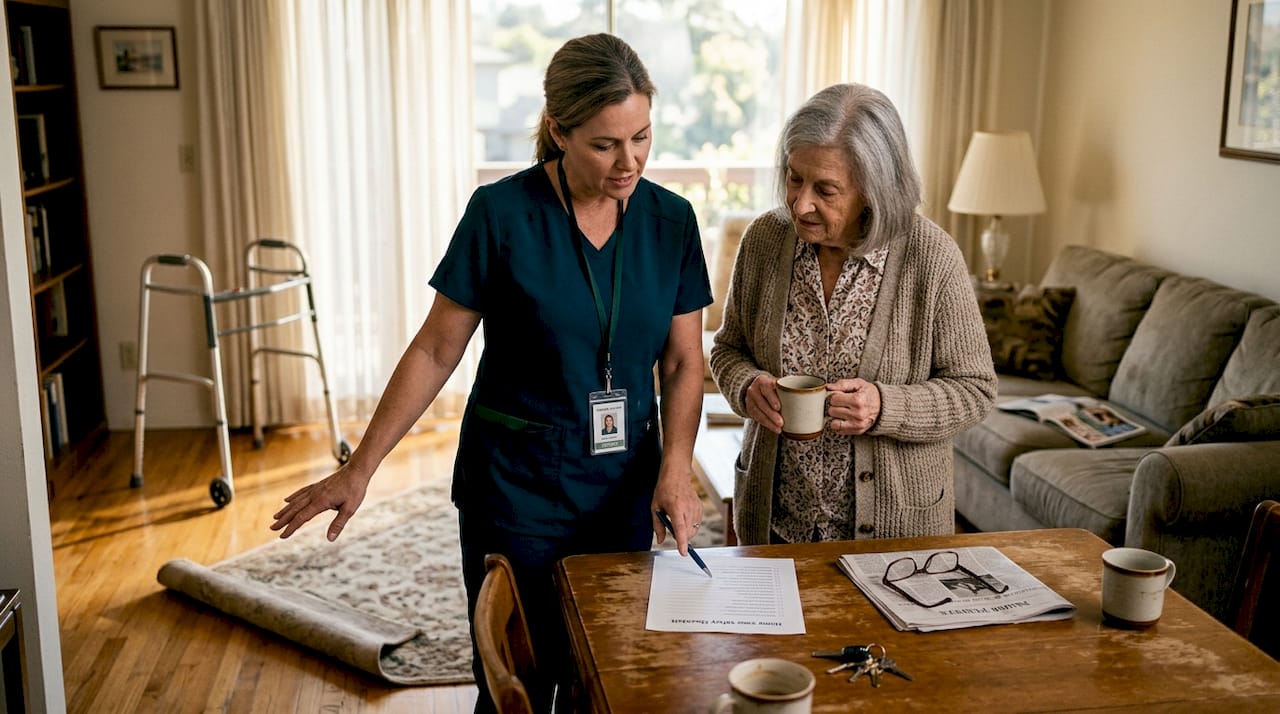
Before a hospice patient arrives home, a thorough safety assessment is the single most important thing you can do. Many families focus on emotional readiness and overlook the physical environment, but the two are deeply connected. A cluttered hallway or a poorly lit bathroom can cause a fall that leads to a hospital visit, disrupting the peace you worked so hard to create.
Start by walking through the home with fresh eyes. Look at every space the patient will use, from the front entrance to the bedroom and bathroom. Ask yourself whether a person with limited mobility, fatigue, or balance issues could move through each area safely.
Common home safety risks for hospice patients:
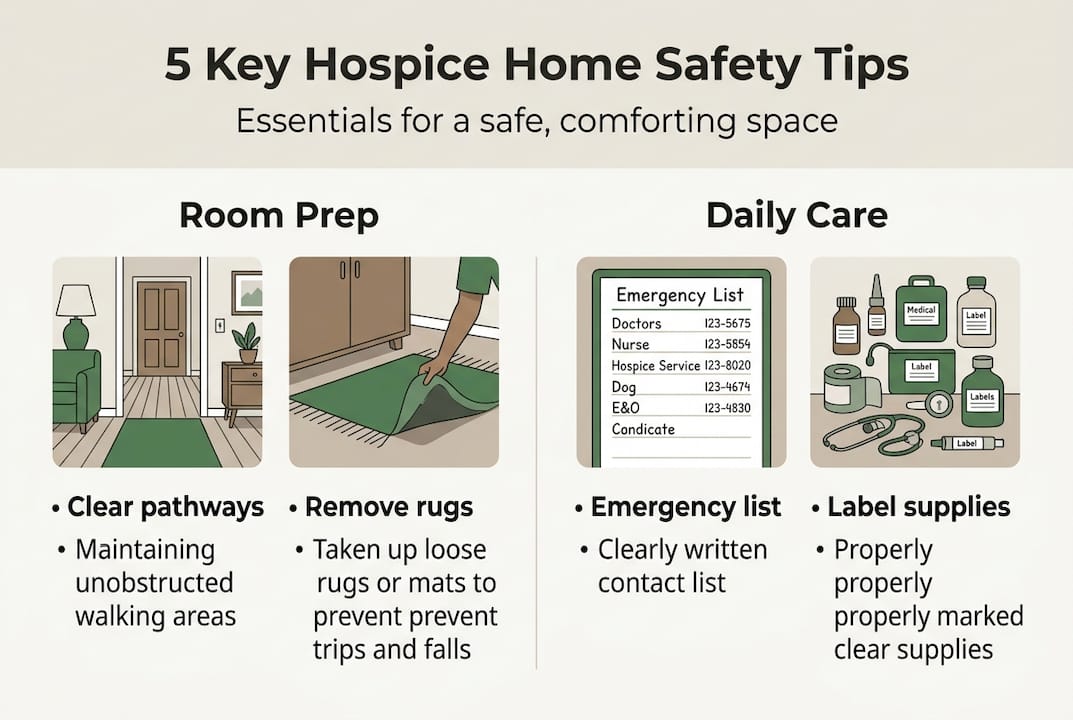
- Loose rugs or uneven flooring that can cause trips and falls
- Narrow doorways that block wheelchair or walker access
- Poor lighting in hallways, bathrooms, and stairwells
- Medications stored in unlocked or hard-to-reach locations
- No grab bars near the toilet, shower, or bed
- Cluttered pathways between the bedroom and bathroom
- Lack of a clear emergency exit route
Safety warning: Falls are the leading cause of preventable injury in home hospice settings. Medication errors and delayed emergency access are close behind. Address all three before care begins, not after an incident occurs.
Here is a quick comparison of safety priorities before and after hospice care begins:
| Safety area | Before hospice | After hospice onset |
|---|---|---|
| Flooring | General tidiness | Remove all rugs, secure transitions |
| Lighting | Standard household | Night lights in every room |
| Bathroom | Standard fixtures | Grab bars, shower chair, raised toilet seat |
| Medications | Cabinet storage | Locked box, labeled, logged |
| Emergency access | Standard locks | Key lockbox installed for responders |
Understanding hospice care standards in California will also help you know what your licensed agency is required to provide. The California Department of Public Health, known as CDPH, regulates all hospice agencies and sets minimum safety expectations for home care environments.
A well-structured home environment for recovery shares many principles with a hospice-ready home: clear sightlines, accessible surfaces, and reduced fall risk.
Pro Tip: Ask your hospice team’s registered nurse or social worker to walk through the home with you before the first care day. They are trained to spot hazards that families often miss and can recommend specific equipment at no extra cost.
Preparing your home: Essential changes and equipment
Once you have identified the hazards, the next step is making targeted changes and bringing in the right equipment. This does not have to be overwhelming. Most families find that a handful of focused modifications make an enormous difference in both safety and comfort.
Step-by-step room setup for hospice patients:
- Choose a ground-floor room whenever possible to eliminate stair risks entirely.
- Position the hospital bed so caregivers can access both sides without squeezing past furniture.
- Place a bedside commode (a portable toilet chair) within arm’s reach to reduce nighttime fall risk.
- Install grab bars in the bathroom near the toilet and inside the shower or tub.
- Add a shower chair or tub transfer bench so bathing can happen safely with one caregiver.
- Ensure all pathways between the bed, bathroom, and main living area are at least 36 inches wide.
- Set up a small table or cart next to the bed for medications, water, tissues, and personal items.
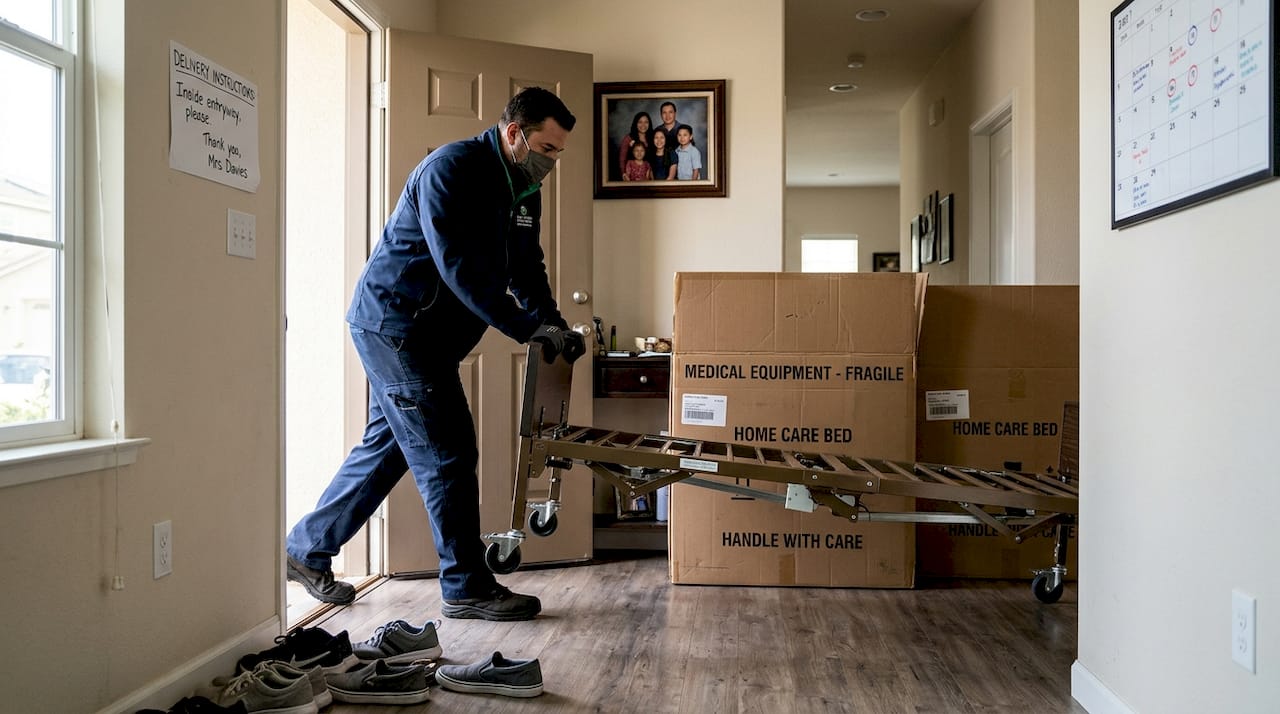
Below is a summary of commonly recommended equipment and typical Medi-Cal coverage status. Medi-Cal covers hospice-related equipment when you work through a licensed California agency, which makes a real financial difference for many families.
| Equipment | Purpose | Typically Medi-Cal covered |
|---|---|---|
| Hospital bed | Adjustable positioning, pressure relief | Yes |
| Wheelchair | Mobility support | Yes |
| Shower chair | Safe bathing | Yes |
| Grab bars | Fall prevention | Yes |
| Bedside commode | Nighttime bathroom access | Yes |
| Raised toilet seat | Easier transfers | Yes |
| Oxygen equipment | Breathing support if prescribed | Yes |
| Pressure relief mattress | Skin protection | Yes |
Understanding the full home hospice care workflow helps families know when equipment arrives, who sets it up, and how to coordinate with the care team. For a broader look at what to expect day to day, the at-home support guide offers practical context.
Pro Tip: Label every cabinet, drawer, and bin that holds medications or medical supplies with large, clear text. In an urgent moment, a labeled system saves precious time and prevents dangerous mix-ups.
Ensuring daily safety and comfort for loved ones
Equipment and room layout set the foundation, but daily habits are what keep a hospice patient truly safe and comfortable over time. Consistency matters enormously here. Small routines, repeated reliably, prevent the majority of common incidents.
Critical safety checks for each care shift:
- Confirm bed rails are raised and locked if the patient is resting alone.
- Check that all walkways are clear of shoes, cords, and loose items.
- Review the medication log to confirm the last dose time and next scheduled dose.
- Assess the patient’s skin for any new redness or pressure marks, especially on the heels and tailbone.
- Verify that call bells or alert devices are within the patient’s reach.
- Confirm the emergency contacts list is visible and up to date.
The role of hospice aides in completing these checks is well documented. CDPH guidelines recognize hospice aides as essential members of the care team, responsible for personal care, safety monitoring, and family support. The role of caregivers in hospice extends this further, as family members often fill in between professional visits.
Daily comfort priorities to maintain alongside safety:
- Keep the room temperature between 68 and 72 degrees Fahrenheit, adjusting for the patient’s preference
- Offer small sips of water or ice chips frequently to prevent dry mouth
- Use soft lighting during the day and dim night lights after dark
- Play familiar music or keep the television on a preferred channel for emotional comfort
- Gently reposition the patient every two hours to prevent pressure sores (areas of skin damage from prolonged pressure)
- Coordinate pain management timing with the hospice nurse so comfort is maintained around the clock
For a closer look at how professional visits support these routines, the visit workflow for comfort care explains what happens during each scheduled visit and how families can prepare.
Pro Tip: Post a single-page emergency contacts sheet on the refrigerator and near the patient’s bed. Include the hospice nurse’s after-hours line, the primary physician, and the nearest family member. Every helper, including volunteers and neighbors, should know exactly where to find it.
Leveraging California’s hospice resources and regulations
California families have access to some of the strongest hospice protections and support systems in the country. Knowing how to use them is just as important as any physical home modification.
Steps to verify a hospice agency and secure Medi-Cal coverage:
- Visit the CDPH CalHealthFind website and search for licensed hospice providers in your county.
- Confirm the agency holds a current California hospice license before signing any agreement.
- Ask the agency directly whether they accept Medi-Cal and which services are covered under your plan.
- Request a written care plan that outlines all covered equipment, medications, and visits.
- Contact your county’s Medi-Cal office if you have questions about eligibility or covered benefits.
Families should always verify agency licensing through CDPH and use CalHealthFind before committing to a provider. This one step protects your loved one from unlicensed or substandard care.
Your rights and California’s support services:
- You have the right to change hospice providers if care does not meet your expectations
- You may request a patient care conference with the full hospice team at any time
- California’s In-Home Supportive Services (IHSS) program can supplement hospice aide visits
- The California Department of Aging offers caregiver support programs in most counties
- Grief counseling and bereavement support are required components of licensed hospice care
Statistic: The vast majority of hospice services in California are fully covered by Medi-Cal for eligible patients, including nursing visits, medications related to the terminal diagnosis, and all necessary medical equipment.
For families navigating urgent situations, understanding emergency care in hospice is critical. Knowing when to call the hospice line versus 911 can prevent unnecessary hospitalizations. Families in Southern California can also explore hospice care in Orange County for region-specific guidance.
Pro Tip: Bookmark the CalHealthFind website on your phone right now. When you need to verify a provider quickly or find a backup agency, having it saved saves real time.
Our perspective: What truly makes home hospice safe and compassionate
After years of supporting families through life’s final chapter, we have learned something that safety checklists alone cannot teach: the families who experience the least stress are not the ones with the most equipment. They are the ones who ask for help early and let go of the idea that everything must be perfect.
Many families come to us convinced that safety means control. They want every variable managed, every risk eliminated. What actually prevents accidents and emotional exhaustion is something quieter: a consistent routine, a trusted care team, and the courage to say
Recommended
- Emergency care in hospice: a guide for California families | Graceland Hospice Care Blog
- End of Life Care Steps for Home Hospice Success | Graceland Hospice Care Blog
- Hospice Visit Workflow for Comfort Care at Home | Graceland Hospice Care Blog
- End of Life Care Guide for Compassionate At-Home Support | Graceland Hospice Care Blog
- Understanding Palliative Care: A Holistic Approach to Serious Illness with Dr. John Horton