Patient comfort at home: A complete end-of-life guide
Patient comfort at home: A complete end-of-life guide
TL;DR:
- Caring for a terminal loved one at home involves managing symptoms, making preparations, and emotional resilience, all centered on comfort. Hospice care prioritizes symptom relief, dignity, and connection, with evidence showing home care improves quality of life and caregiver support. Accessing hospice resources and early support helps families sustain compassionate, personalized care without burnout.
Caring for a terminally ill loved one at home can feel like stepping into the unknown. One moment you are managing medications, the next you are trying to ease their restlessness while holding back your own tears. Many families describe a strange mix of love, exhaustion, and quiet fear, wondering if they are doing enough or doing it right. This guide cuts through the uncertainty. It walks you through what comfort care actually means, what you need to have on hand, how to structure each day, and when to ask for more help, so you can focus on what matters most: being present.
Table of Contents
- Understanding comfort care: What it means at home
- Gathering your comfort care essentials
- Step-by-step comfort actions for families
- Common pitfalls and how to avoid them
- When and how to seek extra support
- A better way forward: Why family support is the heart of comfort care
- How Graceland Hospice Care can support your family
- Frequently asked questions
Key Takeaways
| Point | Details |
|---|---|
| Home care improves comfort | Empirical evidence shows that comfort care at home can reduce hospitalizations and improve quality of life for both patients and families. |
| Preparation is crucial | Gathering the right supplies and support makes delivering effective comfort care at home much easier. |
| Family routines matter | Simple, repeatable daily steps go a long way to promote symptom control and emotional comfort. |
| Myths can harm care | Misunderstandings about pain medications or delayed help can interrupt quality comfort care—trust expert advice. |
| Seek help when needed | Knowing when and how to get extra support protects both patient dignity and caregiver well-being. |
Understanding comfort care: What it means at home
Comfort care is an approach to care that focuses entirely on relieving symptoms and supporting quality of life rather than trying to cure an illness. You may also hear it called palliative care or hospice care, and while those terms overlap, they are not identical. Understanding what hospice care means can help you make informed decisions without second-guessing yourself at every turn.
Palliative care can begin at any point during a serious illness, even alongside active treatment. Hospice care, by contrast, typically begins when a physician determines that curative treatment is no longer the goal and a person’s life expectancy is estimated at six months or less. Both approaches share the same core priority: keeping the patient as comfortable, dignified, and connected as possible.
Home-based care matters because it surrounds a patient with familiar sights, sounds, and people. Research consistently shows that home-based hospice improves quality of life, reduces unnecessary hospitalizations, and provides stronger caregiver support compared to institutional settings. That is not a small difference. It shapes how a person experiences life’s final chapter.
Comparing comfort care approaches
| Feature | Comfort care at home | Hospital-based care |
|---|---|---|
| Primary setting | Patient’s own home | Hospital room or facility |
| Focus | Symptom relief and dignity | Clinical treatment |
| Family involvement | Central and encouraged | Limited by staff schedules |
| Familiar environment | Yes | No |
| 24/7 support access | Through hospice teams | Always available on-site |
One of the most persistent fears families carry is the belief that accepting hospice or using pain medication will somehow shorten their loved one’s life. This is a myth. As the National Coalition for Hospice and Palliative Care confirms, hospice emphasizes comfort over cure and does not hasten death. Proper medication use under clinical supervision is designed to reduce suffering, not cut life short.
“Choosing comfort care is not giving up. It is choosing to fill whatever time remains with the most meaningful, pain-free existence possible.”
Gathering your comfort care essentials
Once you understand what comfort care is, the next step is preparing the essentials for effective support at home. Preparation reduces panic. When the right supplies and contacts are already in place, you can respond calmly instead of scrambling during a difficult moment.
Physical supplies and equipment you may need
- A hospital-grade adjustable bed or a firm mattress with a pressure-relief overlay to prevent bedsores
- A bedside commode, shower chair, and non-slip bath mat for safe hygiene
- Medications prescribed by the hospice team, including pain relievers, anti-nausea drugs, and anxiety medications
- Oral care supplies, gentle skin moisturizers, and soft bedding
- A baby monitor or call bell so the patient can signal for help easily
- Latex-free gloves, hand sanitizer, and disposable pads for caregiving hygiene
Emotional readiness and family communication
Physical supplies are only part of the picture. Families often underestimate how much emotional preparation matters. Before caregiving becomes intense, sit down together and talk openly about what your loved one wants, including their preferences for visitors, music, silence, or spiritual practices. Write those preferences down so everyone on the care team knows and respects them.
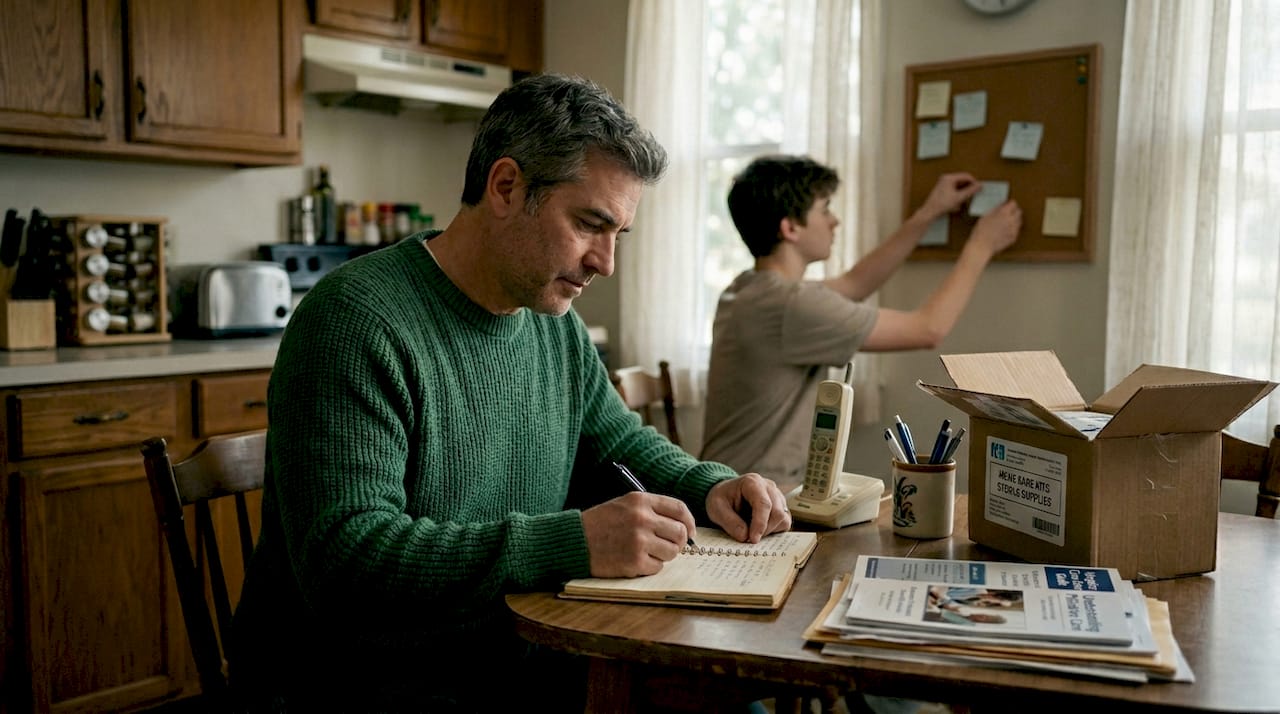
Designating a primary caregiver and a backup prevents confusion and resentment. Rotate responsibilities where possible, because sustained caregiving without breaks leads quickly to burnout. Evidence shows that caregiver support in hospice settings measurably reduces caregiver stress when families follow a structured workflow.
Pro Tip: Build a simple contact list and post it near the patient’s bed. Include the hospice nurse on call, the primary physician, a trusted family member, and a local pharmacy. When you are exhausted and something changes at 2 a.m., you will not have to search for numbers.
For a more detailed breakdown of logistics, the step-by-step home hospice workflow resource walks families through daily care routines from morning hygiene to overnight monitoring.
Recognizing when to call for help
Knowing warning signs in advance is critical. Call your hospice nurse or care team immediately if you observe:
- Sudden, uncontrolled pain that does not respond to current medications
- Labored or gurgling breathing that changes rapidly
- A skin color shift, especially around the lips or fingertips
- Extreme agitation or confusion that appears suddenly
- No urine output for 12 or more hours
Step-by-step comfort actions for families
With your essentials ready, here’s how to translate preparation into effective, compassionate daily actions. Comfort care at home is not a single event. It is a rhythm, repeated gently each day, adjusted as your loved one’s needs change.
1. Assess pain and comfort at regular intervals Ask your loved one to describe their discomfort using simple terms or a numeric scale (0 to 10). Look for physical cues like a furrowed brow, restlessness, or shallow breathing when verbal communication becomes difficult.
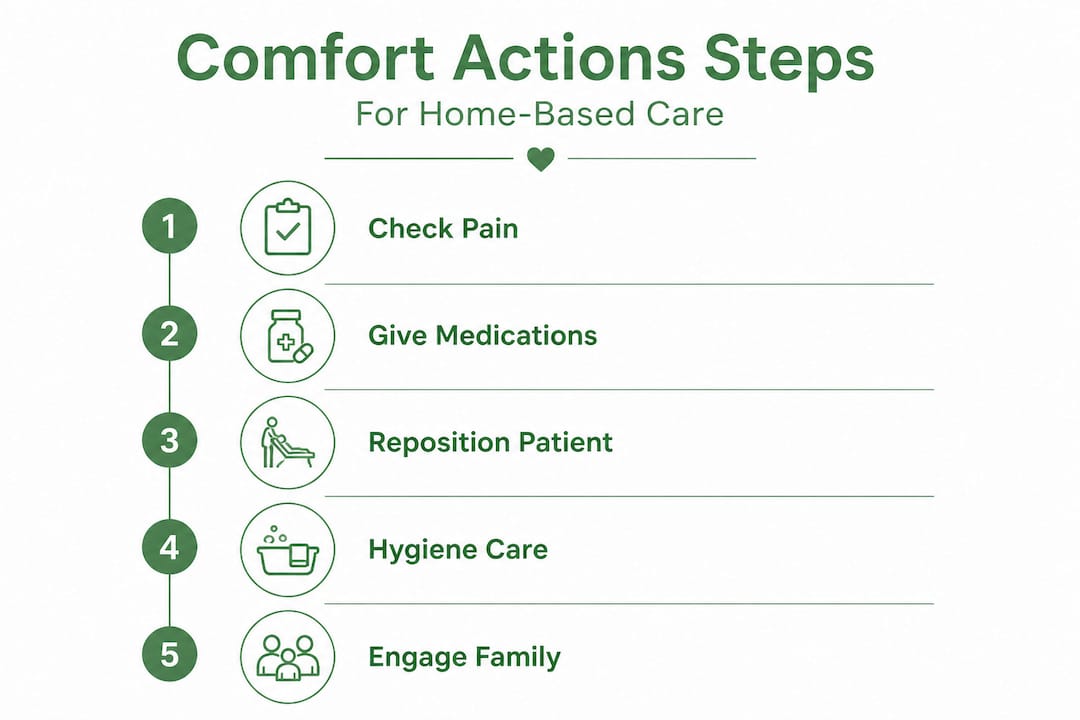
2. Administer medications on schedule, not just when asked Many families wait until their loved one reports pain before giving medication. This reactive approach often leads to suffering that is harder to control. Scheduled dosing, as directed by the hospice nurse, keeps symptoms ahead of the pain curve. Effective pain and symptom management is most successful when caregivers stay consistent.
3. Reposition regularly to prevent pressure wounds Turn or reposition a bedridden patient at least every two hours. Use pillows to support natural body alignment. This simple action prevents painful skin breakdown and improves circulation.
4. Address shortness of breath with calm and positioning Elevate the head of the bed, open a window slightly, or use a small fan to move air gently across the face. These non-drug methods can reduce the sensation of breathlessness meaningfully. The hospice team may also prescribe low-dose opioids to ease breathing.
5. Provide gentle hygiene care daily Oral care is particularly important because dry, cracked lips cause real discomfort. Use a moistened swab to clean the mouth and apply lip balm frequently. Sponge baths keep the skin clean without the fatigue of a full shower.
6. Support meaningful interaction Even when a patient is minimally responsive, hearing remains active. Talk to them, read aloud, play their favorite music softly, or simply hold their hand. Research confirms that shared decision-making near end of life and maintaining connection both support better overall outcomes for patients and families.
7. Involve the hospice medical team proactively Do not wait for a crisis to call your nurse. Regular check-ins allow the team to adjust care plans before small problems become big ones. The hospice visit workflow is designed to keep communication flowing between visits.
Pro Tip: Keep a small notebook at the bedside and jot down any changes you notice between nursing visits, including changes in eating, breathing, sleep, or mood. This simple log becomes invaluable during care team calls.
Common pitfalls and how to avoid them
Even experienced families can stumble. These are the key pitfalls and simple advice to keep you on course.
Myth: Pain medication will hasten death This fear causes some families to under-medicate their loved ones, leaving them in unnecessary pain. The National Coalition confirms that properly managed opioid therapy does not shorten life. Withholding pain medication out of fear, however, clearly reduces quality of life and dignity.
Delaying help due to guilt or pride Many caregivers feel that asking for help means they are failing their loved one. The opposite is true. Requesting support from hospice volunteers or additional nursing visits means your loved one receives better care because you are not depleted.
Family conflict and communication breakdowns End-of-life situations are emotionally charged, and disagreements about care decisions are common. A hospice social worker can facilitate family meetings and help everyone stay aligned with the patient’s wishes. When tension rises, focusing the conversation on what the patient said they wanted often brings clarity.
Neglecting your own mental health Caregiver burnout is real and common. Watch for signs in yourself: persistent exhaustion, irritability, difficulty sleeping, and feelings of hopelessness. The caregiver support resources available through hospice programs include counseling, respite care, and peer support groups.
“The most loving thing you can do for your family member is also take care of yourself. You cannot pour from an empty cup, and your presence matters more than your perfection.”
When and how to seek extra support
Finally, let’s make sure you know exactly when and how to reach out for more help so you can sustain compassion without burning out. Asking for support is not a sign that comfort care at home has failed. It is a sign that you understand how to serve your loved one well.
Red flags that signal the need for additional support
- Symptoms such as pain, breathlessness, or agitation are no longer controlled with current medications
- You are sleeping fewer than five hours a night for more than several consecutive days
- Your loved one’s condition has changed significantly since the last medical assessment
- You feel emotionally unable to be present without overwhelming distress
- Practical tasks like medication management or wound care feel beyond your current ability
Types of support available to you
Hospice programs offer far more than nursing visits. They typically include:
- Skilled nursing visits to assess and manage symptoms
- Home health aides who assist with personal care and hygiene
- Social workers who provide emotional support and help families navigate decisions and resources
- Chaplains who offer spiritual care regardless of religious background
- Volunteers who provide companionship, run errands, and give caregivers short breaks
- Bereavement counselors who support the family before and after loss
Studies confirm that families engaged with full hospice support have measurably better outcomes in terms of both patient comfort and caregiver wellbeing. You do not have to manage this alone, and the full end-of-life care steps available through hospice include resources most families never realized they could access.
Understanding the role of caregivers in hospice also helps families set realistic expectations for themselves, which reduces guilt and improves the overall caregiving experience significantly.
A better way forward: Why family support is the heart of comfort care
After years of working with families through some of life’s most tender and difficult moments, we have come to believe something strongly: the medical protocols matter, but they are not what patients and families remember most. What people carry forward is whether they felt heard, whether their loved one was treated with dignity, and whether there was space to simply be together without the noise of clinical urgency.
Families sometimes arrive at end-of-life care looking for a perfect checklist, a formula that guarantees they did everything right. The truth is more flexible than that. There is no single correct way to provide comfort care. What works beautifully for one family may not suit another. A loved one who wants quiet and privacy deserves that. One who wants music, visitors, and storytelling deserves that too. Being willing to adapt to what your loved one actually needs, rather than what you think you should be doing, is itself an act of deep care.
The moments families describe most vividly are rarely the successful medication schedules. They are the conversations held at 3 a.m., the hand held during a difficult hour, the laughter that somehow still happened. Explore compassionate at-home support options that honor this human dimension alongside clinical excellence. The goal is not a flawless caregiving performance. It is connection, dignity, and peace, for your loved one and for you.
How Graceland Hospice Care can support your family
With your family’s commitment, these steps can make a real difference. And when you need more, Graceland Hospice Care is here. Our compassionate team of nurses, social workers, chaplains, and volunteers is trained to support families through exactly the challenges described in this guide. We offer professional hospice services built around your loved one’s unique needs and your family’s circumstances. You can explore our full range of services to understand what is available to you, and read real family stories and reviews from people who have walked this path before you. Please contact us today for a free consultation.
Frequently asked questions
What is the difference between hospice and palliative care at home?
Hospice focuses on comfort when cure is no longer possible, while palliative care can be provided alongside active treatment at any stage of illness. Both approaches reduce hospitalizations and improve quality of life for patients at home.
Will pain medicine hasten my loved one’s death?
No. Properly managed pain medication in hospice is designed to reduce suffering, not shorten life. The National Coalition for Hospice confirms that hospice-guided opioid therapy does not hasten death.
How do I know if my family needs extra help from hospice?
If symptoms are difficult to control, caregiving feels overwhelming, or you need emotional guidance, hospice teams can provide significant relief. Research consistently shows that families with full hospice engagement experience better patient comfort and caregiver wellbeing.
What support can hospice social workers provide?
Hospice social workers help with emotional needs, family communication, and connecting families to practical resources. Their support makes end-of-life transitions measurably easier for both patients and their caregivers.
Recommended
- End of Life Care Guide for Compassionate At-Home Support | Graceland Hospice Care Blog
- End-of-Life Planning Guide: Hospice & Comfort Care at Home | Graceland Hospice Care Blog
- End of Life Care Steps for Home Hospice Success | Graceland Hospice Care Blog
- Hospice Visit Workflow for Comfort Care at Home | Graceland Hospice Care Blog