Why quality of life matters most in hospice care at home
Why quality of life matters most in hospice care at home
TL;DR:
- Most Californians prefer to die at home, but many don’t due to late hospice engagement.
- Quality hospice prioritizes comfort, dignity, and personalized care, enhancing quality of life.
- Early hospice referral and understanding California regulations can improve end-of-life experiences at home.
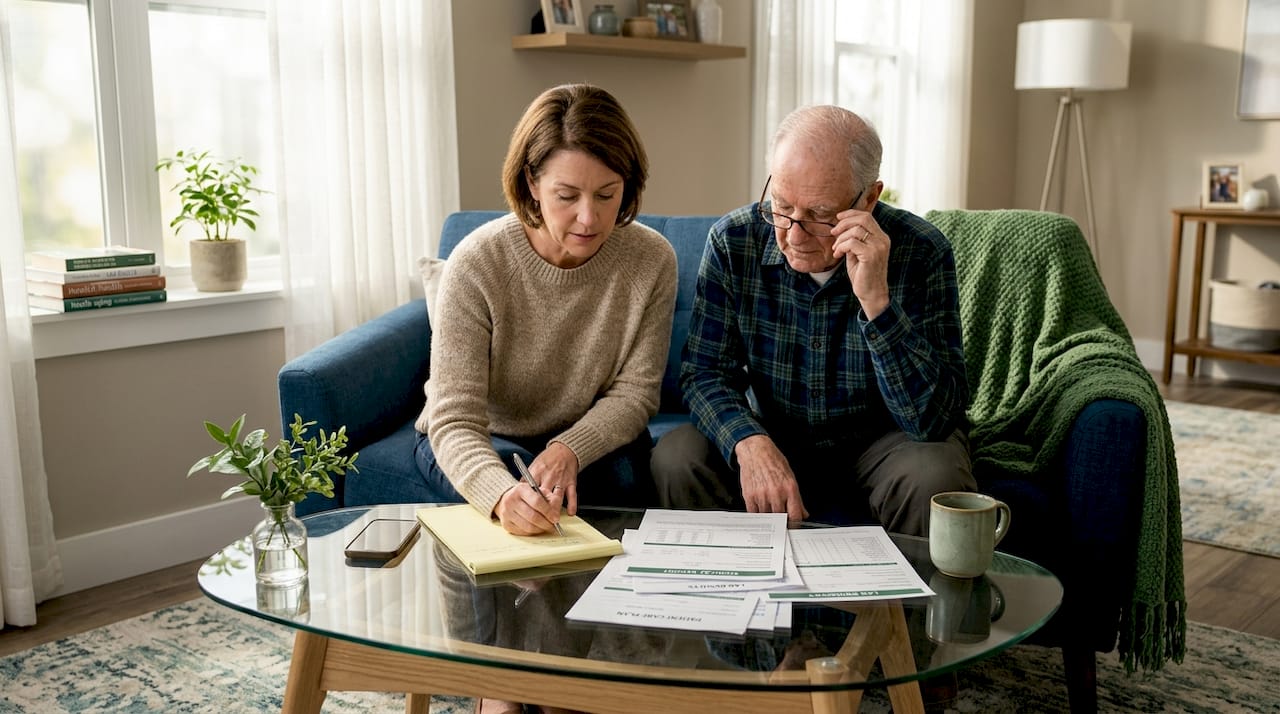
Most Californians say they want to die at home, surrounded by family in a familiar place. Yet many don’t get that chance. Hospice increases the odds of dying at home by 2.21 times compared to non-hospice care, yet families often wait too long to ask for help. If you’re caring for a terminally ill loved one, understanding what quality hospice truly offers can change everything. This guide explains what quality of life means in hospice, how care works at home, what California requires of providers, and how to avoid the most common pitfalls families face.
Table of Contents
- What ‘quality of life’ really means in hospice care
- How quality of life hospice works for families at home
- California standards: Ensuring quality and accountability in hospice care
- Barriers to quality hospice at home—and how to avoid them
- What most families don’t realize about quality hospice at home
- Support for your family: Compassionate hospice care in California
- Frequently asked questions
Key Takeaways
| Point | Details |
|---|---|
| Quality over cure | Hospice focuses on comfort, dignity, and emotional support instead of aggressive treatment. |
| Home benefits | Receiving hospice at home increases the chance loved ones remain where they feel secure and surrounded by family. |
| Licensed standards matter | Choosing a California-licensed hospice ensures ongoing care reviews, accountability, and access to top-quality support. |
| Start early | Referring to hospice sooner helps families avoid crisis and access the full range of support and comfort. |
What ‘quality of life’ really means in hospice care
When people hear the word hospice, they sometimes assume it means giving up. That assumption couldn’t be further from the truth. Understanding what hospice care means is the first step toward making a decision that truly honors your loved one.
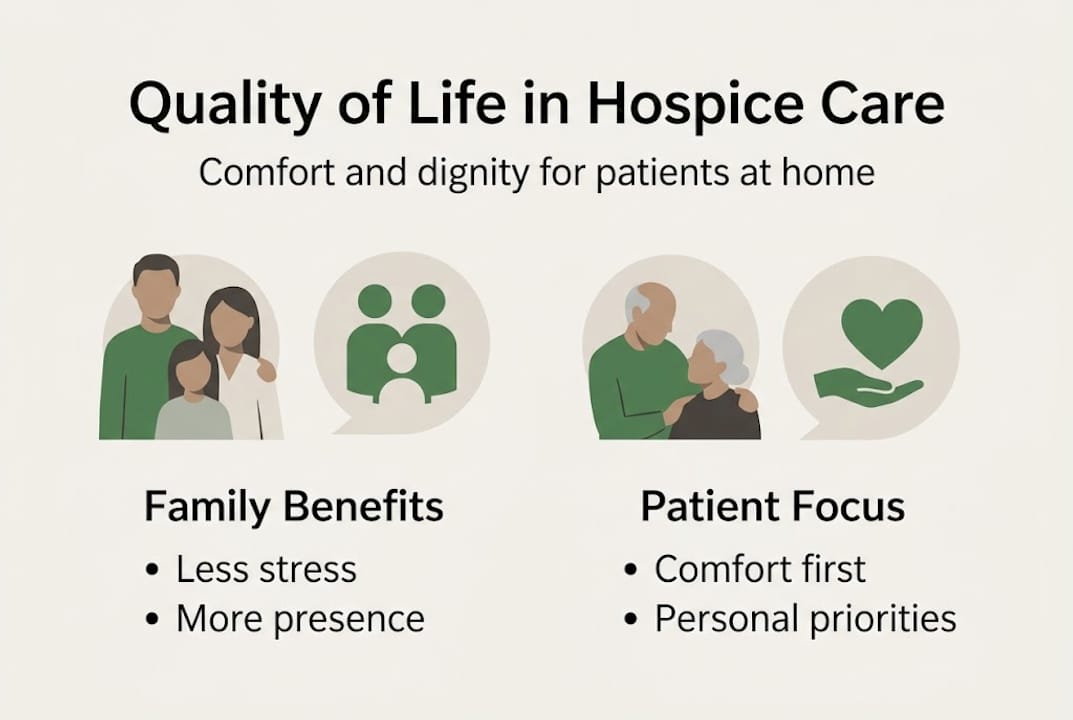
Quality of life in hospice is about maximizing comfort, preserving dignity, and reducing suffering during life’s final chapter. The goal shifts away from aggressive treatments aimed at curing illness and moves toward care that makes each day as meaningful and peaceful as possible. That shift is not a retreat. It is a deliberate, compassionate choice.
“Hospice care prioritizes quality of life by focusing on symptom management, pain relief, and comfort rather than curative treatment.”
This philosophy has real, practical consequences for your loved one and your family. A well-designed hospice plan addresses the whole person, not just the illness. It includes:
- Pain and symptom management: Medications, therapies, and expert monitoring to keep discomfort at bay
- Emotional support: Counseling and mental health services for both patients and family members
- Spiritual care: Chaplain services that respect every belief system and personal value
- Practical assistance: Help with daily activities, personal care, and household needs
- Family education: Training so you feel confident caring for your loved one at home
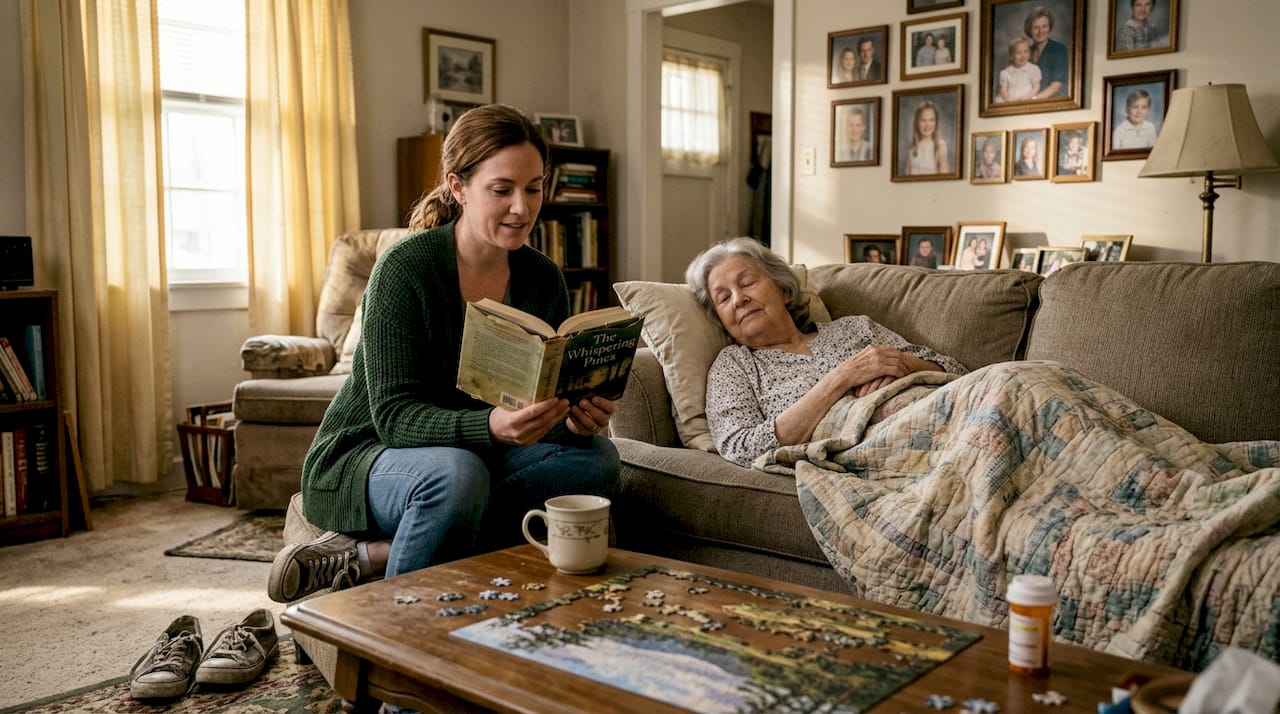
Care plans in quality hospice are never one-size-fits-all. They reflect the patient’s individual priorities, values, and wishes. If your mother wants to spend her mornings in the garden, that matters. If your father wants music playing softly in the background, that matters too. This guide for families walks through how personalized care planning works in practice.
The result is more meaningful time together. Families report feeling less overwhelmed and more present when professional support handles the medical complexity. That is the real promise of quality of life hospice.
How quality of life hospice works for families at home
Understanding the philosophy is one thing. Knowing how it actually unfolds in your home is another. Home hospice is built around an interdisciplinary team, meaning a coordinated group of professionals who each bring a specific skill set to your loved one’s care.
The interdisciplinary team approach in hospice includes nurses, physicians, social workers, chaplains, and aides providing 24/7 on-call support, home-delivered equipment, and family caregiver education to prevent crises and hospitalizations. You are never alone at 2 a.m. when something changes.
Here is what starting hospice at home typically looks like:
- Referral and eligibility check: A physician certifies that the patient has a terminal diagnosis with a prognosis of six months or less if the illness follows its expected course.
- Initial assessment: A hospice nurse visits your home to evaluate needs, discuss goals, and create a preliminary care plan.
- Care plan development: The interdisciplinary team builds a personalized plan covering medical, emotional, and spiritual needs.
- Equipment delivery: A hospital bed, wheelchair, medications, and other supplies are delivered directly to your home.
- Ongoing visits and 24/7 support: Regular visits from nurses, aides, and social workers, plus around-the-clock phone access for emergencies.
- Family check-ins: Regular reviews of the care plan and caregiver support to adjust as needs change.
Pro Tip: Don’t wait for a medical crisis to ask about hospice. Families who engage early benefit from more time with a full support team in place, better symptom control, and far less emergency stress.
The data supports this approach. 53.1% of Medicare decedents in 2024 received hospice care, the highest rate ever recorded, with routine home care as the primary level of service. Research also confirms that home hospice outcomes are strong, with patients more likely to achieve their wish of dying at home.
| Metric | Home hospice | Hospital care |
|---|---|---|
| Likelihood of home death | Significantly higher | Lower |
| Symptom burden | Reduced | Often higher |
| Average family satisfaction | High | Moderate |
| Covered by Medicare/Medi-Cal | Yes | Yes |
For more on managing pain in hospice and the importance of hospice at home, our team has put together practical resources to guide you. You can also review a detailed hospice visit workflow to know what to expect on each visit.
California standards: Ensuring quality and accountability in hospice care
Not all hospice providers are equal. In California, families have the advantage of strong regulatory oversight that sets a clear floor for quality. Knowing what the law requires helps you ask the right questions and choose the right provider.
California hospice is licensed by the California Department of Public Health (CDPH) with requirements for individualized care plans reviewed every 15 days by interdisciplinary teams, 24/7 core services, and Medi-Cal coverage for routine home care. These are not optional extras. They are legal requirements.
Families can also check quality ratings through the CAHPS (Consumer Assessment of Healthcare Providers and Systems) survey, a standardized tool that measures family satisfaction. Notably, 49% of providers received 4 to 5 stars on the CAHPS family survey, meaning roughly half of all hospice agencies are performing at a high level. You want to find one of those.
| Requirement | California standard |
|---|---|
| Licensing body | CDPH |
| Care plan review frequency | Every 15 days |
| On-call availability | 24/7 |
| Quality reporting | HQRP/CAHPS survey |
| Coverage options | Medicare and Medi-Cal |
When evaluating a provider, look for these signs of quality:
- Star ratings: Check the CAHPS survey score and HQRP (Hospice Quality Reporting Program) data
- Care plan process: Ask how often the plan is reviewed and who is involved in those reviews
- Team composition: Confirm the team includes a nurse, social worker, chaplain, and aide
- Response time: Ask how quickly someone responds to after-hours calls
- Transparency: A trustworthy agency will answer your questions openly and without pressure
For a deeper look at what hospice care standards look like in California, our blog covers the specifics in plain language.
Barriers to quality hospice at home—and how to avoid them
Even with strong standards and clear benefits, many families still don’t access quality home hospice in time. Understanding why helps you act before problems arise.
Sudden deterioration (31%), hospice waiting lists (27%), and transfer delays (21%) are the top reasons patients end up dying in a hospital despite expressing a preference for home. These are not rare exceptions. They are common patterns that early action can prevent.
Here are the most frequent barriers and what you can do about each:
- Sudden health decline (31%): A rapid change in condition can make home setup feel impossible. Solution: Start hospice conversations while your loved one is stable enough to participate in planning.
- Hospice wait lists (27%): Some agencies have limited capacity. Solution: Research and contact providers early, before a crisis forces a rushed decision.
- Transfer delays (21%): Moving from a hospital or facility to home hospice takes coordination. Solution: Ask the hospital’s discharge planner about hospice options as early as possible.
- Uncertainty about eligibility: Many families assume their loved one doesn’t qualify yet. Solution: Ask a physician to assess eligibility. You may be surprised.
- Fear of losing treatment options: Some families worry hospice means no more care. Solution: Hospice is care, just focused differently. Comfort-focused care is still active, attentive care.
Pro Tip: Start the hospice conversation before every box seems checked. Most families who delayed say they wish they had started sooner. Earlier enrollment means more time with a full team in place.
Home hospice keeps costs low with reduced symptom burden and no increase in caregiver grief compared to hospital-based end-of-life care.
For caregiver support tips and a step-by-step hospice workflow guide, we’ve gathered resources to help you move forward with confidence. You can also review steps for hospice success to understand the full process. Research on costs and benefits of home hospice consistently supports early engagement, and guidance on coping with grief can help your family prepare emotionally.
What most families don’t realize about quality hospice at home
Here is something we’ve seen time and again: families who choose hospice early don’t regret it. Families who waited almost always do.

The common misconception is that hospice is about dying faster or giving up on your loved one. In reality, hospice is about living better for whatever time remains. It creates space for real conversations, for saying what needs to be said, and for being present without the noise of constant medical intervention.
The support system hospice provides is as much for the family as it is for the patient. Caregivers who accept that support earlier experience less burnout, less crisis, and more meaningful moments. Exploring types of palliative support available at home can open your eyes to just how much is possible.
Our honest perspective: involve your care team in advance care planning now. Don’t wait for every condition to be perfect or every question to be answered. The families who lean into hospice early are the ones who tell us, months later, that it gave them their loved one back in the ways that mattered most.
Support for your family: Compassionate hospice care in California
If you’re ready to explore what quality hospice looks like for your family, we’re here to help. At Graceland Hospice Care, we are licensed, compassionate, and committed to meeting every family where they are. Our hospice services cover the full range of medical, emotional, and spiritual support your loved one deserves, delivered at home with dignity and respect.
We also offer a library of hospice resources to guide you through every step of this journey. Whether you have questions about eligibility, what to expect, or how to talk to your family, we have answers. Please contact us for a free consultation. You don’t have to navigate this alone.
Frequently asked questions
What does quality of life mean in hospice care?
Quality of life in hospice means prioritizing comfort, dignity, and meaningful time at home rather than pursuing curative treatments. It addresses physical, emotional, and spiritual needs as a whole.
How does California regulate hospice quality?
California requires individualized care plans reviewed every 15 days, 24/7 service availability, and quality reporting through the CAHPS survey to ensure consistent, accountable care.
Can hospice really help patients die at home?
Yes. Hospice increases the odds of dying at home by 2.21 times, and these services are covered by both Medicare and Medi-Cal for eligible patients in California.
What are common barriers to starting hospice early?
Sudden declines, wait lists, and transfer delays are the most common reasons families miss out on full home hospice benefits. Early referral is the most effective solution.
Does home hospice increase costs or caregiver burden?
No. Research shows that home hospice costs remain low and caregiver grief does not increase compared to hospital-based end-of-life care.
Recommended
- Hospice Care Standards: Ensuring Quality at Home | Graceland Hospice Care Blog
- Why Hospice at Home Matters for Families | Graceland Hospice Care Blog
- End of Life Care Guide for Compassionate At-Home Support | Graceland Hospice Care Blog
- Blog & Resources | Graceland Hospice Care
- Why upgrade home accessibility for safer, confident living
- Beste tips voor ouderencomfort voor een prettig en veilig thuis – Finlandic