Why Hospice at Home Matters for Families
Why Hospice at Home Matters for Families
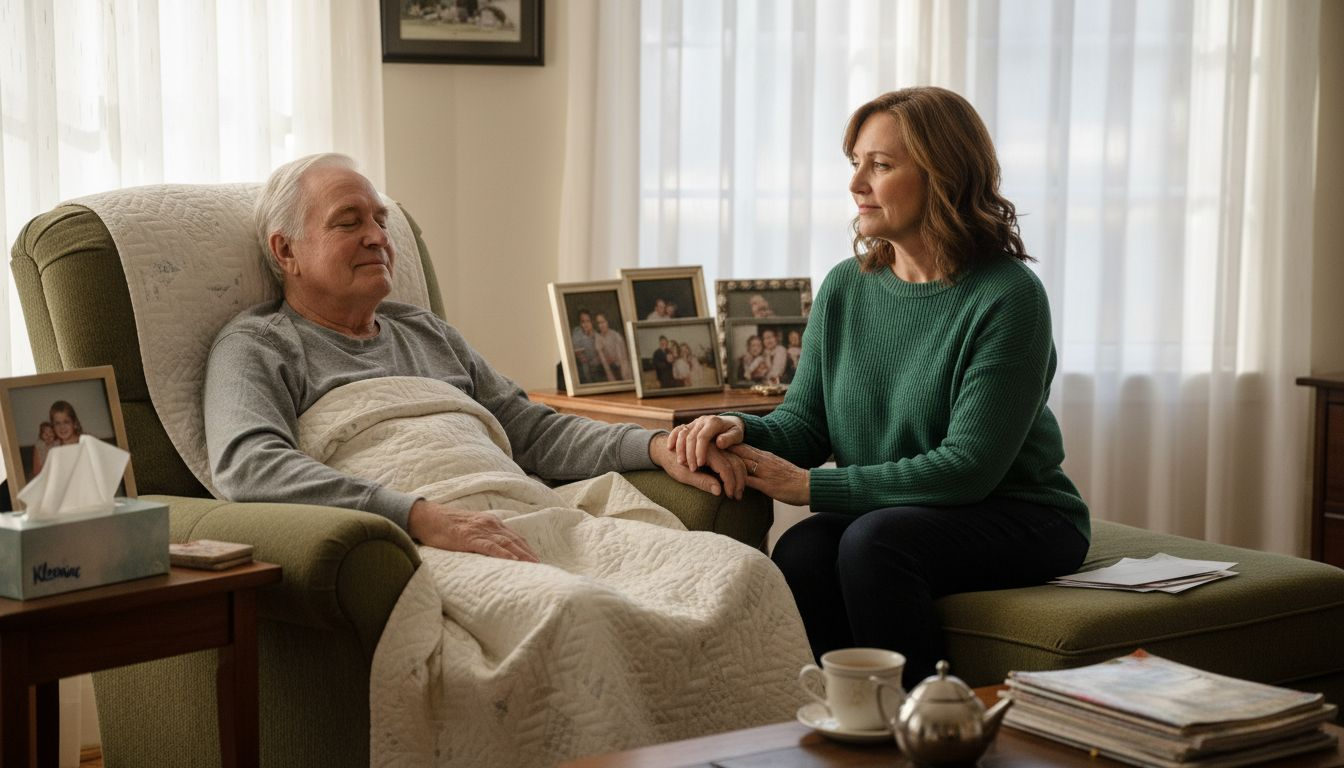
Caring for a terminally ill loved one at home in Orange or Los Angeles County often means balancing deep emotional challenges with daunting daily responsibilities. Families want more than just medical treatment—they seek comfort, dignity, and support for everyone involved. Choosing hospice care at home helps you provide compassionate symptom relief, 24/7 access to a dedicated team, and practical guidance, all while keeping your loved one surrounded by the people and environment they know best.
Table of Contents
- Defining Hospice Care at Home
- Types and Levels of Hospice Services
- How Home Hospice Supports Families
- Costs, Coverage, and Eligibility Requirements
- Comparing Home Hospice to Facility Care
Key Takeaways
| Point | Details |
|---|---|
| Home Hospice Care Enhances Comfort | Hospice care prioritizes comfort and quality of life, allowing patients to receive support while remaining in familiar environments with family. |
| Interdisciplinary Team Approach | A coordinated team of healthcare professionals manages symptom control, emotional support, and spiritual care tailored to individual needs. |
| Flexible Levels of Care | The hospice care model offers various levels, from routine home visits to more intensive care based on the patient’s evolving needs. |
| Comprehensive Coverage | Hospice services are often covered by Medicare and other insurance plans, minimizing financial burden for families during a challenging time. |
Defining Hospice Care at Home
Hospice care at home is specialized medical support for people expected to live six months or less. It prioritizes comfort over curative treatment, allowing patients to spend their final months surrounded by family in a familiar environment.
Unlike traditional hospital care, hospice focuses on quality of life. The goal is managing symptoms, reducing pain, and addressing emotional and spiritual needs—not fighting the underlying disease.
What Makes Hospice Care Different
Hospice operates through an interdisciplinary team approach. This means you’re not working with a single doctor, but rather a coordinated group of professionals.
This team typically includes:
- Physicians trained in hospice and palliative medicine
- Registered nurses who manage symptoms and medications
- Certified nursing assistants for personal care and comfort
- Social workers and counselors for emotional support
- Chaplains or spiritual advisors for faith-based needs
- Pharmacists ensuring medications work together safely
Hospice care addresses medical, physical, spiritual, and psychosocial needs through this team approach. Each member brings expertise to address different aspects of your loved one’s well-being.
Care Focused on Comfort
At its core, hospice emphasizes symptom management. This means treating pain, nausea, shortness of breath, and other uncomfortable symptoms—the things that affect daily quality of life.
Hospice caregivers work to keep your loved one as comfortable and alert as possible. Medications are adjusted based on symptoms, not on extending life.
Supporting Families, Not Just Patients
Hospice recognizes that end-of-life care affects the entire family. Caregivers receive ongoing support and education about what to expect.
This support includes:
- Nursing guidance on comfort care techniques
- Help managing medications and medical equipment
- Emotional counseling for family members
- Respite care to give primary caregivers breaks
- Bereavement support after the patient’s passing
Families in Orange and Los Angeles County often find that hospice transforms a frightening situation into something more manageable and meaningful.
Hospice allows families to focus on presence and connection rather than fighting a losing battle against disease.
Why Home Matters
Staying home during end-of-life care offers distinct advantages. Your loved one remains in familiar surroundings, maintains routines, and stays close to the people who matter most.
Home-based hospice eliminates hospital visits, reduces stress from unfamiliar environments, and lets family members participate directly in caregiving—creating opportunities for closeness during precious final months.
Pro tip: Ask your hospice provider about what equipment and supplies they’ll provide for home care—many include hospital beds, oxygen, and pain management devices at no additional cost.
Types and Levels of Hospice Services
Hospice care isn’t one-size-fits-all. Federal regulations outline four distinct levels of care, each designed for different situations and needs during your loved one’s final months.
Understanding these levels helps you know what to expect and when to request changes based on your family’s circumstances.
Routine Home Care
Routine home care is the most common hospice level. Your loved one stays at home while hospice nurses, aides, and other team members visit regularly to provide care.
Visits typically happen a few times per week, though frequency adjusts based on symptoms. Between visits, your family provides daily care with 24/7 phone support available.
Routine care includes:
- Regular nurse assessments and symptom monitoring
- Medication management and pain control
- Personal care assistance from certified aides
- Equipment like hospital beds, wheelchairs, and oxygen
- Counseling and spiritual support as needed
This level works well for patients whose symptoms remain stable and families comfortable managing day-to-day care.
Here’s a summary of the four hospice care levels and when each is most appropriate:
| Level of Care | Setting | Typical Use Case | Primary Focus |
|---|---|---|---|
| Routine Home Care | Patient’s home | Stable symptoms, family can assist | Scheduled visits, symptom management |
| Continuous Home Care | Patient’s home | Acute crisis, uncontrolled symptoms | 24-hour nurse presence |
| Inpatient Respite Care | Facility/hospital | Caregiver fatigue or absence | Temporary patient admission |
| General Inpatient Care | Facility/hospital | Complex symptoms, needs 24/7 monitoring | Intensive medical oversight |
Continuous Home Care During Crisis
When symptoms become severe or unpredictable, continuous care provides intensive support. A hospice nurse stays in your home during acute crises, often for 24-hour or extended periods.
This level prevents unnecessary emergency room visits and hospital admissions. Nurses manage medication adjustments, monitor vital signs, and provide hands-on comfort measures.
Continuous care kicks in when:
- Pain becomes difficult to control
- Breathing problems develop suddenly
- Psychological distress intensifies
- Complex medical needs emerge
Inpatient Respite Care
Caregiving exhausts even the most dedicated families. Inpatient respite care offers temporary relief by admitting your loved one to a hospice facility or hospital for up to five consecutive days.
This lets primary caregivers rest, handle personal matters, or simply recharge emotionally. Your family member receives skilled nursing and comfort care in a facility setting.
General Inpatient Care
General inpatient care addresses complex medical situations requiring hospitalization. Hospice services include medical supplies and symptom management in hospital or facility settings when home management becomes impossible.
This level handles:
- Severe, uncontrolled symptoms
- Complex medication management
- Palliative procedures or treatments
- End-of-life crisis situations
Every level of hospice care centers on comfort and dignity, not on where the care happens.
Choosing the Right Level
Your hospice team assesses your loved one’s medical status, your family’s capacity, and your home environment. Care levels can change as needs shift.
Families in Orange and Los Angeles County should expect regular team meetings to evaluate whether the current level matches reality.
Pro tip: Don’t hesitate to request a higher level of care if you feel overwhelmed—hospice teams expect these conversations and adjust services based on what your family actually needs.
How Home Hospice Supports Families
End-of-life care doesn’t have to fall entirely on your shoulders. Home hospice shifts the burden of medical management to professionals while keeping your loved one close and allowing your family to focus on what matters most.

This support transforms a potentially overwhelming situation into something manageable and meaningful.
Relief from Medical Complexity
Managing medications, monitoring symptoms, and coordinating medical care creates constant stress. Hospice professionals handle the clinical work so you don’t have to become a nurse overnight.
Your team manages:
- Medication schedules and adjustments
- Symptom monitoring and documentation
- Medical equipment setup and troubleshooting
- Coordination with physicians
- Insurance and paperwork details
This frees you to be present as a family member, not a medical technician.
Emotional and Practical Support
Hospice care provides emotional and social support throughout your loved one’s final months. Social workers and counselors understand the unique grief and anxiety families experience during this time.
They offer guidance about what to expect, validation of your feelings, and coping strategies. Many families find these conversations invaluable for processing difficult emotions.
Flexible Family Involvement
You control how much or how little you participate in hands-on care. Some families want to help with bathing, feeding, and personal care—building precious moments together.
Others prefer to let professionals handle all physical care while they focus on conversation and presence. Both approaches are completely valid, and hospice supports families in either role.
Hospice respects your family’s values, culture, and preferences about involvement.
Respite Care for Caregivers
Primary caregivers need breaks—physically and emotionally. Respite care provides temporary relief by bringing in additional support or admitting your loved one to a facility for short stays.
This isn’t abandonment. It’s recognizing that sustainable caregiving requires rest.
Round-the-Clock Access
24/7 availability means your hospice team answers calls at 2 a.m. when panic sets in or symptoms escalate unexpectedly. You’re never alone wondering what to do.
Hospice enables families to focus on presence and connection instead of managing medical crises.
Bereavement Support
Your relationship with hospice doesn’t end when your loved one dies. Grief support continues for your family through counseling, support groups, and resources.
This ongoing care acknowledges that loss extends far beyond the patient’s final breath.
Creating Space for Meaning
When professionals handle medical tasks, families gain time and emotional energy for conversations, reminiscing, and closure. These moments become irreplaceable memories.
Parents say goodbye to adult children. Spouses share final words. Grandchildren record stories. These connections define end-of-life care as much as any medication.
Pro tip: Write down specific questions or concerns for your hospice team during your first visit—they expect this and use your input to personalize care around your family’s actual needs.
Costs, Coverage, and Eligibility Requirements
One major concern for families is cost. The good news is that hospice care is covered by Medicare, Medicaid, and most private insurance plans. Understanding eligibility and what’s covered removes financial uncertainty during an already stressful time.
Understanding the Medicare Hospice Benefit
Medicare covers hospice services when your loved one qualifies. The Medicare Hospice Benefit is a comprehensive program that eliminates most out-of-pocket expenses for eligible patients.
Medicare covers:
- Nursing care and visits
- Medical equipment and supplies
- Medications related to the terminal diagnosis
- Counseling and spiritual care
- Respite care for family caregiver relief
- Bereavement support after death
You typically pay little to nothing for these services under Medicare.
Eligibility Requirements
To qualify for hospice, your loved one must meet specific criteria. A patient must have a life expectancy of six months or less, certified by two physicians.
This certification isn’t a death sentence—it’s a realistic assessment that the disease is progressing and curative treatment won’t change the outcome.
Eligibility requirements include:
- Terminal illness diagnosis
- Six-month prognosis or less
- Physician certification
- Second physician concurrence
- Patient or family agreement to focus on comfort care
Insurance Coverage Beyond Medicare
Medicaid programs cover hospice in all states, though specific benefits vary by state. Most private insurance plans also include hospice coverage.
If your loved one has multiple insurance types, one becomes the primary payer. Graceland Hospice handles insurance verification and billing coordination—you don’t manage this directly.
Cost-Sharing and Out-of-Pocket Expenses
Under Medicare, your family may have small copayments for medications or respite care, but these are minimal. The vast majority of hospice services carry no cost-sharing.
Unlike hospital stays, there’s no deductible to meet before coverage begins. Services activate once your loved one is enrolled.
What About Uninsured Patients?
Lack of insurance doesn’t disqualify families from hospice. Hospice agencies, including Graceland Hospice, provide care regardless of ability to pay.
Many hospice organizations have financial assistance programs and work with families to find funding solutions. No one should be denied hospice care due to cost.
Hospice coverage removes the financial barrier that might otherwise prevent families from accessing end-of-life care.
The Enrollment Process
Your physician discusses hospice eligibility with your family. Once you decide to enroll, the hospice team handles certification paperwork, insurance verification, and all administrative details.
This typically takes 24 to 48 hours from initial contact to active care in your home.
What Happens to Coverage if Prognosis Changes
If your loved one lives longer than six months, Medicare continues coverage. The prognosis gets reassessed, and if the disease remains terminal, care continues.
Some patients actually improve temporarily—hospice adjusts care accordingly while maintaining the comfort-first philosophy.
Pro tip: Ask your hospice intake coordinator for a detailed explanation of what Medicare covers and what minor costs you might encounter—most families are pleasantly surprised by how comprehensive coverage is.
Comparing Home Hospice to Facility Care
Not every family situation is the same. Some thrive with home-based hospice, while others need the structured environment of a facility. Understanding the differences helps you choose what works best for your loved one and your family.
The Home Hospice Advantage
Home hospice keeps your loved one in familiar surroundings where they feel most comfortable. Being in their own bed, hearing familiar sounds, and maintaining daily routines can significantly reduce anxiety and promote peace.
Home care offers:
- Familiar environment reduces stress
- Family maintains control over the space
- Flexible scheduling around family preferences
- Privacy and personalization
- Ability to say goodbye on your own terms
- Often preferred by patients and families
Many patients report feeling safer and more at ease at home, which directly impacts their comfort during end-of-life care.
When Facility Care Makes Sense
Facility-based hospice in inpatient units supports patients requiring constant medical care or when caregivers cannot provide full-time support. This includes nursing homes, hospice houses, and hospital-based units.
Facility care becomes necessary when:
- Symptoms require 24-hour professional nursing
- Family members lack physical ability to provide care
- Home environment cannot accommodate medical equipment
- Behavioral or psychiatric needs exceed home support capacity
- No family caregivers are available
Facility care isn’t a failure—it’s the right choice when home care isn’t feasible.
Medical Complexity and Staffing
Home hospice handles most symptoms effectively with nursing visits and 24/7 phone support. However, some patients need constant monitoring—continuous IV medications, frequent adjustments, or complex wound care.
Facility settings provide round-the-clock RN presence, making complex symptom management safer and more responsive.
Cost Considerations
Both settings are covered by Medicare and insurance. However, facility care sometimes involves room-and-board costs depending on your insurance plan, while home hospice typically has no housing costs.
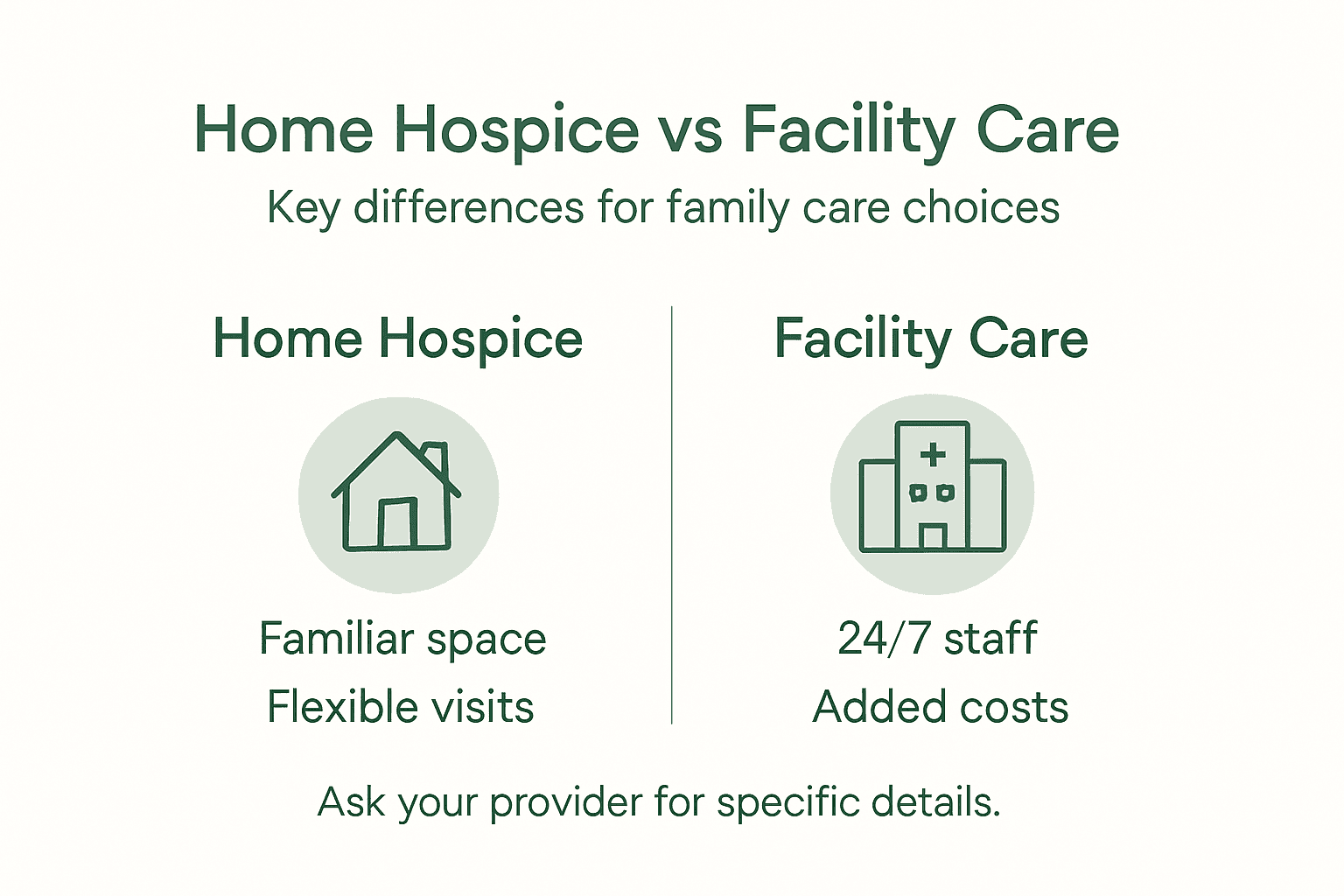
Ask your hospice provider about specific costs before choosing between settings.
Compare home hospice and facility care to see which suits your needs best:
| Aspect | Home Hospice | Facility Care |
|---|---|---|
| Environment | Familiar and personal | Structured and clinical |
| Family Role | Major involvement, flexibility | Supportive, less hands-on |
| Medical Support | Scheduled visits, phone backup | 24/7 nursing staff onsite |
| Cost Consideration | No room charges, covered equipment | Possible room/board fees |
Flexibility and Transitions
Care isn’t static. Many families start with home hospice and transition to facility care if needs escalate. Others do the reverse—starting in a facility and returning home as symptoms stabilize.
The best hospice setting is the one that meets your loved one’s medical needs while honoring your family’s values and capacity.
Family Involvement in Either Setting
Whether home or facility, hospice supports families as much as patients. Visiting hours are flexible, family participation is encouraged, and your loved one’s preferences guide all decisions.
Your role as family changes but doesn’t disappear in facility settings.
Making the Decision
Discuss these questions with your hospice team during intake:
- Can your home accommodate medical equipment?
- Can primary caregivers provide hands-on care or monitoring?
- What are your loved one’s stated preferences?
- What level of medical complexity do you expect?
Your team helps you honestly assess what’s realistic for your situation.
Pro tip: Visit potential facility settings before enrolling—seeing the space, meeting staff, and asking questions reduces anxiety and helps confirm whether it feels like the right choice for your family.
Discover Compassionate Hospice Care That Respects Your Family’s Needs
The article highlights the vital role of hospice at home in easing the challenges families face during end-of-life care. Many families struggle with managing complex symptoms, balancing emotional support, and feeling overwhelmed by medical responsibilities. At Graceland Hospice, we understand these pain points. Our interdisciplinary team specializes in providing personalized comfort-focused care that supports both patients and their loved ones in Orange and Los Angeles County.
If you want to transform this difficult time into meaningful moments while ensuring expert symptom management, explore how our hospice care services can help your family focus on connection and comfort without the burden of medical stress. Start with a free consultation and learn why more families trust Graceland Hospice to deliver compassionate care where it matters most. Visit Graceland Hospice Blog today and take the first step toward comfort and support.
Frequently Asked Questions
What is hospice care at home?
Hospice care at home is specialized medical support for individuals expected to live six months or less. It emphasizes comfort rather than curative treatment, allowing patients to remain in familiar surroundings with their loved ones.
How does hospice care support families?
Hospice care provides families with emotional, practical, and medical support, allowing them to focus on spending quality time with their loved one while professionals manage medical complexities. This includes ongoing counseling, respite care for primary caregivers, and 24/7 accessibility for concerns.
What levels of hospice care are available at home?
There are four levels of hospice care: Routine Home Care, Continuous Home Care (for crises), Inpatient Respite Care (for temporary relief of primary caregivers), and General Inpatient Care (for complex medical needs requiring hospitalization). Each level is tailored to meet specific needs.
What costs and insurance coverage apply to home hospice care?
Hospice care is generally covered by Medicare, Medicaid, and most private insurance plans, minimizing out-of-pocket expenses. It covers services like nursing care, medical supplies, and counseling, making it financially accessible for most families.