The role of a hospice chaplain: Support for all families
The role of a hospice chaplain: Support for all families
TL;DR:
- Many families mistakenly believe hospice chaplains only pray or read scripture, overlooking their broader support role. Chaplains assess spiritual needs, provide emotional comfort, and collaborate with care teams, regardless of faith background. Their trained presence addresses existential questions, distress, and family support, making holistic end-of-life care possible for all.
Many families assume that a hospice chaplain is only there to pray, read scripture, or provide last rites. That assumption, while understandable, misses so much of what chaplains actually do. A hospice chaplain is trained to walk alongside anyone facing life’s final chapter, regardless of faith, belief, or background. Whether your family is deeply religious, quietly spiritual, or entirely secular, a chaplain can offer a kind of support that no other member of the care team is specifically trained to provide. This article will help you understand exactly what that support looks like, and why it matters.
Table of Contents
- What does a hospice chaplain do?
- Supporting spiritual and emotional well-being at end of life
- How chaplains assess spiritual needs: Frameworks and practice
- Training, limits, and ethical challenges in hospice chaplaincy
- What most families (and care teams) misunderstand about chaplaincy
- How Graceland Hospice Care supports families and caregivers
- Frequently asked questions
Key Takeaways
| Point | Details |
|---|---|
| Chaplains address all beliefs | Hospice chaplains offer support to both religious and non-religious families, focused on meaning and comfort. |
| Integral team members | Chaplains work closely with doctors, nurses, and social workers to coordinate holistic end-of-life care. |
| Specialized spiritual assessments | Structured spiritual assessments guide customized support and ensure continuity across the hospice team. |
| Rigorous training and ethics | Hospice chaplains receive advanced education in spiritual care, crisis support, and ethical decision-making. |
| Supports families and caregivers | Chaplains help ease distress for both patients and their loved ones at every stage of the hospice journey. |
What does a hospice chaplain do?
Now that you know chaplaincy isn’t just for religious needs, let’s explore what chaplains actually do in a hospice setting.
The role of a hospice chaplain is broader and more structured than most people expect. At its core, the job involves visiting patients and families, conducting spiritual assessments, and helping the wider care team understand the spiritual and emotional needs of the person in their care. A chaplain does not simply show up when someone requests prayer. They are an active, integrated member of the interdisciplinary team.
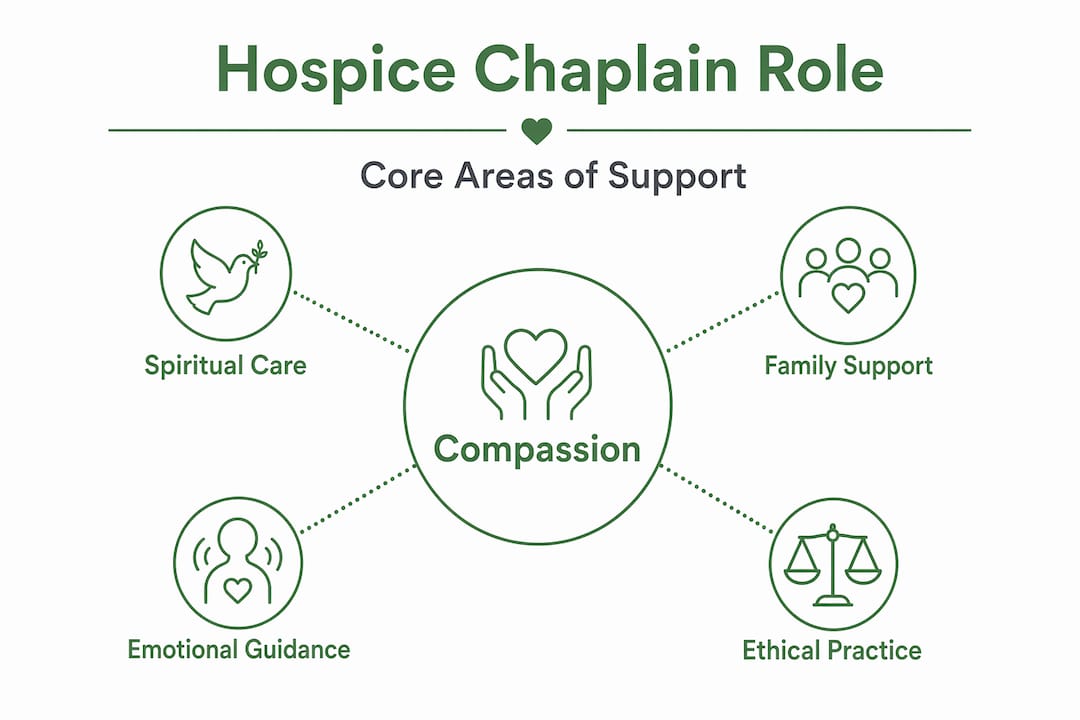
Hospice chaplains document and coordinate spiritual care needs within the patient’s plan of care and collaborate with other disciplines, including nurses, social workers, and physicians. This is not informal work. It is deliberate, documented, and built into the care plan from the start.
Here is a snapshot of what a chaplain’s day-to-day work often looks like:
- Conducting spiritual assessments with newly admitted patients and their families
- Visiting regularly throughout the course of care, not just in a crisis
- Documenting spiritual needs so the entire care team stays informed
- Participating in team meetings to help coordinate care around a patient’s values
- Offering grief support before and after a patient’s death
- Connecting families to community clergy or faith resources when requested
- Supporting staff who also experience grief and moral fatigue
Documentation is especially important. Hospice accreditation standards require that spiritual needs be identified and recorded in every patient’s plan of care. This ensures that spiritual support is not an afterthought but a consistent, quality-driven component of care. Meeting those hospice care standards is part of how programs protect families and ensure care is truly holistic.
“Spiritual care in hospice is not an optional add-on. It is a documented, accountable part of coordinated care that benefits patients, families, and the entire care team.”
| Chaplain activity | Who benefits | Frequency |
|---|---|---|
| Spiritual assessment | Patient and family | On admission and ongoing |
| Care plan documentation | Entire care team | Ongoing updates |
| Emotional/spiritual visits | Patient and family | Regular throughout care |
| Team collaboration meetings | All disciplines | Weekly or as needed |
| Bereavement follow-up | Family members | After patient’s death |
This table illustrates that chaplaincy is woven into the full arc of hospice care, from the first days to well beyond the patient’s passing.
Supporting spiritual and emotional well-being at end of life
Beyond planning and documentation, chaplains make a real difference for the emotional and spiritual well-being of patients and families.
When someone is close to death, questions surface that medicine cannot answer. Why did this happen? Did my life matter? Is it okay to feel angry at God, or to feel nothing at all? What happens after? These are not medical questions, but they are deeply human ones. Chaplains are specifically trained to sit with those questions, without rushing to resolve them or impose answers.
Hospice spiritual care is used to address spiritual distress and existential suffering, supporting both patients and caregivers through some of the most difficult territory a person can face. Spiritual distress is a real clinical concern. It can show up as restlessness, unresolved guilt, fear of dying, or a profound sense of isolation.
Common themes chaplains help patients and families work through include:
- Meaning and purpose: Helping a person feel that their life has mattered
- Forgiveness: Supporting conversations about reconciliation with self, others, or a higher power
- Hope: Reframing hope away from cure and toward comfort, connection, and legacy
- Disconnection: Helping families feel present and emotionally connected to their loved one
- Anger and doubt: Creating a safe, non-judgmental space for all emotions and beliefs
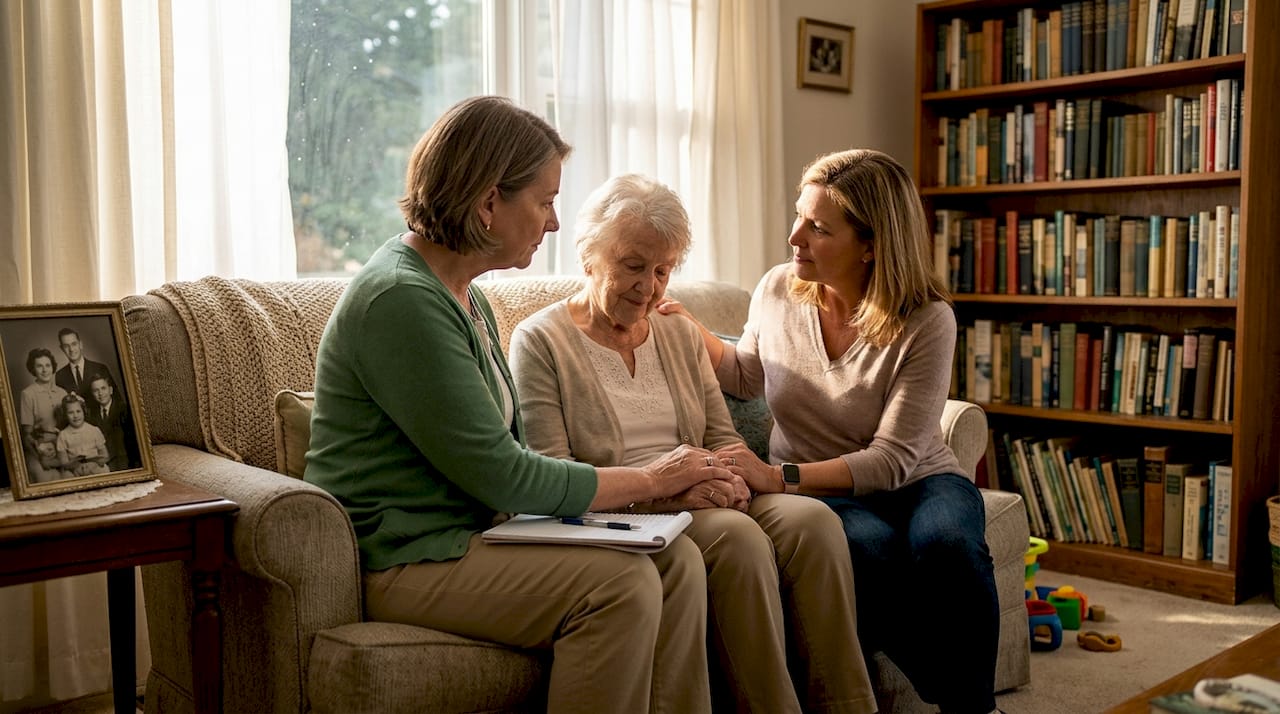
Importantly, chaplains support family members just as much as patients. The person lying in the bed is not the only one who is suffering. The importance of spiritual care extends to everyone in the room, and chaplains understand that family members carry their own grief, fear, and spiritual questions.
If your loved one has existential fear or spiritual distress, chaplains may be able to help address suffering, disconnection, and meaning issues in ways that other care team members are not trained for.
Chaplains are also rigorously non-judgmental. A chaplain will not try to convert anyone, challenge personal beliefs, or push a particular religious framework. If a patient identifies as atheist, the chaplain will support that person’s specific worldview. If a family holds mixed beliefs, the chaplain can navigate that with sensitivity. The goal is always comfort and dignity, never persuasion.
Pro Tip: If you are unsure whether a chaplain visit would be welcome, ask your hospice team to arrange a brief, informal introduction. Many families who were initially hesitant find the conversation surprisingly helpful. Caregiver support includes these kinds of gentle first steps.
How chaplains assess spiritual needs: Frameworks and practice
Many wonder how chaplains know what to ask or how to approach sensitive topics. Here is how assessments work and why structure matters.
A chaplain’s first formal conversation with a patient or family is not a free-form chat. It follows a structured framework designed to draw out spiritual needs without making anyone feel interrogated or uncomfortable. One widely used approach is the HOPE framework, which stands for Sources of Hope, Organized Religion, Personal Spirituality and Practices, and Effects on Medical Care and End of Life Issues.
Chaplains use structured approaches for spiritual assessment to guide consistent, coordinated conversations and documentation across the care team. This structure matters for two reasons. First, it ensures nothing important is overlooked. Second, it means a patient does not have to repeat deeply personal information every time a new care team member comes on shift.
Here is what a typical spiritual assessment process looks like:
- Introduction and rapport building: The chaplain begins with a warm, unhurried conversation to put the patient at ease before asking any formal questions.
- Exploring sources of meaning: The chaplain asks open-ended questions about what gives the patient strength, hope, or comfort.
- Understanding faith or spiritual background: This is done without assumption. A patient may have no religious background at all, and that is just as valid.
- Identifying concerns or distress: The chaplain listens for signs of unresolved guilt, fear, or spiritual pain.
- Documenting findings: All information is recorded and shared with the care team in an appropriate, respectful manner.
- Developing a spiritual care plan: Based on the assessment, specific goals for spiritual support are written into the patient’s overall plan of care.
| Assessment tool | What it explores | Best suited for |
|---|---|---|
| HOPE framework | Sources of hope, religion, personal practice, care effects | Broad spiritual backgrounds |
| FICA tool | Faith, Importance, Community, Address in care | Faith-focused conversations |
| Open narrative approach | Personal life story and meaning | Secular or non-religious patients |
Using a hospice assessment guide can help families know what to expect when their loved one begins hospice care. The spiritual assessment is just one part of a larger process, but it is often the part that families find most meaningful in retrospect.
Pro Tip: You can let the chaplain know ahead of time if your loved one is reluctant to discuss spiritual topics. A skilled chaplain can adjust their approach to focus on life stories, values, and relationships without using explicitly spiritual language.
Training, limits, and ethical challenges in hospice chaplaincy
Sound assessment and documentation are just one piece. Chaplaincy is a professional discipline with specific preparation and ethical realities.
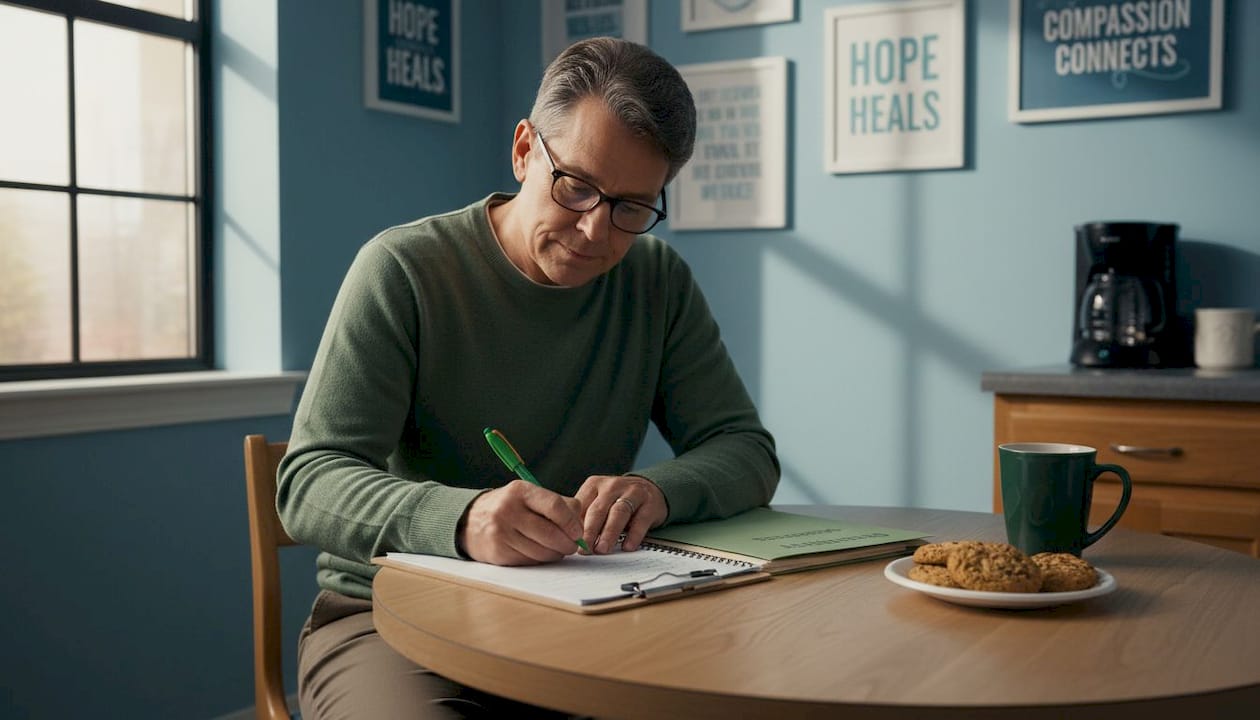
It would be a mistake to think of hospice chaplains as volunteers or informal pastoral visitors. Most chaplains who work in hospice settings have completed significant professional training. Professional preparation is rooted in Clinical Pastoral Education (CPE), a supervised, hands-on training model that prepares chaplains for interdisciplinary systems work and crisis competency. CPE typically involves hundreds of supervised hours in clinical settings, often hospitals or hospice programs, where chaplains learn to work within medical teams and respond to acute emotional and spiritual crises.
Key elements of a well-trained hospice chaplain’s background typically include:
- Graduate-level theological or counseling education
- Completion of multiple units of CPE (each unit equals roughly 400 hours)
- Board certification through a recognized professional body
- Ongoing continuing education in grief, trauma, and palliative care
- Crisis intervention skills for acute moments of distress or family conflict
It is worth noting that chaplaincy is not without its ethical complexities. Chaplains hold a unique position on the care team because they are bound by confidentiality while also being expected to document and share relevant information with colleagues. Navigating that tension requires both training and professional judgment.
One particularly sensitive area is medical assistance in dying. Chaplains may disagree about advocacy roles in controversial topics such as medical assistance in dying. Some chaplains see their role as accompanying patients through whatever decision they make; others hold personal or religious convictions that shape their involvement. Families should feel comfortable asking a chaplain how they approach these topics so expectations are clear from the start.
“A chaplain’s role is not to make decisions for patients or families. It is to ensure that every person feels heard, respected, and supported in whatever choices they face.”
Confidentiality also matters. What a patient shares with a chaplain in confidence is treated with the same respect as a conversation with any other licensed professional. Families can trust that the chaplain’s presence is a safe one.
What most families (and care teams) misunderstand about chaplaincy
Perhaps the most persistent misconception about hospice chaplains is that they exist to tend to “spiritual people.” The implication being that if your family does not identify as religious, a chaplain simply has nothing to offer. This view is both common and limiting.
In reality, chaplaincy is fundamentally about human connection at its most vulnerable. Even a firmly secular family grappling with anticipatory grief, strained relationships, or the weight of saying goodbye has needs that a chaplain is well-positioned to meet. The language may be different, but the need for meaning, for feeling witnessed, and for permission to grieve openly is universal.
There is also a common misunderstanding among some care team members. Because chaplains do not perform clinical procedures, they are sometimes treated as peripheral to the “real” work of hospice. That view undervalues something important. Chaplains address the suffering that morphine cannot reach. Unresolved guilt, existential terror, and broken family relationships cause real pain at the end of life. And they require a specific kind of human presence to address.
Another overlooked reality is that chaplains can help families who feel uncertain about how to show up for a dying loved one. Many people do not know what to say or how to be present. A chaplain can guide a family through that, helping them find meaningful ways to express love and create lasting memories.
The qualities of compassionate care in hospice always include openness, respect, and presence. Chaplains embody all of those qualities, and their impact is often remembered long after the clinical details have faded. We believe that families who engage with chaplaincy, even tentatively, almost always find something of genuine value.
Professional chaplains will never impose a belief system. They will meet your family exactly where you are, and they will stay as long as you need them. That is not a small thing. It is one of the most meaningful forms of support hospice care can offer.
How Graceland Hospice Care supports families and caregivers
If you want to experience this kind of compassionate, team-centered spiritual support for your family, here is where to look next.
At Graceland Hospice Care, spiritual support is not a checkbox on an intake form. It is woven into every aspect of how we care for patients and their families. Our interdisciplinary team includes skilled chaplains who are dedicated to honoring each individual’s unique beliefs, values, and background. Whether your family is navigating deep faith questions or simply needs someone to sit quietly alongside you, we are here.
Our hospice care services are built around the whole person, not just the medical condition. We understand that end-of-life care involves the heart as much as the body, and our team is trained to respond to both. You can also hear directly from people who have experienced our care firsthand through our family stories, which reflect the real, lived impact of compassionate hospice support. Please contact us for a free consultation.
Frequently asked questions
Do you have to be religious to receive chaplain support in hospice?
No, hospice chaplains offer support to people of any or no faith background, focusing on meaning, connection, and comfort. Spiritual care addresses meaning and distress, not just religious issues.
Can chaplains help with family or existential distress, not just religious needs?
Yes, chaplains are trained to help patients and families cope with existential fears, questions about meaning, and emotional suffering. Chaplains help address suffering and disconnection for anyone in need.
What training do hospice chaplains have?
Most hospice chaplains have advanced training in Clinical Pastoral Education (CPE) and significant supervised experience supporting diverse spiritual needs across clinical settings.
Do chaplains discuss or participate in decisions about medical assistance in dying?
Some chaplains may participate, but their involvement and views on advocacy vary depending on personal, ethical, and organizational boundaries. Chaplains may disagree about their advocacy roles in these conversations.
Is spiritual care included in every hospice plan of care?
Yes, spiritual needs are documented in hospice plans of care and regularly reviewed by the care team to meet quality and accreditation standards.
Recommended
- How social workers support families in hospice care | Graceland Hospice Care Blog
- How volunteers in hospice care support families | Graceland Hospice Care Blog
- Caregiver Support in Hospice: Easing End-of-Life Care | Graceland Hospice Care Blog
- How psychosocial support in hospice eases end-of-life care | Graceland Hospice Care Blog