Hospice ethics explained: compassionate care guide 2026
Hospice ethics explained: compassionate care guide 2026
Choosing hospice care for a loved one is rarely straightforward. Many families assume all hospice providers follow the same ethical standards and offer identical support, but the reality involves complex decisions around autonomy, comfort, and fairness. Understanding the ethical principles that guide hospice care empowers families to advocate effectively for compassionate, dignified end-of-life support at home. This guide clarifies core ethical frameworks, California-specific rules, common dilemmas, and practical steps to ensure your loved one receives care aligned with their values and wishes.
Table of Contents
- Understanding Core Ethical Principles In Hospice Care
- California Hospice Care Rules And Election Process
- Common Ethical Dilemmas Families Face In Hospice Care
- How Home Hospice Care Supports Dignity And Ethical Values
- Recognizing And Avoiding Hospice Fraud In California
- Explore Compassionate Hospice Care Options With Graceland Hospice
- Frequently Asked Questions
Key takeaways
| Point | Details |
|---|---|
| Core ethical principles guide hospice decisions | Autonomy, beneficence, non-maleficence, and justice form the foundation of ethical hospice care. |
| California hospice rules affect care timing and eligibility | Medi-Cal covers two 90-day periods followed by unlimited 60-day renewals with signed election statements. |
| Common dilemmas include patient autonomy and symptom management | Families navigate tensions between effective pain relief, avoiding harm, and respecting patient choices. |
| Home hospice enhances dignity through personalized care | Home settings preserve autonomy and individuality with relationship-building strategies from hospice staff. |
| Fraud risks exist and families should be vigilant | Warning signs include no visits, unsolicited gifts, and pressured signups requiring immediate reporting. |
Understanding core ethical principles in hospice care
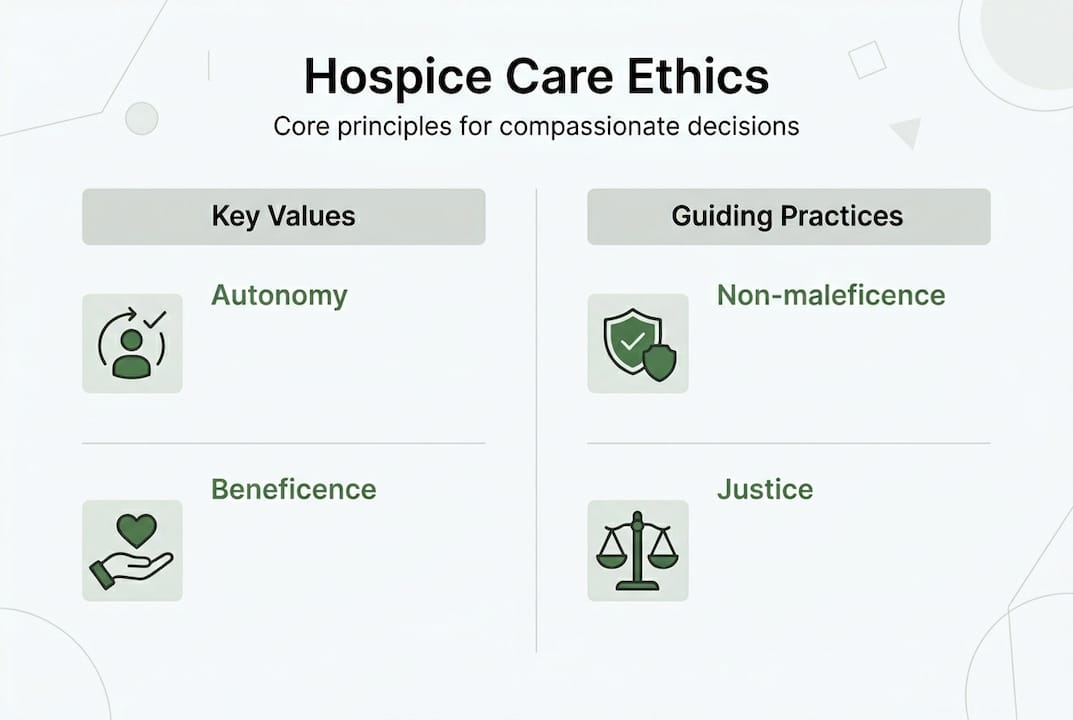
Four foundational ethical principles direct every hospice care decision and interaction. Autonomy, beneficence, non-maleficence, and justice provide the framework for navigating complex end-of-life situations. Autonomy honors the patient’s right to make informed choices about their care, even when those decisions differ from family preferences. Beneficence means acting in the patient’s best interest to promote comfort and well-being.
Non-maleficence requires avoiding unnecessary harm or suffering, which becomes especially relevant when balancing symptom management with potential side effects. Justice ensures fair access to hospice services without discrimination based on income, location, or background. These principles often require careful balancing, as what promotes autonomy might conflict with what family members believe is beneficial.
Hospice teams apply these principles daily when:
- Respecting a patient’s refusal of certain medications despite family concerns
- Tailoring pain management to minimize sedation while controlling discomfort
- Ensuring equitable access to home hospice regardless of geographic challenges
- Balancing family dynamics with the patient’s documented wishes
Understanding this ethical foundation helps families recognize when care aligns with best practices and when to raise concerns. The end of life care guide offers additional context on applying these principles in home settings. Each principle serves as a checkpoint for evaluating care quality and advocating for your loved one’s dignity.
California hospice care rules and election process
California’s hospice coverage rules directly shape how families access care and make informed decisions. Medi-Cal covers hospice with two initial 90-day periods followed by unlimited 60-day renewal periods, requiring physician recertification at each stage. This structure ensures ongoing eligibility review while providing continuous care for those who need it.
The election statement is a critical document where patients or authorized representatives acknowledge choosing comfort-focused hospice care over curative treatment. This signed agreement protects patient autonomy by confirming informed consent and understanding of hospice philosophy. Families must receive clear explanations of what hospice provides, what it does not cover, and how the election affects other Medicare or Medi-Cal benefits.
California’s rules intersect with ethical principles in several ways:
- Justice: Eligibility criteria must be applied fairly without bias toward certain conditions or populations
- Autonomy: The election process ensures patients make voluntary, informed decisions
- Beneficence: Coverage periods allow sufficient time to establish effective comfort care
- Non-maleficence: Regular recertification prevents inappropriate extended enrollment
| Coverage Phase | Duration | Recertification Requirement |
|---|---|---|
| Initial period | 90 days | Physician certification of terminal prognosis |
| Second period | 90 days | Physician recertification |
| Subsequent periods | 60 days each | Physician recertification for each period |
Families should understand that the election statement can be revoked at any time if the patient chooses to pursue curative treatment. This flexibility preserves autonomy throughout the hospice journey. California’s hospice care standards provide additional regulatory context for ensuring quality and ethical compliance.
Common ethical dilemmas families face in hospice care
Real-world hospice situations often present challenging ethical tensions that require careful navigation. Family disagreements, symptom management risks, non-beneficial interventions, and autonomy threats represent the most frequent dilemmas families encounter. These situations test the balance between competing ethical principles and family dynamics.

Family disagreements emerge when siblings or relatives hold different views on care intensity, medication choices, or the decision to enter hospice. One family member might prioritize aggressive symptom control while another fears oversedation. These conflicts can delay important decisions and create emotional strain during an already difficult time.
Balancing effective symptom relief with potential harm presents another common challenge. Opioids provide essential pain management but carry risks of sedation, respiratory depression, or reduced alertness. Families must weigh the ethical principle of beneficence (providing comfort) against non-maleficence (avoiding harm). The goal is proportionate symptom control that preserves quality of life without causing unintended suffering.
Non-beneficial interventions occur when families request treatments that provide no comfort benefit or conflict with hospice philosophy. Examples include:
- Demanding hospitalization for conditions manageable at home
- Requesting feeding tubes when swallowing difficulties are part of natural decline
- Insisting on antibiotics for infections in actively dying patients
- Pursuing diagnostic tests that won’t change comfort-focused care
Respecting patient autonomy becomes complicated when cognitive decline affects decision-making capacity or when family members pressure patients toward certain choices. Advance directives and early conversations about values help preserve autonomy even when the patient can no longer actively participate in decisions.
Pro Tip: Establish advance directives and hold family meetings early in the hospice journey to clarify your loved one’s wishes and reduce future conflicts. Open communication with hospice staff creates a foundation for navigating dilemmas collaboratively. Resources on managing pain and symptoms can help families understand the medical rationale behind care recommendations.
How home hospice care supports dignity and ethical values
Home hospice uniquely preserves the ethical values of autonomy and dignity through personalized, relationship-centered care. Autonomy and individuality serve as core values in home settings, where patients maintain control over their environment, routines, and daily choices. This alignment with ethical principles makes home hospice particularly effective for families prioritizing dignity.
Hospice staff employ specific strategies to honor dignity in home settings:
- Building trusting relationships through consistent visits and genuine personal connection
- Tailoring symptom management to individual preferences and tolerance levels
- Respecting cultural, spiritual, and personal care preferences
- Involving patients in care decisions whenever possible
- Adapting schedules and interventions to fit family routines
The home environment itself supports ethical care by allowing patients to remain surrounded by familiar belongings, pets, and loved ones. This continuity preserves identity and autonomy in ways institutional settings cannot replicate. Patients control who visits, when they eat, and how they spend their remaining time.
| Care Aspect | Home Hospice | Facility Hospice |
|---|---|---|
| Environment control | Patient chooses surroundings, routines, visitors | Facility rules govern schedules, visiting hours |
| Autonomy preservation | High flexibility in daily decisions | Limited by institutional policies |
| Personalization | Fully customized to individual preferences | Standardized protocols with some flexibility |
| Relationship continuity | Same staff build deep connections | Staff rotation more common |
| Family involvement | Unrestricted participation in care | Visiting restrictions may apply |
Pro Tip: Actively engage with your hospice care team by sharing your loved one’s life story, preferences, and values to help staff provide truly personalized support. This collaboration enhances both care quality and ethical alignment. The home hospice care workflow guide explains how teams coordinate personalized care, while understanding the qualities of hospice staff helps families recognize excellence in relationship-building approaches.
Recognizing and avoiding hospice fraud in California
Hospice fraud threatens the ethical principle of justice by diverting resources from truly eligible patients and compromising care quality. California hospice fraud schemes include enrolling non-terminal patients, providing substandard care, and billing for services never delivered. Families must remain vigilant to protect their loved ones from unethical providers.
Common fraud warning signs include:
- No regular visits from hospice nurses or staff despite billing claims
- Unsolicited gifts, meals, or incentives offered for enrollment
- Pressure to sign hospice election documents immediately without time to review
- Providers discouraging second opinions or family questions about eligibility
- Lack of clear communication about care plans or medication changes
- Staff unable to explain how they determined terminal prognosis
The ethical importance of vigilance extends beyond individual cases. Fraud undermines justice by creating barriers for legitimate patients who need hospice services. When fraudulent providers exhaust resources or damage hospice reputation, eligible families may delay or avoid care.
Families can protect themselves by verifying provider credentials through California Department of Public Health licensing databases and checking complaint histories. Ask detailed questions about visit schedules, staff qualifications, and how the provider determined hospice eligibility. Legitimate hospice organizations welcome transparency and encourage informed decision-making.
If you suspect fraud, report concerns immediately to the California Department of Health Care Services, the Office of the Attorney General, or Medicare’s fraud hotline. Prompt reporting protects other families and holds unethical providers accountable. Trust your instincts when something feels wrong, and don’t hesitate to seek a second opinion on hospice eligibility or switch providers if care quality concerns arise.
Explore compassionate hospice care options with Graceland Hospice
Navigating hospice ethics requires a partner committed to transparency, dignity, and patient-centered values. Graceland Hospice specializes in compassionate hospice care that honors the ethical principles outlined throughout this guide. Our team prioritizes autonomy by involving patients and families in every care decision, ensuring choices align with personal values and wishes.
We offer comprehensive hospice care services designed for home settings, where dignity and comfort thrive. Our staff builds genuine relationships with patients, tailoring symptom management and support to individual needs. We operate with transparency, welcoming questions about eligibility, care plans, and ethical considerations.
Pro Tip: Early consultation with a hospice provider ensures care planning aligns with your loved one’s values before crisis situations arise, giving families time to make informed, pressure-free decisions. Contact Graceland Hospice for a free consultation to explore how our ethical, compassionate approach can support your family’s unique journey.
Frequently asked questions
What are the four main ethical principles in hospice care?
Autonomy honors the patient’s right to make informed care choices. Beneficence means acting in the patient’s best interest to promote comfort and well-being. Non-maleficence requires avoiding unnecessary harm or suffering during treatment. Justice ensures fair, equitable access to hospice services for all eligible patients regardless of background or circumstances.
How does hospice care work under California Medi-Cal?
Medi-Cal covers hospice through two initial 90-day benefit periods followed by unlimited 60-day renewal periods. Each period requires physician recertification confirming the terminal prognosis. Patients or authorized representatives must sign an election statement acknowledging the choice of comfort-focused care over curative treatment, which can be revoked at any time.
What can families do when facing ethical dilemmas in hospice?
Encourage open, honest communication within the family and with hospice staff to surface concerns early. Consider scheduling a family meeting facilitated by the hospice social worker or chaplain to discuss conflicting viewpoints. Review any advance directives or documented patient wishes to guide decisions. Request an ethics consultation if dilemmas persist, as many hospice organizations offer this resource to help families navigate complex situations collaboratively.
How does home hospice enhance patient dignity?
Home hospice preserves dignity by allowing patients to control their environment, routines, and daily choices in familiar surroundings. Staff build trusting relationships through consistent visits and personalized care approaches. Patients maintain autonomy over who visits, when they eat, and how they spend time. The home setting supports cultural and spiritual preferences more easily than institutional care, honoring individuality throughout the end-of-life journey.
How can I tell if a hospice provider is trustworthy?
Watch for red flags like no regular staff visits despite billing, unsolicited gifts or meals offered for enrollment, or pressure to sign documents immediately. Verify the provider’s license through California Department of Public Health databases and check complaint histories. Ask detailed questions about visit schedules, staff qualifications, and eligibility determination processes. Legitimate providers welcome transparency, encourage second opinions, and provide clear communication about care plans and expectations.
Recommended
- End of Life Care Guide for Compassionate At-Home Support | Graceland Hospice Care Blog
- Hospice care for cancer: compassionate support guide 2026 | Graceland Hospice Care Blog
- Hospice vs Home Health – Choosing Compassionate Care | Graceland Hospice Care Blog
- Role of Hospice Nurse: Compassionate Care at Home | Graceland Hospice Care Blog
- Silver Link Companion — AI Voice Companion for Seniors
- Top geriatric care tips for families in Florida 2026