Hospice care for cancer: compassionate support guide 2026

Hospice care for cancer: compassionate support guide 2026
Many families believe choosing hospice care means giving up on their loved one. This misconception prevents countless terminal cancer patients from receiving the comfort and dignity they deserve in their final months. Hospice care is not about surrender but about shifting focus from cure to compassionate support, pain relief, and quality of life. This guide helps caregivers understand hospice care basics, recognize its benefits for cancer patients, and navigate practical steps to access these vital services when the time comes.
Table of Contents
- Understanding Hospice Care For Cancer Patients
- Types Of Hospice Care And Where It’s Provided
- What Hospice Care Covers And The Interdisciplinary Team
- Insurance Coverage And Timing For Hospice Care
- Explore Compassionate Hospice Care Options With Graceland Hospice Care
- Frequently Asked Questions
Key takeaways
| Point | Details |
|---|---|
| Comfort over cure | Hospice care prioritizes symptom management and dignity for terminal cancer patients rather than curative treatments. |
| Comprehensive support | Services address physical, emotional, and spiritual needs for both patients and their families throughout the journey. |
| Home-based care | Most hospice care occurs at home, allowing patients to remain in familiar surroundings with visiting nurse support. |
| Interdisciplinary teams | Physicians, nurses, social workers, chaplains, and aides collaborate to address all aspects of patient wellbeing. |
| Insurance coverage | Medicare, VA benefits, and most private insurance plans cover hospice services with varying state Medicaid options. |
Understanding hospice care for cancer patients
Hospice care serves patients facing terminal illness with life expectancy of six months or less, verified by a physician. For cancer patients, this typically means the disease has progressed beyond treatment options or the patient has chosen to stop aggressive therapies. The primary goal shifts entirely to comfort, symptom relief, and maintaining the highest possible quality of life during remaining time.
Unlike other care approaches, hospice represents a fundamental change in treatment philosophy. Treatment to cure stops during hospice care, with all efforts redirected toward managing pain, controlling symptoms, and supporting emotional and spiritual needs. This distinction separates hospice from palliative care, which can continue alongside curative treatments. Understanding the differences between hospice and palliative care helps families make informed decisions about their loved one’s care path.
The hospice philosophy recognizes that dying is a natural process deserving of dignity and respect. Care teams work to ensure patients remain as comfortable and alert as possible, free from unnecessary medical interventions that might diminish their final experiences. Family members receive education about what to expect, how to provide basic care, and ways to make meaningful connections during this precious time.
Hospice care transforms the end-of-life experience from a medical crisis into a supported journey focused on peace, comfort, and family connection.
Interdisciplinary teams form the backbone of hospice services, bringing together diverse expertise to address every dimension of patient and family needs:
- Medical professionals manage pain and physical symptoms
- Social workers coordinate resources and provide counseling
- Chaplains offer spiritual support regardless of faith tradition
- Trained aides assist with personal care and daily activities
- Volunteers provide companionship and respite for caregivers
This comprehensive approach ensures no aspect of care falls through the cracks. Teams meet regularly to adjust care plans as patient needs evolve, maintaining responsive support throughout the hospice journey.
Types of hospice care and where it’s provided
Hospice care adapts to patient circumstances and preferences, with various location options available to meet individual needs. The flexibility in care settings allows families to choose environments that best support their loved one’s comfort and their own ability to participate in care.
Home hospice remains most common, with nurses visiting regularly to assess patient status, adjust medications, and provide clinical expertise. Visit frequency depends on patient needs, ranging from daily checks during symptom crises to weekly maintenance visits during stable periods. Between visits, family caregivers handle routine care with 24/7 phone support available for questions or emergencies.
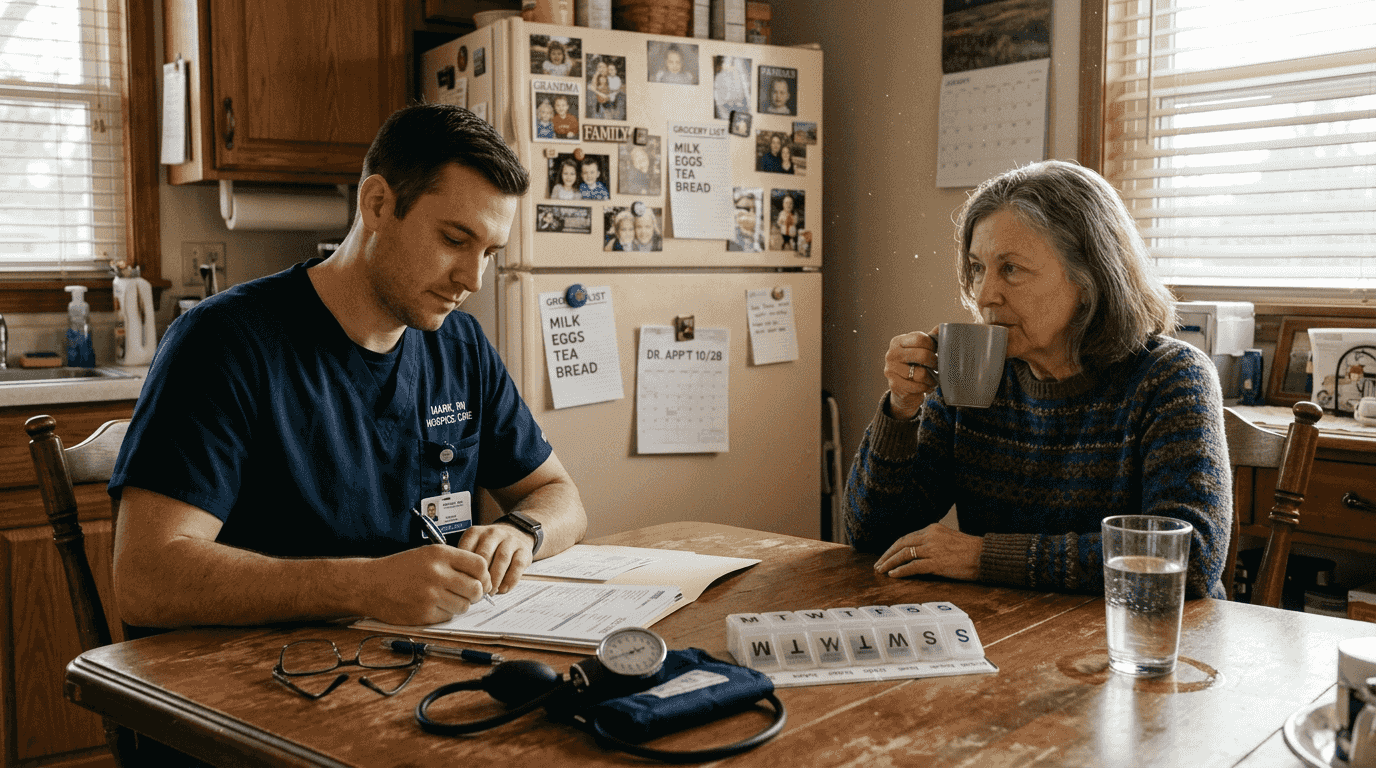
Home care offers profound advantages for many families. Patients remain in familiar surroundings filled with personal belongings, favorite routines, and beloved pets. Family members can participate actively in care without institutional restrictions on visiting hours or number of visitors. Children and grandchildren can visit naturally, creating final memories in comfortable, meaningful settings.
Other hospice settings serve specific situations:
- Hospital-based hospice units provide intensive symptom management when home care proves insufficient
- Nursing home hospice brings services to patients already residing in long-term care facilities
- Freestanding hospice centers offer homelike environments with round-the-clock professional staffing
- Residential care facilities can coordinate with hospice teams for seamless service delivery
Pro Tip: Evaluate your home environment honestly before committing to home hospice. Consider physical space for medical equipment, caregiver stamina for hands-on care, and emotional readiness to witness the dying process in your living space.
The hospice team helps families assess which setting best matches their situation. Factors include patient mobility, symptom complexity, caregiver availability, and family preferences about where death should occur. Understanding the hospice visit workflow helps families prepare for home-based care and set realistic expectations about daily routines.
Care settings can change as needs evolve. A patient might start with home hospice, transfer briefly to an inpatient unit for symptom crisis management, then return home once symptoms stabilize. This flexibility ensures appropriate care intensity throughout the hospice journey.
What hospice care covers and the interdisciplinary team
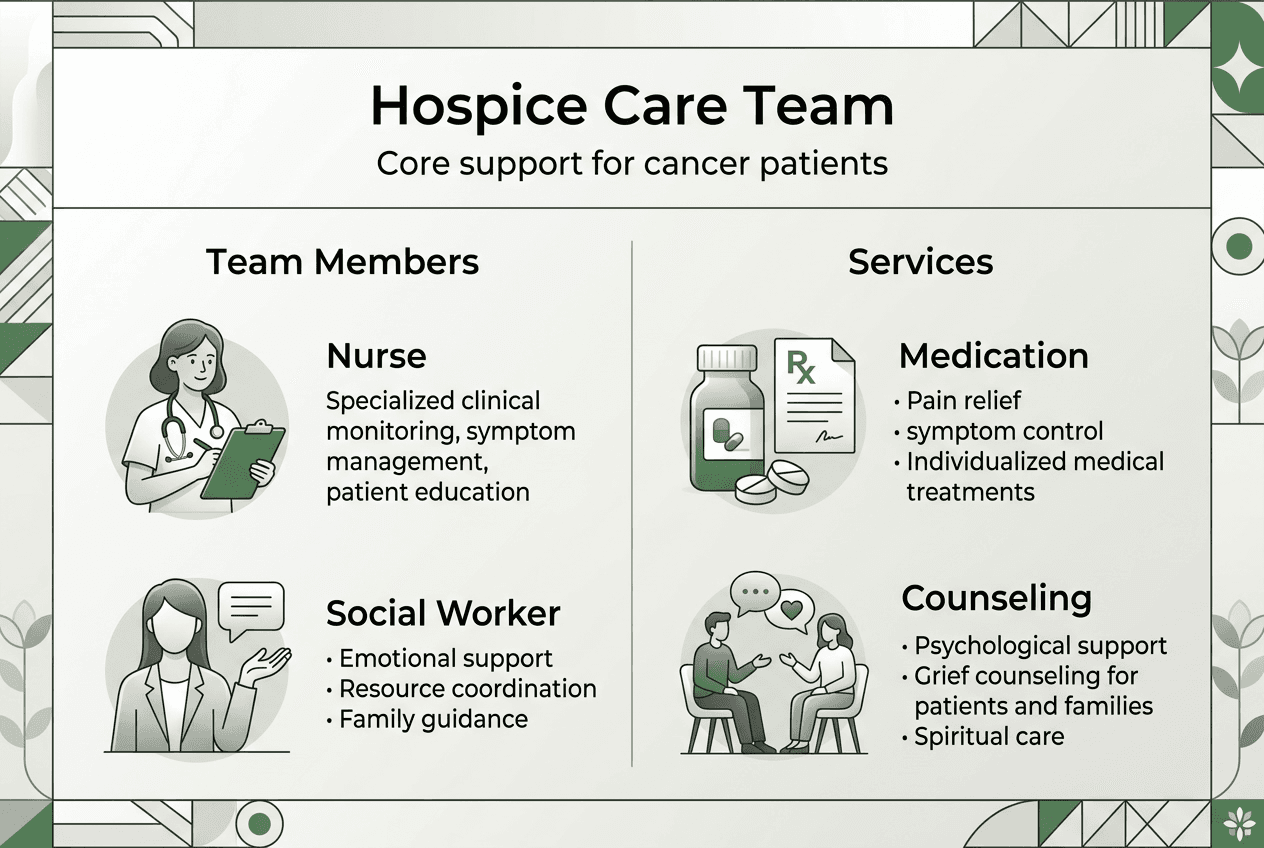
Hospice services extend far beyond basic medical care, encompassing a holistic support system designed to address every dimension of end-of-life needs. The interdisciplinary team structure ensures specialized expertise for each aspect of patient and family wellbeing.
Team roles break down as follows:
- Hospice physician oversees medical care, prescribes medications, and certifies ongoing eligibility
- Registered nurses provide clinical assessments, symptom management, and family education
- Social workers address emotional concerns, coordinate community resources, and facilitate difficult conversations
- Chaplains offer spiritual support tailored to individual beliefs and traditions
- Home health aides assist with bathing, dressing, grooming, and personal care tasks
- Volunteers provide companionship, respite care, and practical assistance like meal preparation
This collaborative approach means families never face challenges alone. Each team member brings specific skills, and regular team meetings ensure coordinated, responsive care as patient conditions change.
| Service Category | What’s Covered | Who Provides It |
|---|---|---|
| Medical care | Pain management, symptom control, medication adjustments | Physician, nurses |
| Personal care | Bathing, dressing, toileting, mobility assistance | Home health aides |
| Emotional support | Counseling, coping strategies, family meetings | Social workers |
| Spiritual care | Faith-based support, life review, meaning-making | Chaplains |
| Practical help | Respite care, errands, companionship | Volunteers |
Hospice coverage includes equipment and medications related to the terminal diagnosis, relieving families of significant financial burdens. Hospital beds, oxygen equipment, wheelchairs, and other necessary items arrive as needed without separate charges. Medications for pain control and symptom management come through the hospice pharmacy, with delivery to the patient’s location.
Family and caregiver support represents a core hospice benefit often overlooked. Teams recognize that supporting caregivers directly improves patient care quality. Services include respite care allowing family members breaks from constant caregiving, education about what to expect during the dying process, and bereavement support continuing for 13 months after the patient’s death.
Pro Tip: Take full advantage of respite care benefits. Caregiver burnout serves no one, and scheduled breaks help you maintain the emotional and physical stamina needed for this demanding role.
The hospice team becomes an extension of the family, providing expert guidance while respecting family preferences and values. This partnership approach ensures care aligns with what matters most to patients and their loved ones. Resources for managing pain and symptoms and caregiver support help families navigate the practical and emotional challenges of end-of-life care.
Insurance coverage and timing for hospice care
Timing decisions about hospice care significantly impact the quality of a patient’s final months. Hospice typically begins when cancer stops responding to treatment and life expectancy drops to six months or less. A physician must verify this prognosis for insurance coverage to activate, though patients can remain in hospice beyond six months if their condition warrants continued care.
Many families wait too long to initiate hospice services, sometimes enrolling only days before death occurs. This delay robs patients and families of the full benefit hospice provides. Earlier enrollment allows time for symptom management optimization, relationship closure, and practical preparation. Studies consistently show patients enrolled in hospice for longer periods report higher satisfaction and better quality of life.
Insurance coverage for hospice services varies by plan type but generally provides comprehensive benefits:
- Medicare Hospice Benefit covers all hospice services with minimal patient cost sharing
- VA benefits provide full hospice coverage for eligible veterans
- Medicaid hospice benefits vary significantly by state but typically mirror Medicare coverage
- Private insurance plans differ widely in coverage details and require early verification
The Medicare Hospice Benefit deserves special attention as the most common coverage source. It includes four benefit periods: two 90-day periods followed by unlimited 60-day periods. Physicians must recertify eligibility at each period’s end, but patients can continue hospice indefinitely if they remain eligible. The benefit covers medications, equipment, nursing care, and all services related to the terminal diagnosis.
| Insurance Type | Coverage Scope | Patient Costs | Verification Needed |
|---|---|---|---|
| Medicare | Comprehensive hospice services | Minimal copays | Physician certification |
| Medicaid | State-dependent, usually comprehensive | Typically none | Varies by state |
| VA Benefits | Full hospice coverage | None for eligible veterans | VA eligibility confirmation |
| Private Insurance | Plan-specific, verify details | Varies widely | Pre-authorization often required |
Families should verify coverage details early in the decision process. Insurance complexities should never delay necessary care, and hospice staff typically handle authorization paperwork. Most hospice programs have financial counselors who help families understand coverage and identify additional resources if gaps exist.
Pro Tip: Contact your insurance provider as soon as hospice becomes a consideration, not after you’ve made the decision. Understanding coverage details removes financial uncertainty from an already stressful situation.
The end-of-life care decision process involves multiple conversations with medical teams, family members, and the patient when possible. These discussions should address goals of care, quality of life priorities, and practical considerations about care settings and family capacity. Starting these conversations early, before crisis moments force rushed decisions, leads to choices that better reflect patient values and family circumstances.
Explore compassionate hospice care options with Graceland Hospice Care
Navigating hospice decisions requires expert guidance from providers who combine clinical excellence with genuine compassion. At Graceland Hospice, our interdisciplinary teams specialize in hospice care that honors each patient’s unique needs while supporting families through every step of the journey. We bring decades of combined experience in symptom management, emotional support, and spiritual care to ensure comfort and dignity during life’s final chapter.
Our commitment extends beyond patient care to comprehensive caregiver support that recognizes the vital role families play. From education about managing pain and symptoms to respite services that prevent burnout, we provide resources that strengthen your capacity to care while maintaining your own wellbeing. Contact us for a free consultation to discuss how our compassionate approach can serve your family’s specific situation.
Frequently asked questions
What are the eligibility criteria for hospice care for cancer patients?
Eligibility requires a physician’s certification that life expectancy is six months or less if the disease follows its expected course. The patient must also choose to stop curative cancer treatments and focus solely on comfort care. These criteria can be met at various cancer stages depending on disease progression and treatment response.
How is hospice care different from palliative care for cancer?
Palliative care can continue alongside curative treatments, focusing on symptom relief while still pursuing cancer remission or control. Hospice care stops all curative treatments and concentrates entirely on comfort, quality of life, and end-of-life support. The shift represents a fundamental change in care goals rather than just service intensity.
Can hospice care be provided at home and what support is available?
Yes, home hospice represents the most common care setting, with nurses visiting regularly to manage symptoms and assess patient status. Support includes pain management, medication delivery, medical equipment, emotional and spiritual counseling, and trained aides for personal care assistance. Families receive 24/7 phone access to nursing staff for urgent questions or concerns between scheduled visits.
How is hospice care typically paid for and covered by insurance?
Medicare and VA benefits provide comprehensive hospice coverage with minimal patient costs, while Medicaid coverage varies by state but typically mirrors Medicare benefits. Private insurance plans differ significantly in coverage details, making early verification essential. Most hospice programs employ financial counselors who help families navigate insurance complexities and identify additional resources when needed.
Recommended
- End of Life Care Guide for Compassionate At-Home Support | Graceland Hospice Care Blog
- Blog & Resources | Graceland Hospice Care
- Caregiver Support in Hospice: Easing End-of-Life Care | Graceland Hospice Care Blog
- Understanding Hospice Care: A Guide for Families | Graceland Hospice Care Blog
- Geriatric medication management guide for caregivers 2026