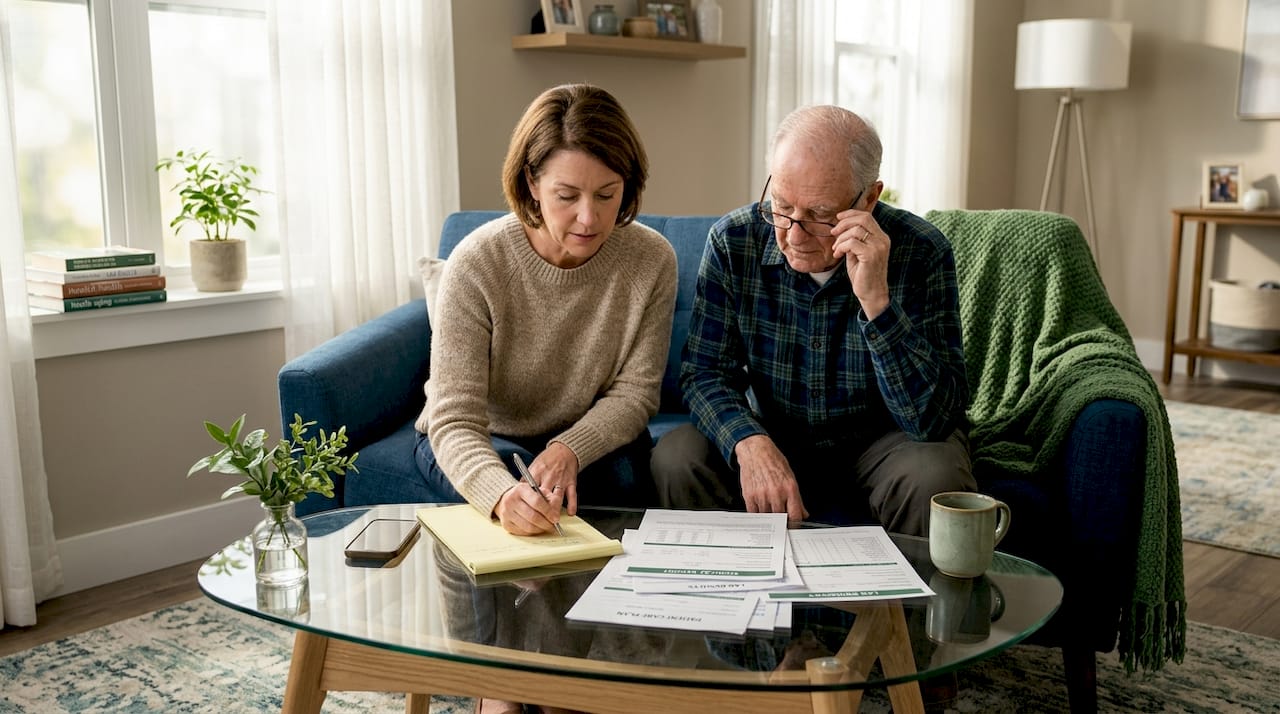
Cultural Sensitivity in Hospice: A Family Guide
Cultural Sensitivity in Hospice: A Family Guide
TL;DR:
- Culturally sensitive hospice care recognizes and respects patients’ religious, linguistic, and familial values, improving end-of-life experiences. Many hospices offer accommodations like language services and gender-concordant care but are often underutilized due to lack of awareness or requests. Advocating early, asking specific questions, and involving community members ensure care aligns with cultural needs and promotes equity for diverse families.
When a loved one reaches life’s final chapter, the care they receive should reflect who they are — their faith, their language, their family traditions, and their sense of dignity. Yet cultural sensitivity in hospice is one of the most overlooked aspects of end-of-life planning. Families from diverse backgrounds often encounter hospice systems that were not designed with their specific needs in mind, and the resulting misalignments can cause real distress at an already painful time. This guide will help you understand what culturally aware hospice care looks like and how to advocate for it.
Table of Contents
- Key takeaways
- Cultural sensitivity in hospice: what it means and why it matters
- Common cultural considerations families face in hospice
- How hospice providers accommodate cultural diversity
- Tips for families to advocate for culturally sensitive care
- Equity challenges in culturally sensitive hospice care
- My perspective on what cultural sensitivity really requires
- How Gracelandhc honors cultural dignity in hospice care
- FAQ
Key takeaways
| Point | Details |
|---|---|
| Culture shapes end-of-life care | Religious, linguistic, and family traditions directly affect how patients and families experience hospice. |
| Accommodations exist but are underused | Many hospices offer culturally sensitive services, yet families often do not know to ask for them. |
| Communication is your strongest tool | Clearly stating cultural and spiritual preferences during intake improves care quality significantly. |
| Systemic gaps affect access | Racial and ethnic minorities face real barriers to hospice enrollment that families and providers must address together. |
| Advocacy makes a difference | Asking the right questions and involving your community in care planning leads to more respectful outcomes. |
Cultural sensitivity in hospice: what it means and why it matters
Cultural sensitivity in hospice refers to a care team’s ability to recognize, respect, and respond to the cultural values and beliefs that shape a patient’s experience of illness and dying. It goes beyond simple politeness. It means understanding that a patient’s religious background may determine who is allowed in the room, what food can be served, or whether a same-sex caregiver is required for personal care.
Cultural competence in hospice extends this further. A culturally competent provider does not just tolerate differences. They actively build systems that accommodate them, from hiring multilingual staff to offering dietary options that meet religious law. The goal of culturally competent care is improved patient outcomes and stronger patient-provider relationships, which matters deeply when time is limited and trust is everything.
Several dimensions of culture are especially relevant in hospice settings:
- Religion and spirituality: Beliefs about death, the afterlife, prayer, and ritual shape nearly every end-of-life decision.
- Language: Patients and families who communicate primarily in a language other than English may struggle to understand care options, consent forms, or medication instructions.
- Family roles: In many cultures, decisions about care are made collectively by the family rather than by the individual patient alone.
- Traditions and rituals: From specific funeral preparations to dietary laws and modesty requirements, traditions deserve to be honored, not overlooked.
- Perceptions of death and dying: Some cultures view openly discussing death as harmful or disrespectful, which affects how care teams should approach conversations.
When a care team understands these dimensions, they can offer support that genuinely honors the person receiving care. When they do not, even well-meaning actions can cause harm.
Common cultural considerations families face in hospice
Every family brings something different to the hospice experience. Understanding the most common cultural challenges can help you anticipate them and address them early.
Family decision-making structures vary widely. In many Latino, Asian, and Middle Eastern families, for example, medical decisions are made by the family group rather than the patient alone. This can conflict with the Western hospice model’s emphasis on individual patient autonomy. A care team that recognizes this difference will find ways to include the family appropriately without bypassing the patient’s rights.
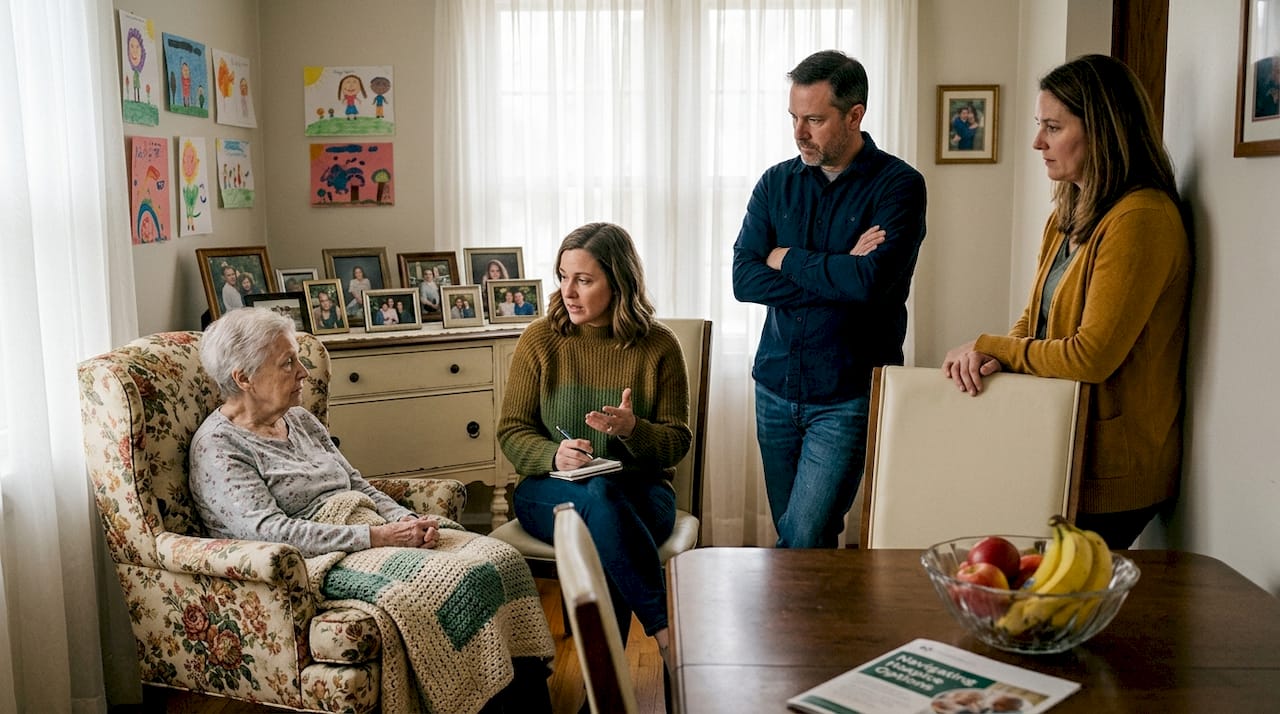
Language and communication represent one of the most urgent challenges. Language barriers and lack of multilingual resources are a well-documented obstacle to culturally sensitive hospice care, particularly for patients from immigrant communities. When care materials are only available in English, families cannot make fully informed decisions.
Additional considerations include:
- Spiritual and religious needs: Religious beliefs directly influence preferences around diet, modesty, provider gender, and prayer schedules. A Muslim patient may need a female caregiver for personal hygiene. A Jewish family may observe Shabbat and need flexibility in care routines on Friday evenings and Saturdays.
- Room and environment preferences: Some families wish to display religious symbols, photos, or altars in the patient’s room. These requests are more common than many providers realize.
- Same-sex caregiver requests: Some patients feel strongly that only a caregiver of the same gender should provide intimate care. This is not a preference to be dismissed.
- Fear of discrimination: Many families from marginalized communities carry well-founded concerns about bias in the healthcare system. This fear can delay hospice enrollment or limit honest communication with providers.
- Lack of information in native languages: When education about hospice care is not available in a family’s primary language, they may turn down services they would otherwise welcome.
Recognizing these challenges is the first step toward addressing them with your care team.
How hospice providers accommodate cultural diversity
The good news is that many hospices have made real progress in building culturally responsive services. Knowing what is available helps you ask the right questions.
| Accommodation | What it looks like in practice |
|---|---|
| Gender-concordant care | A patient receives personal care only from staff of the same sex |
| Diverse spiritual counseling | Chaplains or counselors from various faith traditions are available |
| Culturally specific menus | Meals following kosher, halal, vegetarian, or other dietary laws |
| Room personalization | Patients can display religious items, family photos, or cultural symbols |
| Flexible meal timing | Meals served outside standard hours to accommodate religious fasts |
| Multilingual staff or interpreters | Care teams or professional interpreters available in the patient’s language |
| Cultural education workshops | Staff receive training on specific cultural and spiritual needs |
Research shows that 56.5% of hospice facilities offer gender-concordant care upon request, and 70.3% provide access to spiritual counselors from diverse religious traditions. These numbers show real commitment, but they also mean that a meaningful portion of facilities do not offer these services by default.
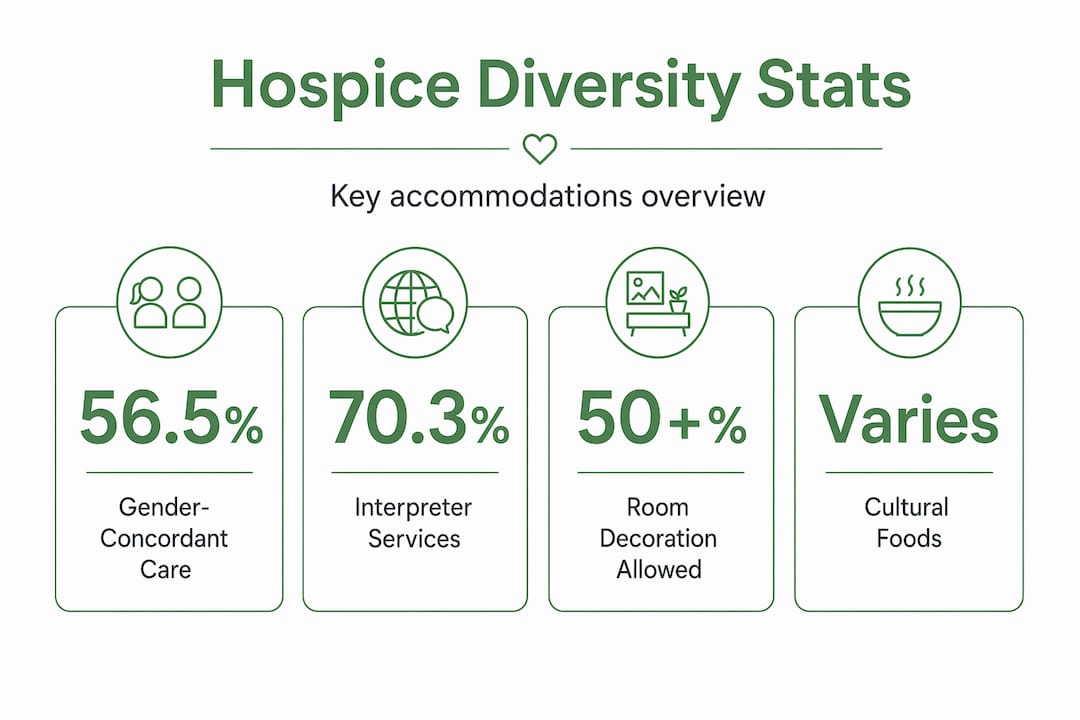
Over half of facilities allow patients to decorate their rooms according to cultural or spiritual preferences, and some offer meals outside typical service times for religious reasons. However, these accommodations are often underutilized simply because families do not know to request them. Understanding spiritual care in hospice can help you ask more specific, informed questions during intake.
Pro Tip: Ask your hospice provider specifically about each accommodation listed above during your very first meeting. Do not assume that services are unavailable just because they are not mentioned. Many culturally sensitive services exist but are only offered when a family requests them.
Tips for families to advocate for culturally sensitive care
You are your loved one’s best advocate. Here is how to make your cultural needs clearly known and respected throughout the hospice process.
-
Speak up during the admission assessment. The intake conversation is the best moment to share your family’s cultural background, religious practices, and care preferences. A thorough hospice assessment should invite this conversation, but you can raise these topics yourself if the care team does not.
-
Ask direct questions about available accommodations. Do not wait to see what is offered. Ask whether the team includes counselors from your faith tradition, whether dietary needs can be met, and whether interpreters are available for family members who need them.
-
Know your rights. Patients in hospice have the right to have their cultural and spiritual preferences respected. If you feel those preferences are being dismissed, you can request a care conference or speak with a patient advocate.
-
Request interpreter services. Professional interpreter services are a right, not a luxury. If your loved one or family members primarily speak a language other than English, ask that all key conversations and documents be made available in that language.
-
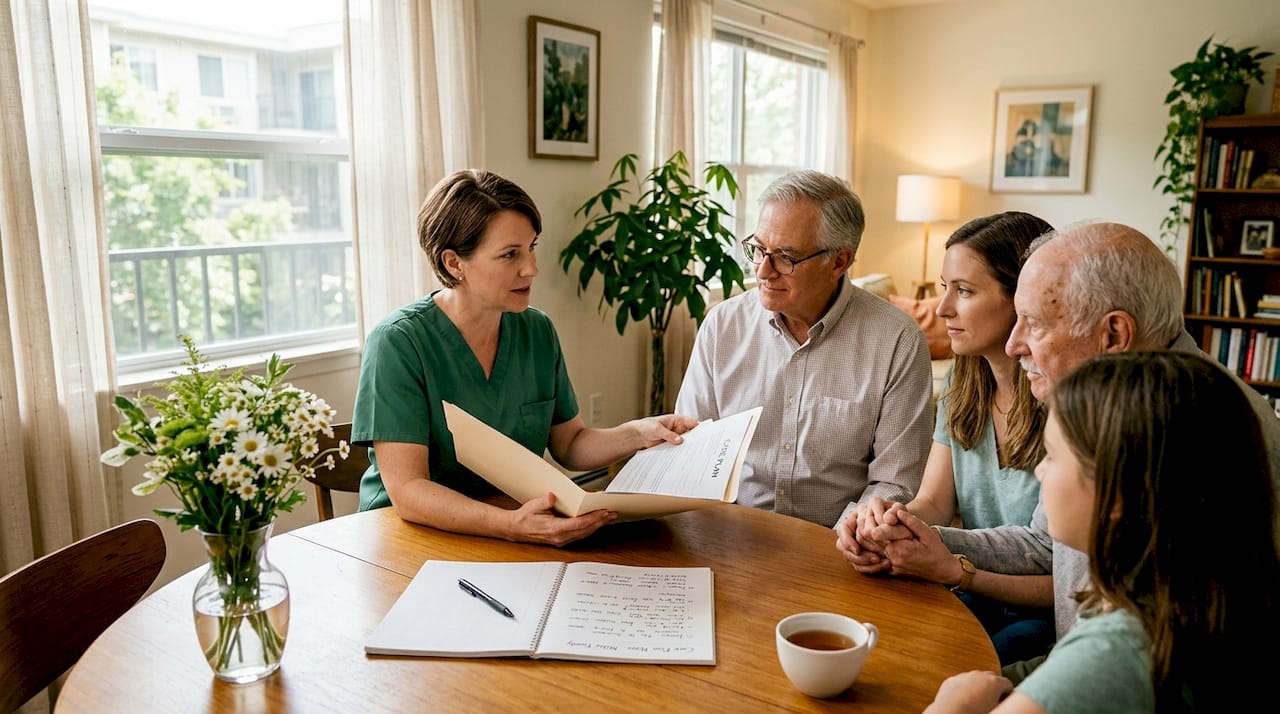
Involve your community. Religious leaders, community elders, or trusted friends who share your cultural background can be invaluable at care planning meetings. Their presence communicates the importance of your traditions and helps the care team understand your needs more fully.
-
Document your preferences in writing. Ask that your cultural and spiritual preferences be included formally in the care plan. A written record protects your family if staff members change.
Pro Tip: If you are unsure how to describe your cultural needs in a medical context, consider speaking with a hospice social worker before the formal care planning meeting. They are trained to help families articulate exactly these kinds of concerns.
Equity challenges in culturally sensitive hospice care
Even when individual care teams are committed and compassionate, systemic barriers affect whether diverse families can access quality hospice care at all.
Research consistently shows disparities in hospice enrollment among racial and ethnic minorities. One significant structural barrier is the requirement that patients discontinue curative treatment to qualify for hospice. This rule contributes to racial disparities in hospice enrollment, as some communities are less willing or able to make that transition due to cultural, financial, or informational factors.
Staff training is another gap. Only one-third of hospice facilities offer regular diversity training, and fewer than 5% have dedicated diversity representatives. This matters because even the most well-intentioned caregiver can cause unintentional harm without proper education on cultural competence in palliative care. Understanding why cultural competence leads to better outcomes is not just relevant for therapists. It applies directly to hospice staff as well.
Additional challenges include:
- Hospice materials written only in English, which creates barriers for non-English-speaking families
- Mistrust of the healthcare system rooted in historical and ongoing discrimination
- Cultural beliefs that conflict with hospice’s model of “comfort only” care, making enrollment feel like abandonment
- Insufficient community outreach to underserved populations about hospice benefits
“Advocating for concurrent care models and culturally sensitive hospice providers can significantly improve end-of-life experiences for diverse communities.” (Moving the mindset of equitable hospice access)
Concurrent care models, which allow patients to continue some disease-directed treatment alongside hospice support, represent one promising path toward greater equity. Families who are aware of these models can ask providers directly whether they qualify.
My perspective on what cultural sensitivity really requires
I have seen what happens when cultural sensitivity is treated as a checkbox rather than a genuine commitment. A care team that nods politely at a family’s religious preferences but never actually adjusts the care plan has not accomplished anything meaningful. The family notices. And at the end of someone’s life, feeling unseen is its own kind of suffering.
What I have learned is that cultural humility matters more than cultural knowledge. No caregiver can memorize the practices of every tradition. But a caregiver who approaches each family with genuine curiosity and respect will ask the right questions and listen carefully to the answers. That posture changes everything.
I have also watched families hesitate to speak up because they did not want to seem demanding or difficult. Please do not let that happen. Asking for a same-sex caregiver, requesting a meal that honors your faith, or bringing a community elder to a care meeting is not demanding. It is honoring the person you love. Hospice care done right wraps around the whole person, including everything that person holds sacred.
End-of-life planning that centers cultural identity is not more complicated than standard care. It is simply more complete. And your loved one deserves nothing less.
— Sam
How Gracelandhc honors cultural dignity in hospice care
At Gracelandhc, cultural sensitivity is not an add-on. It is built into how the team approaches every patient and family. Gracelandhc works with spiritual counselors from diverse religious and cultural traditions, supports families in personalizing the care environment, and prioritizes clear communication regardless of language background. The team understands that no two families are alike and that compassionate end-of-life care means respecting every dimension of a person’s identity. If you are looking for a hospice provider who will honor your family’s cultural values from the very first conversation, Gracelandhc is ready to help. Reach out today to schedule a free consultation and learn more about their culturally responsive services.
FAQ
What is cultural sensitivity in hospice care?
Cultural sensitivity in hospice means recognizing and respecting a patient’s cultural, religious, and linguistic background throughout the care process. It includes accommodating spiritual practices, dietary laws, communication preferences, and family roles in decision-making.
How do cultural beliefs affect hospice decisions?
Cultural beliefs shape whether families accept hospice at all, who makes care decisions, what dietary and spiritual accommodations are needed, and how openly death is discussed. Religious beliefs directly influence preferences around provider gender, diet, and prayer, making early communication with the care team critical.
Can I request a same-sex caregiver for my loved one?
Yes. Research shows that 56.5% of hospice facilities offer gender-concordant care upon request. Ask your provider directly during the intake process to confirm this accommodation is available and documented in the care plan.
What should I do if my family’s cultural needs are not being met?
Request a formal care conference and ask that your preferences be documented in writing. You can also ask to speak with a patient advocate, a hospice social worker, or a spiritual counselor who shares your background. Tailored cultural education within the hospice can also prompt providers to respond more effectively.
Are interpreter services available in hospice care?
Professional interpreter services are available in many hospice settings and are a protected right for patients with limited English proficiency. Ask your provider at intake whether interpreters are available in your family’s primary language and whether care documents can be translated.