Hospice team guide: 40% higher family satisfaction

Hospice team guide: 40% higher family satisfaction
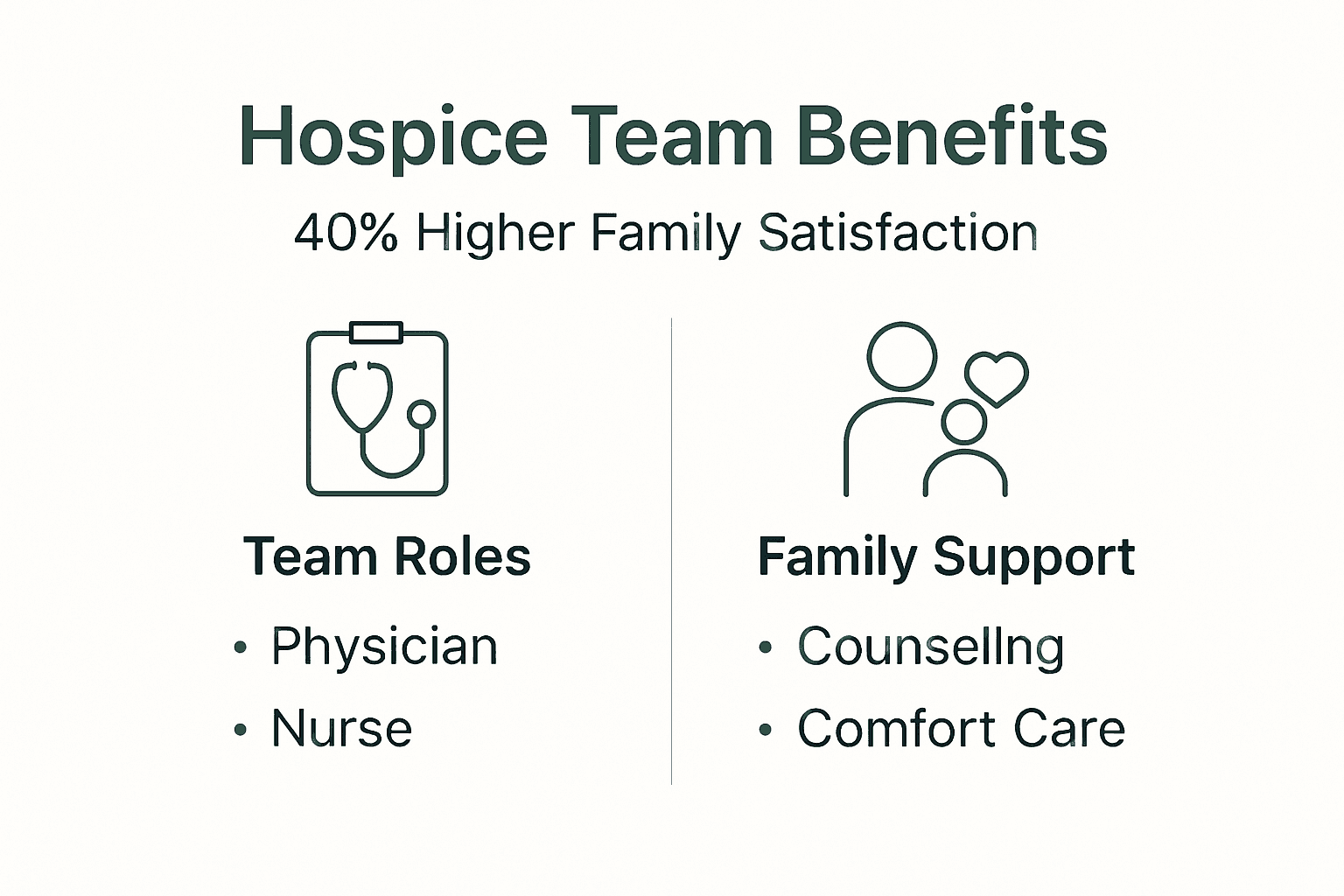
Many families view hospice as giving up hope, but this couldn’t be further from the truth. In reality, home hospice care results in over 40% higher patient and family satisfaction compared to inpatient care. Hospice teams actively improve quality of life through coordinated, compassionate support. This guide clarifies who makes up these teams, their specific roles, and how they support families navigating end-of-life care at home in California.
Table of Contents
- Introduction To Hospice Teams
- Composition And Roles Of Hospice Team Members
- How Hospice Teams Coordinate And Communicate
- Benefits Of Hospice Team Care For Patients And Families
- Common Myths Versus Realities About Hospice Teams
- Legal And Regulatory Context In California For Hospice Care
- Practical Guidance For Engaging With Hospice Teams
- Explore Compassionate Hospice Care With Graceland Hospice
- Frequently Asked Questions
Key takeaways
| Point | Details |
|---|---|
| Team composition | Hospice teams include physicians, nurses, social workers, chaplains, home health aides, counselors, and trained volunteers who work together. |
| Care coordination | Weekly interdisciplinary meetings and personalized care plans ensure seamless communication and tailored support for each patient. |
| Proven outcomes | Home hospice care increases comfort and family satisfaction by over 40% through holistic symptom management and emotional support. |
| Myth busting | Hospice provides active treatment focused on comfort, not giving up, with most care delivered at home rather than in facilities. |
| California regulations | State licensing ensures hospice teams meet quality standards with qualified professionals and mandatory care plan reviews. |
Introduction to hospice teams
A hospice team is an interdisciplinary group of specialized healthcare professionals who work together to provide comprehensive end-of-life care. Unlike traditional medical care that focuses solely on curing illness, hospice teams prioritize comfort, dignity, and quality of life for patients and emotional support for their families.
Collaboration among diverse specialists is essential because end-of-life care involves far more than physical symptoms. Patients and families face emotional challenges, spiritual questions, practical concerns about daily living, and complex medical decisions. No single professional can address all these needs effectively alone.
Typical hospice team members include:
- Hospice physician who oversees medical care and symptom management
- Registered nurses who provide hands-on clinical care and coordinate services
- Social workers who offer emotional support and connect families to resources
- Chaplains or spiritual counselors who address faith and meaning
- Home health aides who assist with personal care and daily activities
- Bereavement counselors who support families through grief
- Trained volunteers who provide companionship and respite care
In California, most hospice care happens at home rather than in facilities. This home-based approach allows patients to remain in familiar surroundings with loved ones nearby while receiving professional medical and emotional support. The team adapts their services to each family’s unique situation, cultural preferences, and evolving needs throughout the hospice journey.
Composition and roles of hospice team members
Understanding each team member’s specific role helps families know what to expect and how to make the most of available support. Each professional brings distinct expertise that contributes to holistic, patient-centered care.
Key team members and their responsibilities:
- Hospice physician: Directs medical care, manages complex symptoms, prescribes medications, and consults with the primary care doctor to ensure coordinated treatment.
- Registered nurse: Provides the most frequent patient contact, managing symptoms, administering medications, and offering comfort measures with 1-3 visits per week on average. Nurses also educate families about what to expect and when to call for help.
- Social worker: Addresses emotional and practical concerns, helping families navigate difficult decisions, access community resources, and process feelings about loss. Research shows social workers improve family emotional outcomes by approximately 20% through targeted support.
- Chaplain: Supports spiritual needs regardless of religious background, helping patients find peace and meaning while respecting diverse beliefs and traditions.
- Home health aide: Assists with bathing, dressing, grooming, and other personal care tasks that become challenging during illness, preserving patient dignity.
- Bereavement counselor: Provides grief support to family members both during hospice care and for up to 13 months after a loved one’s death.
- Volunteer: Offers companionship through visits, conversation, reading, or simply sitting with patients, giving family caregivers much-needed breaks.
The following table summarizes each role’s key tasks and typical visit frequency:
| Team Member | Primary Responsibilities | Typical Visit Frequency |
|---|---|---|
| Hospice Physician | Medical oversight, complex symptom management, medication orders | As needed, usually monthly |
| Registered Nurse | Symptom control, medication administration, family education | 1-3 times per week |
| Social Worker | Emotional support, resource connection, advance planning | 1-2 times per month |
| Chaplain | Spiritual care, meaning-making, religious support | As requested by family |
| Home Health Aide | Personal care, bathing, dressing, grooming assistance | 2-5 times per week |
| Bereavement Counselor | Grief support for family members | During and after hospice |
| Volunteer | Companionship, respite for caregivers | Weekly or as arranged |
Pro Tip: Openly communicate any new symptoms or concerns to your nurse right away, even if they seem minor. Early intervention prevents discomfort from escalating and allows the team to adjust care plans quickly. Keeping a simple symptom log between visits helps you remember important details to share.
Team members like those with qualities of hospice staff work together seamlessly because they understand their distinct roles complement each other. When families engage actively with each professional, they receive the full benefit of this coordinated approach.
How hospice teams coordinate and communicate
Seamless coordination separates exceptional hospice care from fragmented services. Hospice teams use structured processes to ensure everyone stays informed and care remains consistent despite multiple professionals involved.
The coordination process typically follows these steps:
- Initial comprehensive assessment: The team evaluates the patient’s physical symptoms, emotional state, spiritual needs, family dynamics, and home environment to create a baseline understanding.
- Personalized care plan development: Using assessment findings, the team collaboratively designs a care plan tailored to the patient’s specific symptoms, preferences, cultural values, and goals.
- Weekly interdisciplinary team meetings: All team members meet regularly to review each patient’s status, discuss what’s working, identify emerging concerns, and adjust care plans as conditions change.
- Coordinated visit scheduling: Team members schedule visits strategically to maintain continuity, avoid overwhelming families, and ensure timely responses to changing needs.
- Documentation in shared records: Every visit and intervention gets documented in a central electronic system accessible to all team members for real-time updates.
- Regular family communication: The team proactively reaches out to families, explains changes, answers questions, and incorporates family observations into care planning.
- 24/7 on-call availability: A nurse remains available by phone around the clock for urgent questions or symptom changes requiring immediate guidance.
- Ongoing evaluation and adjustment: The team continuously monitors whether interventions achieve desired comfort levels and modifies approaches based on results.
This structured approach ensures nothing falls through the cracks even as multiple professionals enter and exit the home. Clear communication protocols prevent conflicting instructions and ensure families receive consistent information from every team member.
Family involvement strengthens coordination significantly. When families actively participate in care planning, report changes promptly, and share their observations during visits, the team can respond more effectively. Many families appreciate knowing they’re partners in care rather than passive recipients of services.
Pro Tip: Before scheduled visits, jot down questions and observations you want to discuss. This simple preparation helps you make the most of face-to-face time with team members and ensures important concerns don’t get forgotten in the moment. Consider keeping a notebook near your loved one’s bedside for easy reference.
Effective hospice visit coordination and communication creates a safety net where families feel supported rather than alone in managing complex end-of-life care at home.
Benefits of hospice team care for patients and families
The interdisciplinary team approach delivers measurable improvements in both patient comfort and family well-being compared to standard end-of-life care. Evidence consistently demonstrates that coordinated hospice services make a profound difference during one of life’s most challenging transitions.
Research shows home hospice care increases patient comfort and family satisfaction by over 40% compared to inpatient hospice settings. This dramatic improvement stems from the combination of professional medical expertise with the emotional comfort of remaining at home surrounded by loved ones.
Additionally, holistic hospice care increases family satisfaction with emotional and spiritual support by 35% when teams address psychological and spiritual dimensions alongside physical symptoms. This comprehensive approach recognizes that comfort involves more than pain control alone.
Specific benefits families experience include:
- Superior symptom control through expert pain and discomfort management
- Reduced anxiety for both patients and family members through consistent professional support
- Improved quality of remaining time together through focus on meaningful activities rather than invasive treatments
- Better preparation for the dying process through education and emotional support
- Decreased hospital readmissions because teams manage crises at home
- Ongoing grief support extending beyond the patient’s death
- Practical assistance with daily care tasks that might otherwise overwhelm family caregivers
- Spiritual peace through chaplain support and meaning-making conversations
The following table compares key outcomes between hospice team care and standard end-of-life care:
| Outcome Measure | With Hospice Team | Standard Care |
|---|---|---|
| Patient pain control | 85-90% adequate relief | 60-65% adequate relief |
| Family satisfaction | Over 90% very satisfied | 50-60% very satisfied |
| Hospital readmissions | 15-20% of patients | 40-50% of patients |
| Family reports patient died peacefully | 80-85% yes | 45-50% yes |
| Caregiver burnout | 30-35% report high stress | 60-70% report high stress |
“The hospice team didn’t just care for my father. They cared for our entire family, helping us navigate the hardest days with compassion and practical support we couldn’t have managed alone.”
These improvements happen because hospice teams bring specialized expertise in symptom management, emotional support skills, and coordination that general healthcare providers rarely possess. The benefits of home hospice care extend far beyond medical intervention to encompass the full human experience of dying and grieving.
Common myths versus realities about hospice teams
Misconceptions about hospice care prevent many families from accessing beneficial services when they need them most. Addressing these myths directly helps families make informed decisions based on facts rather than fears.
Myth: Choosing hospice means giving up on treatment
Reality: Hospice teams provide active treatment focused on comfort rather than cure. They aggressively manage symptoms, adjust medications, and intervene to prevent suffering. The difference lies in the goal, prioritizing quality of life over quantity, but treatment remains intensive and expert-directed.
Myth: Hospice teams only address physical symptoms
Reality: Modern hospice care is holistic, addressing emotional distress, spiritual questions, social isolation, and family dynamics alongside physical comfort. Social workers, chaplains, and counselors play equally important roles as nurses and doctors in comprehensive care planning.
Myth: Hospice care happens in facilities away from home
Reality: In California and nationwide, the majority of hospice care occurs at home with team members visiting regularly. Inpatient hospice facilities exist for crisis management or when home care becomes impossible, but most patients remain home throughout their hospice journey.
Myth: Once you choose hospice, you cannot change your mind
Reality: Patients can discontinue hospice services at any time and return to curative treatment if they wish. Hospice is always voluntary, and families maintain complete control over care decisions throughout the process.
Myth: Hospice teams rush the dying process
Reality: Hospice neither hastens nor postpones death. Teams focus exclusively on comfort and supporting natural processes. Many patients actually live longer under hospice care than predicted because superior symptom management improves overall well-being.
The following table contrasts common myths with evidence-based realities:
| Myth | Reality |
|---|---|
| Hospice means giving up | Active comfort-focused treatment with aggressive symptom management |
| Only physical care provided | Holistic support including emotional, spiritual, and social dimensions |
| Must go to a facility | Most care happens at home with visiting team members |
| Cannot change your mind | Patients can discontinue or restart hospice anytime |
| Hastens death | Focuses on natural process; many patients live longer than expected |
| Only for cancer patients | Serves anyone with life-limiting illness of any type |
Understanding these realities helps families recognize hospice as an additional layer of support rather than abandonment of hope. The team approach simply redirects focus toward what matters most during limited remaining time.
Legal and regulatory context in California for hospice care
California maintains rigorous standards ensuring hospice teams deliver quality care while protecting patient rights. Understanding this regulatory framework reassures families that their loved ones receive services from qualified professionals operating within clear guidelines.
Key California regulations governing hospice care include:
- State licensing requirements: All hospice agencies must obtain licenses from the California Department of Public Health, which inspects facilities, reviews policies, and ensures compliance with care standards before granting operating authority.
- Medicare certification: Most hospices also pursue federal Medicare certification, subjecting them to additional oversight and quality measures beyond state requirements.
- Interdisciplinary team mandates: California regulations require licensed hospices to maintain complete interdisciplinary teams with physicians, nurses, social workers, and chaplains available to all patients.
- Care plan documentation: Teams must develop written care plans within 48 hours of admission and update them regularly through documented interdisciplinary conferences, ensuring coordinated rather than fragmented care.
- Professional qualification standards: Each team member must meet specific educational and licensing requirements. Nurses hold active RN licenses, social workers have appropriate degrees and credentials, and physicians maintain unrestricted medical licenses.
- Patient rights protections: California law guarantees hospice patients rights to informed consent, refusal of treatment, confidentiality, complaint procedures, and respectful care regardless of background or beliefs.
- Quality reporting and transparency: Licensed hospices must report quality metrics publicly and maintain procedures for addressing patient and family complaints promptly.
These regulations create accountability mechanisms ensuring families receive care from competent, ethical professionals. When selecting a hospice provider, families can verify licensing status through the California Department of Public Health website and review quality ratings through Medicare’s Hospice Compare tool.
The regulatory framework also supports home-based care models by requiring hospices to provide services across their service areas rather than limiting care to facility settings. This ensures rural and urban families alike can access interdisciplinary team support at home.
Practical guidance for engaging with hospice teams
Knowing how to participate actively in your loved one’s care maximizes the benefits of hospice team support. Families who engage proactively report higher satisfaction and feel more prepared for the journey ahead.
Essential questions to ask when first meeting the hospice team:
- How often will each team member visit our home?
- Who should we call with questions or concerns between visits?
- What symptoms should prompt an immediate call versus waiting for the next scheduled visit?
- How do you involve family members in care planning and decision-making?
- What happens if we need to travel or change locations temporarily?
- How will you communicate with our primary care doctor?
- What equipment and supplies will you provide versus what we need to obtain?
Steps for effective family participation in care planning:
- Designate a primary family contact: Choose one person to coordinate communication with the team, reducing confusion and ensuring consistent information flow.
- Attend care planning meetings: When the team offers planning conferences, make time to participate even if it requires schedule adjustments.
- Share observations promptly: Report new symptoms, changes in eating or sleeping, mood shifts, or comfort concerns as soon as you notice them rather than waiting for scheduled visits.
- Ask for clarification: If you don’t understand instructions or recommendations, speak up immediately. Effective care requires clear understanding.
- Express preferences and concerns: Let the team know your loved one’s wishes, cultural practices, spiritual needs, and family dynamics affecting care.
- Track medications and interventions: Keep a simple log of what medications were given, when, and any effects noticed to help the team assess effectiveness.
- Request additional visits if needed: If circumstances change or you feel overwhelmed, ask for extra visits from appropriate team members.
Typical visit schedules vary based on individual needs but generally include nursing visits 1-3 times weekly, aide visits 2-5 times weekly for personal care, and social worker or chaplain visits monthly or as requested. Between scheduled visits, the team remains accessible by phone 24/7 for urgent concerns.
Pro Tip: Keep a care journal near your loved one’s bedside to track symptoms, questions, medications, and observations between team visits. This simple tool transforms vague concerns into specific information team members can use to adjust care plans effectively. Include dates and times to help identify patterns.
Families ready to explore hospice options can learn more about starting hospice care and understand why many choose at-home hospice benefits over facility-based care.
Explore compassionate hospice care with Graceland Hospice
Understanding how hospice teams work together to support patients and families is the first step toward accessing this valuable care. Graceland Hospice brings this coordinated, compassionate approach to families throughout California who need expert end-of-life support at home.
Our interdisciplinary team embodies the collaborative model described throughout this guide, with experienced physicians, skilled nurses, dedicated social workers, compassionate chaplains, trained aides, and caring volunteers working together to ensure comfort and dignity. We customize care plans to your family’s unique situation, cultural preferences, and evolving needs throughout the hospice journey.
Explore our comprehensive hospice care services to learn how we support families during this sacred time. Discover practical guidance about compassionate at-home hospice support and take the first step by learning how to start hospice care at home with professional guidance.
Contact us for a free consultation to discuss your family’s specific situation and learn how our team can help your loved one experience peaceful, dignified end-of-life care in the comfort of home.
Frequently asked questions
What is a hospice team?
A hospice team is a group of healthcare professionals who work together to provide comprehensive end-of-life care focused on comfort rather than cure. The team typically includes a physician, nurse, social worker, chaplain, home health aide, counselor, and trained volunteer, each contributing specialized expertise. This interdisciplinary approach addresses physical symptoms, emotional distress, spiritual questions, and practical concerns simultaneously rather than treating the patient as just a medical case.
How do hospice teams support patients and families?
Hospice teams provide medical symptom management, emotional counseling, spiritual care, assistance with daily activities, and family education about what to expect during the dying process. They create personalized care plans based on each patient’s specific symptoms, preferences, and values, then adjust these plans regularly as conditions change. Beyond direct patient care, teams support family members through education, respite care, and bereavement counseling that extends beyond the patient’s death.
How often do hospice team members visit patients at home?
Visit frequency varies based on individual needs but typically includes nursing visits 1-3 times per week, home health aide visits 2-5 times per week for personal care, and social worker or chaplain visits monthly or as requested by the family. Physicians usually provide oversight through monthly consultations or as needed for complex symptom management. Between scheduled visits, a nurse remains available 24/7 by phone for urgent questions or concerning changes requiring immediate guidance.
How can families communicate with hospice teams?
Families communicate with hospice teams through scheduled visits, phone calls to the 24/7 on-call nurse line, and participation in regular care planning meetings. Most hospices assign a primary nurse who serves as the main contact point for questions and concerns. Families should report new symptoms, changes in comfort levels, or questions promptly rather than waiting for scheduled visits, as early intervention prevents minor issues from becoming crises. Many hospices also offer secure messaging systems for non-urgent communication between visits.
What are the eligibility basics for hospice care in California?
Patients qualify for hospice in California when a physician certifies they have a life-limiting illness with a prognosis of six months or less if the disease follows its expected course. This prognosis doesn’t mean patients must die within six months; many live longer, and hospice can be extended as long as the terminal condition continues. Patients must choose comfort-focused care over curative treatment, though they can discontinue hospice and return to curative care at any time. Medicare, Medicaid, and most private insurance plans cover hospice services completely with no out-of-pocket costs for families.