Medical Equipment in Hospice: A Family Caregiver's Guide

Medical Equipment in Hospice: A Family Caregiver’s Guide
TL;DR:
- Hospice teams coordinate the delivery, setup, and management of medical equipment to focus on patient comfort and safety.
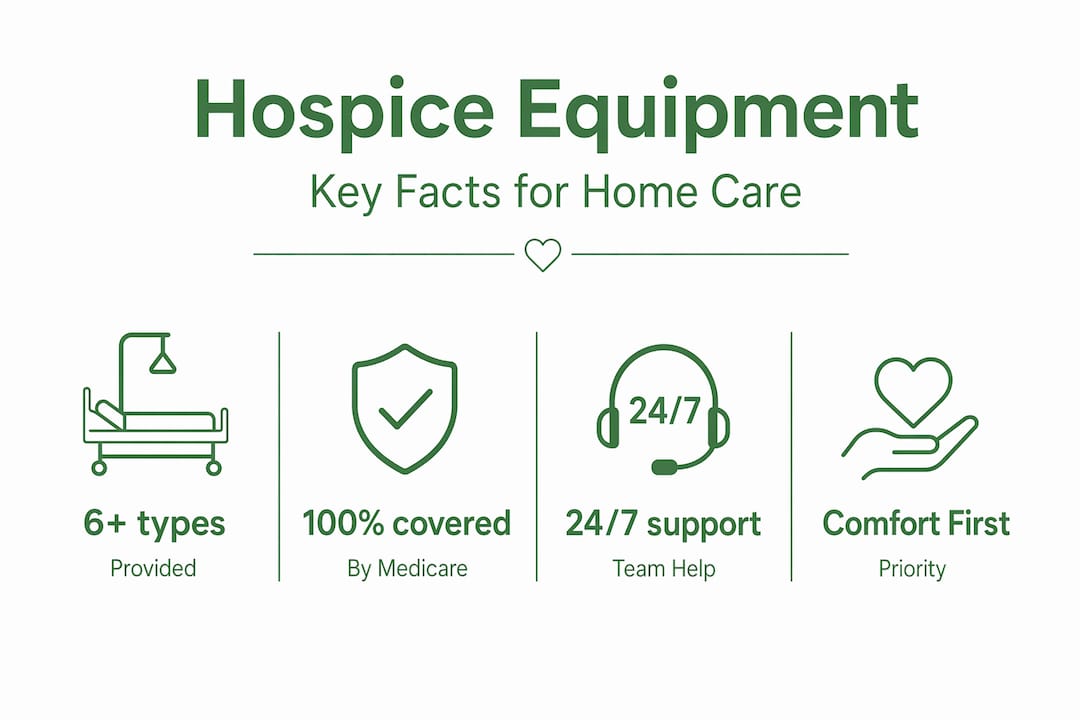
- Medicare covers necessary equipment like beds, wheelchairs, oxygen, and hygiene supplies, which prioritize symptom relief over cures.
- Proactive communication with the hospice team ensures timely equipment adjustments, proper home adaptation, and caregiver confidence in the care process.
When a loved one enters hospice, most families feel an immediate wave of uncertainty about the practical side of care. What medical equipment in hospice will be provided? Who sets it up? Who pays for it? The good news is that you are not expected to figure this out alone. Hospice teams coordinate the delivery, setup, and ongoing management of equipment so your family can focus on what matters most: being present with your loved one during life’s final chapter.
Table of Contents
- Key takeaways
- Medical equipment in hospice: what it covers and why it matters
- How the hospice team manages equipment logistics
- Safety and comfort at home: matching equipment to your environment
- Communicating with your hospice team about equipment
- A personal perspective on equipment and caregiver confidence
- How Gracelandhc supports your family through every stage
- FAQ
Key takeaways
| Point | Details |
|---|---|
| Hospice covers medical equipment | Medicare includes medically necessary equipment related to terminal illness comfort and safety. |
| Equipment is a team responsibility | Hospice interdisciplinary teams handle procurement, delivery, and ongoing changes as needs evolve. |
| Comfort drives every choice | Equipment decisions center on symptom relief and dignity, not clinical measurements alone. |
| Communication reduces caregiver stress | Asking early about equipment timelines and after-hours contacts prevents delays and anxiety. |
| Home safety can be addressed | Hospice teams offer guidance on adapting equipment to your home layout, even without structural changes. |
Medical equipment in hospice: what it covers and why it matters
Understanding the full scope of home hospice equipment is the first step toward feeling confident in your caregiving role. Hospice is not just about medications and nurse visits. It includes a carefully selected set of physical tools designed to keep your loved one comfortable, safe, and as independent as possible.
Medicare covers medically necessary equipment when it is directly related to the terminal diagnosis and focused on comfort rather than cure. That distinction matters. Hospice care supplies exist to relieve symptoms, not to treat the underlying illness. Here is what that typically looks like in practice:
- Hospital beds: Adjustable height beds with side rails let caregivers assist with repositioning, reduce the risk of falls during transfers, and ease breathing distress by elevating the head of the bed. They also reduce caregiver strain significantly compared to caring for someone in a standard bed.
- Mobility aids: Walkers, wheelchairs, and gait belts are core end-of-life medical equipment that prevent patient falls and protect family caregivers from injury during assisted movement.
- Oxygen equipment: Concentrators and portable oxygen units are provided to relieve breathlessness and the anxiety that comes with it. The goal is symptom comfort, not hitting a specific oxygen saturation number. Oxygen therapy in hospice is always guided by how the patient feels, not a monitor reading.
- Bedside commodes and bath equipment: Raised toilet seats, shower chairs, and bedside commodes allow your loved one to maintain dignity and reduce the physical demand on caregivers during personal care routines.
- Medical supplies for daily care: Hospice supplies include gloves, wound dressings, skincare products, wipes, and other hygiene materials. These practical items are covered under Medicare and are delivered on a scheduled or as-needed basis.
A point that caregivers often find reassuring: equipment selection focuses on comfort outcomes, not clinical fixes. This means every piece of equipment your loved one receives is there because it makes their day more manageable, more peaceful, or less painful.
How the hospice team manages equipment logistics
One of the most common and understandable misconceptions families carry is that they are responsible for sourcing and managing equipment on their own. That is not how hospice works. Hospice nurses facilitate equipment decisions and coordinate with durable medical equipment suppliers so families do not have to make phone calls, compare vendors, or manage deliveries independently.
Here is how the process typically unfolds:
- Initial assessment: When your loved one is admitted to hospice, the interdisciplinary team evaluates the home environment and the patient’s current functional level. Equipment needs are identified based on those findings.
- Equipment order and delivery: The hospice team places orders with a contracted equipment supplier. Delivery is usually arranged within 24 to 48 hours for standard items, and faster for urgent needs like a hospital bed or oxygen.
- Setup and instruction: A delivery technician sets up equipment in the home and demonstrates how to use it safely. Your hospice nurse will reinforce this during subsequent visits.
- Ongoing reassessment: Hospice equipment is a dynamic process, not a one-time delivery. As your loved one’s condition changes, equipment is upgraded or replaced. A patient who starts with a walker may transition to a wheelchair within weeks. The team monitors this and acts proactively.
- After-hours support: Most hospice programs have a nurse on call around the clock. If a piece of equipment malfunctions or a new need arises overnight, there is a protocol in place. Ask your team for the specific after-hours contact number during your first week of care.
Proactive communication with your hospice care team is the single most effective way to stay ahead of equipment needs before they become urgent. Do not wait until your loved one can no longer transfer safely to ask about a wheelchair.
Pro Tip: Write down three to five questions about equipment before your first care planning meeting. Ask specifically about delivery timelines, after-hours equipment support, and the process for requesting changes. This one conversation can prevent weeks of confusion.
Safety and comfort at home: matching equipment to your environment
Choosing the right palliative care tools is only half the equation. The other half is making sure those tools fit your specific home and your loved one’s mobility level. A hospital bed placed in a narrow hallway or a wheelchair that cannot clear a doorframe creates more stress, not less.
Here is what to assess before or shortly after equipment arrives:
- Doorway width: Standard wheelchairs require at least 32 inches of clearance. Narrow doorways may require a slimmer transport chair or repositioning furniture.
- Floor surfaces: Thick rugs and uneven transitions between rooms create fall hazards. Consider removing area rugs or securing them with non-slip tape.
- Bed placement: Hospital beds should be placed to allow caregiver access from both sides and ideally close to a bathroom or commode.
- Electrical access: Oxygen concentrators and adjustable beds require nearby outlets. Extension cords are a tripping hazard and should be avoided.
The following comparison helps caregivers weigh the most common assistive devices for hospice against each other based on practical factors:
| Equipment | Best for | Key safety feature | Caregiver benefit |
|---|---|---|---|
| Hospital bed | Patients needing repositioning or elevated head | Adjustable rails and height | Reduces back strain during care |
| Wheelchair | Limited mobility or long distances | Lockable wheels | Prevents rolling during transfers |
| Walker with wheels | Patients with some ambulatory ability | Brakes and seat option | Supports independence longer |
| Bedside commode | Nighttime bathroom needs | Non-slip feet | Eliminates fall risk in the dark |
| Oxygen concentrator | Breathlessness relief | Alarm for low flow | Consistent symptom management |
Hospice cannot typically provide home remodeling such as widened doorways or ramp construction, but the team can suggest practical workarounds. A social worker or occupational therapist on the hospice team can often recommend low-cost adaptations or community resources for those modifications. Lean on that expertise.
Communicating with your hospice team about equipment
Feeling empowered to speak up about your loved one’s equipment needs is not overstepping. It is caregiving at its best. Early and clear communication about equipment needs and after-hours support is directly linked to reduced caregiver stress and faster response times.

Pro Tip: Keep a small notebook near your loved one’s bed to jot down equipment concerns as they arise throughout the day. Bring that list to every nurse visit instead of trying to remember everything in the moment.
Here are specific conversations worth having with your hospice team right away:
- Ask who to call if equipment breaks down or does not arrive on schedule.
- Ask how to request a different size or style of equipment if what was delivered does not fit your loved one well.
- Ask how often the care plan is formally reviewed and whether equipment needs are part of that review.
- Ask if there are any caregiver support resources available to help you learn how to use equipment safely.
- Ask what to do if your loved one refuses to use a piece of equipment. This is more common than you might expect, and hospice teams have experience navigating it with compassion.
For ongoing equipment maintenance, wipe down surfaces with appropriate cleaners as directed, report any looseness or instability immediately, and never modify equipment yourself. If something seems off about how a device is functioning, call the hospice line rather than troubleshooting independently.
A personal perspective on equipment and caregiver confidence
I have worked alongside families navigating hospice care for many years, and one pattern stands out more than any other. The families who struggle most with the equipment side of hospice are not the ones who ask too many questions. They are the ones who ask too few.
In my experience, caregivers often hold back because they do not want to seem demanding or because they assume the hospice team will automatically anticipate every need. What I have seen, time and again, is that the interdisciplinary team is watching for clinical signals while family members are watching something different: the daily realities of how a loved one is managing at home. That lived observation is irreplaceable information.
I have seen a simple hospital bed transform a family’s caregiving experience overnight. A mother who had been sleeping on the couch to monitor her father finally felt safe stepping away for a few hours because the adjustable rails gave her peace of mind. That is not a small thing. That is the difference between a caregiver who collapses under the weight of it all and one who holds steady.
My honest advice: treat the hospice team as your partners in a full conversation about equipment, not just the people who drop off supplies. Ask the uncomfortable questions early. Push for changes when something is not working. The team expects it and welcomes it, because that kind of home hospice equipment dialogue is what keeps both patient and caregiver safer over time.
— Sam
How Gracelandhc supports your family through every stage
At Gracelandhc, equipment coordination is never an afterthought. It is built into every care plan from day one. The team at Graceland Hospice Care works closely with families to identify equipment needs early, manage logistics so you do not have to, and adjust supplies as your loved one’s condition evolves. From hospital beds to oxygen equipment to daily care supplies, Gracelandhc handles the details with compassion and thoroughness. You deserve a team that is as committed to the practical side of care as it is to the emotional side. Reach out to Gracelandhc today for a free consultation and let us walk this path alongside you.
FAQ
What medical equipment does hospice typically provide at home?
Hospice typically provides hospital beds, wheelchairs, walkers, oxygen equipment, bedside commodes, and daily care supplies like wound dressings and hygiene products. All equipment is selected based on the patient’s comfort and safety needs related to their terminal diagnosis.
Does Medicare pay for medical equipment in hospice?
Yes. Medicare covers medically necessary equipment and supplies when they are directly related to the terminal illness and focused on comfort care rather than curative treatment.
Who is responsible for setting up hospice equipment at home?
The hospice team coordinates equipment ordering, delivery, and setup through contracted suppliers. Family caregivers are not expected to manage these logistics on their own, though clear communication with the hospice nurse helps the process run smoothly.
Can hospice equipment be changed if my loved one’s needs change?
Absolutely. Hospice equipment provision is an ongoing process adjusted as the patient’s condition evolves. A patient might start with a walker and transition to a wheelchair as mobility declines, with the hospice team managing that change proactively.
What should I do if hospice equipment malfunctions after hours?
Contact your hospice program’s on-call nurse line immediately. Most hospice organizations provide round-the-clock after-hours support for exactly these situations. Keep the after-hours number visible near the equipment from your first week of care.
Recommended
- Understanding Hospice Care: A Guide for Families | Graceland Hospice Care Blog
- Home Hospice Care Workflow: A Step-by-Step Guide for Families | Graceland Hospice Care Blog
- Caregiver Support in Hospice: Easing End-of-Life Care | Graceland Hospice Care Blog
- Patient comfort at home: A complete end-of-life guide