Hospice team roles explained: A guide for California families
Hospice team roles explained: A guide for California families
When a loved one enters hospice care, families often feel overwhelmed by the number of professionals involved in their care. You might wonder who each person is, what they do, and when to reach out to them. Understanding the distinct roles of hospice team members can significantly reduce your stress and help you better support your loved one during this difficult time. Each professional brings specialized skills to ensure comfort, dignity, and comprehensive support throughout the end-of-life journey.
Table of Contents
- Key takeaways
- Understanding the hospice interdisciplinary team
- Roles and responsibilities of hospice nurses and aides
- Social workers and chaplains: supporting emotional and spiritual needs
- Physicians and volunteers: medical direction and extra compassionate support
- How Graceland Hospice Care supports families in California
- FAQ
Key Takeaways
| Point | Details |
|---|---|
| Interdisciplinary hospice team | Nurses, aides, social workers, chaplains, and physicians work together to address medical, emotional, and spiritual needs. |
| Family contact points | Families benefit from knowing who to contact for different needs and concerns. |
| Regular team meetings | Regular meetings keep staff informed about the patient and family concerns and guide care decisions. |
| Home visit scheduling | Team members visit at different frequencies, from daily to weekly, to provide timely and personalized care. |
Understanding the hospice interdisciplinary team
The hospice interdisciplinary team includes nurses, aides, social workers, chaplains, and physicians working together to deliver comprehensive end-of-life care. This collaborative approach ensures that every aspect of your loved one’s physical, emotional, and spiritual needs receives attention from qualified professionals. Unlike traditional medical care where a single doctor directs treatment, hospice care relies on multiple specialists who communicate regularly to adjust care plans based on changing patient needs.
The interdisciplinary team model recognizes that dying is not just a medical event but a profound human experience affecting the whole person and their family. Each team member contributes unique expertise while working toward shared goals of comfort, dignity, and quality of life. Regular team meetings ensure everyone stays informed about your loved one’s condition and family concerns.
This coordinated approach offers several advantages for families:
- Multiple perspectives identify problems early and create more effective solutions
- Specialized professionals address specific needs rather than generalists handling everything
- Continuous communication prevents gaps in care or conflicting advice
- Families have clear points of contact for different types of support
- Care adjustments happen quickly when multiple professionals monitor progress
You can expect team members to visit your home on different schedules based on your loved one’s needs. Some visit daily, others weekly, and all remain available for urgent situations. This flexibility allows the team to respond to changing circumstances while maintaining consistent, personalized attention throughout the hospice journey.
Roles and responsibilities of hospice nurses and aides
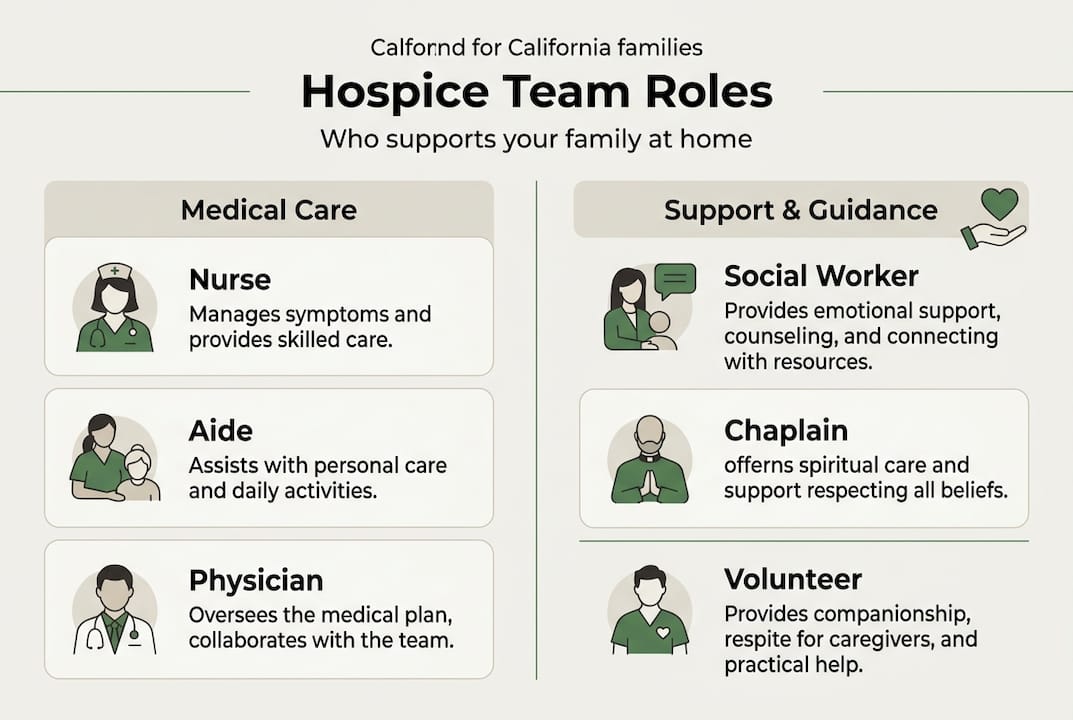
Hospice nurses serve as the primary medical contact for families, visiting regularly to assess symptoms and adjust care plans. Hospice nurses manage symptoms and coordinate care plans while hospice aides assist with daily living activities and comfort measures. Your hospice nurse monitors vital signs, administers medications, and teaches family members how to provide basic care between visits. They also coordinate with the hospice physician to modify treatments when symptoms change or new issues arise.
Nurses bring specialized training in pain management, symptom control, and end-of-life care that general medical nurses may lack. They understand how to balance medication effectiveness with quality of life, preventing both under-treatment of pain and over-sedation. When you call with concerns about breathing difficulties, restlessness, or pain, the nurse can often provide immediate phone guidance and schedule an urgent visit if needed.
Hospice aides complement nursing care by focusing on personal comfort and daily living activities. Hospice aides play a vital role in maintaining patient dignity through personal care and companionship. They typically visit several times per week to help with bathing, dressing, grooming, and toileting. These professionals also assist with transfers from bed to chair, turning patients to prevent bedsores, and ensuring the patient remains clean and comfortable.
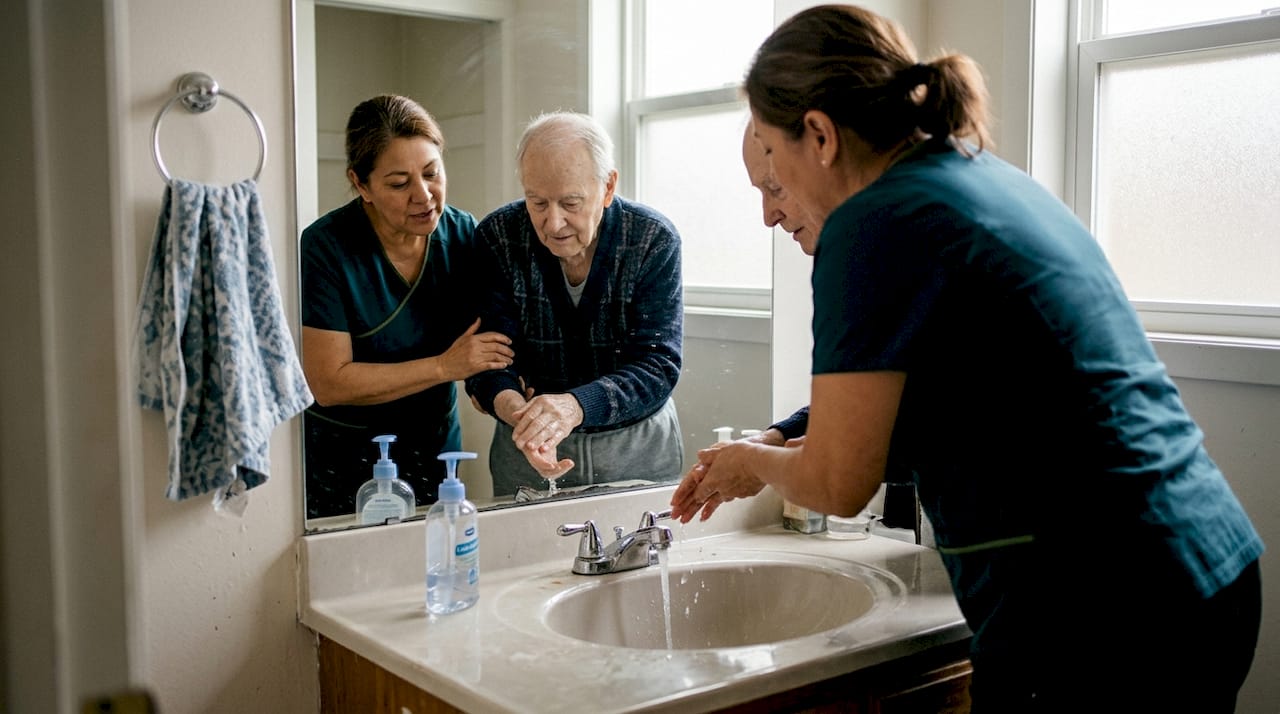
The aide’s role extends beyond physical tasks to include emotional support through their consistent presence. Many patients develop close bonds with their aides, who often spend the most time providing hands-on care. Aides also observe changes in condition and report concerns to the nursing team, serving as additional eyes and ears.
Key nursing and aide responsibilities include:
- Assessing and managing pain, nausea, breathing problems, and other symptoms
- Teaching families how to administer medications and provide comfort care
- Monitoring for complications and adjusting care plans accordingly
- Assisting with bathing, oral care, skin care, and personal hygiene
- Helping with mobility, positioning, and exercises to maintain comfort
- Providing companionship and emotional reassurance during care activities
Pro Tip: Keep a notebook near your loved one’s bedside to track symptoms, medication times, and questions for your hospice nurse. This helps you provide accurate information during visits and phone calls, leading to better symptom management.
Social workers and chaplains: supporting emotional and spiritual needs
While nurses and aides address physical comfort, social workers and chaplains focus on the emotional and spiritual dimensions of end-of-life care. Hospice social workers provide counseling, resource coordination, and support for complex family dynamics. Your social worker meets with family members to discuss fears, grief, and practical concerns about caregiving. They help you navigate difficult conversations about advance directives, funeral planning, and family conflicts that may surface during this stressful time.
Social workers connect families to community resources that ease caregiving burdens. They can help you access financial assistance programs, arrange respite care, find support groups, or secure durable medical equipment. When family disagreements arise about care decisions, social workers facilitate conversations to help everyone feel heard and work toward consensus. Their training in grief counseling also prepares them to support both the patient and family members as death approaches.
Chaplains provide spiritual care tailored to each patient’s beliefs and values. Chaplains address spiritual needs, offering comfort and meaning regardless of religious affiliation. They do not push any particular faith but instead listen to your loved one’s spiritual concerns and provide appropriate support. For religious patients, chaplains may pray, read sacred texts, or arrange visits from clergy of the patient’s faith. For non-religious patients, chaplains explore questions of meaning, legacy, and life review.
Many families initially hesitate to involve chaplains, assuming they only serve religious patients. However, chaplains address universal human concerns about mortality, forgiveness, and what gives life meaning. They create space for conversations that feel too heavy or philosophical for medical staff to address during clinical visits.
Social workers and chaplains offer:
- Individual and family counseling to process emotions and prepare for loss
- Assistance with advance care planning and end-of-life decision making
- Connections to financial aid, legal services, and community support programs
- Spiritual exploration and support aligned with patient beliefs
- Grief support that continues for family members after the patient’s death
- Mediation services when family members disagree about care approaches
Pro Tip: Request a visit from your social worker or chaplain even if you think you are managing well emotionally. These professionals often identify needs and provide support you did not realize would be helpful until you experience it.
Physicians and volunteers: medical direction and extra compassionate support
Hospice physicians oversee the entire medical care plan, working behind the scenes to ensure optimal comfort. Hospice physicians oversee and adjust care plans to ensure comfort and symptom relief. While you may not see the physician as frequently as the nurse, they review your loved one’s case regularly and direct all medical decisions. The physician collaborates with the nursing team to prescribe medications, order medical equipment, and modify treatments based on symptom patterns.
Physicians bring specialized expertise in pain management and palliative medicine that general practitioners may lack. They understand complex medication interactions and how to balance multiple symptoms simultaneously. When standard treatments fail to provide adequate relief, physicians can recommend alternative approaches or specialized interventions. They also certify hospice eligibility and recertify patients who stabilize and require continued care.
Volunteers complement the professional team by providing companionship and practical assistance. Volunteers provide valuable companionship and help with tasks, enriching the patient and family experience. These trained individuals visit regularly to sit with patients, read aloud, play music, or simply provide a caring presence. Their visits give family caregivers much-needed breaks to rest, run errands, or attend to other responsibilities without leaving their loved one alone.
The volunteer role focuses entirely on quality of life rather than medical tasks. Volunteers may help with light housework, prepare simple meals, assist with correspondence, or engage patients in favorite activities. Some volunteers bring special skills like pet therapy, music therapy, or massage. Their consistent presence often becomes a highlight of the week for isolated patients.
| Role | Primary Focus | Key Contributions | Typical Visit Frequency |
|---|---|---|---|
| Hospice Physician | Medical oversight and symptom management | Prescribes medications, directs care plans, certifies eligibility | As needed, typically monthly reviews |
| Hospice Volunteer | Companionship and practical support | Provides respite for caregivers, engages patients in activities | Weekly or bi-weekly visits |
| Impact on Care | Physician ensures medical effectiveness | Volunteer enhances emotional well-being | Both improve overall quality of life |
Physicians and volunteers contribute through:
- Expert medical direction that optimizes comfort without unnecessary interventions
- Medication management that balances symptom relief with alertness
- Regular case reviews to anticipate needs before crises develop
- Friendly companionship that reduces isolation and boredom
- Respite support that prevents caregiver burnout
- Special activities that bring joy and maintain patient dignity
Together, physicians and volunteers represent the full spectrum of hospice support from highly specialized medical expertise to simple human connection. Both roles prove essential to comprehensive end-of-life care that honors the whole person.
How Graceland Hospice Care supports families in California
Now that you understand each team member’s role, consider how Graceland Hospice Care brings this comprehensive approach to California families. Our interdisciplinary team includes experienced nurses, compassionate aides, skilled social workers, caring chaplains, knowledgeable physicians, and dedicated volunteers who work together to support your loved one’s comfort and dignity. We coordinate every aspect of care so you never feel alone or uncertain about next steps.
Our team members communicate constantly to ensure seamless care that adapts to your loved one’s changing needs. When symptoms shift, our nurses and physicians respond quickly with treatment adjustments. When emotional or spiritual concerns arise, our social workers and chaplains provide immediate support. This integrated approach means you always know who to contact for different needs and can trust that everyone shares the same commitment to your family’s well-being. Contact us today for a free consultation to learn how our compassionate team can support your family during this difficult journey.
FAQ
What does a hospice nurse do?
Hospice nurses manage symptoms, administer medications, and coordinate medical care at home. They visit regularly to assess your loved one’s condition, teach families caregiving techniques, and adjust treatments to maintain comfort. Nurses serve as your primary medical contact and can provide phone guidance 24/7 when concerns arise between scheduled visits.
How do hospice social workers assist families?
Social workers provide counseling, help with practical resources, and support families emotionally during hospice care. They connect you to community services, facilitate difficult family conversations, and help with advance care planning. Social workers also offer grief support that continues after your loved one’s death, helping families process loss and adjust to life changes.
What role do hospice volunteers play?
Volunteers offer companionship, assist with non-medical tasks, and provide respite to families. They visit regularly to sit with patients, engage them in activities, or help with light household tasks. Their presence gives family caregivers essential breaks to rest and recharge, preventing burnout while ensuring patients never feel alone or neglected.
When should I contact the hospice physician?
You typically communicate with the hospice physician through your nurse rather than directly. The physician reviews your loved one’s case regularly and directs all medical decisions behind the scenes. If you have concerns about medications, symptom management, or treatment approaches, discuss them with your nurse who will consult the physician and relay recommendations back to you.
Can I request additional visits from team members?
Absolutely. Hospice care plans are flexible and adjust based on patient and family needs. If you need more frequent nursing visits, additional aide support, or extra time with the social worker or chaplain, simply communicate this to your care team. They will modify the schedule to provide appropriate support during challenging periods or as your loved one’s condition changes.
Recommended
- Role of Caregivers in Hospice – Making End-of-Life More Compassionate | Graceland Hospice Care Blog
- Understanding Hospice Care: A Guide for Families | Graceland Hospice Care Blog
- Emergency care in hospice: a guide for California families | Graceland Hospice Care Blog
- Role of Hospice Aides – Impact on Home Care | Graceland Hospice Care Blog
- Silver Link Companion — AI Voice Companion for Seniors