How to coordinate a hospice team for home care success
How to coordinate a hospice team for home care success
Coordinating a hospice team at home often feels like managing chaos. Fragmented communication, unclear roles, and isolated family members create gaps that compromise patient comfort. This guide delivers evidence-backed strategies to streamline team collaboration, engage caregivers meaningfully, and leverage technology for compassionate, efficient end-of-life care that honors dignity and reduces stress.
Table of Contents
- Prerequisites For Effective Hospice Team Coordination
- Establishing A Communication Framework Among Hospice Team Members
- Defining Roles And Responsibilities Clearly
- Engaging Family Caregivers As Essential Team Members
- Utilizing Technology To Facilitate Team Collaboration
- Step-By-Step Hospice Team Coordination Process
- Common Mistakes And How To Avoid Them
- Managing Conflict Within The Hospice Team
- Expected Outcomes And Measuring Success
- Discover Compassionate End-Of-Life Care Solutions
- Frequently Asked Questions
Key takeaways
| Point | Details |
|---|---|
| Structured communication reduces errors | Regular interdisciplinary team meetings cut communication errors by 35% and boost symptom management. |
| Family engagement improves outcomes | Active caregiver involvement increases patient comfort by 25% and lowers emergency visits. |
| Clear roles prevent duplication | Written role definitions eliminate confusion, optimize workflow, and improve team morale. |
| Technology enhances coordination | HIPAA-compliant platforms enable real-time updates, secure messaging, and efficient scheduling. |
| Measuring success drives improvement | Tracking metrics like hospital admissions and satisfaction guides continuous care quality. |
Prerequisites for effective hospice team coordination
Before launching a coordinated hospice care approach, you need specific foundations in place. Without these essentials, even the best strategies falter.
First, assemble a multidisciplinary team trained in clinical and psychosocial aspects of hospice care. Your team should include registered nurses, social workers, spiritual care counselors, and home health aides who understand palliative principles. Each professional brings specialized skills that address physical, emotional, and spiritual patient needs.
Second, secure access to HIPAA-compliant digital communication tools. Paper records and phone tag create delays. Platforms enabling secure messaging, shared documentation, and real-time updates protect privacy while accelerating information flow.
Third, obtain informed consent from family caregivers and confirm their willingness to engage actively. Coordination fails when family members feel excluded or overwhelmed. Early conversations about expectations and boundaries build trust and participation.
Fourth, gather comprehensive information about the patient’s home environment, medical history, advance directives, and legal documents like power of attorney. Understanding cultural preferences, mobility limitations, and existing support networks allows you to tailor care plans realistically.
Key prerequisites include:
- Multidisciplinary hospice professionals with palliative training
- HIPAA-compliant communication platforms for secure data sharing
- Family caregiver consent and documented engagement willingness
- Complete patient assessment including home setup and legal documents
- Clear understanding of cultural and spiritual care preferences
Establishing these conditions prevents coordination breakdowns and sets your team up for sustainable success.
Establishing a communication framework among hospice team members
Clear communication protocols form the backbone of effective hospice coordination. Without standardized structures, information gets lost, tasks fall through cracks, and patient care suffers.
Schedule regular interdisciplinary team meetings with structured agendas covering patient status, care plan updates, and task assignments. Regular IDT meetings reduce communication errors by 35% and improve patient symptom management scores by 20% within 3 months. Consistency matters more than frequency. Weekly or biweekly meetings work for most teams.
Adopt secure digital platforms that enable instant messaging, shared care plans, and documentation access. Tools like Microsoft Teams for Healthcare or specialized hospice software eliminate phone tag and email confusion. Every team member should access current patient information anytime.
Standardize information-sharing protocols to prevent errors. Create templates for handoff reports, symptom updates, and medication changes. When everyone follows the same format, critical details don’t disappear between shifts.
Incorporate cultural competence training to enhance communication with diverse patients and families. Understanding how different cultures approach death, pain expression, and family decision-making prevents misunderstandings and builds trust.
Pro Tip: Schedule recurring meetings at the same time each week with clear objectives sent 24 hours in advance. This consistency helps busy professionals prioritize attendance and come prepared.
Compare traditional versus digital communication approaches:
| Communication Method | Response Time | Error Rate | Documentation Access |
|---|---|---|---|
| Phone calls and voicemail | 4-6 hours average | High (details forgotten) | Limited to caller’s notes |
| Email chains | 2-4 hours average | Moderate (buried threads) | Searchable but fragmented |
| Secure digital platforms | Minutes to real-time | Low (standardized templates) | Instant, centralized, auditable |
Implementing these frameworks requires initial time investment but pays dividends through reduced confusion and improved home hospice success steps execution.
Defining roles and responsibilities clearly
Ambiguous roles breed inefficiency and frustration. When team members don’t know who handles what, tasks get duplicated or ignored entirely.
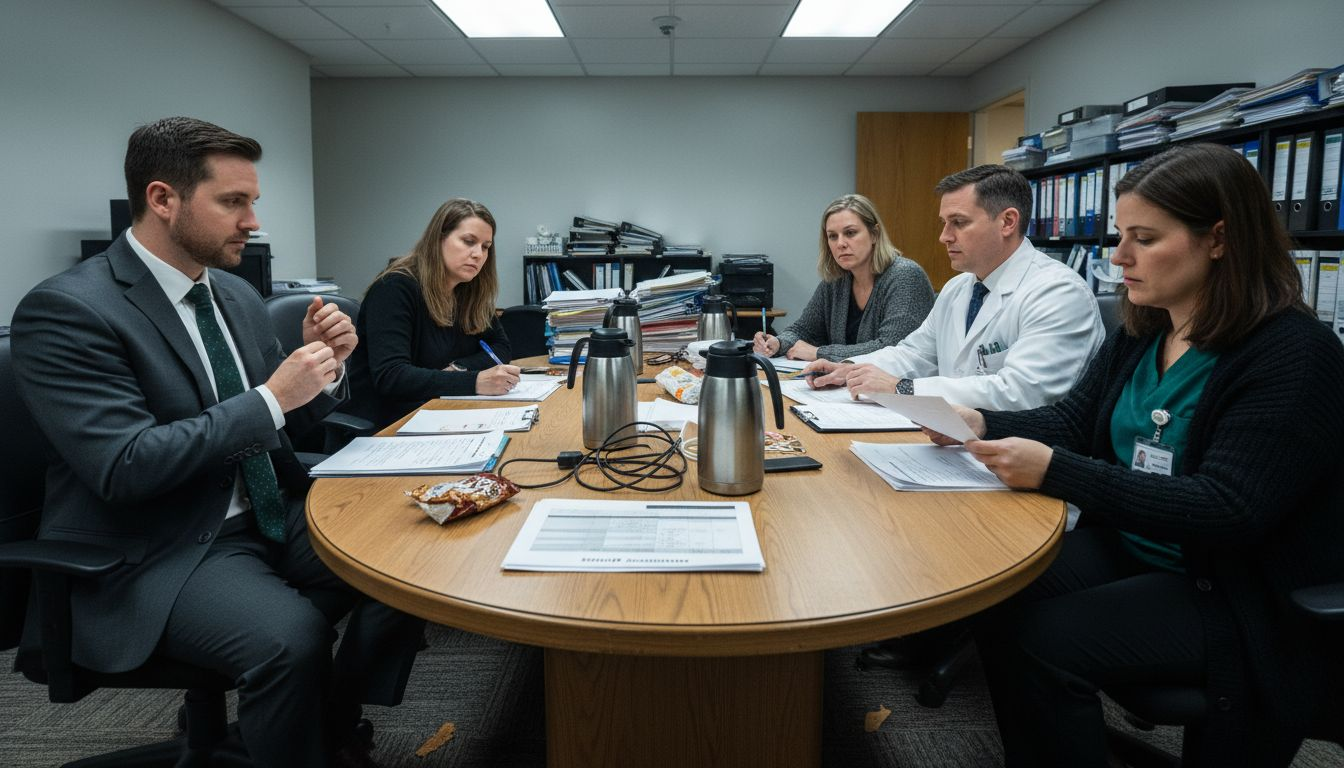
Assign explicit roles tailored to each professional’s expertise. Registered nurses manage medication, symptom assessment, and clinical interventions. Social workers address emotional support, resource navigation, and family counseling. Spiritual care counselors provide existential comfort. Home health aides assist with personal care and daily living activities.
Create formal written role descriptions accessible to all team members and family caregivers. These documents should specify responsibilities, decision-making authority, and communication expectations. Clear documentation prevents the “I thought you were handling that” scenario.
Role clarity prevents duplicated efforts when multiple professionals visit the same patient. If the nurse already assessed pain levels, the social worker can focus on emotional well-being without repeating clinical questions. This efficiency respects everyone’s time and reduces patient fatigue from redundant conversations.
Delegate tasks according to availability and skill level. During emergencies, the on-call nurse handles immediate clinical needs while the social worker follows up on family support the next business day. Matching urgency to expertise optimizes workflow.
Pro Tip: Review and update role assignments monthly as patient needs evolve. End-stage care requires different skill emphasis than early hospice admission.
Key role definition practices:
- Document specific duties for nurses, social workers, spiritual counselors, and aides
- Clarify decision-making authority for medication changes and care plan adjustments
- Define communication expectations including response times and escalation protocols
- Assign backup coverage for each role to prevent gaps during time off
- Share written descriptions with family caregivers to set realistic expectations
Understanding hospice nurse roles helps families appreciate how specialized skills contribute to comprehensive care.
Engaging family caregivers as essential team members
Family caregivers aren’t passive observers. They’re essential team members whose involvement directly impacts patient outcomes.
Include family members in care planning meetings from day one. With patient consent, invite caregivers to interdisciplinary discussions about goals, preferences, and treatment options. Their insights about the patient’s personality, values, and daily routines inform better care decisions.
Provide structured training to family caregivers on symptom monitoring and basic care tasks. Teach them how to recognize pain signs, manage medication schedules, and perform comfort measures like repositioning. Confident caregivers reduce emergency calls and provide consistent support between professional visits.
Maintain regular communication channels with caregivers for updates and emotional support. Excluding family input correlates with 25% lower patient comfort and increased caregiver and provider stress. Daily check-ins via secure messaging or weekly phone calls keep everyone aligned.
Address family emotional and practical needs proactively. Offer respite care options, connect them with support groups, and acknowledge their exhaustion. Burned-out caregivers can’t sustain quality involvement.
Steps to engage family caregivers effectively:
- Obtain written consent from patient for family involvement level
- Schedule initial family meeting to explain team roles and care plan
- Provide hands-on training for symptom monitoring and comfort care techniques
- Establish preferred communication channel and response time expectations
- Share educational resources tailored to the patient’s specific condition
- Check in regularly about caregiver well-being and adjustment needs
- Offer respite care and connect family to community support resources
Integrating caregivers into your hospice visit workflow transforms them from anxious bystanders into confident partners.
Utilizing technology to facilitate team collaboration
Technology eliminates coordination friction when chosen and implemented thoughtfully. The right tools enhance communication without overwhelming users.
Select HIPAA-compliant platforms that provide secure messaging, shared care plans, and real-time record access. Generic consumer apps lack necessary privacy protections. Healthcare-specific solutions like CareSmartz360, WellSky, or Microsoft Teams for Healthcare meet regulatory requirements while offering user-friendly interfaces.
Leverage scheduling tools to coordinate team meetings and home visits efficiently. Digital calendars visible to all team members prevent double-booking, reduce travel time waste, and ensure consistent patient coverage. Automated reminders decrease no-shows.
Incorporate remote monitoring technology for real-time patient updates when appropriate. Wearable devices tracking vital signs, medication dispensers with alerts, and telehealth video consultations extend your team’s reach between in-person visits. These tools work best for patients and families comfortable with technology.
Pro Tip: Balance technology adoption with user proficiency across your team. Offer hands-on training sessions and designate tech-savvy champions who provide ongoing peer support. The fanciest platform fails if half your team won’t use it.
Traditional versus digital communication comparison:
| Factor | Traditional Methods | Secure Digital Platforms |
|---|---|---|
| Information access | Limited to scheduled meetings | 24/7 access to current data |
| Response speed | Hours to days | Minutes to real-time |
| Documentation accuracy | Prone to transcription errors | Standardized, traceable entries |
| Regulatory compliance | Manual audit trails | Automated HIPAA logs |
| Family involvement | Excluded from professional channels | Designated caregiver portal access |
Technology should simplify coordination, not complicate it. Start with one tool, master it, then expand capabilities gradually.
Step-by-step hospice team coordination process
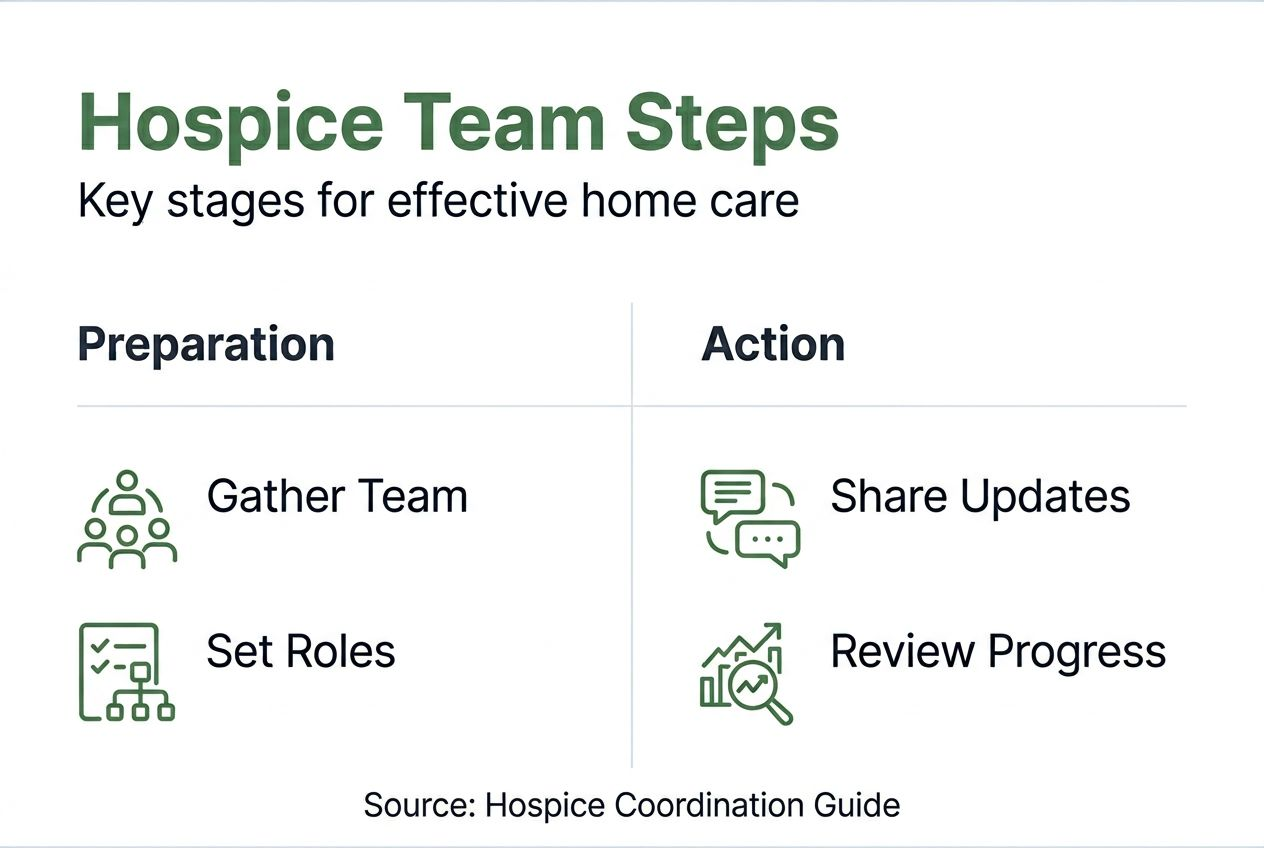
Following a logical sequence transforms coordination from overwhelming to manageable. These steps build on each other systematically.
-
Conduct comprehensive initial assessment involving the entire hospice team and family caregivers. Gather medical history, current symptoms, home environment details, cultural preferences, and advance directives. Document findings in your shared platform.
-
Define and document clear roles and care goals collaboratively. Hold a team meeting where each professional outlines their responsibilities. Establish measurable goals like pain reduction, family education completion, and symptom stability.
-
Schedule and hold regular interdisciplinary team meetings using secure communication tools. Set recurring weekly or biweekly meetings with structured agendas covering patient updates, care plan modifications, and task assignments. Document decisions immediately.
-
Engage family caregivers consistently through training, updates, and emotional support. Provide hands-on skill training during early visits. Maintain daily or weekly contact based on family preference and patient acuity.
-
Implement conflict resolution protocols proactively before tensions escalate. Establish clear escalation paths for disagreements about care approaches. Address interpersonal issues promptly through facilitated discussions.
-
Monitor process effectiveness using measurable outcomes and adjust strategies as needed. Track metrics like symptom management scores, family satisfaction ratings, and communication error frequency. Review quarterly and refine your approach based on data.
Following this step-by-step hospice coordination guide ensures nothing falls through the cracks while remaining flexible enough to adapt to individual patient needs.
Common mistakes and how to avoid them
Even experienced teams fall into predictable traps. Recognizing these pitfalls helps you steer clear.
Unclear communication channels cause delays and errors. When team members don’t know whether to call, text, email, or message through the platform, information gets lost. Care delays due to coordination errors appear in up to 30% of hospice cases leading to patient discomfort. Fix this by standardizing protocols. Designate one primary platform for routine updates and reserve phone calls for urgent issues only.
Lack of role clarity leads to duplicated efforts and missed tasks. Without written definitions, professionals waste time on overlapping activities while critical needs go unmet. Implement detailed role descriptions and review them during onboarding and team meetings.
Excluding family caregivers reduces patient comfort and increases everyone’s stress. Excluding family input correlates with 25% lower patient comfort and increased caregiver and provider stress. Ensure active family engagement through consent, training, and regular communication from day one.
Ignoring conflict management allows tensions to fester and damage team cohesion. Small disagreements about care approaches escalate into personal conflicts when unaddressed. Implement formal resolution strategies and address issues immediately.
Lack of regular meetings creates information gaps and coordination failures. When weeks pass between team discussions, care plans become outdated and professionals work with incomplete information. Set consistent meeting schedules and protect that time religiously.
Avoiding these common hospice coordination mistakes protects care quality and team morale.
Managing conflict within the hospice team
Disagreements happen in every team. How you handle them determines whether conflicts strengthen or sabotage coordination.
Establish formal conflict resolution protocols accessible to all team members. Create a written document outlining steps for addressing disagreements, escalation paths, and neutral mediation options. Everyone should know the process before tensions arise.
Encourage open, respectful dialogue to address disagreements early before they escalate. Create psychological safety where team members can voice concerns without fear of retaliation. A nurse who disagrees with a social worker’s family approach should feel comfortable raising the issue directly.
Offer regular training sessions to enhance interpersonal communication skills. Workshops on active listening, nonviolent communication, and cultural competence reduce misunderstandings that spark conflicts. Invest in these soft skills as much as clinical training.
Utilize neutral mediators when direct resolution fails. Designate a team leader or bring in an external facilitator for conflicts involving personal tensions or power dynamics. An objective third party helps find common ground.
Continuously monitor team dynamics to identify potential conflicts early. Use anonymous surveys, one-on-one check-ins, and observation during meetings to spot warning signs like withdrawn participation or passive-aggressive comments. Address issues proactively.
Key conflict management practices:
- Document resolution protocols and share during team orientation
- Schedule quarterly team-building activities to strengthen relationships
- Provide communication skills training focused on difficult conversations
- Assign a neutral mediator role that rotates among senior team members
- Conduct exit interviews when team members leave to identify systemic issues
Healthy conflict resolution protects the collaborative environment patients and families depend on.
Expected outcomes and measuring success
You can’t improve what you don’t measure. Tracking specific indicators reveals coordination effectiveness and guides refinement.
Regular IDT meetings reduce communication errors by 35% and improve patient symptom management scores by 20% within three months. These benchmarks provide realistic improvement targets.
Key metrics to track include:
- Reduction in unplanned hospital admissions and emergency department visits
- Improvement in patient symptom management scores using validated scales
- Higher patient and family satisfaction ratings through surveys
- Decreased communication errors measured by incident reports
- Reduced time delays between symptom reports and team response
- Improved team morale and reduced staff turnover rates
Decreases in communication errors and response delays indicate better coordination. Track these through incident reporting systems and time-stamped platform messages. Monthly review identifies patterns requiring process adjustments.
Improved team morale and reduced turnover reflect successful collaboration. Burned-out teams provide inconsistent care. Anonymous satisfaction surveys and retention rates reveal whether your coordination approach supports professionals.
Outcome improvements over six months:
| Metric | Baseline | 3 Months | 6 Months |
|---|---|---|---|
| Hospital admissions per 100 patients | 18 | 12 | 8 |
| Patient comfort score (0-10 scale) | 6.2 | 7.5 | 8.3 |
| Family satisfaction percentage | 72% | 84% | 91% |
| Communication error incidents | 14 | 7 | 3 |
| Team member retention rate | 78% | 85% | 92% |
“Measuring coordination outcomes isn’t about judgment. It’s about continuous learning and improvement that ultimately serves patients and families during life’s most vulnerable moments.”
Regular data review transforms coordination from guesswork into evidence-based practice that honors your commitment to excellence.
Discover compassionate end-of-life care solutions
At Graceland Hospice, we understand the complexity of coordinating hospice teams effectively. Our experienced professionals support healthcare providers and family caregivers with evidence-based strategies that prioritize patient comfort and dignity. We provide comprehensive hospice care services tailored to California families navigating end-of-life journeys at home.
Explore our detailed end of life care guide for practical approaches to compassionate support. Our resources offer actionable insights for both professional teams and family members seeking to optimize coordination. Discover proven end of life care steps that enhance collaboration and reduce stress during challenging times. Contact us for a free consultation to discuss how we can support your hospice coordination needs.
Frequently asked questions
How can I ensure family caregivers are effectively involved in hospice coordination?
Include family members in planning meetings with documented patient consent from the start. Provide hands-on training in symptom monitoring, medication management, and comfort care techniques during early visits. Maintain regular communication through secure channels with daily or weekly updates based on family preference and patient condition. Offer emotional support resources like respite care and hospice visit workflow guidance to prevent caregiver burnout while sustaining active participation.
What technologies are recommended to facilitate hospice team communication at home?
Use HIPAA-compliant secure messaging platforms like Microsoft Teams for Healthcare, CareSmartz360, or WellSky that enable real-time updates and shared documentation. Leverage digital scheduling tools to coordinate team meetings and home visits efficiently, reducing conflicts and travel time waste. Incorporate remote monitoring devices for vital signs tracking when appropriate for tech-comfortable patients and families. Ensure all selected technologies meet federal privacy standards and provide adequate training so every team member uses them confidently and consistently.
How can hospice teams handle conflicts to maintain quality care?
Implement formal conflict resolution protocols with documented steps, escalation paths, and neutral mediation options accessible to all members. Promote open, respectful communication through regular team-building activities and psychological safety where concerns can be voiced without fear. Provide interpersonal communication skills training covering active listening, nonviolent communication, and cultural competence to reduce misunderstandings. Assign rotating neutral mediator roles among senior team members and address disagreements immediately before they escalate into personal tensions that compromise patient care.
What are the most important metrics for evaluating hospice coordination success?
Track reductions in unplanned hospital admissions and emergency department visits as primary indicators of effective symptom management and proactive care. Monitor patient comfort scores using validated assessment scales and family satisfaction ratings through regular surveys. Measure communication error frequency through incident reports and response time delays using platform timestamps. Include team morale indicators like staff satisfaction scores and retention rates, as burned-out professionals cannot sustain quality coordination regardless of protocols.
How often should interdisciplinary team meetings occur for optimal coordination?
Schedule recurring meetings weekly or biweekly depending on patient acuity and team size, with consistency mattering more than frequency. Protect meeting time as non-negotiable in everyone’s schedule to prevent cancellations that create information gaps. Send structured agendas 24 hours in advance covering patient status updates, care plan modifications, and task assignments. Document decisions immediately in your shared platform and distribute summaries within 24 hours so absent members stay informed and coordination continues seamlessly between formal meetings.
Recommended
- End of Life Care Steps for Home Hospice Success | Graceland Hospice Care Blog
- Hospice Visit Workflow for Comfort Care at Home | Graceland Hospice Care Blog
- Home Hospice Care Workflow: A Step-by-Step Guide for Families | Graceland Hospice Care Blog
- Blog & Resources | Graceland Hospice Care
- SEO for Funeral Homes - Todd Stager
- Top 10 Tips for Working From Home - TEFL Institute