What Is Spiritual Care in Hospice: a Family Guide

What Is Spiritual Care in Hospice: a Family Guide
TL;DR:
- Spiritual care in hospice addresses meaning, purpose, and peace for patients regardless of beliefs, not just religion.
- It involves assessments by trained chaplains and extends emotional and ritual support to families, improving overall well-being.
When a loved one enters hospice, families often focus on managing physical pain and coordinating daily care. But spiritual care in hospice addresses something just as real and just as urgent: the inner life of a person facing the end of their time. This is not simply about prayer or religion. It is about helping patients find meaning, process fear, and feel at peace. It is about supporting families through grief before loss even arrives. This guide explains what spiritual care actually involves, how it is delivered, and why it matters deeply for everyone in the room.
Table of Contents
- Key takeaways
- What spiritual care in hospice really means
- How spiritual care is delivered in hospice
- Recognizing spiritual distress and why it matters
- How families benefit from spiritual support in hospice
- Emerging trends in hospice spiritual care
- My perspective on why this care cannot be optional
- Compassionate spiritual care starts with the right hospice team
- FAQ
Key takeaways
| Point | Details |
|---|---|
| Spiritual care is not only religious | It addresses meaning, purpose, and peace for patients of all beliefs and backgrounds. |
| Chaplains lead formal assessments | Trained hospice chaplains use structured tools to identify and respond to spiritual distress. |
| Families receive spiritual support too | Spiritual care extends to caregivers and loved ones, not just the patient. |
| Virtual care is expanding access | Telehealth spiritual care models now serve patients in rural and underserved communities. |
| Spiritual distress affects physical symptoms | Unresolved spiritual pain can worsen physical discomfort, making early care critical. |
What spiritual care in hospice really means
Most people assume spiritual care belongs only to patients with strong religious faith. That assumption leaves a lot of people without support they genuinely need. Spiritual care in hospice is an evidence-informed part of serious illness care that addresses existential pain, the kind that shows up as questions like “Did my life matter?” or “Will I be forgotten?” It applies to every patient, whether they attend weekly services or have never set foot in a place of worship.
The goals of spiritual care are straightforward but profound. They include helping patients find personal meaning in their experience, facilitating a sense of peace, and reducing the suffering that comes from unresolved spiritual or existential questions. Chaplains provide expert interventions that explore these questions with patients in a non-judgmental, compassionate way.
Here is what spiritual care in hospice typically aims to address:
- Questions of meaning and life purpose
- Feelings of guilt, regret, or the need for forgiveness
- Fear of dying or of what comes after death
- Grief over relationships, roles, or experiences left behind
- The desire to feel connected to something larger than oneself
Pro Tip: If you are unsure whether your loved one would welcome spiritual care, ask them open-ended questions like “What gives you strength right now?” rather than asking directly about religion. This approach, recommended by the NCHPC, opens the conversation gently and honestly.
A structured tool called FICA, which stands for Faith, Importance, Community, and Address in Care, helps care teams assess patient spirituality and translate their findings into a concrete care plan. This prevents spiritual distress from being missed entirely, which happens more often than most families realize.
How spiritual care is delivered in hospice
Spiritual care does not happen in isolation. It is woven into the fabric of the entire hospice team’s work. The hospice chaplain holds the primary responsibility, but nurses, social workers, and aides all play a part in recognizing and responding to spiritual needs.
The role of the hospice chaplain
A hospice chaplain is a trained professional, not a representative of any single faith tradition. Their job is to meet patients where they are, spiritually and emotionally, without an agenda. Chaplains conduct formal spiritual assessments, document findings, and integrate that information into the patient’s care plan alongside the clinical team.
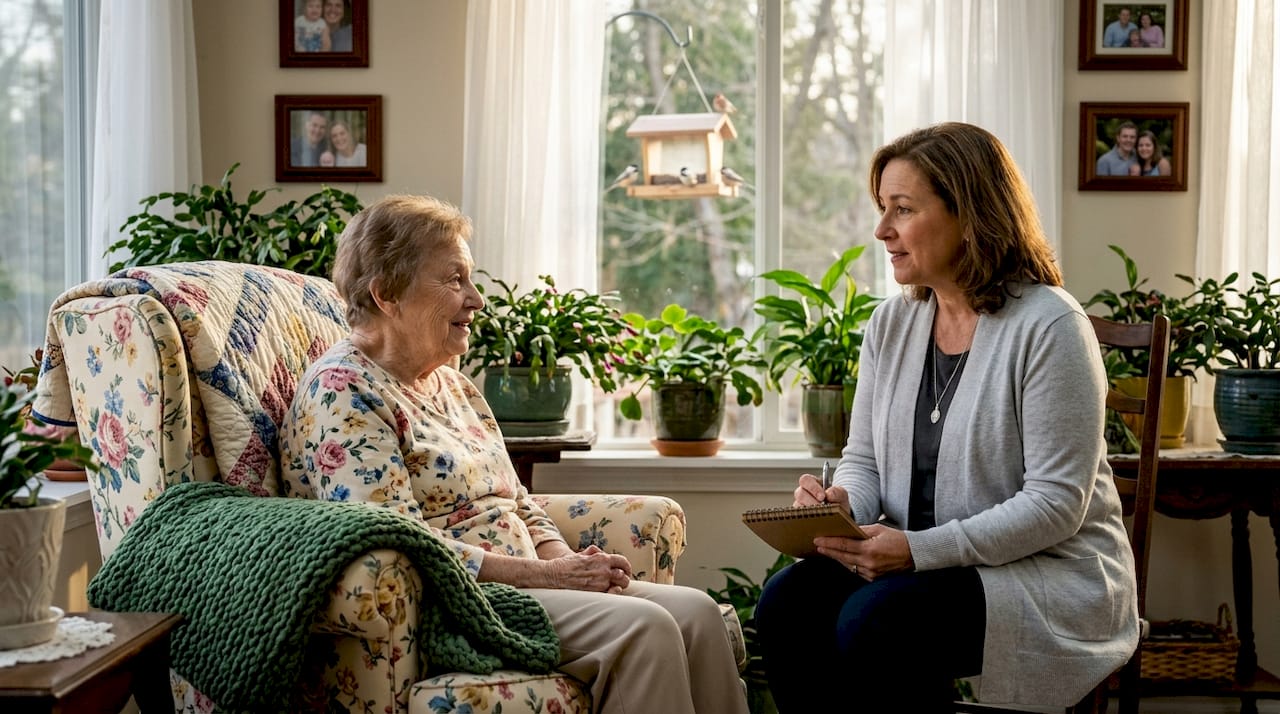
Chaplains also coordinate with the clinical team so spiritual distress is considered when interpreting physical symptoms. This coordination matters more than most people expect.
Core spiritual care practices in hospice settings
| Practice | Description | Who It Serves |
|---|---|---|
| Spiritual history assessment | Uses tools like FICA to document values and needs | Patient and care team |
| Prayer and ritual facilitation | Supports meaningful personal or religious practices | Patient and family |
| Reflective listening | Creates a safe space for patients to process emotions | Patient |
| Meditation and mindfulness | Offers calming techniques for anxiety and fear | Patient and family |
| Interdisciplinary care coordination | Shares spiritual findings with nurses and physicians | Whole care team |
Operationalizing spiritual care involves standardized screening for spiritual distress, documentation in the medical record, and translating findings into interdisciplinary care plans. That means a chaplain’s conversation with a patient about fear of dying can directly inform how a nurse manages pain medication or how a social worker approaches a family meeting.
Virtual care has also changed the picture significantly. Platforms like SpirituWell now offer 24/7 telehealth spiritual care with diverse chaplain teams, which fills a critical gap for patients in rural areas or those who cannot receive in-person visits easily.
Pro Tip: Ask your hospice provider whether their spiritual care team conducts a formal spiritual history assessment at intake. If they do not, request one. It sets the foundation for everything that follows.
Recognizing spiritual distress and why it matters
Spiritual pain does not always look like sadness or quiet contemplation. It can show up as irritability, withdrawal, or even as physical symptoms that resist standard treatment. Emotional and spiritual distress often underlies physical symptoms in serious illness, including pain, shortness of breath, and nausea. A patient who seems to have uncontrolled pain might actually be experiencing deep spiritual anguish that medication alone cannot reach.
Common signs that a patient may be experiencing spiritual distress include:
- Expressing feelings of hopelessness or meaninglessness
- Asking repeatedly why this is happening to them
- Withdrawing from loved ones or activities they once valued
- Expressing anger toward a higher power or at life itself
- Resisting care or making statements about not deserving comfort
Catching these signs early makes a real difference. Spiritual care has been shown to reduce depressive symptoms and hospital mortality by addressing the holistic identity of the patient, not just the diagnosis.
“Spiritual care is a cornerstone of holistic, patient-centered support, fostering connection and resilience even in the most challenging end-of-life circumstances.” — NCHPC
When spiritual distress goes unaddressed, it does not simply stay in the background. It amplifies suffering across every other dimension of care. Families who understand this are better equipped to advocate for timely spiritual support on behalf of someone they love.
How families benefit from spiritual support in hospice
One of the most overlooked aspects of spiritual care in hospice is how much it serves families, not just the patient. Families carry their own weight of fear, grief, and unresolved questions as they support a loved one through life’s final chapter. Spiritual care practitioners recognize this and extend their support accordingly.
The importance of spiritual care for families includes several dimensions that go far beyond simple comfort:
- Guidance through meaningful conversations that might otherwise go unsaid
- Support for family rituals, including cultural or religious practices that honor the patient
- Help processing anticipatory grief, the mourning that begins before a death actually occurs
- Connection to community resources, including faith communities or bereavement groups
- Emotional presence during moments of crisis or sudden decline
Vigil volunteers provide a comforting presence during a patient’s final hours, sitting with both patient and family, creating a peaceful environment when clinical staff cannot always be present. This kind of compassionate witness is spiritual care in its most elemental form. It says: you are not alone.
Families who receive strong spiritual support during hospice also tend to cope better during bereavement. They have had the chance to say what needed to be said, to mark the moment with intention, and to feel supported by something larger than the medical system. That carries forward long after the loss itself.
Pro Tip: Ask the hospice team about caregiver support services available to your family. Spiritual care for caregivers is just as legitimate as care for the patient. You do not have to wait until something feels wrong to ask for it.
Emerging trends in hospice spiritual care
Hospice spiritual care has evolved considerably, and the pace of change is accelerating. The most significant shift is the move toward virtual and telehealth models that expand access beyond what traditional in-person visits allow.
| Traditional Model | Virtual/Emerging Model |
|---|---|
| In-person chaplain visits only | 24/7 access via telehealth platforms |
| Single-faith or limited interfaith options | Diverse, interfaith chaplain teams |
| Urban and suburban focus | Expanded access to rural communities |
| Reactive care after distress is identified | Longitudinal, proactive spiritual check-ins |
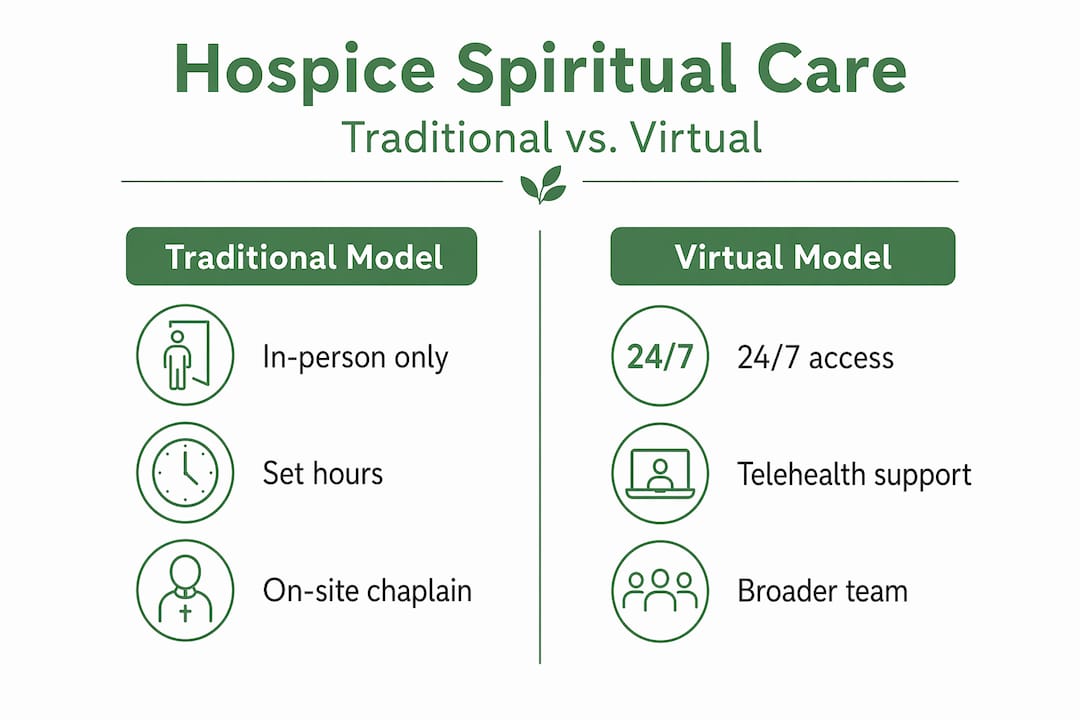
Increasing spiritual care through virtual means improves access in underserved areas and provides culturally aligned care that matches the patient’s background and beliefs. This is not a minor logistical convenience. For a patient in a remote area whose chaplain would otherwise visit once a week, having access to spiritual support at 2 a.m. during a moment of fear can change everything.
Training and certification in spiritual care are also expanding. More hospice programs are investing in chaplain education and formal credentialing, which raises the quality and consistency of care across settings. At the same time, spiritual care is increasingly recognized as part of value-based healthcare models, with evidence showing that it improves outcomes, reduces unnecessary interventions, and increases patient satisfaction.
My perspective on why this care cannot be optional
I have spent years working alongside hospice teams, and I want to say this plainly: the patients who receive good spiritual care die differently. Not always peacefully in the way films portray it. But differently in the sense that they seem to feel less alone, less terrified, and more settled within themselves.
What I’ve seen over and over is that families assume spiritual care is a luxury add-on, something nice to have if the patient happens to be religious. That assumption costs people dearly. I’ve watched patients carry unresolved guilt for decades, only to finally release it in a conversation with a chaplain who asked the right question at the right moment. That release matters. It shapes the entire experience for everyone present.
The misconception I find most damaging is the idea that if a patient says they are not religious, spiritual care does not apply to them. In my experience, non-religious patients often have the deepest existential needs precisely because they lack the ready-made frameworks that organized religion provides. They need someone to sit with them in the uncertainty, not to offer answers, but to not run from the questions.
My honest take is this: if your loved one’s hospice program is not actively assessing and addressing spiritual needs from the beginning, something important is being missed. Spiritual care is not a soft afterthought. It is how we honor the full humanity of a person at the most profound moment of their life.
— Sam
Compassionate spiritual care starts with the right hospice team
Gracelandhc takes the role of spiritual care seriously, treating it as a foundational part of every patient’s experience rather than an optional service. The team at Graceland Hospice works to address the complete person, including their spiritual and existential needs, from the very first day of enrollment. Every patient deserves to feel seen, supported, and at peace, regardless of their background or beliefs. If you are looking for a hospice program that genuinely honors the whole person, explore compassionate end-of-life care at Gracelandhc and reach out for a free consultation. The conversation is a good place to start.
FAQ
What does spiritual care include in hospice?
Spiritual care in hospice includes chaplain assessments, support for prayer or personal rituals, reflective listening, and help with existential questions about meaning, fear, and purpose. It applies to patients of all beliefs, including those with no religious affiliation.
Who provides spiritual care in a hospice setting?
Hospice chaplains lead formal spiritual care, but nurses, social workers, and trained volunteers all contribute. Chaplains coordinate with the broader clinical team to integrate spiritual findings into the overall care plan.
Can spiritual care help with physical symptoms?
Yes. Spiritual distress can manifest as physical symptoms like pain, shortness of breath, and nausea. Addressing spiritual pain through chaplain support can meaningfully reduce symptom burden.
Is spiritual care only for religious patients?
No. Spiritual care is designed for every patient, including those who do not identify with any religion. It focuses on individual meaning, values, and sources of strength, not on faith traditions.
How do families access spiritual support in hospice?
Families can request spiritual care through the hospice social worker or care coordinator at any time. Many programs offer family meetings with chaplains, caregiver support groups, and vigil volunteer services during the final stages of life.