Understanding the role of hospice physicians in care
Understanding the role of hospice physicians in care
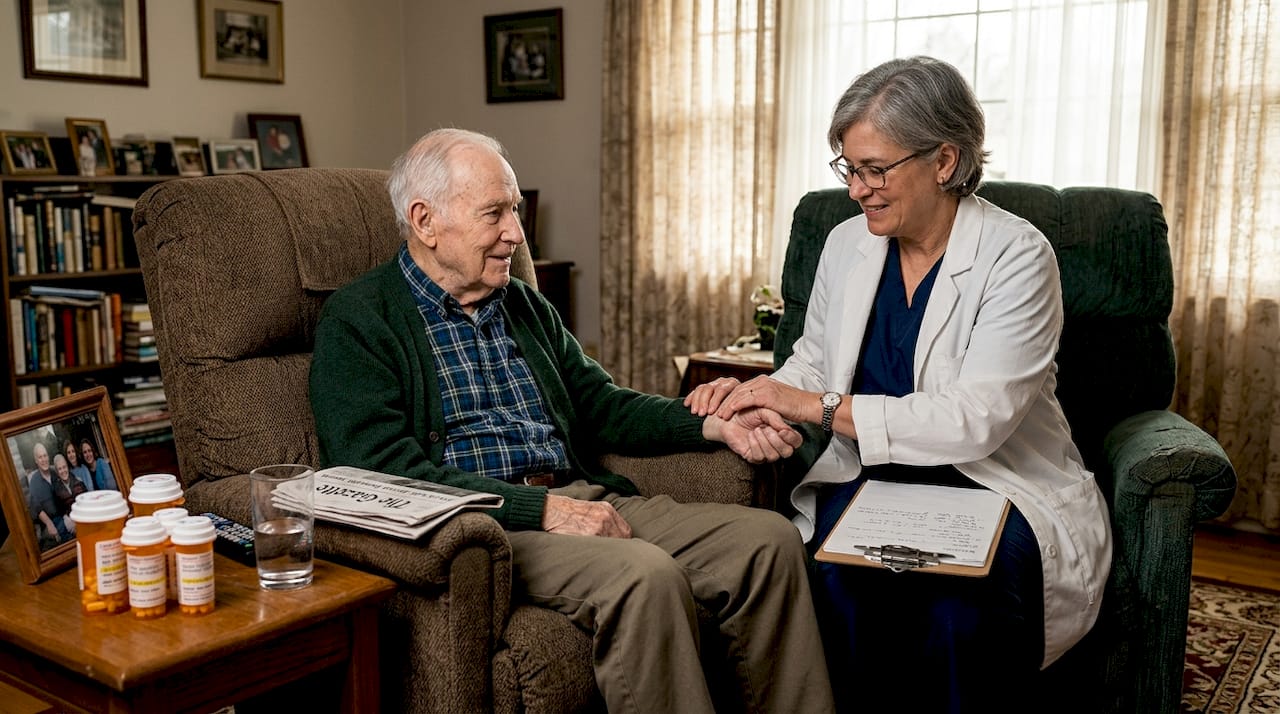
When a loved one enters hospice care, families often wonder what a hospice physician actually does. Many assume their primary care doctor will continue managing everything, or that hospice nurses handle all medical decisions. In reality, hospice physicians bring specialized expertise focused entirely on comfort, symptom management, and quality of life during the final chapter. This guide clarifies their unique responsibilities, how they support both patients and families, and how to access their care in California.
Table of Contents
- Key takeaways
- What hospice physicians do: core responsibilities and patient care
- How hospice physicians develop and oversee individualized care plans
- Supporting families: the hospice physician’s role beyond patient care
- Hospice physicians compared: how they differ from other doctors and how to find one in California
- Explore compassionate hospice care services with Graceland Hospice Care
- Frequently asked questions
Key Takeaways
| Point | Details |
|---|---|
| Comfort oriented care | Hospice physicians prioritize relieving pain and distress to improve quality of life rather than pursuing cure. |
| Interdisciplinary care coordination | They lead teams of nurses, social workers, chaplains, and aides to implement a consistent and adjusted care plan. |
| Regular visits and phone access | Physicians conduct frequent assessments and remain reachable by phone to guide medications and respond to urgent needs. |
| Family education on medications | They explain the purpose, timing, and expected changes of medicines to support symptom control and decision making. |
What hospice physicians do: core responsibilities and patient care
Hospice physicians bring specialized training to manage the complex symptoms that arise during terminal illness. Their primary mission is relieving discomfort. Hospice physicians specialize in symptom management and comfort measures, addressing pain, nausea, breathlessness, anxiety, and other distressing symptoms that impact quality of life. Unlike doctors focused on curing disease, these specialists adjust medications and treatments solely to enhance comfort.
They avoid aggressive interventions that would not improve how patients feel. No chemotherapy solely to extend life by days. No invasive procedures that cause suffering without meaningful benefit. Instead, hospice physicians prescribe medications that ease breathing, reduce pain, calm agitation, and allow patients to remain alert enough to connect with family when possible.
Coordination defines much of their work. Hospice physicians lead interdisciplinary teams that include nurses, social workers, chaplains, and home health aides. They communicate regularly with these team members to ensure everyone understands the current care plan and any recent changes. When a nurse reports increased pain during overnight hours, the physician adjusts medication timing or dosage. When a social worker identifies family stress, the physician may schedule a family meeting to address concerns.
Regular visits allow physicians to assess patient condition firsthand. They examine patients, review symptoms, and make clinical decisions based on current needs rather than outdated assessments. These visits might occur weekly, biweekly, or more frequently if symptoms change rapidly. Between visits, physicians remain available by phone to guide nurses and families through urgent situations.
Prescription management forms another core responsibility. Hospice physicians write orders for pain medications, anti-anxiety drugs, nausea remedies, and other comfort measures. They understand complex medication interactions and adjust dosages as disease progresses. They also educate families about medication purposes, timing, and what changes to expect.
Key responsibilities include:
- Conducting comprehensive symptom assessments during patient visits
- Writing and adjusting prescriptions for pain, nausea, breathlessness, and anxiety
- Coordinating with hospice nurses, social workers, and spiritual care providers
- Making clinical decisions that prioritize comfort over life extension
- Educating families about disease progression and symptom management
- Being available for consultation when urgent symptoms arise
Pro Tip: Keep a simple notebook by the bedside to track symptoms, medication times, and questions for the hospice physician. This record helps physicians make better decisions during visits and shows patterns you might otherwise miss.
How hospice physicians develop and oversee individualized care plans
Every patient enters hospice with unique medical history, symptoms, preferences, and family dynamics. Hospice physicians begin by conducting thorough assessments that go beyond physical examination. They ask about pain levels, sleep quality, appetite, breathing comfort, and emotional state. They also explore what matters most to the patient and family during remaining time together.
Hospice physicians develop personalized care plans based on patient condition and goals. Some patients prioritize maximum alertness to spend meaningful time with grandchildren. Others prefer deeper sedation to minimize pain, even if it means less interaction. Physicians shape medication strategies around these preferences, balancing symptom control with quality of consciousness.
Respecting patient wishes guides every decision. If a patient wants to avoid hospitalization under any circumstance, the physician documents this clearly and trains family members to manage symptoms at home. If a patient hopes to attend a grandchild’s graduation next month, the physician adjusts the care plan to maximize energy and comfort for that specific goal.
Care plan development follows these steps:
- Initial comprehensive assessment of symptoms, medical history, and patient goals
- Collaboration with interdisciplinary team to understand full patient and family needs
- Medication selection and dosing based on symptom severity and patient preferences
- Documentation of patient wishes regarding hospitalization, resuscitation, and comfort priorities
- Family education about the care plan, medication administration, and symptom monitoring
- Regular reassessment and plan modifications as condition changes
Ongoing monitoring separates effective hospice care from static treatment plans. Physicians schedule regular visits to reassess symptoms and adjust medications. They review reports from nurses who visit more frequently, looking for trends that suggest needed changes. When breathlessness worsens, they might add or increase medication. When pain becomes better controlled, they might reduce sedating drugs to improve alertness.
| Care Plan Element | Physician’s Role | Adjustment Frequency |
|---|---|---|
| Pain Management | Prescribe and titrate medications | Weekly or as needed |
| Symptom Control | Address nausea, breathlessness, anxiety | Ongoing assessment |
| Medication Balance | Optimize comfort while maintaining alertness | Every visit |
| Family Education | Teach symptom recognition and medication use | Initial and ongoing |
| Goals of Care | Ensure plan reflects current patient wishes | Monthly or when goals change |
Balancing symptom control with patient alertness requires constant fine tuning. Too little medication leaves patients suffering. Too much medication renders them unable to communicate or recognize family. Hospice physicians adjust dosages carefully, sometimes multiple times weekly, to find the optimal balance for each individual’s current condition and preferences.
Pro Tip: Share honestly with your hospice physician about your loved one’s alertness and comfort levels. If they seem too sedated or still in pain, speak up. Physicians rely on family observations to make the best adjustments.
Supporting families: the hospice physician’s role beyond patient care
Hospice physicians recognize that terminal illness affects entire families, not just patients. They invest significant time explaining disease progression, prognosis, and what changes to expect in coming weeks or months. These conversations help families prepare emotionally and practically for the journey ahead.
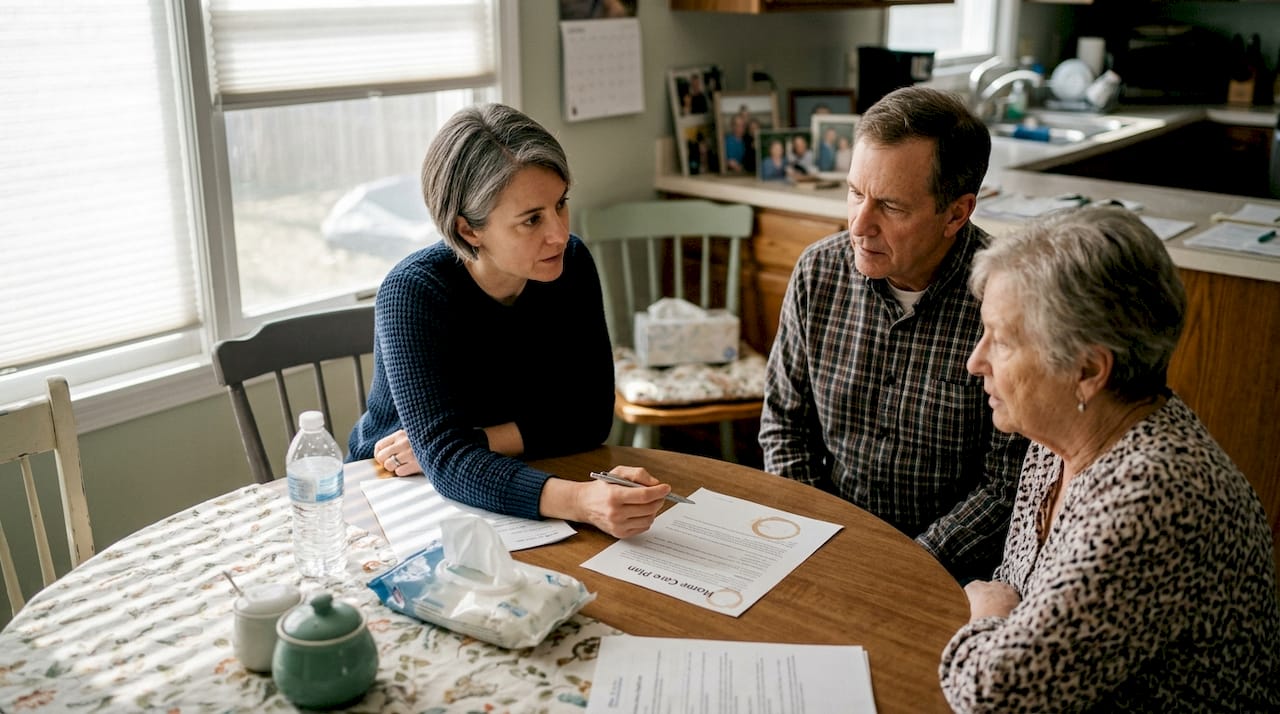
Clear communication about prognosis prevents surprises. Physicians describe typical disease trajectories, helping families understand whether death might occur in days, weeks, or months. They explain signs that death is approaching, such as decreased eating, increased sleeping, or changes in breathing patterns. This knowledge reduces fear and allows families to make informed decisions about time off work, travel plans, or gathering distant relatives.
Hospice physicians engage with families to ease the emotional burden. They answer questions patiently, sometimes repeatedly as families process difficult information. They validate family emotions, acknowledging the grief, fear, and exhaustion that caregiving brings. They also identify when families need additional support, connecting them with social workers or counselors.
Medication safety education protects both patients and caregivers. Physicians teach families how to administer liquid medications, apply pain patches, or give medications through feeding tubes when swallowing becomes difficult. They explain which symptoms require immediate attention and which represent normal disease progression. They clarify when to call the hospice nurse versus when to wait for the next scheduled visit.
Symptom observation guidance helps families become effective care partners. Physicians teach families to recognize pain signals in patients who can no longer communicate verbally. They explain how to assess breathing comfort, skin condition, and signs of distress. This education empowers families to provide better care and communicate more effectively with the hospice team.
Collaboration with social workers and counselors addresses non-medical family needs. When physicians identify family conflict about care decisions, they facilitate meetings to resolve disagreements. When they notice caregiver burnout, they ensure social workers provide respite care resources. When spiritual distress emerges, they connect families with chaplains who can offer appropriate support.
Ways physicians support families:
- Providing realistic prognosis information to help families prepare
- Teaching medication administration and symptom observation skills
- Answering questions about disease progression and end-of-life signs
- Facilitating family meetings to address conflicts or concerns
- Connecting families with social workers, counselors, and spiritual care providers
- Being accessible by phone for urgent questions between visits
Family meetings serve as crucial touchpoints for alignment and support. Physicians schedule these gatherings when care plans need revision, when family disagreements arise, or when aging parents suddenly decline and families need guidance. These meetings allow everyone to ask questions, express concerns, and ensure they understand the current situation and plan moving forward.
Hospice physicians compared: how they differ from other doctors and how to find one in California
Hospice physicians receive specialized training that distinguishes them from other medical professionals. While primary care doctors manage chronic conditions and acute illnesses across a patient’s lifespan, hospice physicians have specialized training focused on palliative and end-of-life care. Many complete fellowships in hospice and palliative medicine after their residency training, gaining expertise in complex symptom management and end-of-life communication.
Their focus differs fundamentally from other physicians. Primary care doctors aim to prevent disease, manage chronic conditions, and extend life. Specialists like cardiologists or oncologists target specific organ systems or diseases. Hospice physicians concentrate exclusively on comfort and quality of life when cure is no longer possible. They measure success by symptom relief and patient dignity, not by lab values or survival rates.
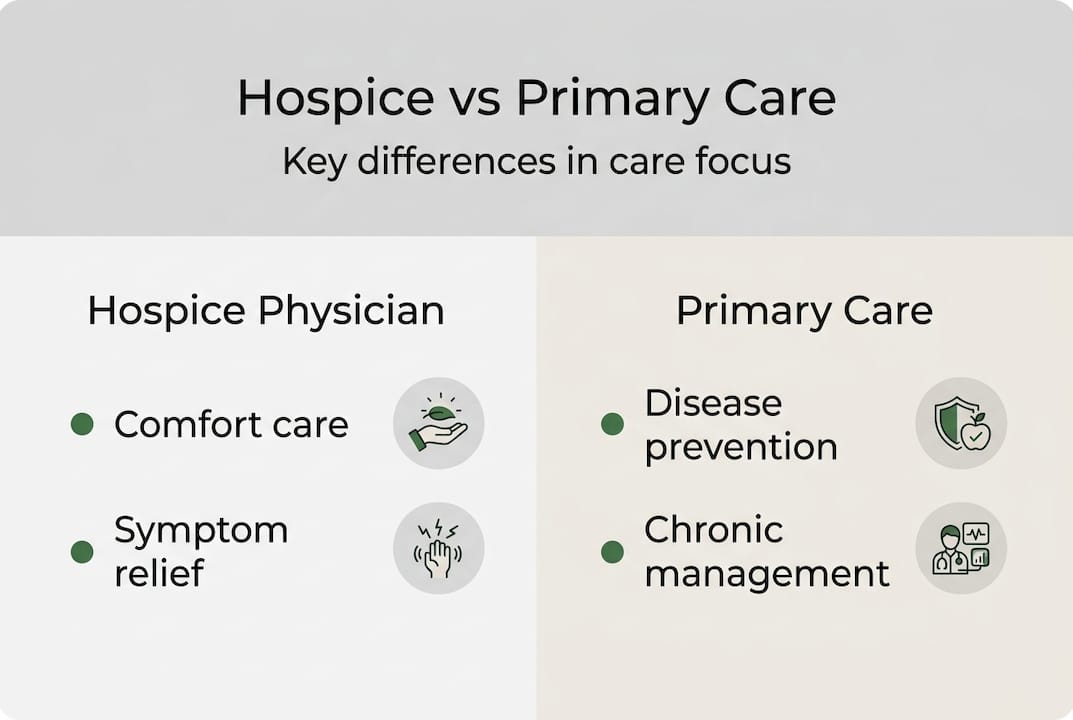
| Physician Type | Primary Focus | Training Emphasis | Role in Hospice |
|---|---|---|---|
| Hospice Physician | Comfort and symptom management | Palliative medicine fellowship | Leads hospice care team |
| Primary Care Doctor | Overall health and disease prevention | General medicine | May refer to hospice |
| Specialist | Specific organ system or disease | Subspecialty training | Consults on complex cases |
| Hospitalist | Acute inpatient care | Hospital medicine | Manages crisis admissions |
Role clarification prevents confusion about who does what. Hospice nurses provide daily or weekly hands-on care, monitoring symptoms and administering treatments. They serve as the family’s primary contact and report changes to the physician. Hospice physicians make medical decisions, write prescriptions, and adjust care plans based on nurse reports and their own assessments. Home care providers might assist with bathing and daily activities but do not make medical decisions.
Your primary care doctor can continue involvement if desired, but the hospice physician assumes primary responsibility for hospice-related medical care. Some families appreciate having their long-time doctor remain informed and available for consultation. Others prefer simplifying communication by working primarily with the hospice team. Both approaches work, depending on family preferences and primary doctor availability.
Initiating hospice physician care in California starts with a hospice referral. Families can request hospice evaluation directly, or their doctor can make a referral. The hospice agency assigns a physician who becomes part of the care team. Most hospice agencies in California have medical directors and staff physicians who oversee patient care, though some contract with community physicians who have hospice expertise.
Steps to access hospice physician care:
- Contact a hospice agency directly or ask your doctor for a referral
- Complete the hospice eligibility assessment with the agency
- Meet with the assigned hospice physician for initial evaluation
- Discuss care preferences and goals with the physician
- Establish a communication plan for ongoing contact
California hospice eligibility requires a physician certification that the patient has a life expectancy of six months or less if the disease follows its natural course. Two physicians must certify this prognosis. The hospice medical director often serves as one certifying physician. Once enrolled, the hospice physician coordinates with specialists when needed for complex symptom management but maintains primary oversight of the hospice care plan.
Explore compassionate hospice care services with Graceland Hospice Care
Understanding what hospice physicians do helps families make informed decisions about end-of-life care for their loved ones. At Graceland Hospice, our experienced team includes skilled hospice care physicians who specialize in comfort management and family support throughout the journey. We develop personalized care plans that honor patient wishes while providing comprehensive symptom relief.
Our physicians work closely with nurses, social workers, and spiritual counselors to address every aspect of patient and family wellbeing. We offer guidance, education, and 24/7 availability to ensure families never face difficult moments alone. Learn more about our hospice care services and discover how our compassionate approach can bring comfort and dignity to your loved one’s final chapter. Contact us today for a free consultation to discuss how we can support your family.
Frequently asked questions
What qualifications do hospice physicians have?
Hospice physicians are licensed medical doctors who have completed medical school, residency training, and often additional fellowship training in hospice and palliative medicine. Many hold board certification in hospice and palliative care from the American Board of Medical Specialties. This specialized training equips them with expertise in complex pain management, symptom control, and end-of-life communication that goes beyond general medical education. Their focus on comfort care and quality of life distinguishes their practice from other medical specialties.
How often does a hospice physician visit the patient?
Visit frequency depends on patient condition and symptom stability. Physicians typically visit every two to four weeks when symptoms remain well controlled. They increase visit frequency when new symptoms emerge, existing symptoms worsen, or the patient enters the active dying phase. Between scheduled visits, physicians remain available by phone to guide nurses and families through urgent concerns. Some hospice programs also offer telehealth visits for minor adjustments or check-ins.
Can families contact hospice physicians directly with concerns?
Yes, families can reach hospice physicians through the hospice team’s communication system. Most hospice agencies have 24/7 nurse lines that triage calls and connect families with physicians when medical decisions are needed. For non-urgent questions, families can leave messages that physicians return during business hours. Physicians prioritize clear, accessible communication and welcome family questions about symptoms, medications, or care plan changes. Your hospice nurse can also facilitate direct physician contact when situations require immediate medical guidance.
What is the difference between a hospice physician and a primary care doctor?
Hospice physicians focus exclusively on comfort and symptom management during end-of-life care, while primary care doctors manage overall health and chronic conditions throughout a patient’s life. Primary care doctors work to prevent disease, treat acute illnesses, and extend life through curative treatments. Hospice physicians shift focus entirely to quality of life when cure is no longer possible, using their specialized training to relieve suffering and support dignified dying. Primary care doctors may refer patients to hospice but typically step back from active medical management once hospice care begins, though some remain involved in a consulting role if families prefer.
Recommended
- Managing Pain and Symptoms in Hospice Care | Graceland Hospice Care Blog
- Graceland Hospice Care | Compassionate End-of-Life Care
- Role of Hospice Nurse: Compassionate Care at Home | Graceland Hospice Care Blog
- 7 Key Qualities of Hospice Staff Every Caregiver Should Know | Graceland Hospice Care Blog
- Master the role of senior care advocates for Florida families