Hospice Nurse Responsibilities: Ensuring Comfort at Home
Hospice Nurse Responsibilities: Ensuring Comfort at Home
Caring for a dying parent at home often leaves Orange County families unsure about what hospice nurses actually do—and whether hospice care means letting go of hope. With emotions high and information sometimes conflicting, finding clear answers matters deeply. This guide brings calm to the confusion by clearly explaining hospice nursing’s focus on comfort, dignity, and support for families, while addressing common misconceptions and highlighting how hospice teams partner with you to improve your parent’s quality of life in their final months.
Table of Contents
- Defining Hospice Nursing And Common Misconceptions
- Types Of Hospice Nurses And Key Qualifications
- Core Duties In Patient Comfort And Symptom Relief
- Supporting Families And Educating Caregivers At Home
- Legal, Ethical, And Safety Responsibilities
Key Takeaways
| Point | Details |
|---|---|
| Understanding Hospice Nursing | Hospice nursing prioritizes comfort and dignity for patients in their final stages of life, focusing on symptom management rather than curative treatments. |
| Common Misconceptions | Many families mistakenly believe that hospice care means giving up or that all medical care stops, when in fact, comfort care and ongoing treatments can coexist. |
| Role of Hospice Nurses | Hospice nurses provide hands-on care, educate families, and coordinate with healthcare teams, ensuring both patients and caregivers feel supported throughout the process. |
| Legal and Ethical Responsibilities | Hospice nurses must respect patient autonomy and adhere to legal regulations, ensuring compassionate care while navigating ethical dilemmas that may arise during end-of-life situations. |
Defining Hospice Nursing and Common Misconceptions
Hospice nursing is a specialized field focused on comfort and dignity in life’s final chapter. Unlike traditional medical care that fights illness, hospice nurses shift their focus entirely to alleviating pain, managing symptoms, and supporting families through end-of-life transitions.
Hospice nursing is not a location or a single action. Many families picture a hospital wing or specialized facility, but reality works differently. Most hospice care happens right in your home, with nurses visiting regularly to provide medications, medical equipment, therapies, and guidance while your family remains the primary caregivers.
The core philosophy of hospice nursing centers on quality of life over quantity of days. According to compassionate medical care for end-of-life patients, hospice does not hasten or prolong death—it supports the natural course while keeping your loved one comfortable and pain-free.
What Hospice Nurses Actually Do
Hospice nurses manage pain, monitor symptoms, and adjust medications as needs change. They’re also educators, teaching your family how to provide hands-on care and recognize signs of declining comfort. This differs significantly from nurses in acute care settings who focus on curing disease.
Key responsibilities include:
- Assessing pain levels and administering comfort medications
- Monitoring symptoms like shortness of breath or nausea
- Providing wound care and managing medical equipment
- Training family members on caregiving techniques
- Coordinating with doctors, social workers, and chaplains
- Offering emotional support and answering difficult questions
Five Common Misconceptions About Hospice
Families in Orange County often approach hospice with understandable confusion. Here are beliefs that don’t match reality:
Misconception 1: Hospice means giving up. Many believe enrolling in hospice signals defeat or abandonment of treatment. Hospice supports patients and families throughout transitions, providing comfort while honoring your loved one’s wishes and values.
Misconception 2: All other medical care stops. This isn’t true. Your parent can continue treatments they find meaningful—dialysis, blood transfusions, or medications for other conditions—while pausing curative treatments for their primary illness.
Misconception 3: You need a Do-Not-Resuscitate order. Hospice enrollment doesn’t require a DNR order. While most hospice patients have one, it’s your choice. Hospice nurses respect your family’s preferences completely.
Misconception 4: Hospice is permanent. Hospice care can be paused or stopped if your parent’s condition improves or if you change your mind about treatment goals. There’s flexibility here.
Misconception 5: Hospice is only for the actively dying. Hospice serves patients with six months or less to live, but people live at different paces. Some spend weeks in hospice; others receive care for months.
Hospice nursing transforms the final months by prioritizing your loved one’s comfort, dignity, and meaningful time together—not by rushing the end, but by honoring the present.
Pro tip: Ask your hospice nurse to explain your parent’s specific disease trajectory and what comfort changes to expect—this knowledge reduces anxiety for both you and your loved one.
Here’s how common hospice misconceptions compare to reality:
| Misconception | Actual Hospice Practice | Resulting Impact on Family |
|---|---|---|
| Hospice means giving up | Hospice supports comfort and quality of life | Reduces guilt, encourages earlier use |
| All medical care stops | Ongoing care for unrelated conditions continues | Eases fear of losing all treatment support |
| DNR required | DNR is not mandatory for enrollment | Honors personal autonomy, less pressure |
| Hospice is permanent | Hospice can be paused or stopped | Offers flexibility, lessens commitment anxiety |
| Only for actively dying | Eligible if six months or less expected | Provides support earlier, not just last days |
Types of Hospice Nurses and Key Qualifications
Hospice nursing isn’t a single role—it’s a spectrum of specialized positions, each bringing different expertise to your parent’s care. Understanding who works on the hospice team helps you know what to expect and who to turn to for specific needs.
All hospice nurses share core training, but their experience levels and focus areas vary significantly. Some have spent decades in critical care; others specialize purely in comfort medicine. This diversity of expertise means your loved one receives well-rounded support.
Education Requirements and Credentials
Becoming a hospice nurse requires substantial education. To qualify, hospice nurses earn either an Associate’s or Bachelor’s degree in nursing, then pass the NCLEX-RN licensure exam to become a registered nurse.
After licensure, many nurses pursue additional credentials. The Certified Hospice and Palliative Nurse (CHPN) credential is increasingly valued by employers and demonstrates specialized expertise in end-of-life care.
Key educational milestones include:
- Completing an ADN (Associate Degree in Nursing) or BSN (Bachelor of Science in Nursing)
- Passing the NCLEX-RN national licensure examination
- Obtaining CHPN certification through the National Board for Certification of Hospice and Palliative Nurses
- Completing ongoing education in pain management and symptom control
Types of Hospice Nurses You’ll Meet
The Registered Nurse (RN) Case Manager oversees your parent’s overall care plan. They coordinate medications, assess symptoms, and communicate with the physician about necessary changes. This nurse becomes your primary contact and often visits most frequently.
The Nurse Practitioner or Clinical Nurse Specialist has advanced training beyond the RN level. They can diagnose conditions, order certain treatments, and make clinical decisions—particularly valuable when your loved one’s needs become complex.
The Palliative Care Nurse focuses specifically on comfort rather than curative treatment. While all hospice nurses emphasize comfort, these specialists have additional training in managing difficult symptoms like pain, breathlessness, or anxiety.
The Telehealth Hospice Nurse provides remote support between in-home visits. They answer questions over the phone, assess changes in your parent’s condition, and help you decide whether a nurse visit is needed.
The main types of hospice nurses and how their roles differ:
| Nurse Type | Unique Responsibilities | Typical Interactions |
|---|---|---|
| RN Case Manager | Coordinates care plan, communicates with physicians | Frequent home visits, primary family contact |
| Nurse Practitioner/CNS | Makes clinical decisions, prescribes medication | Consults for complex needs, guides care adjustments |
| Palliative Care Nurse | Specializes in symptom relief, emotional support | Addresses severe symptoms, educates about comfort |
| Telehealth Hospice Nurse | Provides remote advice, triages issues | Answers questions between visits, offers reassurance |
Essential Qualities Beyond Credentials
Education matters, but personality and compassion matter equally. Effective hospice nurses combine clinical knowledge with emotional intelligence. They listen more than they talk, respect your family’s values, and adapt their approach to your parent’s unique personality and wishes.
The best hospice nurse isn’t just medically trained—they’re someone who genuinely honors your loved one’s dignity and supports your family’s emotional journey alongside their physical needs.
Look for nurses who ask questions about your parent’s life story, acknowledge your feelings, and explain medical changes in understandable language rather than medical jargon.
Pro tip: During your first hospice nurse visit, ask about their experience with your parent’s specific diagnosis and whether they’ve cared for patients with similar goals—this conversation reveals whether the nurse’s expertise aligns with your family’s needs.
Core Duties in Patient Comfort and Symptom Relief
Hospice nurses spend most of their time doing one thing: ensuring your parent is as comfortable as possible. This isn’t passive care—it’s active, skilled work that requires constant assessment, problem-solving, and adjustment.
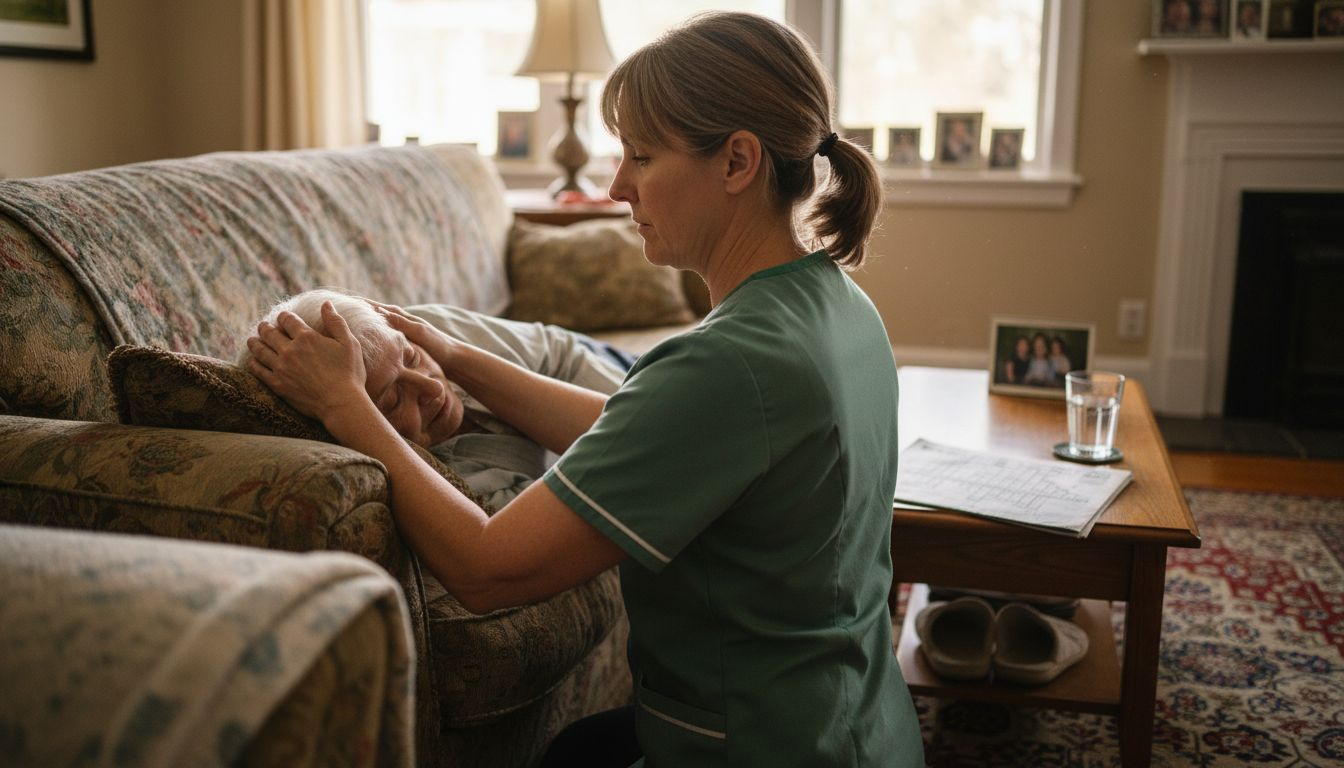
Comfort means more than just pain relief. It includes breathing easier, feeling less anxious, maintaining dignity, and having moments of peace with family. Hospice nurses orchestrate all of this.
Regular Symptom Assessment and Monitoring
Your hospice nurse visits on a schedule, but they’re also available between visits by phone. During each visit, they systematically assess how your parent is doing physically and emotionally.
They ask specific questions about pain levels, nausea, shortness of breath, sleep quality, and mood. They observe your parent’s facial expressions, body positioning, and overall demeanor. Nothing goes unnoticed.
Key assessment areas include:
- Pain intensity and location
- Breathing difficulty or changes in breathing pattern
- Nausea, vomiting, or appetite changes
- Constipation or urinary issues
- Anxiety, restlessness, or confusion
- Mouth dryness or difficulty swallowing
- Sleep disturbances or fatigue
Medication Management and Administration
Pain medication is typically the foundation of comfort care. Hospice nurses don’t wait for your parent to request pain relief—they administer medications on a schedule to keep pain from building up in the first place.
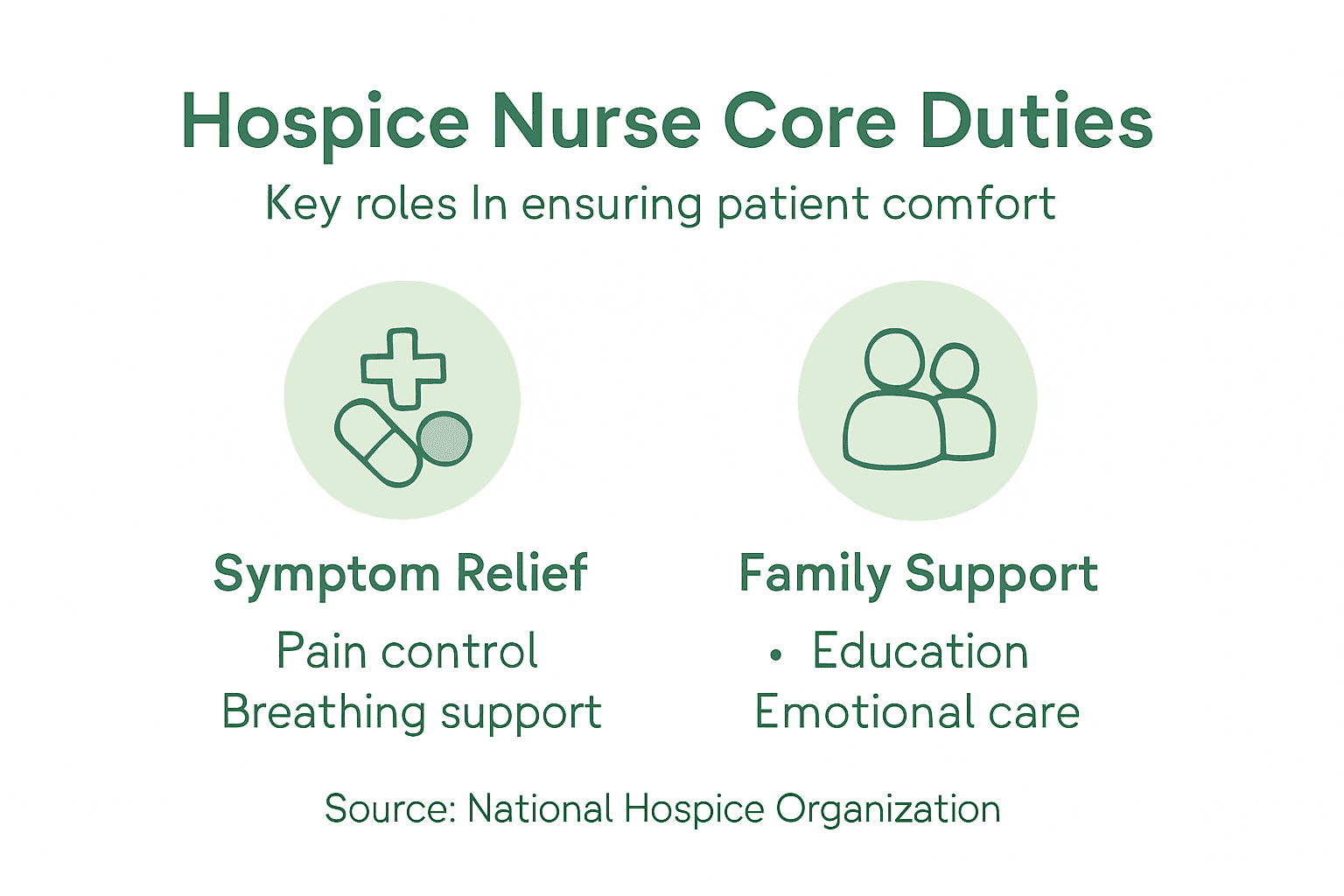
Medications are given through various routes depending on your parent’s ability to swallow. Pills, liquid medications, patches, injections, and suppositories all serve different purposes. Your nurse chooses the best option for each symptom.
Beyond pain, hospice nurses manage multiple challenging symptoms including anxiety, nausea, and difficulty breathing. They adjust medication timing and doses as your parent’s needs change day to day.
Hands-On Comfort Measures
Nurses also provide non-medication comfort. These simple but powerful measures often matter as much as drugs.
Repositioning prevents pressure sores and helps breathing. Your nurse teaches you how to gently turn your parent and use pillows strategically.
Oral care prevents dry mouth and infection. This means brushing teeth, moisturizing lips, and rinsing the mouth—small actions that significantly improve comfort.
Environmental adjustments address physical needs. A fan can ease shortness of breath. Cool, damp cloths can soothe fever. Soft blankets provide comfort without overheating.
Skin care prevents breakdown and maintains dignity. Regular bathing, clean linens, and gentle touch communicate respect and care.
Family Support and Education
Your hospice nurse teaches you what to watch for and how to respond. They explain why certain symptoms appear and what interventions work best.
They also recognize that watching a parent decline emotionally drains caregivers. Many nurses check in on your wellbeing, not just your parent’s.
Hospice nurses understand that comfort for your parent means comfort for the whole family—reducing your anxiety so you can be present without fear.
Pro tip: Keep a simple notebook during hospice care to track medication times, symptom changes, and questions for your nurse—this record helps identify patterns and ensures nothing gets overlooked at the next visit.
Supporting Families and Educating Caregivers at Home
Hospice nurses don’t just care for your parent—they equip you to provide skilled care yourself. Most hospice patients receive hands-on care from family members, and your nurse becomes your teacher, coach, and safety net.
This responsibility transforms the hospice nurse’s role. You’re no longer just a visitor; you’re training your family to handle medical tasks that once seemed impossible.
Teaching Practical Caregiving Skills
Your hospice nurse teaches you concrete, actionable skills. This isn’t theory; it’s practical training you’ll use daily.
Medication management might seem intimidating, but your nurse breaks it down step by step. They show you how to administer pills, inject medications, or apply patches. They explain why timing matters and what side effects to expect.
Hands-on care includes bathing, grooming, toileting, and repositioning. Your nurse demonstrates gentle techniques that protect your parent’s dignity while preventing pressure sores or injury.
Wound care requires precision. Your nurse teaches sterile technique for dressing changes, recognizing infection signs, and knowing when to call for help.
Symptom recognition is perhaps the most important skill. Family caregivers often perform complex medical tasks with limited training, so your nurse teaches you what changes signal a problem and when to contact medical staff.
Key teaching topics include:
- How to give medications safely and track doses
- Recognizing pain, discomfort, or breathing changes
- Proper lifting and repositioning techniques
- Infection prevention and wound observation
- When to call the nurse versus handling issues at home
- How to communicate about your parent’s needs
Emotional Support and Caregiver Wellness
Your nurse knows that caregiving drains emotions and energy. They check in on how you’re managing, not just your parent’s physical state.
They normalize difficult feelings—guilt, fear, anger, exhaustion. Watching a parent decline is traumatic, and acknowledging that makes the burden lighter.
Many hospice teams offer bereavement support, counseling, and support groups. Your nurse connects you with these resources before and after your parent’s death.
Clear Communication and Problem-Solving
Documentation matters. Your nurse teaches you what to track and why—medication times, symptom changes, appetite, mood. This record helps identify patterns and informs care adjustments.
Phone access is critical. You can reach your nurse between visits with questions. Good hospice programs encourage 24/7 access so you never feel stranded.
Advance planning reduces crisis moments. Your nurse discusses “what-if” scenarios so you know how to respond before emergencies arise.
Hospice nurses empower families by treating you as capable partners in care, not passive bystanders—your confidence grows with each skill learned and each decision supported.
Pro tip: Ask your hospice nurse to give you written instructions for your parent’s medications, symptoms to watch for, and when to call—keep this sheet posted where all caregivers can reference it, reducing anxiety and ensuring consistency.
Legal, Ethical, and Safety Responsibilities
Hospice nurses operate within strict legal and ethical frameworks. Understanding these boundaries protects your parent, your family, and ensures quality care aligned with your values and wishes.
These responsibilities aren’t bureaucratic obstacles—they’re safeguards that guarantee your parent’s autonomy, dignity, and rights throughout end-of-life care.
Understanding Patient Rights and Autonomy
Your parent has fundamental rights in hospice care. These include the right to make decisions about their own body and treatment, even when those decisions seem medically questionable.
Hospice nurses must respect advance directives and Do-Not-Resuscitate orders (DNRs). If your parent documented wishes, the nurse follows them—period. No exceptions, no overriding preferences.
Informed consent means your parent understands what’s happening and why before any intervention. A nurse can’t administer medication, perform procedures, or change care plans without explanation and agreement.
Confidentiality is absolute. Hospice nurses can’t discuss your parent’s condition with anyone outside the care team without written permission. Even spouses sometimes need to request information through proper channels.
Key rights your parent retains:
- Making healthcare decisions independently
- Refusing treatment or medication
- Accessing medical records
- Having privacy and confidentiality protected
- Receiving compassionate, respectful care
- Choosing alternative treatments alongside hospice
Navigating Ethical Dilemmas
End-of-life care creates ethical gray areas. Your parent might request something medically impossible. Family members might disagree about care decisions. These moments test everyone involved.
Hospice nurses face ethical challenges regarding treatment decisions and respecting patient wishes, requiring collaboration with doctors, social workers, chaplains, and ethics committees. Your nurse doesn’t decide alone—they facilitate conversations and access expert guidance.
Common ethical questions include:
- Should we continue feeding if your parent can’t swallow?
- Is it okay to use comfort medications that might shorten life?
- What if family members disagree about goals of care?
- How do we honor religious or cultural beliefs?
These questions have no universal answers. Your hospice team helps families navigate them thoughtfully, respecting your parent’s voice above all.
Regulatory Compliance and Quality Standards
Hospice programs must meet strict federal requirements to operate legally. Federal regulations outline hospice eligibility criteria, required services, and safety standards to ensure quality care.
This means your hospice provider maintains detailed records, reports adverse events, responds to complaints, and undergoes regular audits. These oversight mechanisms protect you.
Your hospice nurse follows protocols for medication safety, infection prevention, documentation, and emergency response. These aren’t suggestions—they’re requirements.
Safety Protocols and Emergency Procedures
Your hospice nurse ensures your home is safe for end-of-life care. They identify fall risks, medication storage hazards, and infection control needs.
They establish emergency procedures before crises occur. What happens if your parent falls? Who do you call at 2 a.m.? What’s the plan if your parent stops breathing?
Clear protocols reduce panic. Written instructions posted in your home mean everyone responds the same way.
Hospice nurses balance autonomy with safety—respecting your parent’s choices while ensuring they’re protected from harm, medically informed, and never abandoned in crisis.
Pro tip: Request a written summary of your parent’s legal documents (advance directive, DNR, HIPAA authorization), your hospice program’s emergency protocols, and after-hours contact numbers—keep these visible and ensure all family members know where to find them.
Compassionate Hospice Nursing Support Tailored to Your Family’s Needs
Understanding the full scope of hospice nurse responsibilities is essential when seeking care that ensures comfort, dignity, and emotional support for your loved one at home. This article highlights the challenges families face such as managing symptoms, navigating complex medication schedules, and providing hands-on care while coping with emotional stress. The detailed insights into hospice nursing roles and the importance of personalized care can guide you in making confident decisions during this difficult time.
At Graceland Hospice, we share this commitment to compassionate care. Our dedicated team is ready to support you and your family with skilled hospice nursing tailored to your unique situation. Discover how we bring the highest standards in home hospice services by visiting our blog to learn more about compassionate hospice care. Reach out today for a free consultation and take the first step toward easing your loved one’s comfort needs with expert guidance. Learn more about the care options that can bring peace to your family at Graceland Hospice.
Frequently Asked Questions
What are the primary responsibilities of hospice nurses?
Hospice nurses manage pain, monitor symptoms, provide medication, educate family caregivers, and offer emotional support while coordinating care with other healthcare professionals.
How do hospice nurses assess patient comfort at home?
Hospice nurses assess comfort through regular evaluations of pain levels, breathing patterns, mood, and other physical symptoms, allowing for timely adjustments in care.
Can hospice care continue if my loved one wants other treatments?
Yes, hospice allows for ongoing management of unrelated medical conditions, so patients can continue specific treatments that they find meaningful while pausing curative treatments for their primary illness.
What kind of training do hospice nurses have?
Hospice nurses hold degrees in nursing and often have additional certifications such as the Certified Hospice and Palliative Nurse (CHPN) credential, indicating specialized expertise in end-of-life care.
Recommended
- Hospice Visit Workflow for Comfort Care at Home | Graceland Hospice Care Blog
- Role of Hospice Nurse: Compassionate Care at Home | Graceland Hospice Care Blog
- End of Life Care Guide for Compassionate At-Home Support | Graceland Hospice Care Blog
- End of Life Care Steps for Home Hospice Success | Graceland Hospice Care Blog
- AI Referral Management: The Complete Implementation Checklist for SNFs - Smart Admissions