Hospice care longevity: What families need to know
Hospice care longevity: What families need to know
TL;DR:
- Hospice stays in California have a median length of about 31 days, but many are shorter.
- Eligibility requires a physician certifying a terminal illness with a six-month or less life expectancy.
- Early hospice engagement can improve quality of life and may extend survival.
When a loved one is facing a serious illness, one of the first questions families ask is: how long will hospice care last? The median hospice stay in California is around 31 days, yet many families picture hospice as something that only happens in the final hours of life. That gap between expectation and reality can lead to missed opportunities for comfort, support, and meaningful time together. This article walks you through what shapes hospice timelines, what the data actually shows, and how California families can make informed, compassionate decisions during one of life’s most tender chapters.
Table of Contents
- What determines eligibility and length in hospice care?
- How long do most people stay in hospice and why?
- Does hospice care impact how long someone lives?
- What affects how long someone can stay in hospice?
- A compassionate view: What most families miss about hospice longevity
- How Graceland Hospice Care can support your family
- Frequently asked questions
Key Takeaways
| Point | Details |
|---|---|
| Eligibility based on decline | Physician certification and progressive decline determine hospice admission and duration. |
| Short average stay | Most Californians experience hospice for about a month, often less if referred late. |
| Longevity can extend | Some patients stay longer than six months if ongoing eligibility is met. |
| Hospice may add time | Research shows hospice care can support equal or better survival and comfort. |
| Timing matters | Early involvement in hospice often leads to a better experience and avoids crisis care. |
What determines eligibility and length in hospice care?
Understanding who qualifies for hospice and why stays vary in length is the foundation for any family navigating this process. Hospice is not simply a last resort. It is a specialized form of care designed to prioritize comfort over curative treatment, and it begins with a formal eligibility process.
To qualify, hospice eligibility requires that two physicians certify a terminal illness with a life expectancy of six months or less if the disease follows its expected course. This certification is not a prediction of an exact date. It is a clinical judgment based on observable patterns of decline.
So what does that decline look like? Physicians look for signs such as progressive functional decline including weight loss, reduced activity levels, and repeated hospitalizations. These are the signals that indicate a disease is advancing despite treatment. Understanding what is hospice care and how it differs from other services helps families recognize when these conversations should begin.
The length of a hospice stay is shaped by several factors:
- Disease type: Some conditions, like cancer, tend to have more predictable decline curves. Others, like heart failure or dementia, can plateau for extended periods.
- Timing of referral: Families who engage hospice earlier often experience longer, more supported stays.
- Ongoing evaluation: Hospice teams reassess patients regularly. If someone stabilizes, they may be discharged. If they continue to decline, they remain in care.
- Recertification: Patients who live beyond six months can remain in hospice if they still meet the medical criteria.
It is also worth noting that hospice vs palliative care are often confused. Palliative care can begin at any stage of illness, while hospice is specifically for those nearing the end of life. Knowing the difference helps families choose the right level of support at the right time.
Pro Tip: Ask your hospice team how the Palliative Performance Scale (PPS) is being used in your loved one’s care plan. This tool measures functional status and helps guide decisions about care intensity and expected trajectory.
The CMS hospice guidelines provide a clear framework for how these determinations are made and what families can expect from the certification process.
How long do most people stay in hospice and why?
The real-world numbers on hospice length of stay often surprise families. Many assume hospice is a brief, end-stage service. The data tells a more nuanced story.
In California, over half of patients die within 30 days of admission, with a median stay of 31 days. Nationally, 20 to 22% of hospice patients stay only one to four days, reflecting how late many families wait before making the call.
| Metric | California | National average |
|---|---|---|
| Median length of stay | 31 days | ~18 days |
| Patients staying under 30 days | Over 50% | Approximately 55% |
| Patients staying 1 to 4 days | Around 20% | 20 to 22% |
| Patients staying 6 months or more | 14 to 20% | Varies by diagnosis |
Several factors explain why some patients have much longer stays:
- Non-cancer diagnoses: Conditions like dementia, COPD, or heart failure often have less predictable decline, leading to longer hospice enrollment.
- Early referral: Families who begin hospice conversations sooner tend to have more time to benefit from the full range of services.
- Strong home support: Patients with engaged family caregivers and stable living situations often remain more comfortable for longer.
For families considering hospice at home, understanding these patterns helps set realistic expectations. A short stay is not a failure. But a timely referral can make a significant difference in the quality of care received.
“Most patients, over 90%, die within six months of hospice admission. Yet the experience of those months can vary enormously based on when care begins and how well it is coordinated.”
Exploring at-home end-of-life care options early gives families the best chance of a supported, peaceful experience. California hospice discharge data shows that home-based care is by far the most common setting chosen by families across the state.
Does hospice care impact how long someone lives?
This is one of the most emotionally charged questions families ask. Many fear that choosing hospice means accepting a shorter life for their loved one. The research says otherwise.
Studies show that hospice may extend survival for patients with terminal illnesses, including metastatic melanoma, compared to those who pursue aggressive curative treatment. This is not an anomaly. It reflects a broader pattern: when the body is not subjected to the stress of intensive interventions, it often stabilizes and sometimes thrives for longer.
| Care approach | Typical outcome |
|---|---|
| Aggressive curative treatment | Higher symptom burden, frequent hospitalizations |
| Hospice care | Better symptom control, fewer crises, equal or longer survival |
| No structured care | Variable, often with unmanaged pain and distress |
Here is how hospice actively supports longevity and quality of life:
- Pain and symptom management: Skilled nurses and physicians keep discomfort under control, reducing the physical toll of illness.
- Emotional and psychological support: Social workers and counselors help patients and families process fear and grief, which reduces stress on the body.
- Nutritional and comfort guidance: Hospice aides and nurses advise on hydration, positioning, and daily comfort routines.
- Family caregiver support: When families are supported, patients benefit too. Caregiver burnout can inadvertently worsen patient outcomes.
- Coordination of care: Hospice teams prevent unnecessary emergency room visits, which are physically taxing and emotionally distressing.
Understanding hospice vs home health is also helpful here. Home health focuses on recovery and rehabilitation. Hospice focuses on comfort and dignity. They serve different needs, and choosing the right one at the right time matters.
Research on end-of-life care intensity consistently shows that higher-intensity interventions near the end of life do not improve survival and often reduce quality of life. Hospice offers a compassionate alternative that honors both the patient and the family.
What affects how long someone can stay in hospice?
Beyond the initial six-month eligibility window, many families wonder what happens next. The answer is that hospice is not a fixed-term service. It adapts to the patient’s condition over time.
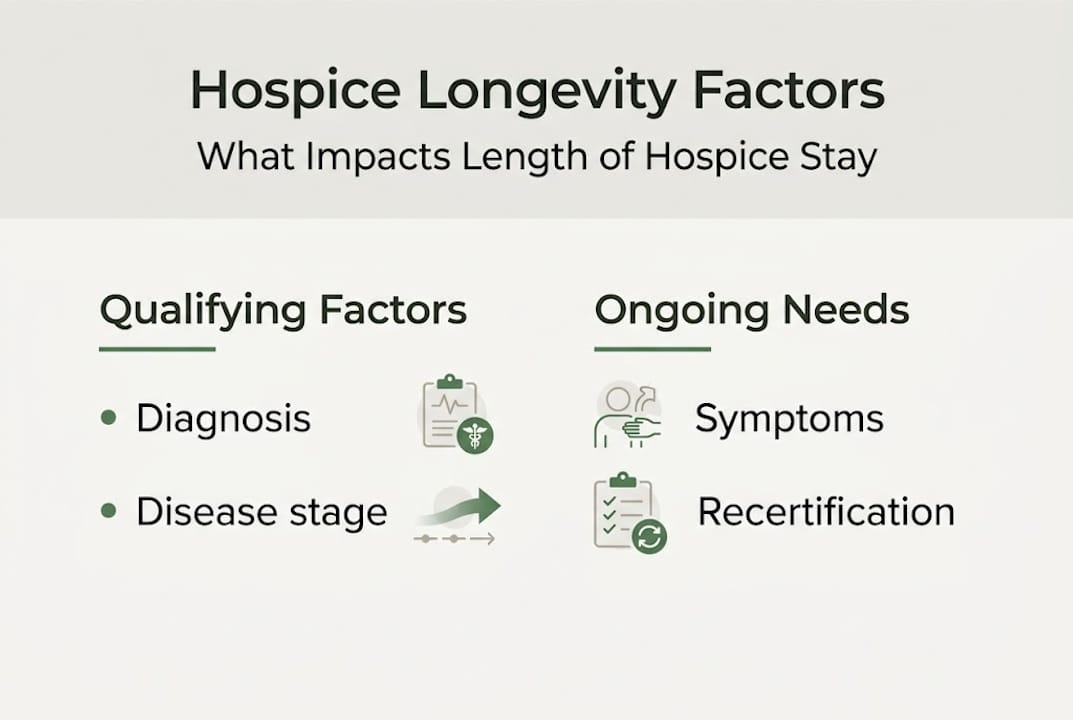
Patients who live beyond six months, which accounts for 14 to 20% of hospice patients, can be recertified as long as they continue to meet the clinical criteria for decline. This recertification process involves a physician review and updated documentation of the patient’s condition.
In California, 76% of hospice discharges occur from home-based settings, reflecting both patient preference and the effectiveness of home hospice programs. Families who choose home hospice often find it allows for more personalized, intimate care.
Several factors influence how long a patient remains in hospice:
- Disease type and trajectory: Slowly progressing illnesses like dementia often result in longer stays than rapidly advancing cancers.
- Functional status: Patients who maintain some level of independence tend to remain stable longer.
- Family support: A strong caregiving network at home can extend the period of comfortable, managed care.
- Access to care: Rural patients and those from underserved communities may face barriers to consistent hospice services, which can affect outcomes.
- Emotional readiness: Both patient and family acceptance of the hospice philosophy plays a role in how effectively care is utilized.
Reviewing end-of-life care steps with your hospice team early on helps everyone stay aligned. Strong caregiver support in hospice is equally important, as family members who feel equipped and supported are better able to provide consistent, loving care at home.
Pro Tip: Schedule regular check-ins with your hospice team, not just during crises. Proactive communication helps the team adjust the care plan before problems escalate, keeping your loved one more comfortable for longer.
National data on hospice trends confirms that earlier engagement with hospice services consistently leads to better outcomes for both patients and families.
A compassionate view: What most families miss about hospice longevity
After walking through the clinical facts and the data, there is something deeper worth saying. Most families who wait to begin hospice do so out of love. They fear that calling hospice means giving up, that it will somehow accelerate the end. That fear is understandable. It is also, in most cases, the very thing that shortens the meaningful time they have left together.
We have seen, time and again, that families who engage hospice earlier experience something unexpected: more peaceful days, fewer emergency room visits, and a sense of control that comes from having a skilled team beside them. The number of days in hospice matters far less than the quality of those days.
Exploring the value of home hospice before a crisis hits gives families the chance to make thoughtful choices rather than reactive ones. Hospice longevity is not just a medical statistic. It is a reflection of how well a family was supported, how early they reached out, and how much comfort was made possible. The goal was never more days. It was better ones.
How Graceland Hospice Care can support your family
If you are navigating these questions for a loved one in California, you do not have to figure it out alone. At Graceland Hospice Care, we specialize in compassionate, personalized hospice support delivered in the comfort of home. Our team of physicians, nurses, social workers, and counselors works together to ensure every patient and family receives the care and dignity they deserve. Whether you are just beginning to explore options or are ready to start the conversation, we are here to guide you every step of the way. Visit our family resources or contact us today for a free consultation.
Frequently asked questions
How do doctors decide if someone qualifies for hospice?
Two physicians must agree that the patient has a life expectancy of six months or less and is experiencing a progressive decline in health.
Can someone stay in hospice care for longer than six months?
Yes. Patients can continue receiving hospice if their condition still meets recertification criteria after the initial six-month period.
Does hospice care mean my loved one will die sooner?
No. Research shows hospice does not shorten life and may even extend it through better symptom control and reduced physical stress.
What are some reasons for short stays in hospice?
Short stays most often happen because families wait until a crisis to begin care, with over 50% of patients in California having stays under 30 days due to late referrals.
Recommended
- Understanding Hospice Care: A Guide for Families | Graceland Hospice Care Blog
- Blog & Resources | Graceland Hospice Care
- Why Hospice at Home Matters for Families | Graceland Hospice Care Blog
- Long-Term Care vs Hospice – Choosing the Right Path | Graceland Hospice Care Blog
- Family Therapy in Oakland & Walnut Creek | Revive Health Therapy
- About grief - When it’s slightly belated| Heske Therapy