How to Navigate Hospice Services for Family Caregivers

How to Navigate Hospice Services for Family Caregivers
Facing decisions about end-of-life care can leave caregivers in Orange and LA Counties feeling uncertain and overwhelmed. When a loved one is living with a serious illness, understanding hospice care becomes a pivotal step to ensure dignity, comfort, and support at home. With clear guidance, you can confidently assess eligibility, select a trusted provider, and build a partnership that delivers compassionate care when it matters most. Hospice care centers the quality of life—for patients and families alike.
Table of Contents
- Step 1: Assess Needs And Eligibility For Hospice Care
- Step 2: Select A Trusted Hospice Provider
- Step 3: Coordinate Care With Your Hospice Team
- Step 4: Monitor Quality And Adjust Services
Quick Summary
| Key Insight | Explanation |
|---|---|
| 1. Confirm Eligibility for Hospice | Ensure your loved one meets terminal illness criteria with a life expectancy of six months or less before seeking hospice care. |
| 2. Engage with Primary Physician | Communicate openly about your loved one’s prognosis; their insights are crucial in making informed decisions. |
| 3. Choose a Quality Hospice Provider | Verify that the hospice provider is certified and offers a compassionate, interdisciplinary approach for holistic care. |
| 4. Maintain Clear Communication | Regularly communicate with the hospice team to ensure updated information and effective care coordination. |
| 5. Monitor Care Quality Continuously | Track your loved one’s symptoms and care responsiveness to address any issues and adjust services as needed. |
Step 1: Assess Needs and Eligibility for Hospice Care
Before pursuing hospice services, you need to understand whether your loved one meets eligibility criteria and what their specific care needs are. This assessment shapes every decision moving forward, from choosing a provider to planning your caregiving role at home.
Understand the core eligibility requirement. Hospice care serves people with a terminal illness and a life expectancy of six months or less. This doesn’t mean your loved one must have exactly six months left. It means a physician believes the illness will likely result in death within that timeframe if the disease runs its natural course.
Know what qualifies as terminal. Common diagnoses include cancer, heart disease, pulmonary disease, dementia, renal failure, and liver disease. However, a diagnosis alone doesn’t determine eligibility. The progression and clinical presentation matter equally.
Here’s what you’ll need to gather for the eligibility assessment:
- Medical records documenting the diagnosis and current condition
- Recent test results and imaging reports
- A list of current medications and treatments
- Information about any curative treatments your loved one is currently receiving
- Your loved one’s functional status (ability to walk, eat, communicate)
Consider your loved one’s functional abilities. Healthcare providers use tools like the Palliative Performance Scale to assess functional status and disease progression objectively. Can your loved one walk independently? Eat without assistance? These practical details help determine readiness for hospice.
Understand the curative treatment requirement. Hospice and curative treatment don’t typically happen together. If your loved one continues chemotherapy, dialysis, or other aggressive treatments aimed at curing the disease, they usually won’t qualify for hospice. This shift in focus from curing to comforting represents the fundamental transition.
Speak with your loved one’s primary physician. They know the medical situation best and can give an honest assessment of prognosis. Ask directly: “Does my loved one have a terminal diagnosis? How long might we realistically have together?” These conversations, though difficult, provide clarity.
The honest conversation with your doctor about prognosis is the foundation for every decision that follows.
Consider your loved one’s wishes and values. Beyond medical eligibility, think about whether hospice aligns with what your loved one wants. Have they expressed preferences about comfort versus aggressive treatment? Do they want to spend time at home versus in a facility? Their priorities matter as much as medical criteria.
Request a palliative care consultation if you’re uncertain. Some loved ones aren’t quite ready for full hospice but benefit from end-of-life care guidance at home. A specialist can help clarify where your loved one stands and what services would help most.
Here’s a comparison of palliative care and hospice care to help you clarify the differences:
| Aspect | Palliative Care | Hospice Care |
|---|---|---|
| Goal | Improve quality of life | Provide comfort at end of life |
| Eligibility | Any stage of serious illness | Life expectancy of six months or less |
| Curative Treatment | Can be ongoing | Discontinued |
| Where Provided | Hospitals, homes, facilities | Usually at home or hospice facility |
Pro tip: Write down specific questions before meeting with the doctor—what to expect, timeline, symptoms to watch for—so you capture answers during an emotionally charged conversation.
Step 2: Select a Trusted Hospice Provider
Choosing the right hospice provider is one of the most important decisions you’ll make as a caregiver. The right provider becomes an extension of your family, offering medical expertise, emotional support, and practical assistance during a vulnerable time.

Start by verifying certification and compliance. Look for providers that follow Medicare standards and regulations. Certified programs have met rigorous quality benchmarks and undergo regular oversight. This certification signals that the organization is accountable to established care standards.
Understand what an interdisciplinary team looks like. Quality hospices employ diverse professionals working together, including:
- Physicians who oversee medical care and pain management
- Registered nurses providing clinical expertise and daily monitoring
- Social workers helping with emotional and practical concerns
- Chaplains or spiritual advisors supporting emotional and spiritual needs
- Trained volunteers offering companionship and caregiver relief
Evaluate the services they actually provide. Beyond basic nursing, does the provider offer 24/7 availability and services across different settings like home, assisted living, or facilities? Can they manage complex symptoms? Do they provide grief counseling and respite care so you can rest?
Ask about their experience with your loved one’s specific diagnosis. A provider experienced with dementia may approach care differently than one specializing in cancer. Experience matters because each condition presents unique challenges and requires tailored comfort strategies.
Check their insurance and financial policies. Confirm they accept Medicare, Medicaid, or your private insurance. Understand what costs might fall on your family. A transparent conversation about finances prevents surprises later.
Seek patient and family feedback. Ask for references from recent families they’ve served. What was their experience? Did the team respond quickly? Were they compassionate during crisis moments? Real stories from other caregivers reveal what daily care actually feels like.
Consider cultural sensitivity and values alignment. Does the provider respect your family’s cultural practices, religious beliefs, and end-of-life preferences? Care feels different when providers honor what matters most to your loved one.
The best hospice provider isn’t the biggest or most well-known, but the one whose values and approach match your family’s needs and hopes.
Meet the actual team, not just the director. Request to speak with the nurse or social worker who would work with your loved one. These individuals shape the daily experience far more than administrative leadership.
Trust your instincts about communication style. Does the team listen more than they talk? Do they ask about your loved one’s goals before prescribing treatments? Effective hospice providers partner with families rather than dictate care.
Pro tip: Visit the hospice location in person and observe how staff interact with current patients and families—you’ll sense the culture and compassion level immediately.
Step 3: Coordinate Care with Your Hospice Team
Your hospice team is not a group that works independently from you—they work with you. Effective coordination means clear communication, shared decision-making, and a partnership where everyone understands the care plan and their role in supporting your loved one.
Establish regular communication rhythms with the team. Ask how often nurses will visit, how you can reach someone during emergencies, and what updates they need from you daily. Clear communication helps ensure the patient’s comfort and addresses new needs promptly as the situation evolves.
Understand each team member’s role. Your hospice team typically includes:
- Physicians overseeing pain and symptom management
- Nurses providing clinical care and medical monitoring
- Social workers addressing emotional and practical concerns
- Home health aides assisting with personal care
- Chaplains supporting spiritual and emotional needs
- Volunteers offering companionship and respite
Receive proper training for your caregiving responsibilities. The hospice team should assess your knowledge and readiness, then teach you specific tasks like medication administration, wound care, or comfort measures. Don’t hesitate to ask questions or request demonstrations until you feel confident.
Participate actively in care planning discussions. Family caregivers are essential partners in care delivery, bringing crucial insights about your loved one’s preferences, values, and responses to treatment. Your input shapes every decision.
Manage medications and treatment changes carefully. Keep a detailed log of medications, timing, and any side effects you observe. When the hospice team suggests adjustments, understand the reason. This shared responsibility prevents errors and ensures treatments align with comfort goals.
Communicate changes or concerns immediately. New symptoms, behavioral shifts, or questions that arise between visits deserve prompt attention. Hospice teams depend on caregiver observations to adjust care plans appropriately.
The hospice team’s expertise and your intimate knowledge of your loved one combine to create the best possible care.
Schedule regular team meetings to review progress. Monthly or as-needed meetings keep everyone aligned about what’s working, what isn’t, and how goals might shift. These structured conversations prevent miscommunication and ensure consistent care.
Don’t try to handle everything alone. Respite care allows you to rest while trained professionals care for your loved one. Using this service isn’t weakness—it’s self-care that enables you to be present when you’re with your loved one.
Pro tip: Keep a shared notebook or digital document where you and the hospice team log observations, medication times, and questions—this single resource prevents missed information and improves coordination.
Step 4: Monitor Quality and Adjust Services
Quality hospice care isn’t static—it evolves as your loved one’s needs change. Your role as a caregiver includes observing what’s working, what isn’t, and speaking up when adjustments are needed. Regular monitoring ensures your loved one receives the best possible comfort and support.
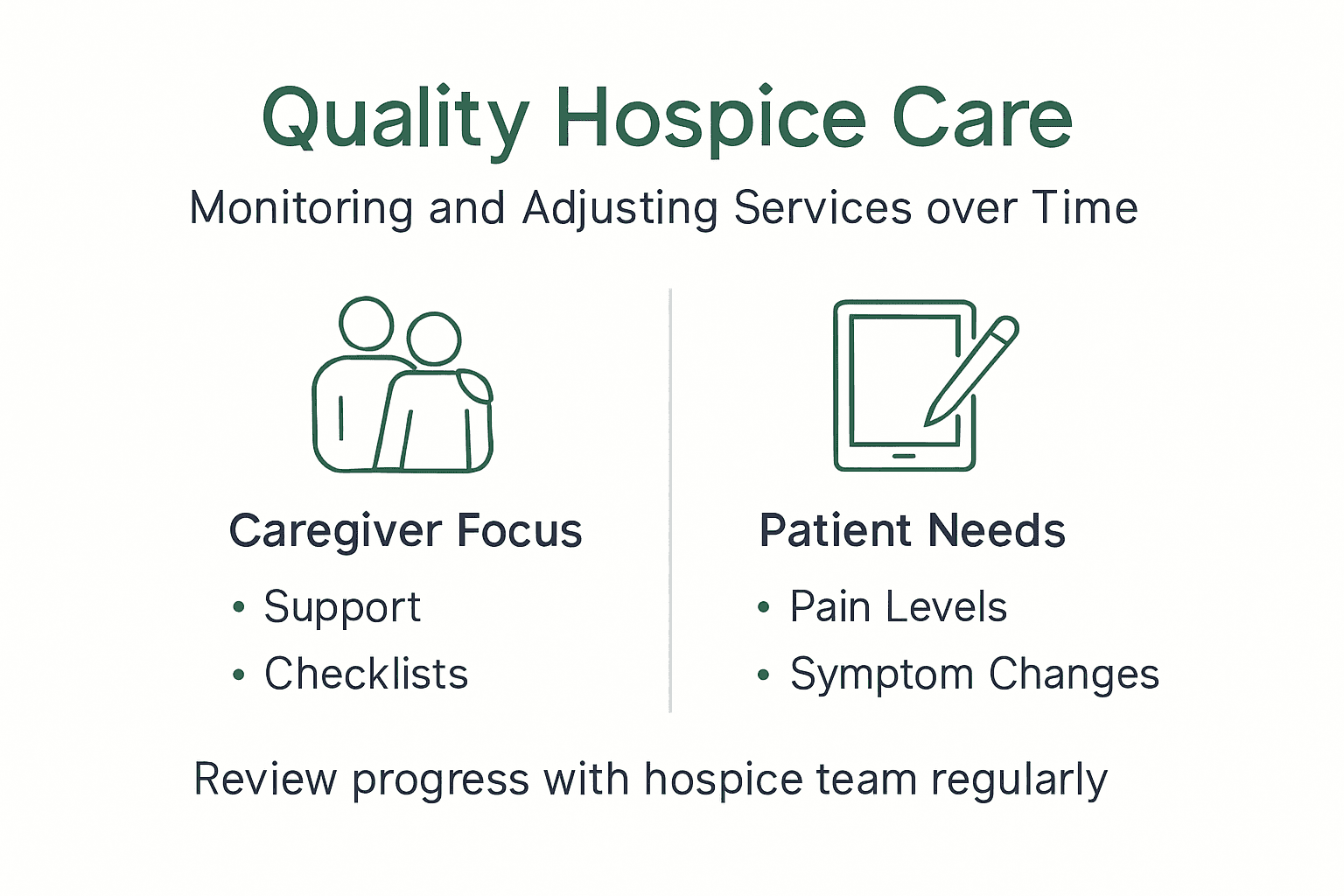
Track your loved one’s physical symptoms daily. Note pain levels, breathing patterns, appetite, sleep quality, and any new concerns. These observations guide the hospice team’s decisions about medications and interventions. Write details down rather than relying on memory during emotional conversations.
Watch for signs that current care is effective:
- Reduced pain or improved pain control
- Better sleep and rest patterns
- Maintained dignity and comfort during personal care
- Emotional peace and reduced anxiety
- Family time without medical crises interrupting moments together
Assess your own experience as a caregiver. Are you getting adequate support? Do you understand your responsibilities? Can you reach the team when needed? Hospice teams continuously monitor patient comfort and adjust care plans as illness progresses, but they also need to evaluate whether family caregivers are managing well.
Request service adjustments when needed. If pain management isn’t working, ask for medication changes. If you need more nursing visits, speak up. If your loved one’s goals shift, communicate that too. Quality care adapts to reality, not rigid plans.
Evaluate the team’s responsiveness. Do nurses return calls promptly? Do they explain their recommendations clearly? Do they listen to your concerns? Responsiveness matters as much as clinical expertise during vulnerable times.
Below are key indicators that your hospice provider is delivering quality care:
| Indicator | What to Look For | Why It Matters |
|---|---|---|
| Rapid Response | Calls are answered within an hour | Ensures urgent needs are met |
| Consistent Team | Same professionals visit regularly | Builds trust and better outcomes |
| Personalized Care Plan | Adapted as needs change | Optimizes comfort and support |
| Family Involvement | Family input shapes care decisions | Honors patient’s values |
Schedule formal quality reviews periodically. Every few weeks, discuss with your team what’s working and what needs adjustment. These structured conversations prevent small problems from becoming crises.
The best quality assurance happens when you and your hospice team are actively problem-solving together, not waiting for things to fall apart.
Document concerning patterns or repeated issues. If medication isn’t being delivered on time or if comfort measures consistently fail, keep records. This documentation helps identify systemic problems and justifies requests for changes.
Don’t settle for substandard care. If your concerns aren’t being addressed after multiple conversations, request to speak with the hospice director. You have the right to expect professional, compassionate, responsive service during this critical time.
Pro tip: Create a simple weekly checklist tracking pain levels, symptom changes, medication effectiveness, and team responsiveness—this data makes adjustment conversations more productive and specific.
Find Compassionate Support to Navigate Hospice Care with Confidence
Navigating hospice services as a family caregiver can feel overwhelming. The article highlights key challenges such as understanding eligibility criteria, managing complex care coordination, and monitoring quality to ensure your loved one receives the best comfort. At Graceland Hospice, we recognize these pain points and are committed to providing a compassionate partnership that honors your loved one’s values while relieving the burdens of caregiving. Our team excels in clear communication, personalized comfort plans, and responsive support.
If you want trusted guidance through every step of hospice care, explore our resources and compassionate services at Graceland Hospice Blog. Start with our carefully crafted end-of-life care support and discover how our experienced team can bring peace of mind and dignity to your family’s journey. Contact us today for a free consultation and take the crucial next step toward confident caregiving and compassionate care.
Frequently Asked Questions
How do I determine if my loved one is eligible for hospice care?
To determine if your loved one is eligible for hospice care, confirm they have a terminal illness with a life expectancy of six months or less. Gather their medical records and latest test results, then discuss their condition with their primary physician.
What should I look for in a hospice provider?
When selecting a hospice provider, verify that they are certified and compliant with established care standards. Evaluate their team of professionals, the services they offer, and their experience with your loved one’s specific diagnosis.
How can I effectively communicate with my hospice team?
Establish clear communication rhythms with your hospice team by asking how often nurses will visit and how to reach someone during emergencies. Keep a shared notebook for logging observations and questions to enhance communication and ensure everyone is aligned on the care plan.
What should I do if the current hospice care isn’t meeting my loved one’s needs?
If hospice care is not meeting your loved one’s needs, request service adjustments as necessary. Document any concerning patterns or issues and discuss them with your hospice team to create a personalized care plan that prioritizes comfort and support.
How can I ensure quality hospice care over time?
Continuously monitor your loved one’s physical symptoms and assess how the hospice team is responding. Schedule formal quality reviews every few weeks to discuss what’s working and what isn’t, ensuring that care evolves with your loved one’s needs.
What role do family caregivers play in hospice care?
Family caregivers play a crucial role in hospice care by providing insights about the loved one’s preferences and values. Actively participate in care planning discussions and coordinate with the hospice team to ensure caregivers’ responsibilities are clear and manageable.