Long-Term Care vs Hospice – Choosing the Right Path

Long-Term Care vs Hospice – Choosing the Right Path
Deciding on care for aging parents often brings tough questions, especially when facing serious illness or a sudden decline. For families in Orange County, California, knowing the differences between long-term care and hospice care can make these choices feel less uncertain. Each approach supports unique needs, whether ongoing health challenges or providing dignity and comfort at the end of life. This guide offers clarity to help you advocate for your loved ones with confidence and compassion.
Table of Contents
- Long-Term Care vs Hospice: Core Differences
- Who Qualifies for Each Type of Care
- Services, Locations, and Daily Support
- Costs, Medicare Coverage, and Insurance
- Making the Transition: What Caregivers Need to Know
Key Takeaways
| Point | Details |
|---|---|
| Long-Term Care Focus | Long-term care supports daily living activities for individuals with chronic conditions, promoting independence and wellness. |
| Hospice Care Purpose | Hospice care is designed for patients with terminal illnesses, emphasizing comfort, pain relief, and emotional support for patients and families. |
| Eligibility Criteria | Long-term care eligibility is based on the ability to perform daily living activities, while hospice requires a terminal diagnosis and life expectancy of six months or less. |
| Financial Considerations | Understanding insurance coverage is essential; long-term care may have high out-of-pocket costs, whereas hospice care typically involves minimal expenses due to Medicare benefits. |
Long-Term Care vs Hospice: Core Differences
Caring for aging loved ones requires understanding complex medical support options. Long-term care and hospice care represent two distinct approaches to supporting individuals with serious health challenges, each serving unique purposes in the healthcare continuum.
Understanding these differences is critical for families navigating complex medical decisions. Palliative care and hospice involve specialized medical support focused on comfort and quality of life for patients with serious illnesses.
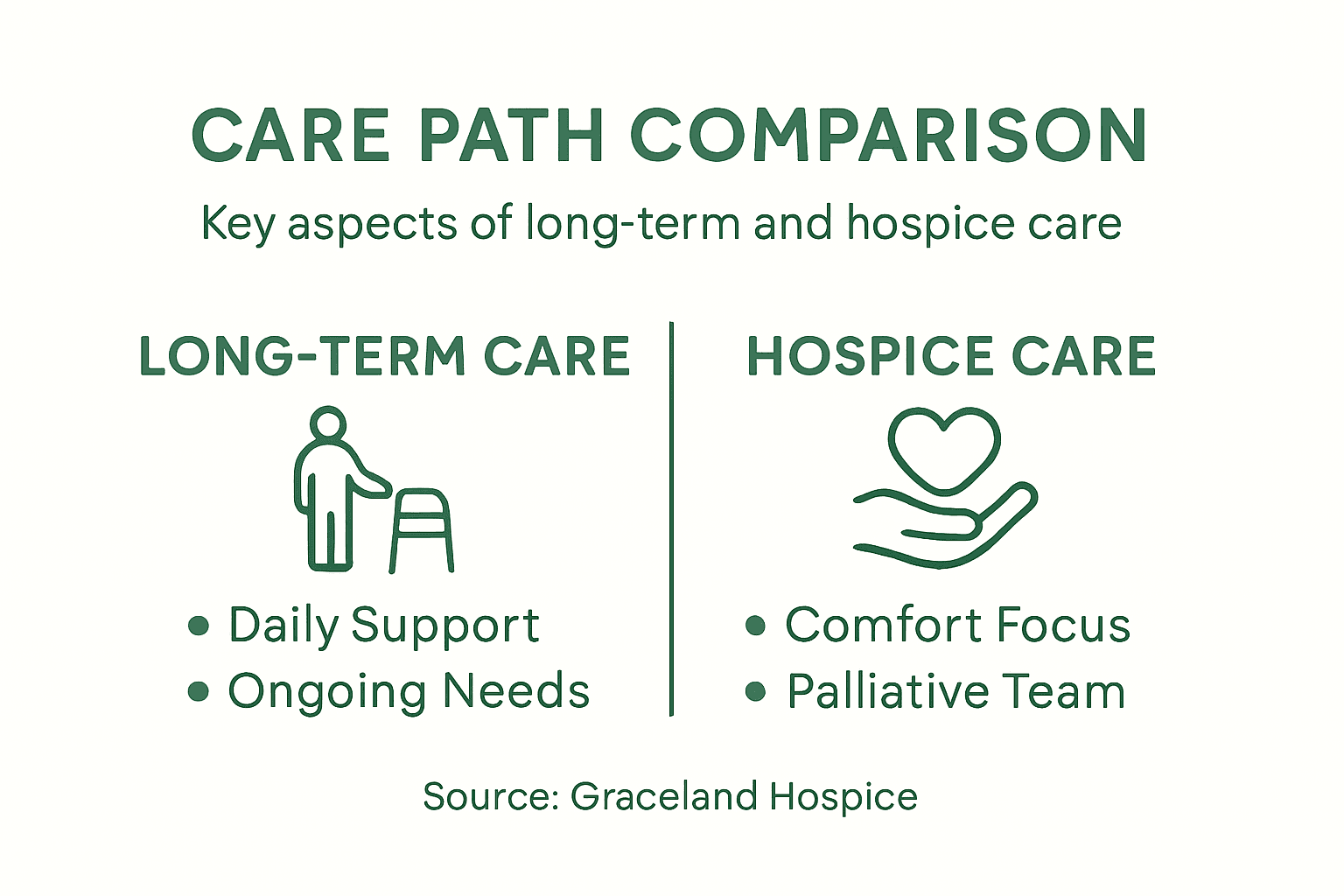
Key distinctions between long-term care and hospice include:
-
Long-Term Care
- Supports chronic conditions requiring ongoing assistance
- Helps with daily living activities like bathing, dressing, mobility
- Can be provided in nursing homes, assisted living facilities, or at home
- Focuses on maintaining current health status and supporting independence
-
Hospice Care
- Designed for patients with terminal diagnoses
- Provides end-of-life comfort and symptom management
- Typically covers patients with six months or less life expectancy
- Prioritizes pain relief and emotional support for patient and family
The primary goal of hospice care involves exclusive focus on patient comfort after curative treatments have concluded. Unlike long-term care, which aims to support ongoing daily functioning, hospice concentrates on quality of life during a patient’s final months.
Hospice care represents a compassionate approach to managing end-of-life experiences, ensuring patients receive dignified, personalized support during life’s most challenging transition.
Pro tip: Consult with healthcare professionals and discuss your specific family situation to determine the most appropriate care approach for your loved one’s unique medical needs and circumstances.
Here’s a concise comparison of long-term care and hospice care across critical factors:
| Factor | Long-Term Care | Hospice Care |
|---|---|---|
| Primary Focus | Support daily living | Manage end-of-life comfort |
| Patient Condition | Chronic, stable, or progressive | Terminal, nearing life’s end |
| Care Duration | Months to years | Weeks to months |
| Main Care Team | Aides and nurses | Interdisciplinary hospice team |
| Setting | Home or facility | Home or specialized hospice setting |
| Family Role | Encouraged, variable support | Central, with guidance/training |
Who Qualifies for Each Type of Care
Navigating the complex landscape of care options requires understanding specific eligibility criteria for long-term care and hospice services. Family caregivers must carefully evaluate their loved one’s medical condition, functional abilities, and overall health status to determine the most appropriate support.
Hospice care eligibility involves precise medical criteria centered around terminal illness diagnosis and life expectancy. Patients typically qualify when:
- Diagnosed with a terminal condition
- Physician certifies six months or less life expectancy
- Patient chooses comfort care over curative treatment
- Medical documentation supports end-stage health status
- Patient requires symptom management and pain relief
Long-term care qualification depends on an individual’s ability to perform activities of daily living (ADLs). Care requirements typically involve assistance with basic personal tasks such as:
- Bathing and personal hygiene
- Dressing and clothing management
- Mobility and transferring
- Eating and meal preparation
- Toileting and bathroom assistance
- Medication management
Medicaid and private insurance play significant roles in determining long-term care eligibility. Each state maintains unique guidelines for assessing an individual’s need for sustained medical support, considering factors like functional impairment, chronic conditions, and overall health status.
Comprehensive medical evaluations are crucial in determining the most appropriate care pathway for individuals facing complex health challenges.
Pro tip: Request a detailed assessment from healthcare professionals to understand your specific care options and potential financial coverage for long-term care or hospice services.
Services, Locations, and Daily Support
Understanding the comprehensive support provided by long-term care and hospice services is crucial for families navigating complex healthcare decisions. Each care approach offers unique services designed to meet different medical and emotional needs of patients and their families.
Hospice care services encompass holistic patient support across multiple care settings. Typical hospice services include:
- 24/7 medical support and consultation
- Pain and symptom management
- Emotional and spiritual counseling
- Medical equipment provision
- Bereavement support for families
- Medication management
- Short-term respite care for family caregivers
Hospice care can be delivered in various locations, providing flexibility for patients and families:
- Patient’s personal home
- Nursing home facilities
- Dedicated hospice care centers
- Assisted living communities
- Specialized hospital units
Comprehensive end-of-life care focuses on patient comfort and maintaining dignity during challenging times. While professional teams provide medical support, family members often serve as primary daily caregivers, working closely with hospice professionals to ensure comprehensive care.
The most effective hospice care integrates professional medical support with compassionate family involvement, creating a holistic approach to end-of-life care.
Pro tip: Discuss specific care preferences and family support capabilities with hospice providers to develop a personalized care plan that meets both medical and emotional needs.

Costs, Medicare Coverage, and Insurance
Navigating the financial landscape of long-term care and hospice services can be overwhelming for families facing complex medical challenges. Understanding insurance coverage, Medicare benefits, and potential out-of-pocket expenses is crucial for making informed healthcare decisions.
Medicare hospice coverage provides comprehensive support for patients with terminal illnesses. Key Medicare hospice benefits include:
- Skilled nursing services
- Medical supplies and equipment
- Therapy services
- Prescription medications for symptom control
- Short-term inpatient care
- Social worker consultations
- Counseling services
Medicare Part A typically covers most hospice expenses, with patients responsible for minimal costs:
- Small copayments for prescription drugs
- Potential modest fees for respite care
- Limited out-of-pocket expenses for medical equipment
- No charges for core hospice services
Medicare eligibility requires specific medical certification for hospice care, including:
- Terminal illness diagnosis
- Life expectancy of six months or less
- Using a Medicare-approved hospice provider
- Formal election of hospice benefit
Understanding the nuanced details of Medicare coverage can significantly reduce financial stress during challenging healthcare transitions.
Pro tip: Contact your local Medicare representative to get a detailed breakdown of specific hospice coverage and potential out-of-pocket expenses for your unique situation.
Below is a summary of factors influencing costs and insurance coverage for each care type:
| Aspect | Long-Term Care | Hospice Care |
|---|---|---|
| Insurance Coverage | Medicaid, some private plans | Medicare Part A, some Medicaid |
| Out-of-Pocket Risk | Can be high, varies by state | Generally low, minimal fees |
| Key Expenses | Room/board, personal care | Medications, equipment, respite care |
| Financial Planning Needed | Early, for eligibility | Typically urgent at diagnosis |
Making the Transition: What Caregivers Need to Know
Caring for a loved one during end-of-life transitions demands emotional resilience, practical knowledge, and compassionate support. Family caregivers face complex challenges that require understanding, preparation, and access to professional guidance during this profound journey.
Family caregivers receive critical hospice support through comprehensive assistance and education. Essential caregiver preparation involves:
- Understanding the dying process
- Learning symptom management techniques
- Recognizing emotional transition stages
- Preparing for grief and loss
- Maintaining personal emotional health
- Establishing communication with hospice team
- Creating a supportive home environment
Hospice teams play a crucial role in guiding caregivers through this challenging period by:
- Providing emotional support
- Offering medical guidance
- Teaching pain management strategies
- Helping normalize end-of-life experiences
- Assisting with practical care techniques
- Supporting family communication
- Facilitating grief counseling
Emotional preparation is as important as practical skills. Caregivers must balance compassionate care with personal well-being, recognizing that their emotional health directly impacts the quality of support they can provide.
Successful hospice transitions require a delicate balance of professional support, personal resilience, and unconditional love.
Pro tip: Schedule regular check-ins with the hospice care team to discuss your emotional needs and receive personalized guidance throughout the caregiving journey.
Finding the Right Care Solution for Your Loved One
Choosing between long-term care and hospice can be overwhelming when faced with chronic or terminal illness in a loved one. This article highlights the critical differences in goals and services, helping you understand the importance of timely decisions for comfort and quality of life. If you are grappling with questions about eligibility, care settings, or how to support your family through these transitions, you are not alone.
At Graceland Hospice, we specialize in compassionate hospice care that prioritizes dignity, pain management, and emotional support for both patients and families. Our dedicated team is here to guide you through every step of this journey with expertise and heart. Learn more about how hospice care can provide comfort and relief during difficult times by visiting our blog. Take the next step in ensuring your loved one receives the personalized care they deserve by contacting us for a free consultation at Graceland Hospice. Your path to compassionate hospice care starts now.
Frequently Asked Questions
What is the primary difference between long-term care and hospice?
Long-term care focuses on supporting individuals with chronic conditions and daily living activities, while hospice care is designed for patients with terminal diagnoses, providing comfort and symptom management during the end of life.
Who qualifies for hospice care?
Patients typically qualify for hospice care if they have a terminal condition, a physician certifies six months or less life expectancy, and they choose comfort care over curative treatment.
What types of services are provided in long-term care?
Long-term care services usually include assistance with daily activities like bathing, dressing, eating, and medication management, and can be provided in various settings, including nursing homes and the patient’s home.
How is hospice care funded and what costs should families expect?
Hospice care is typically covered by Medicare Part A, which includes services like skilled nursing, medical supplies, and respite care. Patients may have minimal out-of-pocket costs, such as small copayments for medications.
Recommended
- Graceland Hospice Care | Compassionate End-of-Life Care
- Graceland Hospice Care | Compassionate End-of-Life Care
- Graceland Hospice Care | Compassionate End-of-Life Care
- Graceland Hospice Care | Compassionate End-of-Life Care
- Role of Caregivers in Hearing Aid Choice – Impact on Elderly Wellbeing – Audora