How to Coordinate Hospice Visits for Home Comfort Care
How to Coordinate Hospice Visits for Home Comfort Care
Facing the final chapter of a parent’s life at home in Orange County can feel overwhelming for families striving to balance comfort, dignity, and emotional support. Every decision matters when it comes to coordinating hospice visits, especially as you navigate sensitive conversations and shifting medical needs. This guide walks you through compassionate care strategies and practical steps to help ensure your loved one receives personalized support, clear communication, and a peaceful environment during their end-of-life journey.
Table of Contents
- Step 1: Assess Patient Needs And Family Preferences
- Step 2: Establish A Clear Communication Plan
- Step 3: Schedule Hospice Visits With Providers
- Step 4: Prepare The Home Environment For Care
- Step 5: Verify Quality Of Visits And Make Adjustments
Quick Summary
| Key Message | Explanation |
|---|---|
| 1. Open Family Communication is Essential | Create a detailed family meeting to discuss the patient’s care preferences openly and compassionately. |
| 2. Establish a Structured Communication Plan | Designate a primary contact and use a shared log to keep everyone informed about care updates. |
| 3. Schedule Visits Based on Medical Needs | Collaborate with healthcare providers to create a flexible visit schedule tailored to the patient’s evolving requirements. |
| 4. Prepare the Home Environment Effectively | Clear spaces for medical equipment and create a comfortable atmosphere to support both care and emotional well-being. |
| 5. Continuously Assess and Adjust Care Quality | Actively monitor hospice visits and discuss observations with the care team to make necessary adjustments for better comfort. |
Step 1: Assess Patient Needs and Family Preferences
Coordinating hospice visits requires thoughtful understanding of your loved one’s unique medical situation and personal preferences. This critical first step involves creating a comprehensive picture of your family member’s comfort, medical requirements, and emotional needs through compassionate communication and careful assessment.
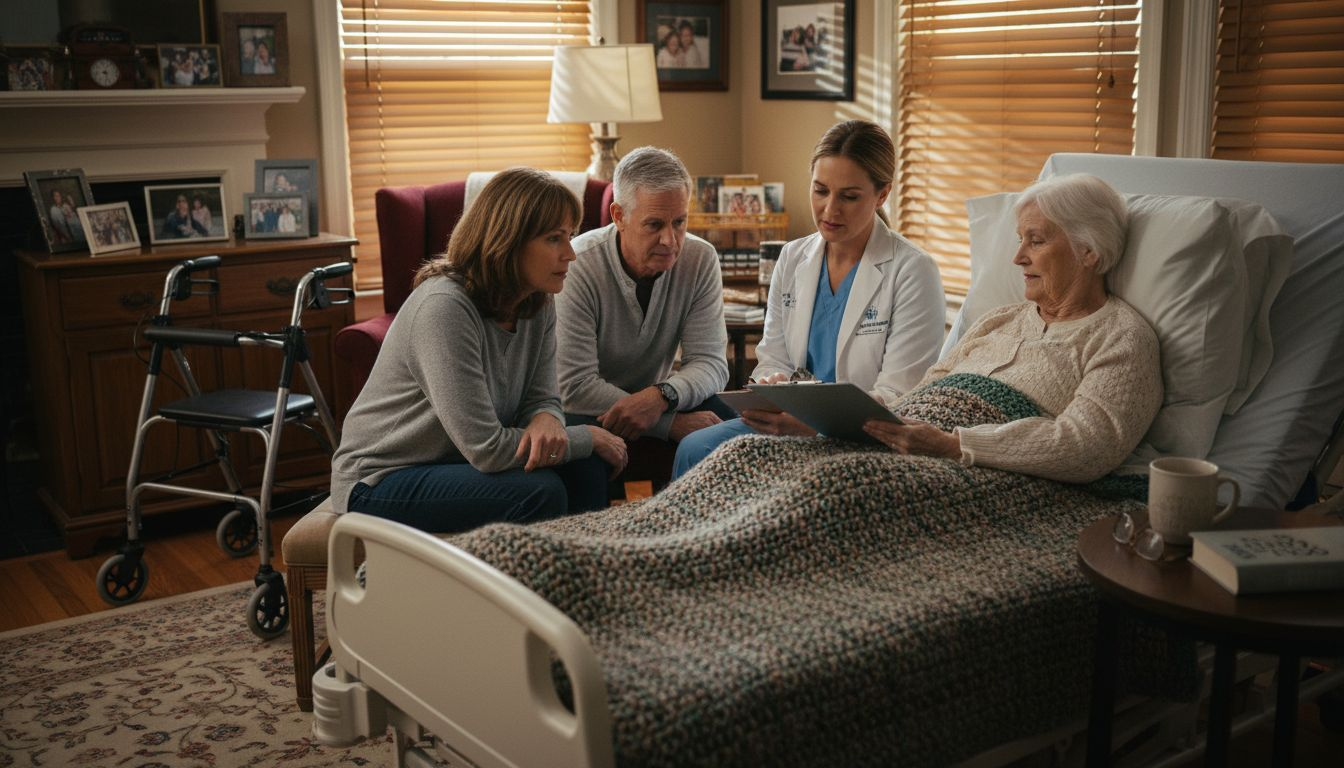
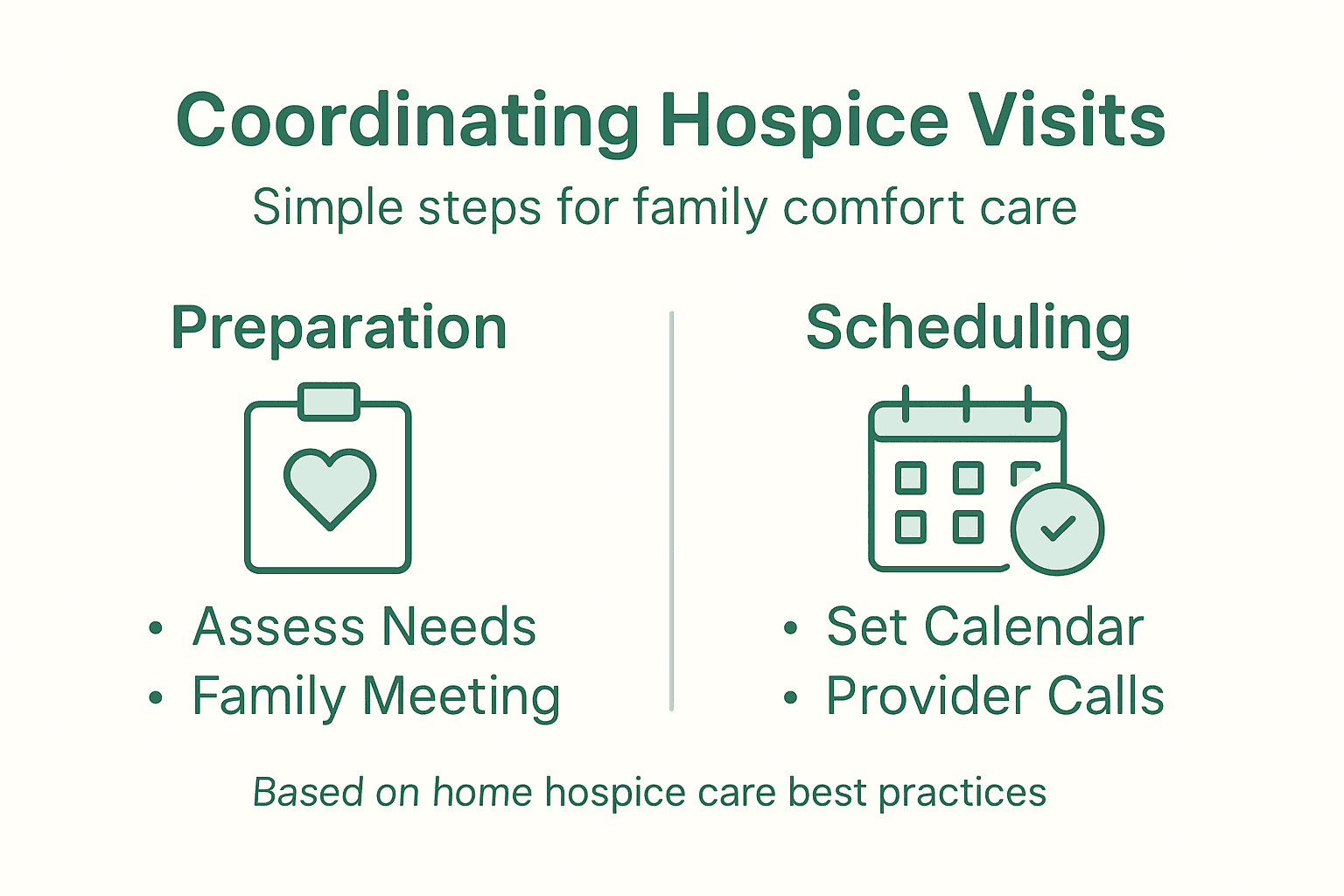
Start by organizing a detailed family meeting where everyone can openly discuss the patient’s wishes and potential care strategies. Skilled communication is essential for understanding core goals and preferences. During this conversation, focus on these key areas:
- Current medical condition and symptoms
- Pain management expectations
- Emotional and spiritual support requirements
- Personal comfort priorities
- Cultural or religious considerations
The hospice care team will help guide these discussions, drawing insights from personalized patient support approaches that emphasize dignity and individual needs. They can assist in reviewing advance directives, understanding treatment preferences, and aligning care objectives with the patient’s values.
Open and honest communication forms the foundation of compassionate end-of-life care.
Prepare to document these discussions thoroughly, ensuring all family members understand and respect the patient’s wishes. This collaborative approach helps create a supportive environment that honors your loved one’s comfort and emotional well-being.
Here is a summary of key roles involved in hospice care coordination:
| Role | Main Responsibility | Typical Interaction |
|---|---|---|
| Family Decision-Maker | Guides choices and communication | Leads meetings, tracks care |
| Hospice Nurse | Delivers direct patient care | Monitors symptoms |
| Social Worker | Provides emotional support | Facilitates conversations |
| Physician | Oversees medical treatment | Adjusts care plans |
| Chaplain/Spiritual Care | Supports spiritual needs | Offers counseling |
Pro tip: Schedule the initial family meeting when all key decision-makers can be present, and consider having a neutral facilitator like a hospice social worker help guide the conversation.
Step 2: Establish a Clear Communication Plan
Creating a robust communication strategy is crucial when coordinating hospice care for a loved one. This step focuses on developing a structured approach that ensures all family members, caregivers, and healthcare professionals are aligned and informed about the patient’s needs and preferences.
Starting conversations early about hospice helps everyone understand and respect the patient’s wishes. Implement these key communication strategies:
- Designate a primary point of contact
- Create a shared communication log or digital platform
- Schedule regular family update meetings
- Establish preferred communication methods (phone, email, text)
- Define information sharing protocols
The hospice team can help you develop effective communication strategies that prioritize the patient’s comfort and emotional well-being. They understand the importance of clear, compassionate dialogue that reduces stress and misunderstandings.
Transparent and consistent communication builds trust and ensures comprehensive care.
Remember that communication is an ongoing process. Be prepared to adapt your plan as the patient’s condition changes and new needs emerge. Flexibility and empathy are key to maintaining a supportive care environment.
Pro tip: Create a shared digital folder or group chat where all key family members can access updates and care information in real-time, ensuring everyone stays informed.
Step 3: Schedule Hospice Visits with Providers
Scheduling hospice visits requires careful coordination and understanding of your loved one’s specific medical needs. This critical step involves establishing a structured visit schedule that ensures comprehensive care and support for both the patient and your family during this challenging time.
Finding the right hospice provider is the first crucial step in creating an effective care plan. Begin by working closely with your loved one’s primary care physician to understand the recommended frequency and type of hospice visits. Consider these key aspects when scheduling:
- Initial comprehensive assessment visit
- Regular nursing visits
- Periodic physician consultations
- Mental health and spiritual support visits
- Caregiver support and training sessions
Determine the optimal visit frequency based on your loved one’s current health status, with the understanding that the schedule can be flexibly adjusted as their condition changes. Most hospice providers offer personalized visit plans that adapt to the patient’s evolving needs, ensuring continuous and compassionate care.
Effective hospice scheduling balances medical necessity with personal comfort and dignity.
Communicate openly with the hospice coordinator about your family’s specific schedule preferences, work constraints, and any unique home care requirements. This collaborative approach helps create a visit schedule that feels supportive and less disruptive to your family’s routine.
Pro tip: Create a shared family calendar specifically for hospice visits to ensure everyone is informed and can potentially be present during key consultations.
Step 4: Prepare the Home Environment for Care
Transforming your home into a comfortable and functional space for hospice care requires thoughtful preparation and collaboration with your hospice team. This crucial step involves creating an environment that supports your loved one’s comfort, medical needs, and emotional well-being while facilitating easy care delivery.
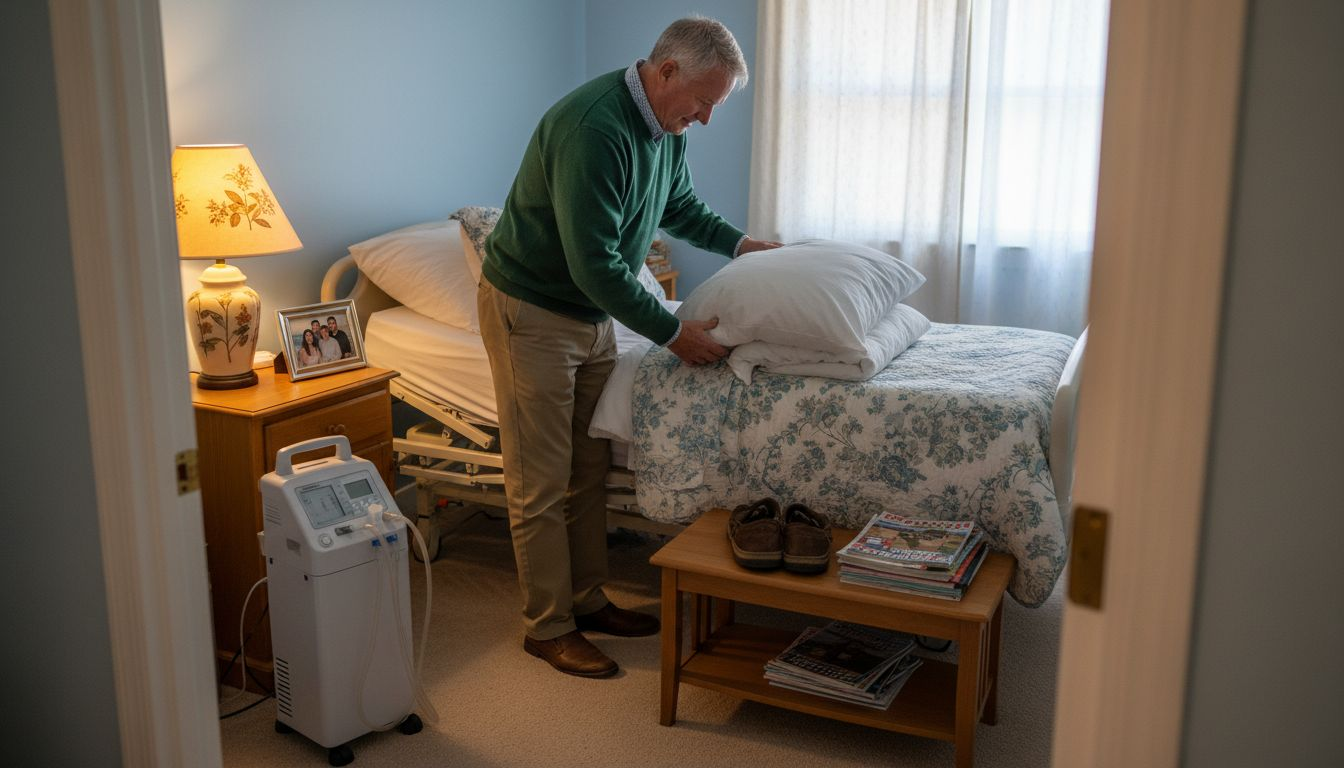
Hospice teams help arrange medical equipment to ensure your home is fully prepared for comprehensive care. Begin by identifying and clearing dedicated spaces for essential medical equipment and care activities. Consider these key preparation steps:
- Create an accessible bedroom with room for medical equipment
- Remove tripping hazards like area rugs or loose electrical cords
- Establish a clear path for wheelchair or medical equipment access
- Set up a comfortable seating area for family visits
- Organize a designated storage space for medical supplies
Coordinate with the hospice team to understand specific equipment needs and ensure proper installation. They can guide you in arranging the space to maximize comfort and functionality, taking into account your loved one’s mobility and specific medical requirements.
A well-prepared home environment reduces stress and supports compassionate care.
Prioritize creating a peaceful, welcoming atmosphere that feels both medical and personal. Include family photos, soft lighting, and familiar items that provide emotional comfort while maintaining the practical needs of hospice care.
Pro tip: Take photographs of your prepared space and share them with the hospice team to confirm you’ve met their recommended setup guidelines.
Step 5: Verify Quality of Visits and Make Adjustments
Maintaining high-quality hospice care requires ongoing assessment and proactive communication with your care team. This critical step involves actively monitoring the effectiveness of hospice visits, understanding your loved one’s changing needs, and ensuring the care provided meets your family’s expectations.
Hospice care quality can be systematically evaluated through structured feedback and careful observation. Develop a comprehensive approach to tracking and assessing the care provided by implementing these key strategies:
- Document each hospice visit’s details and observations
- Track symptom management and pain control effectiveness
- Note communication quality with hospice professionals
- Assess emotional and spiritual support provided
- Record any concerns or suggested improvements
Work closely with the hospice team to review and discuss care quality regularly. The interdisciplinary team can help you interpret observations, address potential gaps, and adjust the care plan to ensure it remains responsive to your loved one’s evolving needs.
Continuous quality assessment ensures compassionate, personalized hospice care.
Remember that open, honest communication is key to maintaining the highest standard of care. Don’t hesitate to ask questions, share concerns, or request changes that could improve your loved one’s comfort and quality of life during this sensitive time.
The following table outlines how to adjust your hospice care plan with changing needs:
| Change Detected | Recommended Action | Who to Notify |
|---|---|---|
| Increased pain | Request medication review | Hospice nurse, physician |
| Emotional distress | Schedule social worker visit | Social worker |
| Mobility decline | Update equipment setup | Hospice coordinator |
| Communication problems | Plan family conference | All care team members |
Pro tip: Keep a dedicated notebook or digital document to track hospice visit details, making it easier to provide specific feedback and identify patterns in care.
Simplify Coordinating Hospice Visits with Graceland Hospice
Coordinating hospice visits while balancing your loved one’s medical needs and family preferences can feel overwhelming. This article highlights the challenges of assessing patient comfort, establishing clear communication plans, scheduling visits, preparing the home environment, and ensuring ongoing quality of care. Key pain points like managing visit schedules, maintaining open communication, and adapting care as conditions change require dedicated support and expertise.
At Graceland Hospice, we understand the emotional and logistical challenges families face during this sensitive time. Our compassionate team is committed to helping you navigate every step with respect, flexibility, and personalized care tailored to your loved one’s unique needs. Discover how we set higher standards in hospice care by treating every individual with deep compassion and ensuring seamless coordination. Learn more about our approach in How to Coordinate Hospice Visits and start building a care plan that honors your family’s wishes.
Take the first step toward providing your loved one with comfort and dignity at home today. Contact Graceland Hospice for a free consultation and experience hospice care designed around you and your family’s needs. Visit Graceland Hospice Blog now to learn more.
Frequently Asked Questions
How do I assess my loved one’s needs before coordinating hospice visits?
Start by holding a family meeting to discuss the patient’s medical condition and personal preferences. Focus on key areas like pain management expectations and emotional support needs to create a comprehensive care picture.
What steps should I take to establish a communication plan for hospice care?
Designate a primary point of contact within the family to streamline communications. Create a shared communication log and schedule regular family update meetings to ensure everyone is informed about the patient’s care.
How can I schedule effective hospice visits for my family member?
Work closely with the patient’s primary care physician to determine the type and frequency of hospice visits needed. Document the visits on a shared calendar to keep everyone informed and involved in the care process.
What should I do to prepare my home for hospice care?
Transform your home by clearing space for medical equipment and arranging a comfortable environment for the patient. Coordinate with the hospice team to ensure that all necessary equipment is installed correctly and conveniently.
How do I evaluate the quality of hospice visits and make adjustments?
Regularly document details of each hospice visit, focusing on symptom management and emotional support quality. Use this information to communicate with the hospice team, so they can adjust the care plan based on changing needs.
What actions can I take if I notice a change in my loved one’s condition?
If you detect changes such as increased pain or mobility decline, promptly request a medication review or equipment update. Notify the hospice coordinator or social worker to facilitate necessary adjustments to the care plan.
Recommended
- Graceland Hospice Care | Compassionate End-of-Life Care
- Graceland Hospice Care | Compassionate End-of-Life Care
- Graceland Hospice Care | Compassionate End-of-Life Care
- Graceland Hospice Care | Compassionate End-of-Life Care
- VA Services | Expert Care for Veterans’ Health & Recovery
- Role of Caregivers in Hearing Aid Choice – Impact on Elderly Wellbeing – Audora