Hospice Team Explained: How Each Role Supports Your Family
Hospice Team Explained: How Each Role Supports Your Family
Caring for a loved one with a terminal illness at home in Orange County can bring overwhelming questions about roles and support. Many families discover that understanding the distinct responsibilities of a hospice care team brings much-needed clarity and relief. With professionals dedicated to compassionate end-of-life support, you gain a network focused on comfort, dignity, and emotional strength for both patients and caregivers during life’s most difficult moments.
Table of Contents
- What Is a Hospice Care Team?
- Core Roles Within the Hospice Team
- Levels of Hospice Care Provided at Home
- How Team Members Support Caregivers
- Key Rights, Responsibilities, and Costs
Key Takeaways
| Point | Details |
|---|---|
| Hospice Care Team’s Purpose | Hospice care teams focus on providing comfort and dignity for patients in end-of-life situations rather than seeking a cure. |
| Core Team Members | Essential professionals include Physicians, Registered Nurses, Social Workers, and Chaplains, each addressing specific patient and family needs. |
| Levels of Home Care | Home hospice care offers various service levels, including Routine Home Care, Continuous Home Care, and Crisis Care, tailored to patients’ changing conditions. |
| Support for Caregivers | Hospice team members are dedicated to supporting caregivers, providing emotional, practical, and educational resources to enhance their skills and well-being. |
What Is a Hospice Care Team?
A hospice care team is a compassionate, specialized group of healthcare professionals dedicated to providing comprehensive end-of-life support for patients and their families. Unlike traditional medical care focused on cure, hospice care concentrates on comfort and dignity during life’s most challenging transition.
The team is designed to address multiple dimensions of patient needs, combining medical expertise with emotional and spiritual support. These professionals work collaboratively to ensure the highest quality of life for patients with terminal illnesses, typically those expected to live six months or less. Their holistic approach recognizes that end-of-life care extends far beyond medical treatment.
A typical hospice care team includes several key professionals:
- Physicians: Manage medical symptoms and pain management strategies
- Registered Nurses: Provide direct patient care and medication oversight
- Hospice Aides: Assist with personal care and daily living activities
- Social Workers: Offer emotional support and family counseling
- Chaplains: Provide spiritual guidance and emotional comfort
- Volunteers: Offer additional companionship and support services
Each team member plays a crucial role in creating a supportive environment that prioritizes patient comfort, dignity, and quality of life. They work seamlessly together, coordinating care to address physical, emotional, and spiritual needs.
Hospice care is about adding life to days, not just days to life.
Pro tip: When considering hospice care, request a consultation to understand how each team member can specifically support your unique family situation.
Core Roles Within the Hospice Team
Hospice care is a collaborative approach where each team member contributes unique skills to support patients and families during life’s most challenging journey. Comprehensive end-of-life support requires a multidisciplinary team addressing physical, emotional, and spiritual needs with profound compassion and expertise.
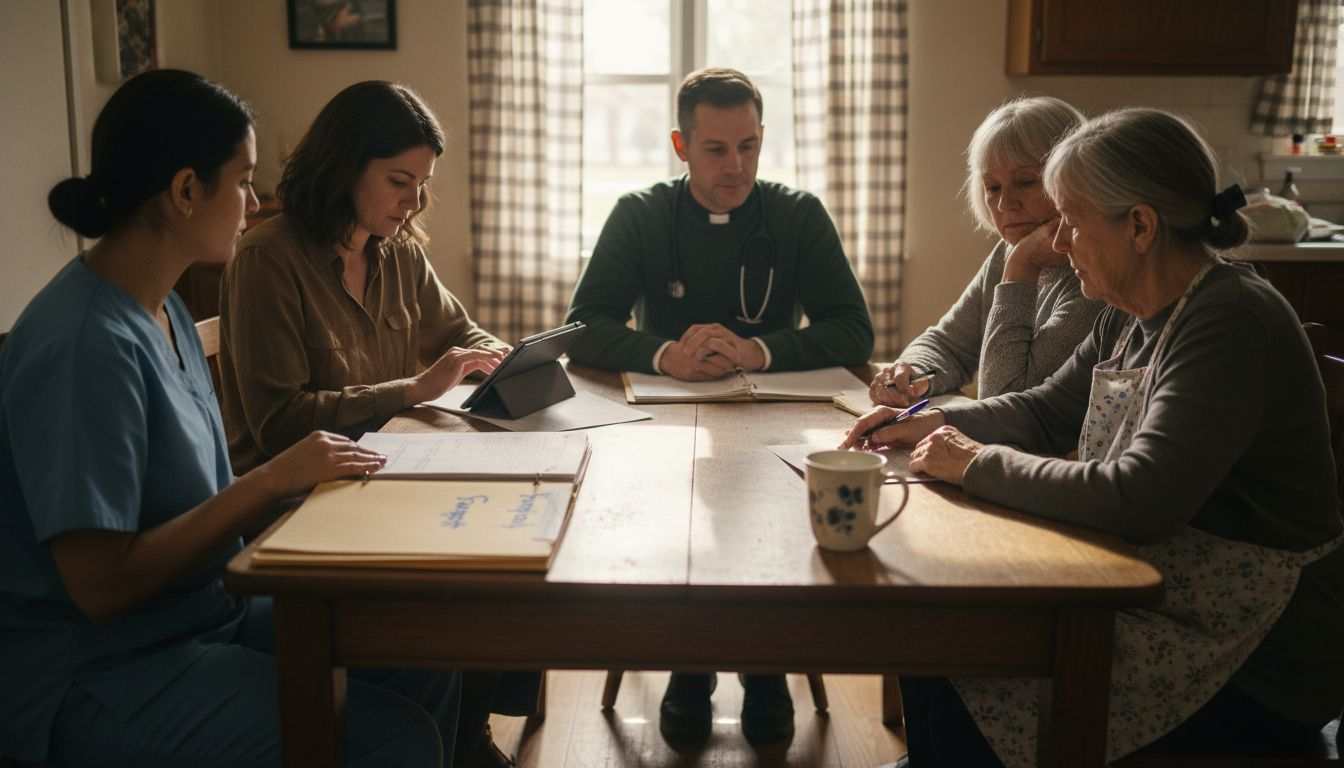
These professionals work in synchronized harmony, ensuring that no aspect of patient care is overlooked. Their collective goal transcends medical treatment, focusing instead on maintaining dignity, managing symptoms, and providing holistic comfort during a deeply personal transition.
The core roles within a hospice team typically include:
- Physicians: Specialized in palliative medicine, managing complex symptom control
- Registered Nurses: Primary caregivers providing direct medical monitoring and intervention
- Hospice Aides: Assisting with personal care, hygiene, and daily living activities
- Social Workers: Offering emotional support, family counseling, and resource navigation
- Chaplains: Providing spiritual guidance and emotional comfort
- Bereavement Counselors: Supporting families through grief and loss process
Each professional brings a specialized perspective, creating a comprehensive support network that addresses the intricate needs of patients facing terminal conditions. Their collaborative approach ensures families receive compassionate, personalized care during an emotionally challenging time.
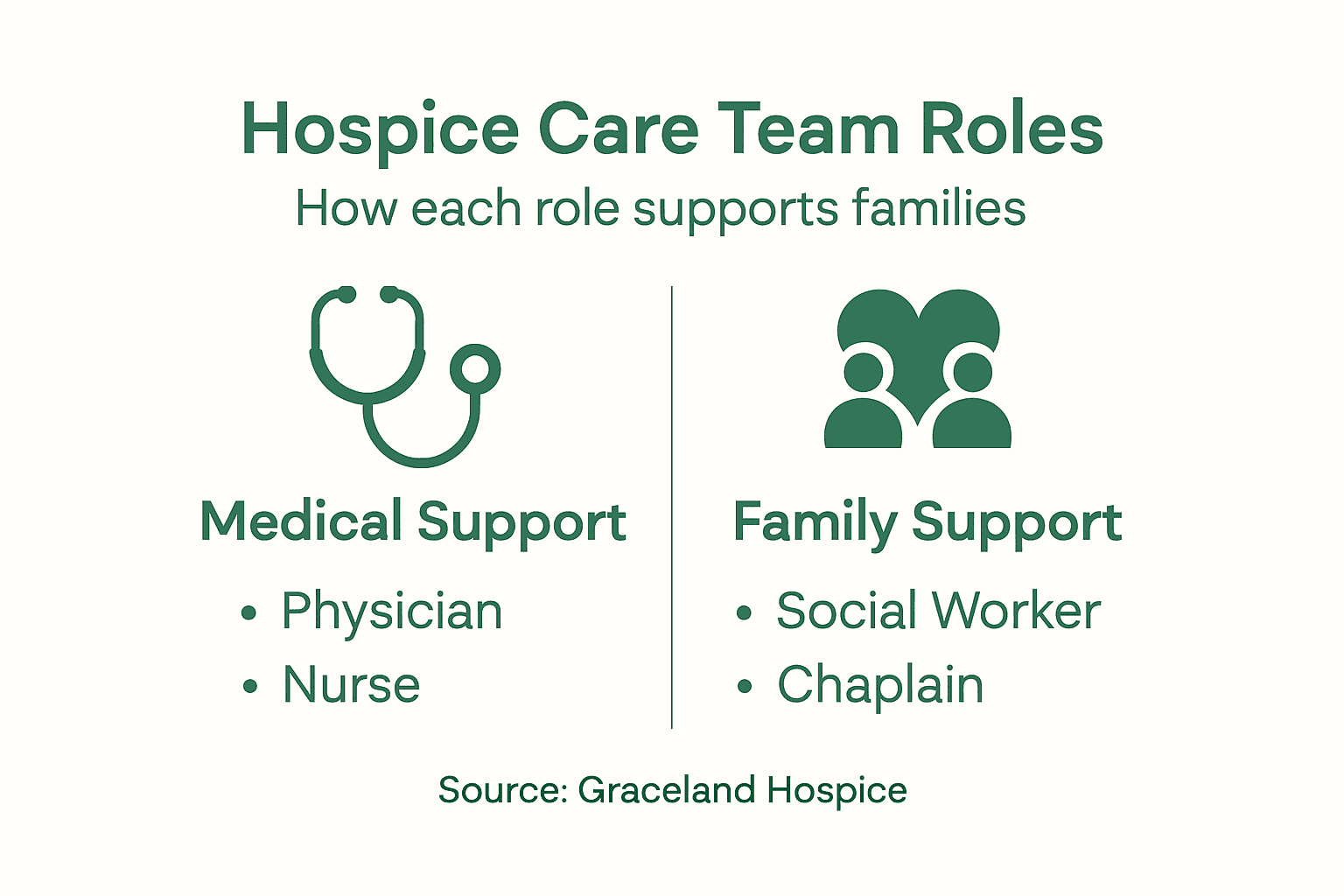
Here’s a summary of the main hospice care team members and their specialized contributions:
| Team Member | Area of Expertise | Unique Contribution |
|---|---|---|
| Physician | Palliative medicine | Manages complex symptom control |
| Registered Nurse | Clinical care | Provides hands-on medical support |
| Social Worker | Emotional counseling | Navigates family and resource needs |
| Chaplain | Spiritual support | Helps with faith and emotional care |
| Bereavement Counselor | Grief management | Supports families after loss |
| Hospice Aide | Daily living assistance | Maintains patient comfort |
The strength of hospice care lies not in extending life, but in enriching the quality of remaining time.
Pro tip: Request a detailed consultation to understand how each team member’s unique role can specifically support your family’s individual needs and emotional journey.
Levels of Hospice Care Provided at Home
Hospice care at home offers a compassionate and flexible approach to supporting patients during their final months, recognizing that comfort and dignity are paramount. Hospice home care provides multiple levels of support designed to meet the unique and evolving needs of patients and their families.
The goal of home-based hospice care is to create a comprehensive support system that addresses medical, emotional, and practical challenges. Each level of care is carefully tailored to ensure patients receive precisely what they need, when they need it, without disrupting the familiar comfort of their home environment.
Home hospice care typically encompasses several critical service levels:
- Routine Home Care: Standard daily support for patients with stable medical conditions
- Continuous Home Care: Intensive nursing support during acute symptom management periods
- Respite Care: Short-term relief for primary family caregivers, typically in a facility
- General Inpatient Care: Temporary hospital or inpatient unit care for complex symptom management
- Crisis Care: Immediate, round-the-clock medical intervention during critical health moments
Each care level is designed to provide seamless support, ensuring patients receive comprehensive attention while allowing families to focus on emotional connection and quality time together. The flexibility of these service levels means that care can be dynamically adjusted as the patient’s condition changes.
Compare these levels of home hospice care for different patient needs:
| Service Level | When Is It Needed? | Core Focus |
|---|---|---|
| Routine Home Care | Stable symptoms, daily needs | Consistent comfort, basic support |
| Continuous Home Care | Sudden symptom escalation | Intensive, constant supervision |
| Respite Care | Caregiver relief moments | Temporary support in a facility |
| General Inpatient Care | Severe, uncontrolled issues | Hospital-grade symptom management |
| Crisis Care | Medical emergencies | Immediate intervention and safety |
Home is where healing happens, even when cure is no longer possible.
Pro tip: Discuss the specific care levels with your hospice provider in advance, and create a flexible care plan that can be easily adapted to your loved one’s changing needs.
How Team Members Support Caregivers
Caregiving is an emotionally and physically demanding journey that can quickly overwhelm even the most dedicated family members. Comprehensive caregiver support services are designed to provide critical assistance, ensuring family caregivers remain emotionally resilient and physically capable during this challenging time.
Hospice team members recognize that supporting the caregiver is just as important as caring for the patient. They understand that a well-supported caregiver can provide more compassionate, effective care, creating a positive cycle of support that benefits both the patient and their loved ones.
The specific ways hospice team members support caregivers include:
- Social Workers: Offering emotional counseling and practical resource navigation
- Personal Care Aides: Providing hands-on assistance with patient daily activities
- Nurses: Teaching specialized care techniques and medical management skills
- Chaplains: Delivering spiritual support and emotional comfort
- Bereavement Counselors: Preparing families for potential loss and grief processing
- Volunteers: Offering respite care and additional emotional support
Each team member brings a unique perspective and set of skills designed to lighten the caregiver’s emotional and practical burden. Their holistic approach addresses not just medical needs, but the entire emotional landscape of family caregiving.
Caregivers are the unsung heroes of hospice care, and every team member is committed to supporting their incredible journey.
Pro tip: Schedule regular check-ins with your hospice team’s social worker to discuss your personal support needs and emotional well-being.
Key Rights, Responsibilities, and Costs
Navigating the legal and financial landscape of hospice care can feel overwhelming, but understanding your fundamental rights and responsibilities provides clarity and peace of mind. Patient rights in hospice care are designed to protect dignity, ensure compassionate treatment, and empower patients and families during a challenging time.
Hospice care operates on a collaborative model where patients, families, and healthcare professionals share mutual responsibilities. This approach ensures transparent communication, personalized care, and a supportive environment that respects individual needs and preferences while maintaining high-quality medical and emotional support.
Key rights and responsibilities include:
-
Patient Rights:
- Receive respectful, personalized medical care
- Make informed decisions about treatment
- Manage pain and symptoms effectively
- Maintain privacy and confidentiality
- Be fully informed about care plans
-
Patient Responsibilities:
- Provide accurate medical history
- Follow recommended care plans
- Communicate openly with hospice team
- Respect hospice staff and guidelines
- Inform team about changing medical conditions
Financial Considerations typically involve:
- Medicare coverage for hospice services
- Medicaid support for eligible patients
- Most private insurance plans providing comprehensive coverage
- Minimal out-of-pocket expenses for qualified patients
- Potential additional costs for non-covered services
Your right to compassionate care is paramount, regardless of financial circumstances.
Pro tip: Request a detailed financial consultation with your hospice provider to understand exactly what your insurance covers and potential additional expenses.
Discover the Power of a Dedicated Hospice Care Team with Graceland Hospice
The article “Hospice Team Explained How Each Role Supports Your Family” highlights the vital challenge families face when navigating the complexities of end-of-life care. Understanding the multiple roles from physicians to bereavement counselors can be overwhelming yet essential for ensuring comfort dignity and emotional support. If you or your loved ones are seeking compassionate guidance that respects these unique needs Graceland Hospice is here to provide expert support driven by deep compassion and professionalism.
At Graceland Hospice we embrace the holistic approach detailed in the article by ensuring each team member works seamlessly to support both patients and caregivers alike. Our commitment means you gain access to specialized care that focuses on pain management emotional counseling and spiritual comfort tailored specifically to your family’s journey. Don’t wait until the weight becomes too heavy connect with us for a free consultation and explore how our hospice care team can create a nurturing environment right in your home. Learn more about our approach on our blog and take the first step by contacting Graceland Hospice today.
Frequently Asked Questions
What is the role of a physician in a hospice care team?
Physicians in a hospice care team manage medical symptoms and pain management strategies to ensure the comfort of patients facing terminal illnesses.
How do social workers support families in hospice care?
Social workers offer emotional support and family counseling, helping families navigate resources and coping strategies during a difficult time.
What types of care levels are provided in home hospice care?
Home hospice care offers several levels, including Routine Home Care for stable conditions, Continuous Home Care during acute symptoms, Respite Care for caregiver relief, General Inpatient Care for complex issues, and Crisis Care for emergencies.
How does the hospice team support family caregivers?
The hospice team supports family caregivers by providing hands-on assistance, emotional counseling, specialized training in care techniques, and spiritual support, ensuring they are well-equipped to care for their loved ones.
Recommended
- Graceland Hospice Care | Compassionate End-of-Life Care
- Graceland Hospice Care | Compassionate End-of-Life Care
- Graceland Hospice Care | Compassionate End-of-Life Care
- Graceland Hospice Care | Compassionate End-of-Life Care
- Role of Caregivers in Hearing Aid Choice – Impact on Elderly Wellbeing – Audora
- Family Counseling Benefits: Support, Healing, and Connection 2025 - Mastering Conflict